What It Means When Dermaplaning Removes Hair (And Why It's More Than Just Shaving)
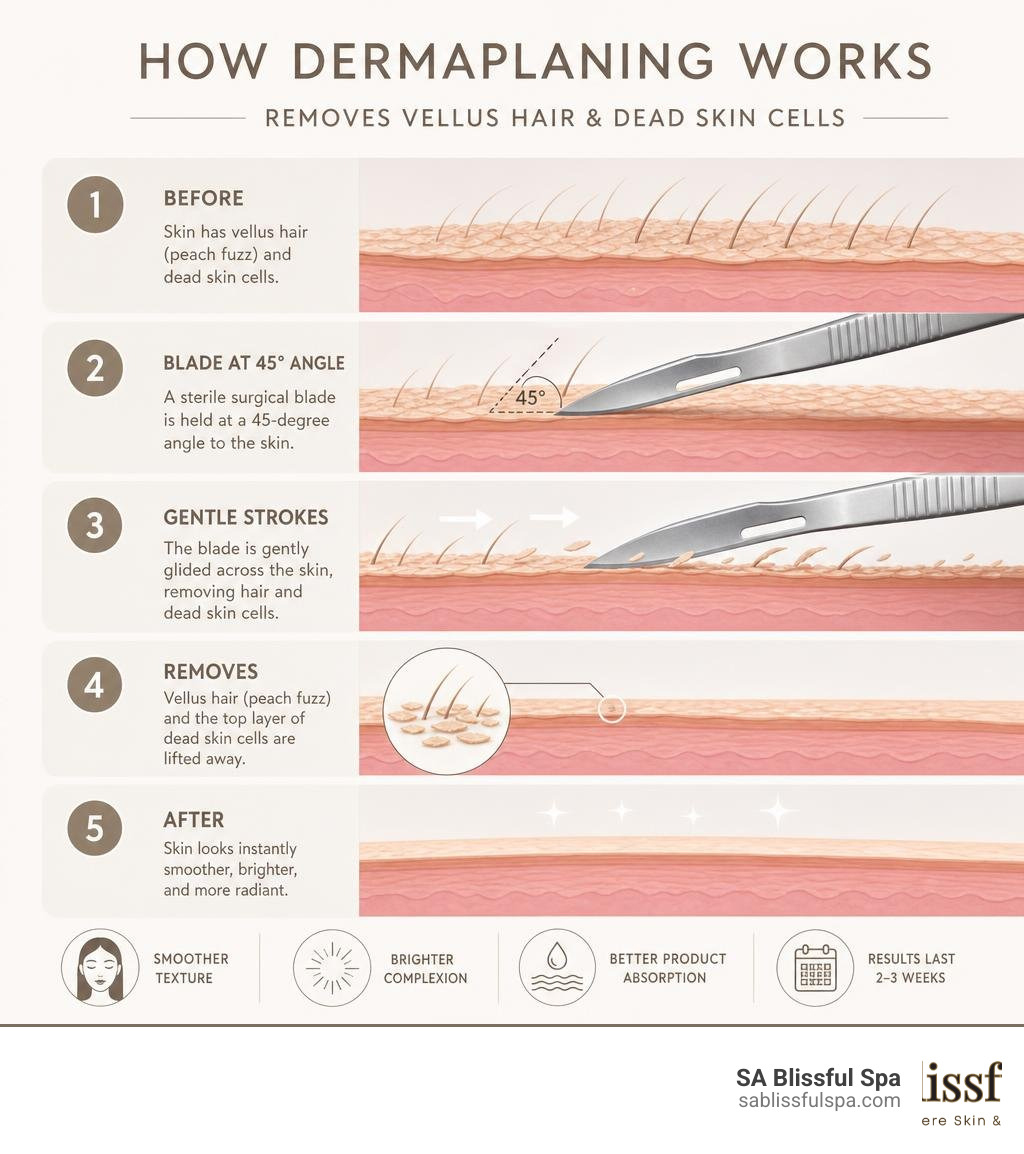
Dermaplaning removes hair from the surface of your face — specifically the fine, soft "peach fuzz" known as vellus hair — along with a layer of dead skin cells, in a single treatment.
Here's the quick answer if that's all you need:
- What it removes: Vellus hair (peach fuzz) and dead skin cells from the outermost skin layer
- How: A sterile surgical blade is held at a 45-degree angle and gently scraped across the skin
- Is it permanent? No — hair grows back in about 2-3 weeks, at the same thickness and color
- Does hair grow back thicker? No — this is a myth. Cutting hair at the surface does not affect the follicle
- Who is it for? Most skin types, except those with active acne, rosacea, eczema, or psoriasis
- Main bonus: Skin looks brighter, feels smoother, and absorbs skincare products better
But if you're wondering whether it's right for your skin, how it compares to waxing or shaving, or what to expect before and after — keep reading.
I'm Saloni Bhandari, licensed esthetician and founder of SA Blissful Spa in Burlington, MA, and I've performed countless dermaplaning treatments on clients who were curious — and sometimes nervous — about Dermaplaning removes hair claims they'd seen online. In this guide, I'll walk you through exactly how it works, who it's best for, and how to get the most out of your treatment.
Dermaplaning removes hair vocabulary:
- Dermaplaning for sensitive skin
- best dermaplaning technique
- what oil to use for dermaplaning at home
How Dermaplaning Removes Hair and Exfoliates the Skin
To understand why this treatment is so popular, we have to look at what is happening at the cellular level. Our skin is constantly regenerating, pushing new cells to the surface. The outermost layer of your skin, called the stratum corneum, is made up of flat, dead skin cells. Over time, these dead cells pile up, trapping oils, dirt, and those fine, light facial hairs we call "peach fuzz" or vellus hair.
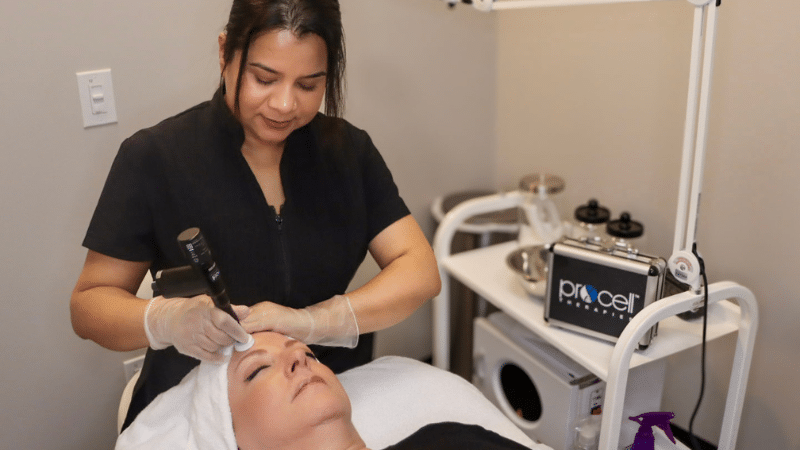
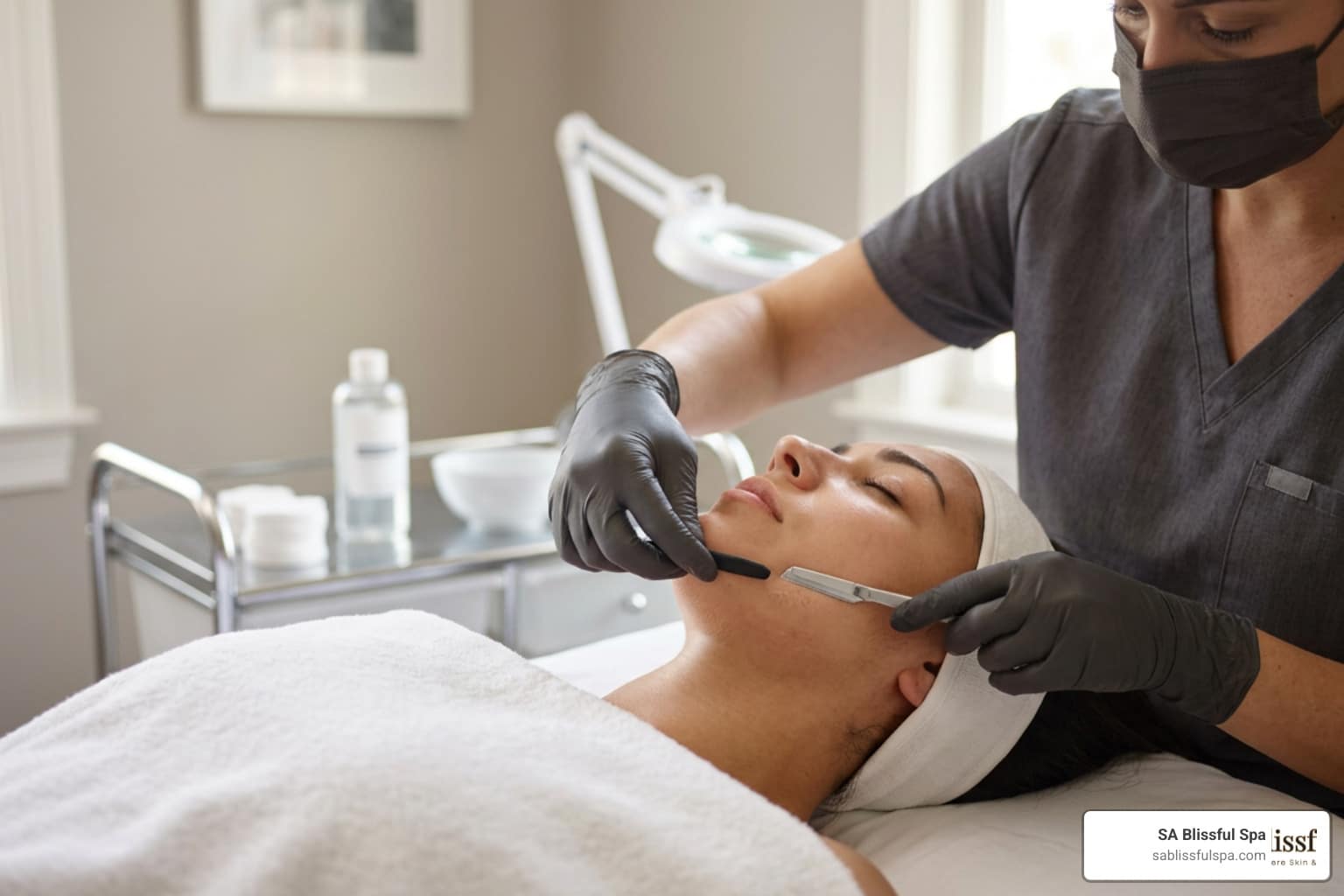
When we perform a professional treatment, we use a sterile, surgical-grade scalpel. By holding the skin taut and gliding the blade at a precise 45-degree angle, we perform a deep physical exfoliation. This process sweeps away the stratum corneum and skims off the vellus hair in one clean motion.
By clearing away this physical barrier, we speed up the appearance of cellular turnover, instantly revealing the fresh, healthy skin cells underneath. If you are new to the concept, you might want to read our breakdown on What is Dermaplaning to get comfortable with the basics. As noted by the Cleveland Clinic, it is a safe, minimally invasive cosmetic procedure that does wonders for dull complexions.
Why Dermaplaning Removes Hair Safely Without Changing Texture
Let's address the absolute biggest worry clients have when they visit us in Burlington: "Will my hair grow back thicker, darker, or coarser?"
The short, scientifically proven answer is: No.
This worry comes from a misunderstanding of follicle biology. The hair on your face is primarily vellus hair, which is fundamentally different from the thick terminal hair found on your scalp or underarms. The follicle determines the thickness, color, and growth rate of your hair from deep beneath the skin's surface.
When Dermaplaning removes hair, it only cuts the hair shaft at the surface of the skin. It does absolutely nothing to the hair bulb or the follicle itself.
The myth of "thicker regrowth" happens because of how the hair is cut. A natural hair has a tapered tip, making it feel soft. When a blade slices the hair, it leaves a blunt cut. As that blunt edge first emerges back through the skin, it may feel slightly stubbly or stiff to the touch for a day or two. However, this is temporary. As the hair grows out, it softens back to its original, fine texture. It is biologically impossible for dermaplaning to turn peach fuzz into thick, dark terminal hair.
How Dermaplaning Removes Hair Compared to Traditional Shaving
While dermaplaning and shaving both use a blade to cut hair at the skin surface, they are not the same thing.
Traditional shaving is done at home using a standard multi-blade razor, often on wet skin with shaving cream. Because the blades are angled differently and have built-in guards, they only cut the hair. Shaving does not provide a true, uniform exfoliation of the dead skin layer.
Professional dermaplaning utilizes a single, ultra-sharp surgical scalpel held at a strict 45-degree angle on dry, clean skin. This allows the blade to sit flush against the skin, removing up to three weeks' worth of dead skin cells alongside the vellus hair.
Here is a quick look at how professional dermaplaning stacks up against traditional face shaving and other popular skin treatments:
| Feature | Professional Dermaplaning | Traditional Face Shaving | Professional Chemical Peels |
|---|---|---|---|
| Primary Goal | Exfoliation & Hair Removal | Hair Removal Only | Cellular Turnover & Pigment Correction |
| Tool Used | Sterile Surgical Scalpel (No Guard) | Multi-Blade Safety Razor | Clinical-Grade Acids |
| Skin State | Completely Dry | Wet (with Shaving Cream/Gel) | Cleaned and Prep-primed |
| Exfoliation Depth | Stratum Corneum (Deep Physical) | Very Superficial | Epidermal to Dermal (Chemical) |
| Vellus Hair Removal | Yes, extremely close | Yes, but less precise | No |
| Downtime | None (Mild pinkness for 1-2 hours) | None (Risk of razor burn) | 1 to 7 days depending on strength |
The Benefits of Dermaplaning for Hair Removal and Skin Appearance
Why do so many of our clients from local towns like Lexington, Billerica, and Woburn keep coming back for this service? Because the results are instant and multi-layered.
Here is what you can expect when Dermaplaning removes hair and dead skin from your face:
- Flawless Makeup Application: Have you ever noticed how foundation can cling to the tiny hairs on your cheeks or jawline, making it look cakey? Once the peach fuzz and dry patches are gone, your makeup glides on like silk.
- Deeper Product Absorption: Your expensive serums and moisturizers no longer have to fight through a thick barrier of dead skin and hair. They penetrate directly into the skin, making your daily skincare routine much more effective.
- Smoother Skin Texture and Tone: By removing the rough outer layer, your skin immediately feels incredibly soft. It also helps to soften the appearance of fine lines and superficial acne scars over time.
- Natural, Radiant Glow: Dead skin cells reflect light unevenly, making your face look tired or dull. Removing them allows light to bounce off your skin naturally, giving you an instant, healthy glow.
If you want to dive deeper into what makes this treatment a game-changer, check out our Dermaplaning Near Me Complete Guide.
Who is a Good Candidate for Dermaplaning?
Dermaplaning is fantastic because it is safe for almost all skin types and tones. Unlike some laser treatments or deep chemical peels, there is no risk of hyperpigmentation on deeper skin tones. It is also an excellent option for pregnant or lactating women who want deep exfoliation but need to avoid chemical exfoliating acids.
However, it is not for everyone. You should skip dermaplaning if you have:
- Active, Inflamed Acne: Gliding a sharp blade over active breakouts can nick the blemishes, spread bacteria, and worsen your acne.
- Inflammatory Skin Conditions: If you are currently experiencing a flare-up of eczema, psoriasis, or rosacea on your face, mechanical exfoliation will only cause further irritation.
- Sunburned or Broken Skin: Your skin barrier is already compromised and needs time to heal.
For those with sensitive skin who are still curious, we highly recommend reading The Sensitive Skin Survival Guide to Dermaplaning to learn how to keep your skin happy and calm.
Professional vs. At-Home Dermaplaning: Safety, Tools, and Costs
With the rise of social media beauty trends, at-home dermaplaning has exploded in popularity. While it is entirely possible to do a light maintenance shave at home, there are massive differences in safety, results, and tools.
Professionals use a specialized surgical scalpel (often referred to as a dermatome tool) that is incredibly sharp and has no safety guard. This allows us to get a perfectly clean, flush scrape. At-home tools, like drugstore plastic eyebrow razors, have built-in safety guards. These guards prevent you from cutting yourself, but they also prevent the blade from getting a close shave or providing any real exfoliation.
There is also the risk of infection. At-home users often reuse blades, which can harbor bacteria and cause breakouts or infections. In a professional spa setting, every single blade is single-use, sterile, and disposed of immediately after your session.
When looking at pricing, professional sessions vary. Based on general internet data, the average cost for a professional dermaplaning session ranges from $75 to $250+ per treatment, depending on your location and whether it is paired with a clinical facial or chemical peel.
Please note: These are average costs based on general internet data and do not represent the actual pricing at SA Blissful Spa. For our official local pricing, you can check our menu directly. To understand more about what goes into these rates, browse the Dermaplaning Near Me Cost Guide.
If you are considering trying it yourself first, the Cleveland Clinic offers a wonderful guide on how at-home methods work and what safety limits you should keep in mind.
Best Practices for At-Home Dermaplaning
If you do choose to maintain your skin between professional visits, safety is key.
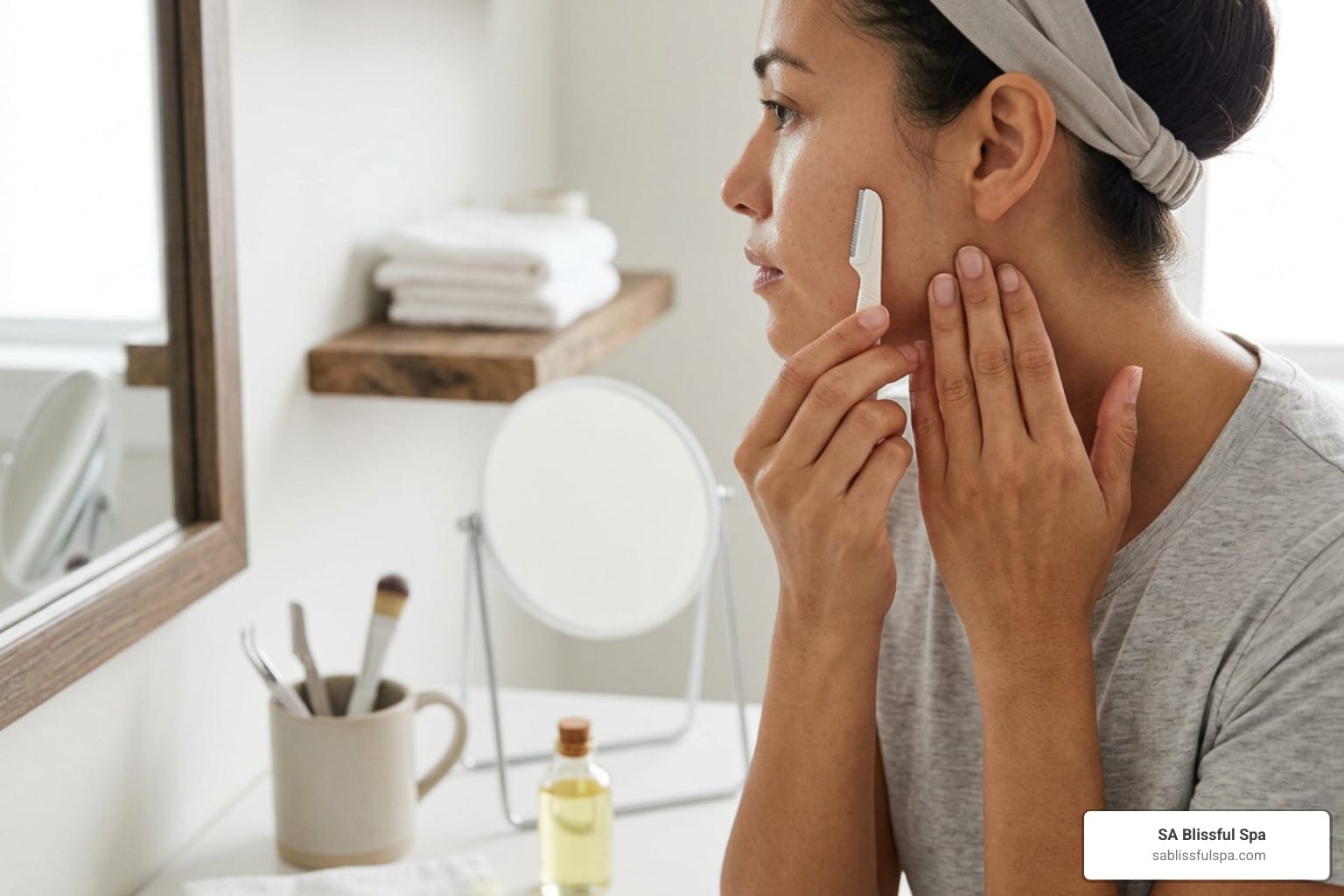
- Start with Clean, Dry Skin: Never dermaplane on a face that has makeup, dirt, or active skincare products on it. Wash with a gentle cleanser and let your skin dry completely.
- Use a Fresh, Sterile Blade: Never reuse an old blade. Keep a stash of single-use facial razors and throw them away after one use.
- Hold the Skin Taut: Use your non-dominant hand to pull your skin tight. Hold the blade at a 45-degree angle with your dominant hand and use short, light, downward strokes. Never press hard.
- Avoid Sensitive Areas: Stay away from your eyelids, lips, and any active pimples or moles.
For a complete step-by-step walkthrough on avoiding common DIY disasters, read our guides on Smooth Moves: Our Guide to the Best Dermaplaning at Home and How to Dermaplane at Home Without Regretting Your Life Choices.
Preparing for and Caring for Your Skin After Dermaplaning
To ensure your skin stays glowing and irritation-free, proper prep and aftercare are essential.
Before Your Appointment:
- Avoid exfoliating products (like glycolic acid, salicylic acid, or scrubs) for 3 to 5 days.
- Stop using retinol or retinoids at least 3 days prior.
- Avoid direct, heavy sun exposure (no sunburns!).
After Your Appointment:
Your freshly exfoliated skin will be sensitive for about 3 days to a week.
- Sun Protection is Mandatory: Your newly exposed skin cells are highly vulnerable to UV damage. Apply a broad-spectrum SPF 30+ daily.
- Keep it Hydrated: Use gentle, hydrating serums (like hyaluronic acid) and a rich moisturizer to support your skin barrier.
- Skip the Actives: Avoid retinols, vitamin C, and exfoliating acids for at least 48 hours.
- Avoid Heat and Sweat: Skip the sauna, steam room, and heavy workouts for 24 hours to prevent sweat from irritating your open pores.
For more details on clinical safety and what to expect during the healing phase, you can read WebMD's Guide to Dermaplaning.
Frequently Asked Questions about Dermaplaning
How often can you safely dermaplane?
For best results, we recommend scheduling a professional dermaplaning treatment every 3 to 4 weeks. This timeline aligns perfectly with your skin's natural 28-day cellular regeneration cycle. Dermaplaning more frequently than this can over-exfoliate your skin, leading to redness, dryness, and a compromised skin barrier.
How does dermaplaning compare to other hair removal methods for women over 40?
As we age, hormonal shifts can lead to an increase in vellus facial hair, while our natural cell turnover slows down, making our skin look a bit dull.
Other hair removal options like waxing or threading can be painful and can sometimes cause skin lifting or tearing on mature, thin skin. Shaving only removes the hair, leaving the dead skin behind. Dermaplaning removes hair while simultaneously removing that dull, dead layer of skin, making it the absolute gold standard for women over 40 who want a smoother, more youthful complexion without harsh chemicals or painful pulling.
What are the risks and side effects of dermaplaning?
Dermaplaning is extremely safe when performed by a licensed professional. However, minor side effects can include temporary redness or a slight tingling sensation that usually fades within a few hours.
If performed incorrectly (such as using a dull blade at home or pressing too hard), risks include minor nicks, skin irritation, bacterial infection, or superficial scarring. This is why we always emphasize seeing a trained esthetician for the deep, scalpel-based treatment.
Conclusion
If you are tired of dealing with peach fuzz and want to experience the smoothest, most radiant skin of your life, professional dermaplaning is the answer.
At SA Blissful Spa in Burlington, MA, we specialize in personalized, luxurious skincare treatments designed to make you look and feel your best. Whether you live right here in Burlington or are visiting us from neighboring towns like Arlington, Bedford, Winchester, or Stoneham, we are here to help you achieve your ultimate skin goals.
Ready to ditch the peach fuzz and get that signature glow? Book a Professional Dermaplaning Session with us today!