Is Dermaplaning Safe for Sensitive Skin? Here's the Short Answer
Dermaplaning for sensitive skin is generally safe — but only when done by a trained professional on calm, non-inflamed skin.
Here's what you need to know at a glance:
| Question | Quick Answer |
|---|---|
| Is it safe for sensitive skin? | Yes, when performed by a licensed professional |
| Does it use chemicals or acids? | No — it's a physical, blade-only exfoliation |
| Who should avoid it? | Active acne, eczema flares, rosacea flares, open wounds |
| How often? | Every 4–6 weeks for sensitive skin |
| Is at-home dermaplaning safe? | Not recommended for sensitive skin types |
| What makes it gentle? | No harsh chemicals, no granular friction, controlled pressure |
If your skin stings easily, flushes from product ingredients, or reacts to weather changes, you likely have sensitive skin — and that raises fair questions about any exfoliation treatment. The good news is that dermaplaning, done correctly, skips the irritants that usually cause problems for reactive skin: no acids, no abrasive particles, no heat.
But "done correctly" is the key phrase. Technique, timing, and your skin's current condition all determine whether you leave glowing — or irritated.
This guide walks you through everything: how the treatment works, when it's safe, what to do before and after, and how to know if it's right for your skin right now.
I'm Saloni Bhandari, licensed esthetician and founder of SA Blissful Spa in Burlington, MA, and I've worked with many clients navigating dermaplaning for sensitive skin — helping them get real results without compromising their skin barrier. In the sections below, I'll share exactly what I've seen work, what to watch out for, and how to approach this treatment safely.
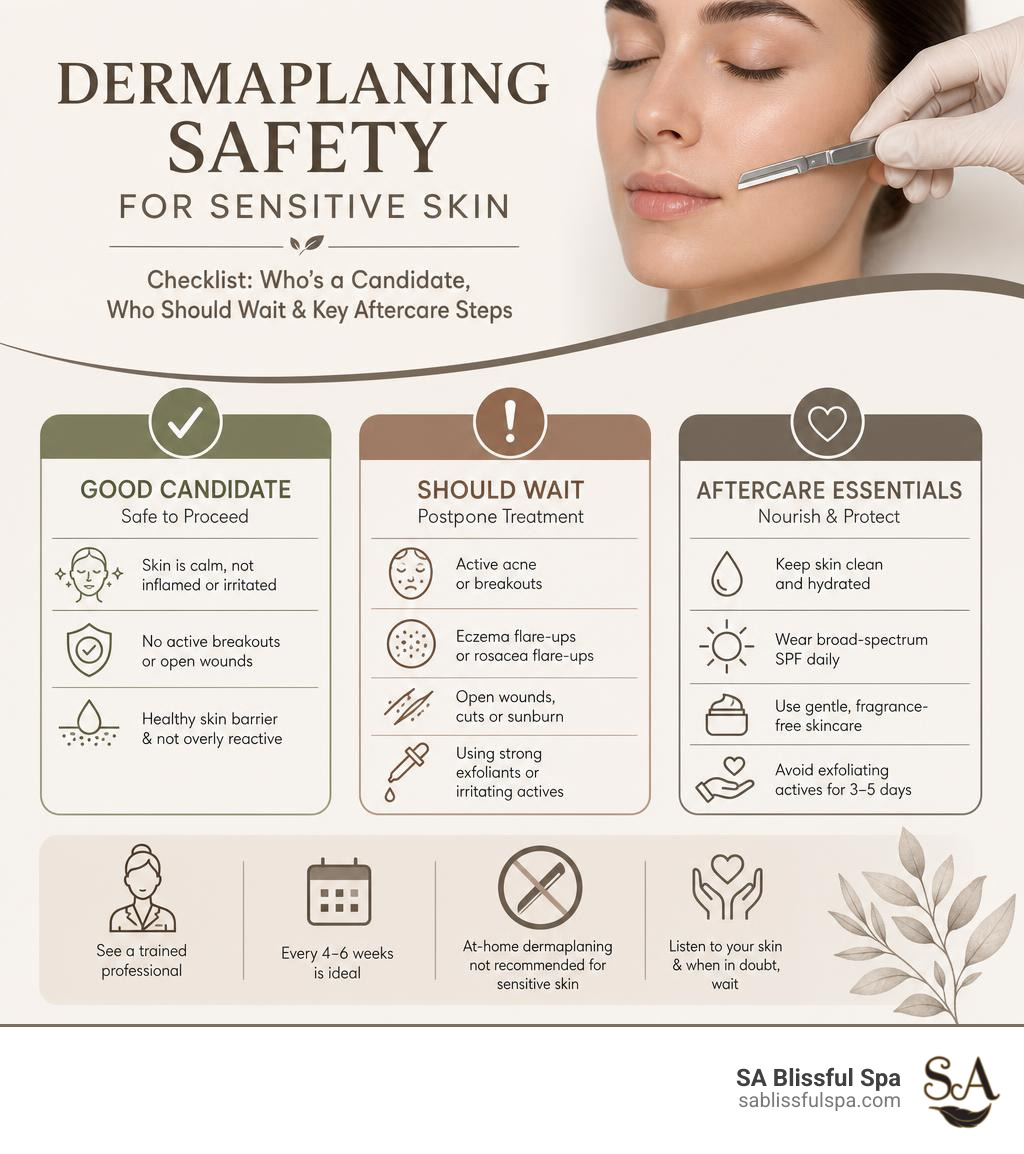
Dermaplaning for sensitive skin basics:
Dermaplaning for sensitive skin: what it is, how it works, and why it can be gentle
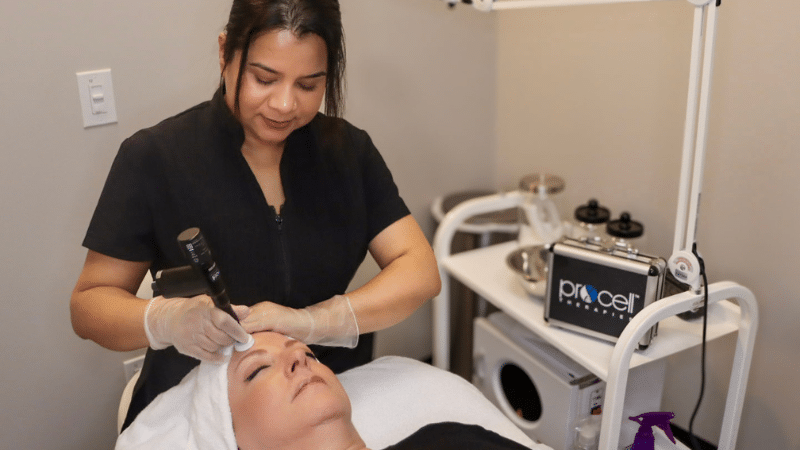
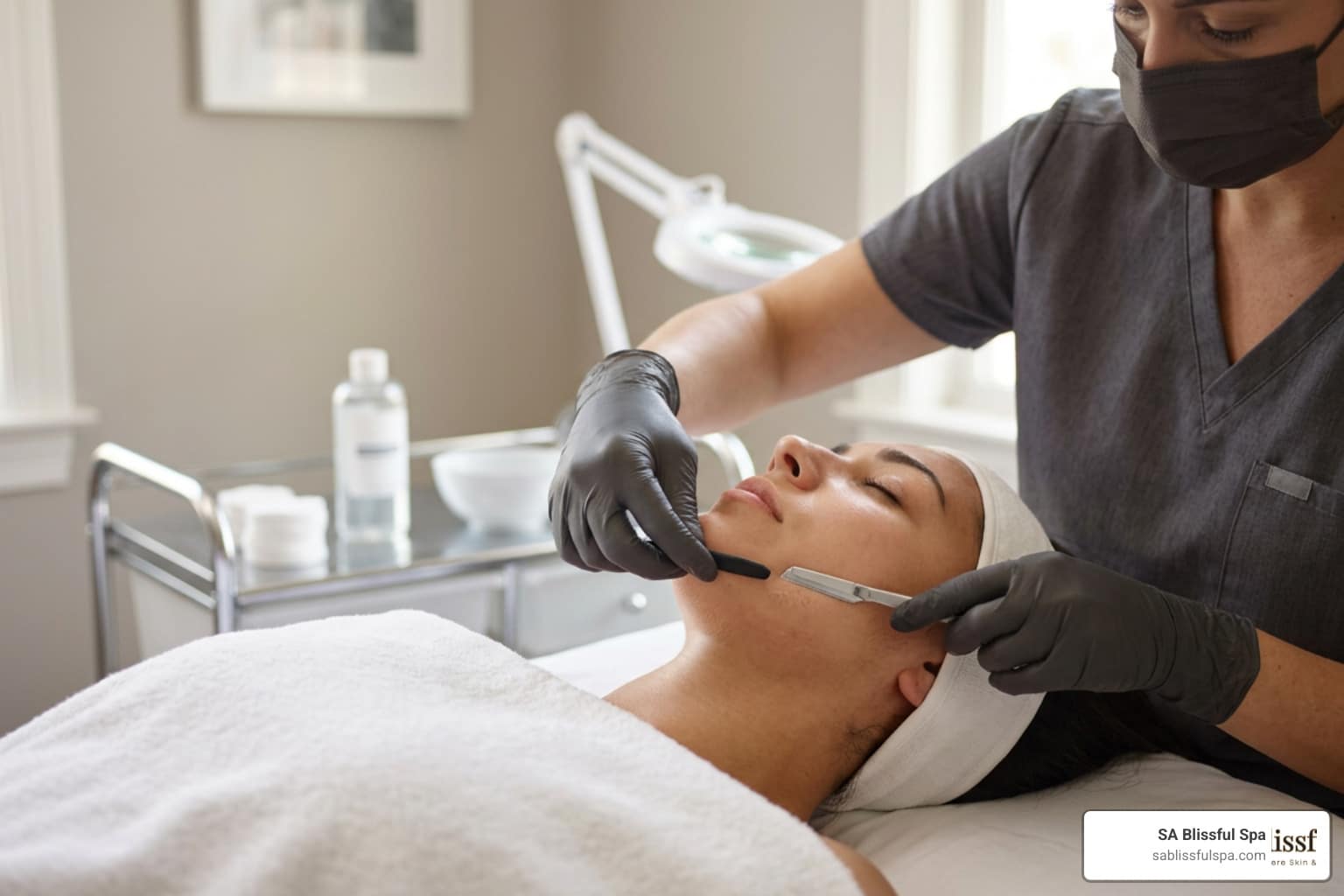
At its core, dermaplaning is a physical exfoliation method. A licensed skincare professional uses a sterile, medical-grade surgical blade held at a precise 45-degree angle. By making short, light strokes across the face, the blade gently scrapes away dead skin buildup and fine vellus hair (the soft "peach fuzz" we all have).
Unlike other clinical resurfacing options, dermaplaning uses no harsh exfoliating acids, no chemical solutions, and no heat. It is a surface-level, mechanical treatment that takes about 30 to 45 minutes. Because there is minimal downtime, you can walk out of your session with instant smoothness and a noticeable glow.
For those with reactive skin, this barrier-conscious technique is incredibly appealing. It physically lifts away the dull, flaky top layer of skin without triggering the deep, chemical-induced inflammation that often comes with peels. Plus, removing that layer of peach fuzz means your daily skincare products absorb much better, and your makeup glides on flawlessly without clinging to dry patches.

If you want to explore this treatment further, you can read our Dermaplaning service details to see how we structure our sessions.
What happens during a dermaplaning session
When you come in for a professional session, we don’t just dive in with the blade. The process is carefully calibrated to protect sensitive skin:
- Skin Cleansing: We start with a thorough, ultra-gentle cleanse to remove surface oils, makeup, and dirt. The skin must be completely clean and dry before the procedure begins.
- Skin Analysis: We inspect your skin under magnification to check for active breakouts, rashes, or areas of compromised barrier health.
- The Procedure: Holding your skin taut with one hand, we glide the sterile blade across the skin using light pressure and controlled, downward strokes. We perform continuous comfort checks to ensure your skin feels fine.
- Calming Aftercare: Once the physical exfoliation is complete, we apply a soothing, fragrance-free calming serum (often rich in hyaluronic acid), followed by a restorative moisturizer and a broad-spectrum mineral SPF.
The sensation is entirely painless; most clients describe it as a light scraping or brushing feeling against the face.
Why dermaplaning may suit sensitive skin better than harsh exfoliation
If you have sensitive skin, traditional physical scrubs with gritty particles (like walnut shells or sugar) can create microtears in your skin barrier. Likewise, chemical peels can cause unpredictable redness, stinging, and peeling.
Dermaplaning is a controlled manual exfoliation. Because we can see exactly how your skin reacts in real-time, we can adjust our speed and pressure instantly. It provides a reliable glow boost and softer texture without chemical exposure, making it an excellent alternative for those who struggle with traditional exfoliation methods. You can learn more about how it compares to other options in our guide to smooth skin secrets and everything about dermaplaning.
Benefits sensitive skin can notice after dermaplaning
- Brighter, More Even Tone: Removing the dead skin buildup immediately reduces dullness.
- Smoother Skin Texture: Dry, flaky patches are instantly smoothed away.
- Improved Product Absorption: Your serums and moisturizers won't get trapped by dead cells and peach fuzz, allowing them to hydrate your skin more deeply.
- Flawless Makeup Finish: Foundations and powders sit flat on the skin rather than clinging to fine facial hairs.
- No Hair Regrowth Myths: Rest assured, shaving or dermaplaning does not cause your vellus hair to grow back thicker, darker, or coarser.
Safety checklist: when dermaplaning is safe, when to wait, and what can go wrong
While dermaplaning for sensitive skin is highly effective, it requires a safety-first mindset. Before booking, we always perform a thorough skin history consultation and ask about any medications you are taking.
When to avoid dermaplaning with sensitive skin
You should postpone or entirely avoid a dermaplaning treatment if you are experiencing any of the following:
- Active acne or cystic acne breakouts (sliding a surgical blade over active blemishes can nick them, spread bacteria, and worsen inflammation)
- Eczema, psoriasis, or rosacea flare-ups
- Sunburn or windburn
- Open wounds, rashes, or broken skin
- Freshly waxed facial skin (wait at least a week)
- Recent chemical peels or aggressive clinical exfoliation
- Use of isotretinoin (Accutane) within the last 6 months
If your skin barrier is currently compromised, it is always best to wait until your skin is calm and healed before scheduling a session.
Risks and side effects to understand before booking
Even with a professional touch, sensitive skin can experience temporary side effects:
- Temporary Redness: A light rosy flush is normal and typically subsides within an hour or two.
- Mild Stinging or Tightness: Freshly exfoliated skin may feel slightly tight, similar to a mild windburn.
- Increased Sun Sensitivity: Because the protective outer layer of dead cells has been removed, your skin is highly vulnerable to UV damage.
- Breakouts: If the tools are not perfectly sterile, or if the skin is touched frequently post-treatment, minor breakouts can occur.
How oilplaning changes the experience for dry, sensitive, or mature skin
For clients with exceptionally dry, mature, or highly reactive skin, we often recommend a variation known as oilplaning.
Instead of performing the treatment on completely dry skin, we apply a thin layer of a gentle, non-comedogenic facial oil (such as squalane, jojoba, or argan oil) first. This oil acts as a protective cushion, reducing friction and blade drag. It minimizes the risk of tiny nicks and leaves dry skin feeling deeply nourished.
However, if you have oily or acne-prone skin, traditional dry dermaplaning remains the safer choice to prevent clogged pores.
Before-and-after care that protects the sensitive skin barrier
Your post-treatment routine is just as important as the procedure itself. Because your skin will behave like "new skin," you must focus on barrier repair, deep hydration, and strict sun protection.

To maximize your results and keep irritation at bay, you might consider pairing your treatment with a customized facial. Learn more about booking a facial with dermaplaning near me to see how we blend these soothing steps.
Pre-treatment precautions for sensitive skin
To prepare your skin for a safe session, follow these guidelines starting 3 to 7 days before your appointment:
- Stop Active Ingredients: Pause the use of retinoids, AHAs, BHAs, salicylic acid, and strong Vitamin C serums.
- Avoid Physical Scrubs: Skip any manual exfoliating brushes or gritty scrubs.
- No Waxing or Hair Removal: Avoid waxing, threading, or chemical depilatories on the face for at least a week prior.
- Stay Hydrated: Drink plenty of water and keep your skin well-moisturized.
- Arrive Clean: Come to your appointment with clean, makeup-free skin if possible.
Aftercare for the first 24–72 hours
During the immediate recovery window, treat your skin with extra care:
- Wash Gently: Use a fragrance-free, non-foaming cleanser and cool water.
- Hydrate Deeply: Apply a soothing serum containing hyaluronic acid or ceramides, followed by a basic, bland moisturizer.
- Protect from the Sun: Apply a broad-spectrum mineral sunscreen of SPF 30 or higher daily. Reapply every two hours if you are outdoors.
- Skip the Makeup: Avoid wearing makeup for at least 24 hours to let your skin breathe and prevent clogged pores.
- Avoid Heat and Sweat: Skip hot showers, steam rooms, saunas, and heavy, sweat-inducing workouts for the first 24 hours.
What to avoid for 3–7 days after dermaplaning
To keep your skin barrier intact, avoid these common irritants for up to a week post-treatment:
- Retinoids, glycolic acid, lactic acid, and salicylic acid
- Astringents or alcohol-based toners
- Direct, unprotected sun exposure and tanning beds
- Facial scrubs or rough washcloths
- Trying out brand-new, complex skincare products (stick to your trusted, simple basics)
Frequency, professional standards, and at-home dermaplaning decisions
To maintain your smooth texture without over-exfoliating, you must space out your appointments correctly. Your skin barrier operates on a natural renewal cycle, and stripping it too frequently will trigger the very sensitivity and redness you are trying to avoid.
How often should Dermaplaning for sensitive skin be scheduled?
While those with resilient skin might get treated every 3 to 4 weeks, we recommend that clients with sensitive skin wait 4 to 6 weeks between sessions. This extended window gives your protective barrier plenty of time to fully recover. If you are experiencing a seasonal allergy flare-up or extreme winter dryness, it is always wise to delay your next appointment until your skin settles.
What to look for in a professional dermaplaning provider
When seeking a provider in our local Massachusetts communities — whether you are looking near Arlington, Lexington, Concord, or right here in Burlington — make sure you choose a licensed esthetician who prioritizes skin health.
When researching local options, you can consult our Dermaplaning Near Me Cost Guide to understand what to expect. On average, based on general internet data across the region, a professional dermaplaning session can range anywhere from $75 to over $300 depending on whether it is booked as a standalone treatment or integrated into a medical-grade facial package. (Please note that these are average regional costs and do not reflect the specific pricing structure at SA Blissful Spa).
To ensure your safety, ask your provider these questions before booking:
- Are you licensed and specifically certified in dermaplaning?
- Do you use single-use, sterile medical scalpels?
- How do you modify your technique for reactive or sensitive skin?
- What calming backbar products do you apply immediately after the blade work?
For a deeper look at finding the right practitioner, browse our guide on the best facial dermaplaning near me.
Can dermaplaning be done at home if you have sensitive skin?
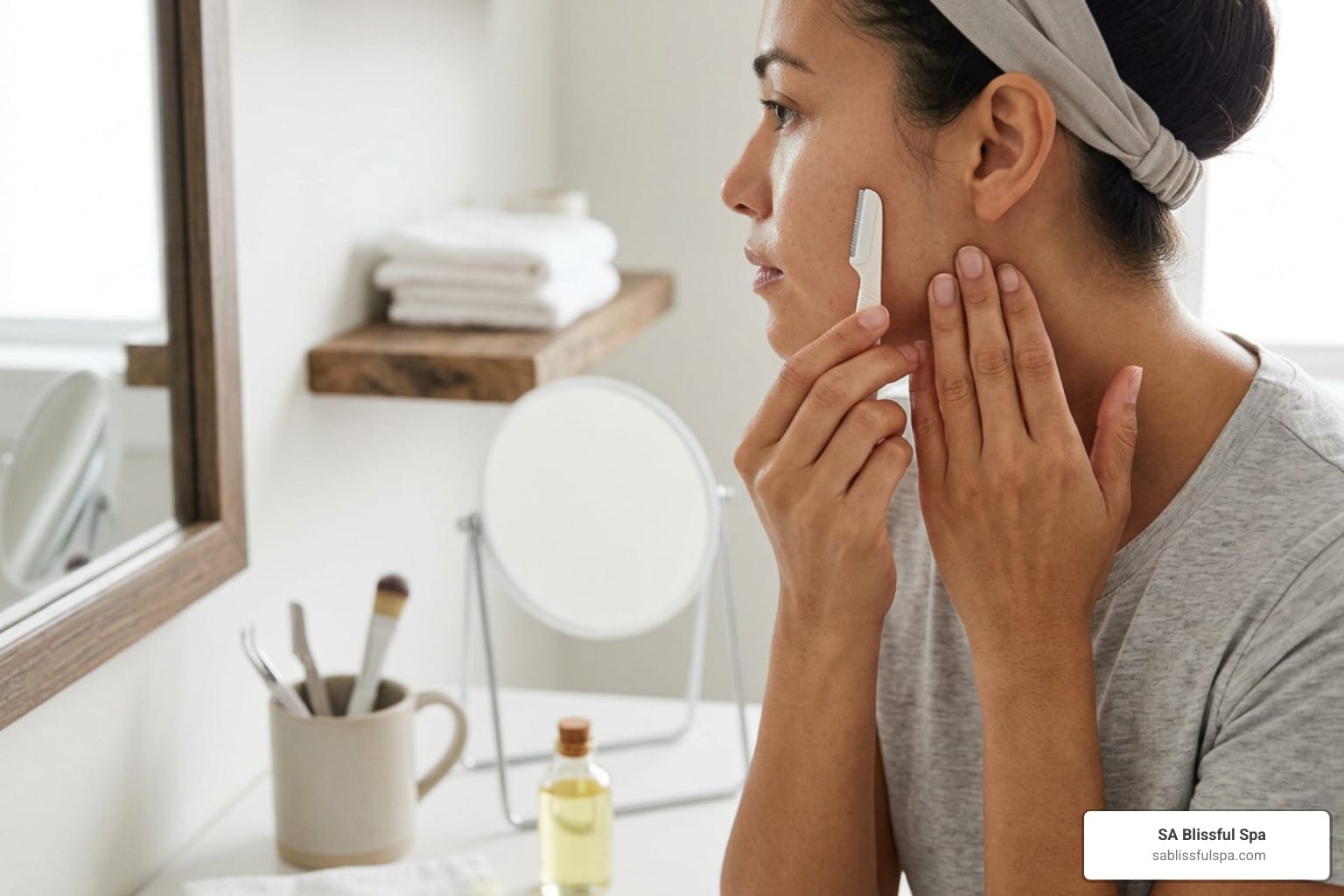
We strongly advise against DIY dermaplaning if you have sensitive skin.
At-home plastic "dermaplaning" guards are nowhere near as sharp as medical-grade surgical steel. Because they are duller, they require you to apply more pressure and slide over the same area multiple times. This repetitive friction easily causes microtears, razor burn, and severe barrier disruption. Furthermore, performing this at home increases the risk of spreading bacteria, leading to breakouts or minor skin infections. To keep your reactive skin safe, leave the blades to the professionals.
Dermaplaning compared with common exfoliation habits for sensitive skin
Choosing the right exfoliation method can feel overwhelming. To help you visualize how dermaplaning fits into your routine compared to other common habits, we've put together this quick comparison table:
| Exfoliation Method | Friction Level | Chemical Risk | Redness/Peeling Risk | Best Suited For |
|---|---|---|---|---|
| Dermaplaning | Very Low (Precise, single blade gliding) | None (Mechanical only) | Low (Slight temporary pinkness) | Dullness, peach fuzz, mild sensitivity |
| At-Home Scrubs | High (Gritty, abrasive particles) | Low | High (Microtears, irritation) | Oily, non-sensitive skin types |
| Active Acids (AHAs/BHAs) | None (Chemical action) | High | Medium to High (Stinging, peeling) | Acne, deep hyperpigmentation |
| Basic Facial Shaving | Low to Medium (Duller safety razors) | None | Medium (Razor burn, uneven results) | Simple hair removal |
Dermaplaning vs scrubs and strong active ingredients
Granular scrubs rely on uneven friction, which can easily sensitize your skin. Chemical exfoliants (like glycolic or salicylic acids) can be highly effective, but they carry a high risk of chemical burns or peeling if used incorrectly.
Dermaplaning offers a chemical-free, controlled alternative. Because it only removes the very outermost layer of dead cells, it avoids the deep irritation associated with strong chemical peels. Just remember to pause your active retinoids and acids for a few days before and after your session, and reintroduce them slowly once your skin feels completely normal.
Dermaplaning vs basic facial shaving
While both methods remove peach fuzz, professional dermaplaning is a true clinical exfoliation treatment. We use a sterile, surgical-grade blade held at a precise angle to scrape away deeply embedded dead skin cells alongside the hair.
Basic facial shaving with drugstore beauty razors only shears off the hair at the surface level, offering very little exfoliative benefit while carrying a higher risk of razor burn and ingrown hairs due to duller blades.
When dermaplaning may not be the right choice right now
If your skin is currently experiencing a severe rosacea flare, an active eczema patch, open acne lesions, or extreme winter windburn, dermaplaning is not the right choice today. Your skin health comes first. In these cases, we recommend focusing entirely on barrier-repairing moisturizers and gentle, non-exfoliating facials until your skin has fully recovered.
Conclusion: your sensitive-skin dermaplaning game plan
Navigating dermaplaning for sensitive skin doesn't have to be stressful. By choosing a professional setting, keeping your skin calm, and following a strict barrier-first aftercare routine, you can enjoy all the benefits of a smoother, brighter, and hair-free complexion without the irritation.
At SA Blissful Spa in Burlington, MA, we specialize in personalized, skin-first consultations to ensure your delicate skin gets the exact care it deserves. If you're ready to experience a gentle, expert-led physical exfoliation, we invite you to explore our Dermaplaning CTA and book your consultation today.
Quick FAQs about Dermaplaning for sensitive skin
- Is it safe for sensitive skin? Yes, when performed by a licensed professional on calm, non-inflamed skin.
- Can I do it with active acne? No. We must avoid any areas with active, inflamed blemishes to prevent spreading bacteria.
- Will my hair grow back thicker? No. This is a common myth; vellus hair will grow back with the exact same soft texture and color.
- How often should I get it? We recommend every 4 to 6 weeks for sensitive skin types to allow for full barrier recovery.
- Can I wear makeup right after? We highly recommend waiting 24 hours to prevent irritation and clogged pores.
Final pre-booking checklist
Before scheduling your session, run through this quick checklist:
- My skin is currently calm, with no active rosacea, eczema, or acne flares.
- I have not used retinoids, AHAs, or BHAs for at least 3 to 5 days.
- I have a gentle, fragrance-free moisturizer and a mineral sunscreen ready for my post-care.
- I don't have any major outdoor events or heavy sun exposure planned for the next 72 hours.
- I am ready to let a licensed professional handle the blade for safe, beautiful results!