Is a Dermaplane Facial Near Me Worth It? Here's What You Need to Know First
If you've been searching for a dermaplane facial near me, here's a quick answer before we dive deeper:
Where to get a dermaplane facial locally:
- Licensed esthetician studios and day spas
- Medical spas (med spas) offering advanced skin treatments
- Dermatology offices with licensed estheticians on staff
- Wellness and beauty salons with certified skin care professionals
What to expect:
- A sterile surgical-grade blade gently removes dead skin cells and peach fuzz (vellus hair)
- Sessions typically run 30 to 75 minutes
- Zero downtime — you can return to your day immediately
- Results last around 3 to 4 weeks
- Average costs based on internet data range from as low as $25 as an add-on to $180 or more for a full multi-modality session
If you're a busy woman juggling work, life, and everything in between, you know how quickly your skin can start looking dull and tired. A dermaplane facial cuts through that in one session — removing the buildup of dead skin and fine facial hair that dulls your complexion and makes makeup look uneven.
It's one of the most searched skincare treatments right now, and for good reason: no chemicals, no downtime, and immediate visible results.
I'm Saloni Bhandari, licensed esthetician and founder of SA Blissful Spa in Burlington, MA, and I've helped countless clients find the right dermaplane facial near me solution for their unique skin goals. In the sections below, I'll walk you through everything you need to know — from how it works to what it costs and how to find a trusted provider.
Dermaplane facial near me word guide:
- Dermaplaning for sensitive skin
- best dermaplaning technique
- what oil to use for dermaplaning at home
What is a Dermaplane Facial and How Does It Work?
At its core, a dermaplane facial is a highly refined method of physical exfoliation. While we all love a good scrub or a gentle chemical peel, manual exfoliation with a sterile surgical scalpel offers a completely different level of precision.
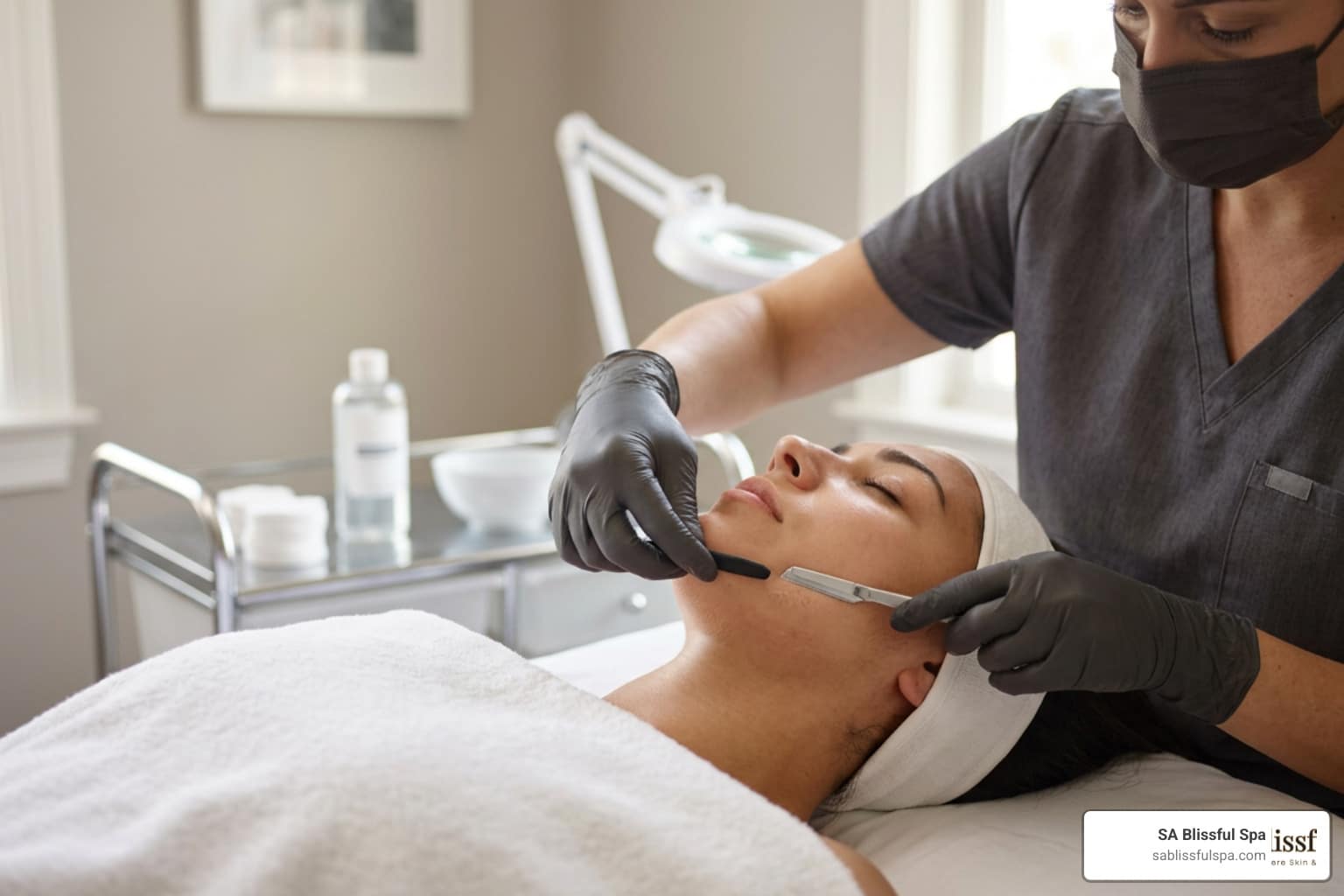
During the procedure, a licensed professional holds your skin taut and gently glides a sterile, single-use surgical blade at a precise 45-degree angle across your face. This action delicately sweeps away the outermost layer of dead skin cells—scientifically known as the stratum corneum—alongside the fine vellus hair, which most of us affectionately call "peach fuzz."
Unlike the terminal hair on our heads or underarms, vellus hair is thin, soft, and usually translucent. By removing this layer, we are essentially wiping away a microscopic blanket of debris that traps oil, dirt, and light, leaving your skin looking immediately brighter. To understand the foundational mechanics of this process, check out More info about dermaplaning basics.
To get the absolute best results, professional estheticians utilize specialized techniques. For instance, some prefer dry dermaplaning on clean, dry skin, while others swear by oil-planing, which uses a light facial oil to reduce friction and cushion the skin barrier. For a deeper dive into these methods, you can read about the ultimate dermaplaning technique.
The Science Behind Manual Exfoliation
Your skin is constantly working behind the scenes. In a healthy young adult, the skin cell turnover cycle takes about 28 to 30 days. As we age, however, this cycle slows down significantly, leaving older, duller cells sitting on the surface longer. This accumulation can make your complexion look flat, emphasize fine lines, and even clog pores.
By manually removing the stratum corneum, dermaplaning mimics a faster cell turnover cycle. This physical exfoliation signals the deeper layers of the skin to produce fresh, healthy new cells. Furthermore, removing this outer barrier can stimulate localized collagen production over time, helping to keep the skin firm and bouncy. For those interested in the medical and scientific backing of these procedures, you can explore the Scientific insights on aesthetic services offered by clinical professionals in Concord, MA.
Finding the Best Dermaplane Facial Near Me
When you begin searching for a dermaplane facial near me, it is crucial to remember that this is a highly skilled, technique-dependent treatment. After all, someone is holding a surgical blade to your face! You want to ensure you are booking with a licensed esthetician who has specific certification in dermaplaning.
During your search, look for providers who offer a comprehensive skin consultation before the blade ever touches your face. A great provider will assess your skin barrier, ask about your current skincare routine (especially your use of retinoids and exfoliating acids), and discuss your long-term skincare goals. If you are ready to start your local search, use this helpful Guide to finding dermaplaning in your area to locate reputable professionals near you.
The Benefits and Candidacy for Dermaplaning
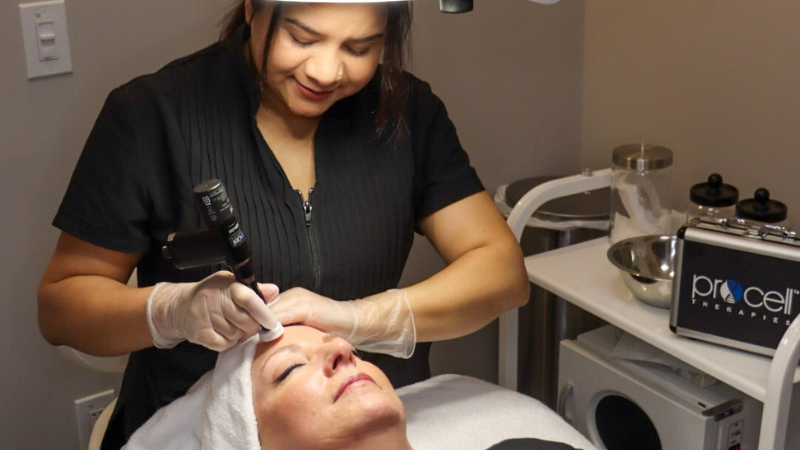
The benefits of dermaplaning go far beyond simply removing facial hair. While waking up to a hair-free face is incredibly satisfying, the true magic lies in how the treatment transforms your skin's texture and behavior.
First and foremost, dermaplaning acts as a "functional amplifier" for your entire skincare routine. When you apply expensive serums and moisturizers over a layer of dead skin and peach fuzz, much of the product gets trapped on the surface. Once that barrier is removed, your active ingredients can penetrate much deeper, giving you better value and faster results from your home care products.
Second, your makeup application will never be the same. Without peach fuzz and dry patches to cling to, liquid foundation and powder glide on like silk, creating a flawless, airbrushed finish. This is why dermaplaning is a favorite pre-event treatment for weddings, photoshoots, and special occasions across Massachusetts. Additionally, over time, regular sessions can help soften the appearance of fine lines, mild acne scars, and uneven skin tone by encouraging constant cellular renewal. To uncover more secrets to achieving a velvety complexion, check out how to Discover the secrets to smooth skin.
Who is a Good Candidate?
Dermaplaning is incredibly versatile and safe for almost all skin types. It is particularly beneficial for:
- Dry or Dehydrated Skin: It sweeps away the flaky patches that trap moisture.
- Mature Skin: It helps minimize the look of fine lines and boosts cellular renewal.
- Deeper Skin Tones: Unlike some lasers or deep chemical peels, dermaplaning carries virtually zero risk of post-inflammatory hyperpigmentation because it does not use heat or chemicals. For specialized tips on this topic, read about Dermaplaning for deeper skin tones.
- Pregnant or Nursing Women: Since it is a purely mechanical exfoliation, it is a fantastic alternative to chemical exfoliants that might be contraindicated during pregnancy.
Who Should Avoid Dermaplaning?
While it is a gentle treatment, there are a few situations where we must press pause. You should avoid dermaplaning if you currently have:
- Active Acne or Cystic Breakouts: Gliding a sharp blade over raised, inflamed blemishes can cut the lesions, spread bacteria, and lead to further breakouts or scarring.
- Severe Rosacea or Eczema: Skin with a highly compromised barrier can become incredibly irritated by physical scraping.
- Sunburn or Open Wounds: The skin must be fully healed before undergoing any form of exfoliation.
If you have highly reactive or easily irritated skin, don't worry—you can still enjoy the benefits of professional exfoliation with the right approach. Be sure to consult The sensitive skin survival guide to dermaplaning to learn how to keep your skin calm and happy.
What to Expect from a Dermaplane Facial Near Me
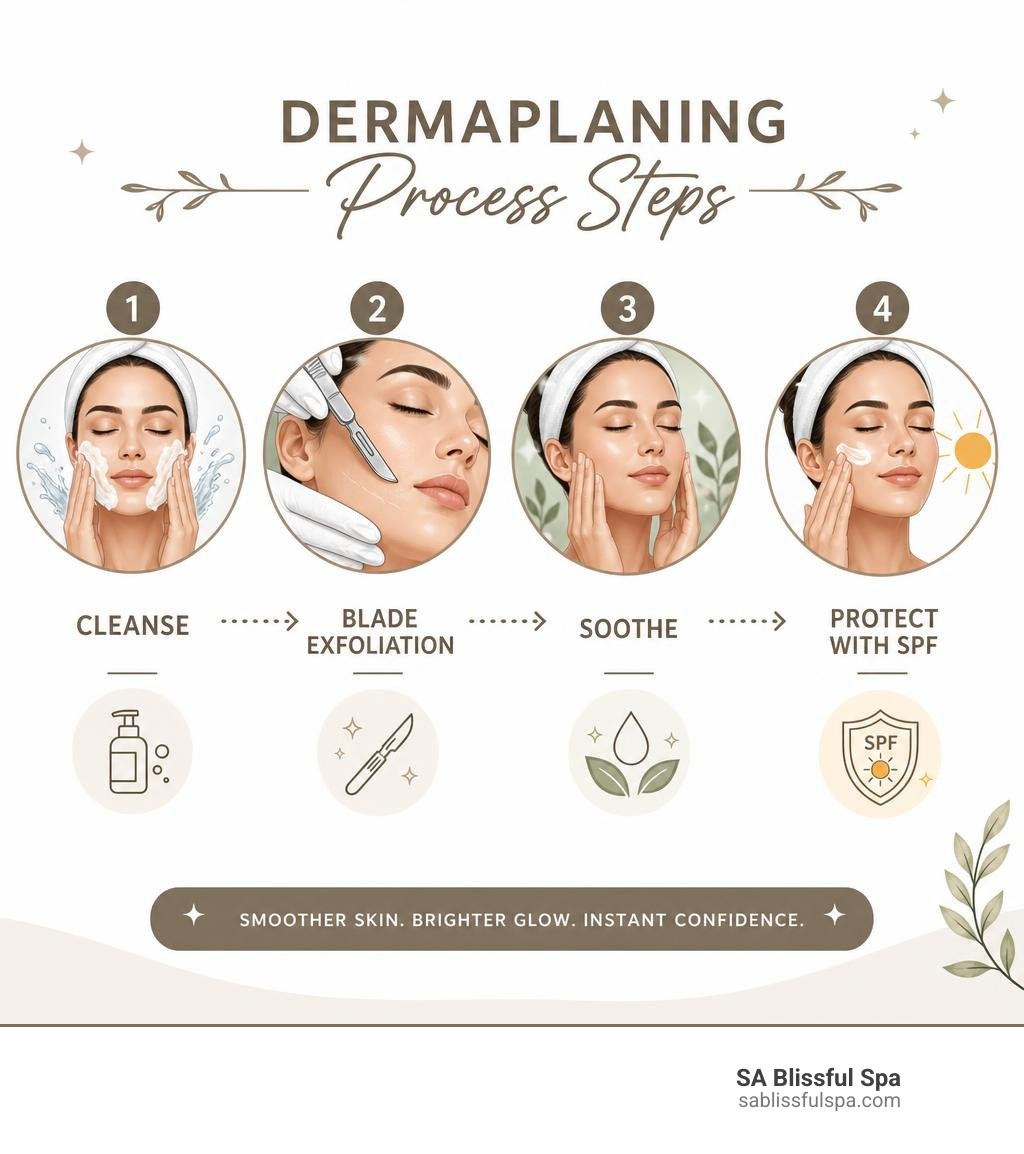
If you have booked your first session, you might be wondering exactly what happens once you lie down on the treatment table. A professional facial involving dermaplaning is a relaxing, multi-step ritual. Here is what a typical session looks like:
- Comprehensive Skin Assessment: Your esthetician will examine your skin under a magnifying lamp to ensure there are no active breakouts, open wounds, or areas of extreme sensitivity.
- Double Cleanse: The skin is thoroughly cleansed to remove makeup, oil, and environmental pollutants. A clean canvas is essential for a safe and effective treatment.
- Prep and Degrease: A gentle toner or prep solution is applied to ensure the skin is completely dry and free of surface oils (unless your esthetician is performing an oil-planing technique).
- The Dermaplaning Procedure: Using a light, feather-like touch, the esthetician will hold your skin taut with one hand and glide the sterile blade in short, upward strokes with the other. You will hear a soft whispering or brushing sound, but you won't feel any pain.
- Soothing Treatment or Mask: After the exfoliation is complete, your newly revealed skin is highly receptive to nutrients. Estheticians will often apply a soothing hydrojelly mask, a hydrating serum, or perform a calming massage.
- Hydration and Protection: The session finishes with a generous application of professional-grade hydrators, antioxidants, and a broad-spectrum SPF to protect your fresh skin.
To get a complete overview of the entire experience from start to finish, read through our complete guide to dermaplaning near you.
Pre-Treatment Preparation
To ensure your skin is in optimal condition for your appointment, there are a few simple preparation rules to follow:
- Pause Retinoids and Acids: Stop using over-the-counter retinol, glycolic acid, salicylic acid, and other strong active ingredients 3 to 5 days before your facial. If you use prescription retinoids, pause them 5 to 7 days prior.
- Avoid Sun Exposure: Do not arrive with a sunburn. Limit direct sun exposure and wear SPF daily for at least two weeks leading up to your session.
- Skip Other Hair Removal Methods: Avoid waxing, threading, or using depilatory creams on your face for at least one week before your treatment.
- Arrive Clean: Try to arrive with a clean, makeup-free face if possible, though your esthetician will always perform a thorough cleanse.
For more detailed preparation tips, check out our guide on How to prepare for your facial.
Post-Treatment Aftercare and Results
The beauty of a dermaplane facial is that there is zero clinical downtime. You might experience a very mild pinkness for an hour or two immediately following the treatment, but this quickly fades into a radiant, healthy glow.
However, because you have just removed your outermost protective layer of dead skin, your skin is temporarily more vulnerable to environmental damage. Proper aftercare is essential:
- Wear Sunscreen Daily: This is non-negotiable. Apply a broad-spectrum sunscreen of SPF 30 or higher every single day, and avoid direct, prolonged sun exposure for at least two weeks.
- Focus on Hydration: Use gentle, hydrating, and barrier-supporting ingredients like hyaluronic acid, ceramides, and squalane.
- Avoid Harsh Actives: Skip your retinoids, exfoliating acids, and physical scrubs for at least 48 to 72 hours post-treatment.
- Delay Makeup: If possible, wait at least 12 to 24 hours before applying makeup to give your skin barrier time to settle and prevent any potential irritation of the open hair follicles.
- Skip the Heat: Avoid saunas, steam rooms, hot showers, and intense workouts that cause heavy sweating for 24 hours.
By protecting your skin during its natural cell turnover cycle, you will prolong your glowing results. To learn more about what to expect as your skin heals, you can read about How long results last after professional exfoliation.
Cost, Frequency, and Common Myths
Whenever a beauty treatment gains widespread popularity, a few myths and questions are bound to arise. Let's break down the actual costs, the ideal frequency for maintaining your glow, and clear up the biggest misconceptions surrounding dermaplaning.
To help you understand how dermaplaning compares to other popular physical exfoliation methods, let's look at a quick comparison with microdermabrasion:
| Feature | Dermaplaning | Microdermabrasion |
|---|---|---|
| Primary Method | Sterile surgical blade (manual scraping) | Diamond tip or exfoliating crystals (suction) |
| Hair Removal | Yes (removes all vellus hair/peach fuzz) | No (does not remove facial hair) |
| Downtime | None (mild pinkness for 1-2 hours) | Minimal (mild redness or windburned feel) |
| Best For | Dullness, peach fuzz, dry skin, makeup prep | Congested pores, uneven texture, mild scarring |
| Sensitivity | Extremely gentle, great for sensitive skin | Can be intense for highly reactive skin |
How Much Does a Dermaplane Facial Near Me Cost?
When researching pricing, it is important to understand that costs can vary widely depending on your geographic location, the provider's level of expertise, and whether you are booking a quick "express" session or a luxurious, multi-modality facial.
Please note: The pricing listed below represents average market costs based on broad internet data and does not reflect the actual menu pricing for SA Blissful Spa.
Across the United States, average costs for dermaplaning range from $25 to $225+ per session.
- On the lower end, you will find quick dermaplane add-ons (where the exfoliation is added to a standard facial) ranging from $25 to $50.
- Standalone express sessions typically run between $55 and $99.
- Premium, comprehensive facials that combine dermaplaning with advanced modalities—such as custom hydrojelly masks, LED red light therapy, gua sha lymphatic drainage, or oxygen infusions—can range from $150 to $225 or more.
To help budget for your skincare routine, you can consult this helpful Dermaplaning cost guide for a deeper breakdown of industry pricing.
How Often Should You Get Dermaplaning?
Because dermaplaning works in harmony with your skin's natural regeneration process, we generally recommend scheduling your sessions every 3 to 4 weeks.
This timeline perfectly aligns with the average 30-day skin cell turnover cycle. Getting treated too frequently can over-exfoliate the skin, leading to a compromised skin barrier, redness, and irritation (turning "glass skin" into "raw skin"). Consistent monthly maintenance sessions are the sweet spot for keeping your complexion continuously bright, smooth, and hair-free. For a complete guide on structuring your skincare calendar, check out the Best facial dermaplaning guide.
Frequently Asked Questions about Dermaplaning
Does dermaplaning make hair grow back thicker or darker?
This is easily the number one concern we hear from clients, and we are happy to put this myth to rest once and for all: No, dermaplaning will not make your hair grow back thicker, darker, or coarser.
The hair on your face is vellus hair (peach fuzz), which is genetically and structurally different from the coarse terminal hair found on your scalp, underarms, or bikini area. The thickness, color, and growth rate of your hair are entirely determined by your genetics and hormones, not by mechanical removal at the surface.
When you shave or dermaplane, the blade cuts the hair at a flat angle at the surface of the skin. As the hair begins to grow back, the freshly cut edge can feel slightly blunt to the touch for the first few days. However, once it fully regrows, it will be just as soft, fine, and light as it was before your treatment.
Can I dermaplane at home?
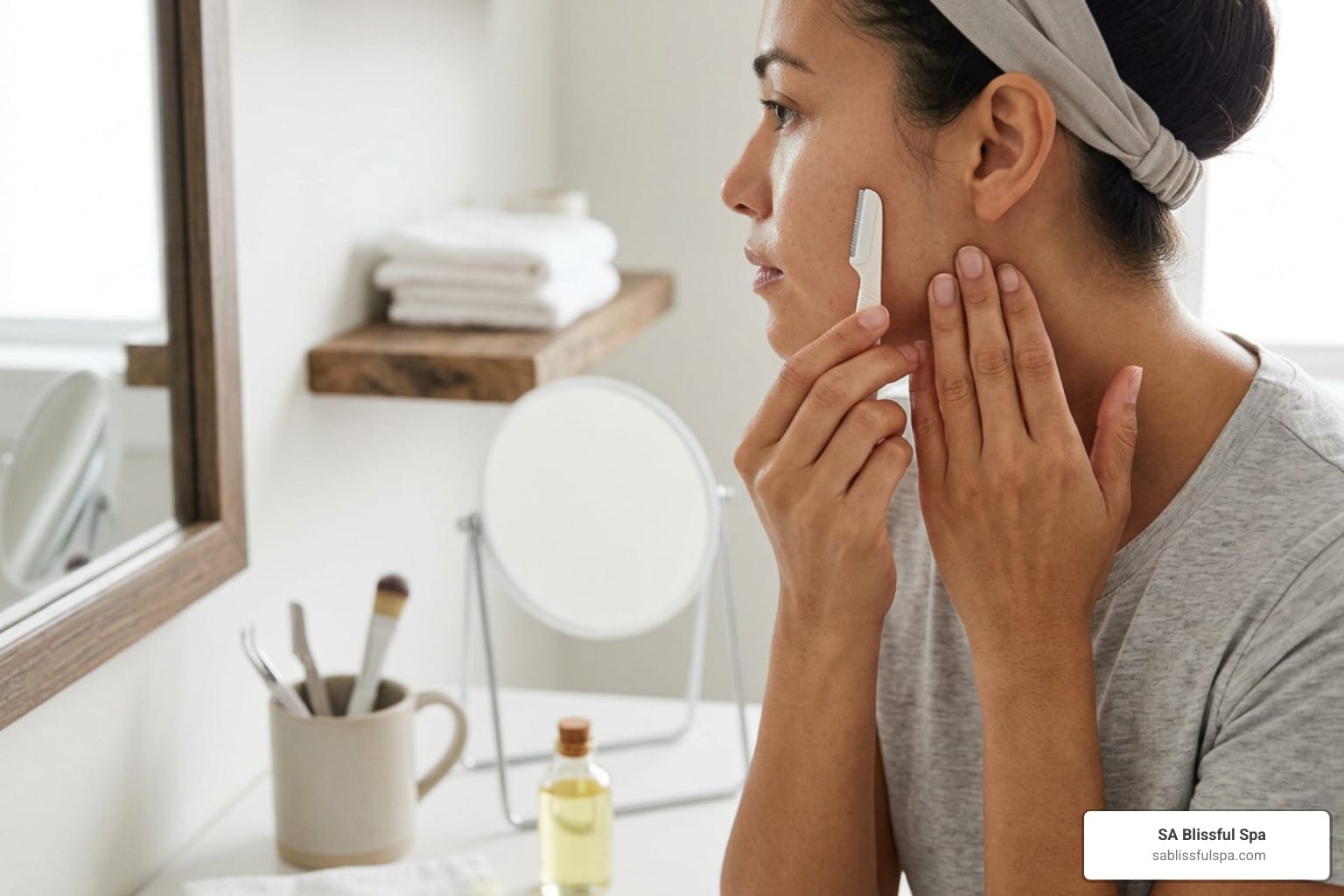
With the rise of inexpensive drugstore beauty razors, many people are tempted to try dermaplaning in their own bathrooms. While at-home touch-ups can be great for quick hair removal, there is a massive difference between shaving your face at home and receiving a professional dermaplane facial.
Professional estheticians use sterile, single-use, surgical-grade steel scalpel blades (often DermaplanePro blades) held at a precise angle. At-home plastic razors are much duller and often scrape the skin unevenly, which can cause micro-tears, razor burn, and irritation. Furthermore, performing this on yourself carries a significant risk of cuts and infection if your tools and skin are not properly sanitized.
If you do choose to maintain your skin between professional visits, it is vital to use the proper tools and techniques. We highly recommend reading our Guide to at-home dermaplaning and learning How to dermaplane at home safely to avoid any unwanted skin disasters.
Can dermaplaning be combined with other treatments?
Absolutely! In fact, dermaplaning is one of the best "gateway" treatments because it preps the skin beautifully for other therapies. Because it removes the barrier of dead skin cells, any treatment applied afterward can work much more effectively.
Some of our favorite professional combinations include:
- Dermaplaning + Chemical Peels: Removing the outer layer of dead skin allows the peel solution to penetrate more evenly and deeply, giving you enhanced results.
- Dermaplaning + Hydrating Hydrojelly Masks: The ultimate recipe for an instant, plump glow.
- Dermaplaning + LED Therapy: Perfect for soothing the skin and boosting collagen production post-exfoliation.
To explore how these combined modalities can elevate your skincare results, take a look at our Facial with dermaplaning options.
Conclusion
Finding a reputable dermaplane facial near me is the first step toward unlocking your skin's smoothest, most radiant potential. By removing the buildup of dead skin cells and fine vellus hair, this gentle, non-invasive treatment delivers immediate, visible results with absolutely no downtime.
At SA Blissful Spa in Burlington, MA, we specialize in providing luxurious, customized skincare and beauty treatments tailored to your unique skin health goals. We proudly serve clients throughout our beautiful local communities, including Arlington, Bedford, Belmont, Billerica, Carlisle, Concord, Lexington, Lincoln, Melrose, North Reading, Reading, Stoneham, Wakefield, Watertown, Wilmington, Winchester, and Woburn.
Whether you are preparing for a special event, hoping to improve your makeup application, or simply wanting to treat yourself to a rejuvenating, personalized facial, our expert team is here to guide you every step of the way.
Ready to experience the ultimate silky-smooth glow? Book your dermaplane facial at SA Blissful Spa today and let us help you reveal your most confident, radiant skin yet!