Why Your Skin Prep Routine Makes or Breaks Your Makeup
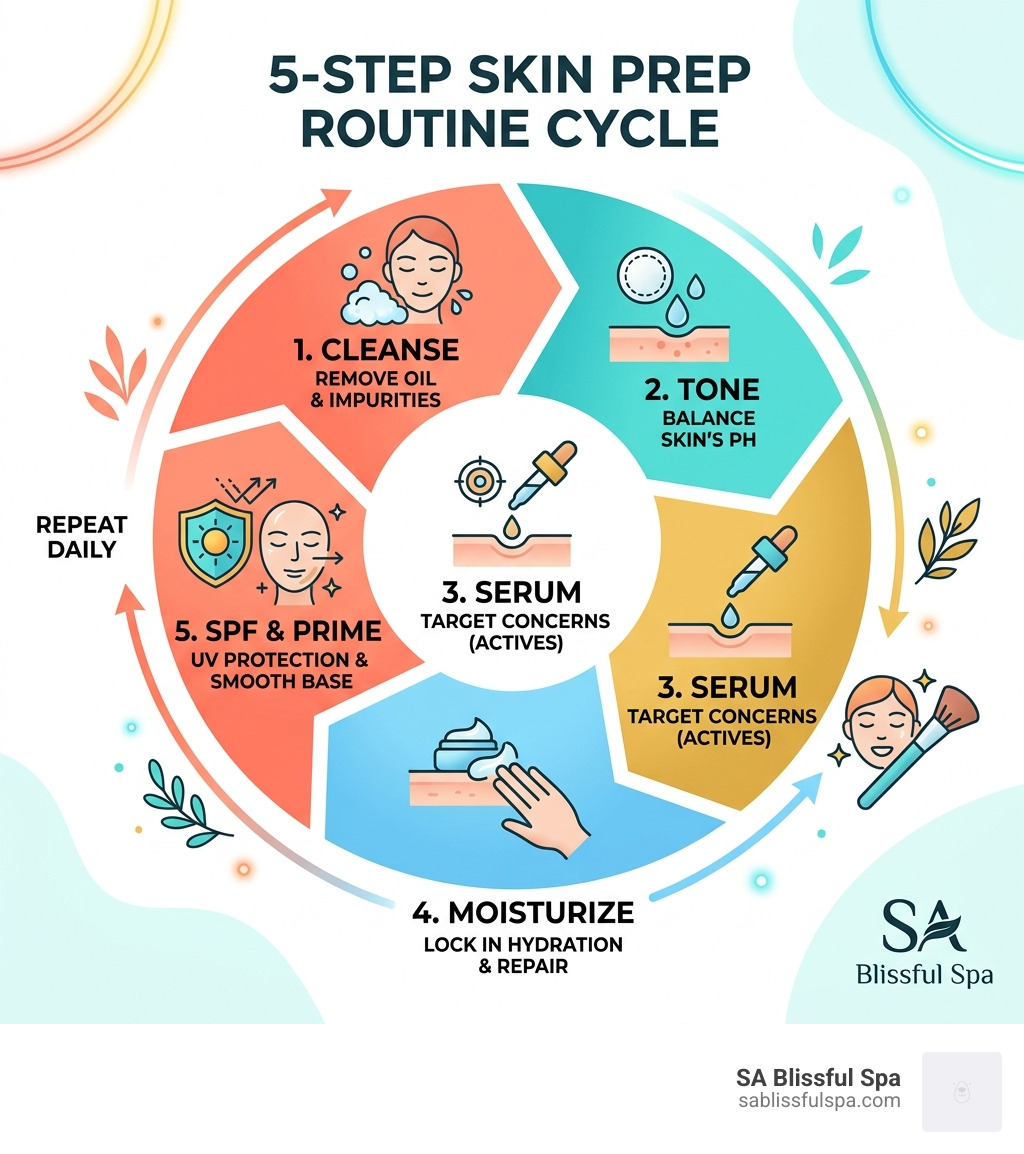
How to prep skin? Here's the quick answer:
- Cleanse - Remove oil, bacteria, and overnight buildup
- Tone - Balance your skin's pH
- Serum - Target specific concerns with active ingredients
- Moisturize - Lock in hydration and support your skin barrier
- SPF - Protect against UV damage
- Prime - Create a smooth, long-lasting base for makeup
We've all been there. You spend time carefully applying your makeup, feel great about it — and then watch it flake, crease, or slide off within hours. The frustrating truth? The problem usually isn't your makeup products or technique. It's what you did — or didn't do — before you ever picked up a brush.
Proper skin prep is the foundation of every great makeup look. Think of your skin as a canvas. A rough, dry, or uneven canvas makes even the best paint look patchy. A smooth, hydrated one makes everything glide on beautifully and stay there.
Skipping prep doesn't just affect how your makeup looks in the moment. It can lead to clogged pores, irritation, and faster breakdown of your carefully applied products throughout the day.
I'm Saloni Bhandari, licensed esthetician and founder of SA Blissful Spa in Burlington, MA — and knowing how to prep skin properly is at the core of everything I do for my clients. In this guide, I'll walk you through every step of an effective prep routine, so your skin looks its best whether you're wearing a full face or nothing at all.
Terms related to How to prep skin?:
Why Learning How to prep skin? is the Secret to Flawless Makeup

If you have ever wondered why foundation looks "cakey" or why your concealer seems to highlight fine lines rather than hide them, the answer is almost always a lack of skin preparation. In our April 2026 update on skincare trends, we’ve seen that "skin-first" makeup is more popular than ever. But what does that actually mean?
When we talk about How to prep skin?, we are talking about creating a barrier and a bridge. The barrier protects your pores from being clogged by heavy pigments, and the bridge ensures that the makeup adheres to your skin instead of sitting on top of dry flakes. Research shows that makeup looks significantly better and foundation lasts longer when applied to a well-hydrated base. For example, some clinical studies on high-end hydrating creams show that 93% of users agree makeup looks better after proper hydration.
Proper prep also prevents pilling—those annoying little balls of product that form when your skincare and makeup don't play well together. By following a consistent routine, such as the one outlined in What is the Best Skincare Routine?, you ensure that each layer absorbs correctly.
| Feature | Unprepped Skin | Prepped Skin |
|---|---|---|
| Texture | Rough, dry patches visible | Smooth, "blurred" appearance |
| Longevity | Fades or slides by midday | Lasts 8-12+ hours |
| Finish | Dull or excessively oily | Radiant, natural glow |
| Blending | Difficult; streaks easily | Effortless; seamless melt |
Identifying Your Canvas: Determining Your Skin Type

Before you can master How to prep skin?, you need to know exactly what you are working with. Using a heavy oil on already oily skin can lead to a "makeup meltdown," while using a mattifying primer on dry skin can make you look ten years older by lunch.
According to Scientific research on skin health, your skin type is largely determined by genetics and sebum (oil) production, though it can change with age or season. Here is how to identify yours:
- Dry Skin: Feels tight, especially after cleansing. You might see visible flaking or "ashy" patches.
- Oily Skin: Shiny all over, with enlarged pores. Makeup tends to slide off or change color (oxidize) throughout the day.
- Combination Skin: The classic T-zone struggle. Your forehead, nose, and chin are oily, but your cheeks are dry or normal.
- Sensitive Skin: Easily irritated, turns red quickly, and may sting when applying new products.
- Normal Skin: Balanced—not too dry, not too oily. You rarely have breakouts or sensitivity issues.
The 30-Minute Wait Test: To find your type at home, wash your face with a gentle cleanser and pat dry. Do not apply any products. Wait 30 minutes. If your face feels tight, you’re dry. If you see shine on your nose and forehead, you’re combination. If you’re shiny everywhere, you’re oily.
The Step-by-Step Guide to a Radiant Base
The golden rule of How to prep skin? is to layer your products from thinnest to thickest. This allows the watery, active-ingredient-heavy products to penetrate the skin before the thicker creams seal everything in. If you’re new to professional skincare, reading Everything You Need To Know Before Booking Your First Facial can help you understand how these steps work in a clinical setting.
Step 1: How to prep skin? with a Deep Cleanse
Don't be fooled into thinking a splash of water is enough in the morning. While you sleep, your skin releases what some experts call a "witches’ brew"—a mix of sweat, bacteria, and toxins. If you don't remove this, you’re just applying makeup on top of waste.
For the best results, we recommend double cleansing if you have the time. Start with an oil-based cleanser to dissolve any leftover nighttime products, followed by a water-based gel or foam to actually clean the skin. This ensures a perfectly clean slate.
Step 2: How to prep skin? with Targeted Hydration
Once clean, you need to put the moisture back in. This is where you use your "actives."
- Toner: Use an alcohol-free toner to balance pH.
- Serum: Look for Hyaluronic Acid, which can hold 1,000 times its weight in water. This "plumps" the skin, making fine lines disappear before you even touch your foundation.
- Eye Cream: Use a tiny amount. Too much eye cream can actually cause your concealer to slide and crease.
- Hydrating Ingredients to Look For: Glycerin, Ceramides, Aloe Vera, and Niacinamide.
Customizing Your Routine for Specific Concerns
Not all skin prep is created equal. If you are dealing with specific issues, you need to adjust your strategy.
- Acne-Prone Skin: Use a lightweight, non-comedogenic moisturizer. If you have active breakouts, products containing salicylic acid can help reduce inflammation. Research shows that some targeted spot gels can reduce redness and size in as little as two hours—perfect for a pre-makeup fix!
- Mature Skin: Focus on peptides and antioxidants. As we age, collagen production slows down (especially after age 25). Use a richer cream to give the skin "bounce."
- Post-Treatment Skin: If you've recently had a professional service, follow the advice in How To Care For Your Skin After A Chemical Peel to ensure you aren't irritating the new skin while prepping for makeup.
- Lip and Eye Prep: Don't forget the details! Gently exfoliate your lips with a damp washcloth and apply balm early in your routine so it has time to soak in before lipstick. For puffy eyes, a caffeine-based serum can work wonders in about 15 minutes.
Professional Treatments for Long-Term Skin Health
While at-home prep is vital, nothing beats the deep-cleansing power of a professional treatment. If you are prepping for a major event—like a wedding in Lexington or a gala in Burlington—we recommend booking a professional facial at least a week in advance.
Treatments like microdermabrasion or oxygen therapy can remove weeks of dead skin cell buildup that a home scrub simply can't reach. For those looking for a total skin reset, a chemical peel can be a game-changer. Just be sure to check our Chemical Peel Safety Ultimate Guide to know what to expect during recovery.
Average Professional Facial Costs: Based on internet data, professional facials typically range from $85 to $400. The wide range accounts for the type of technology used (like HydraFacials or LED therapy) and the expertise of the esthetician. These are average costs and may not reflect the specific pricing at SA Blissful Spa.
Frequently Asked Questions about Skin Preparation
How long should I wait between skincare and makeup?
This is the most common mistake people make! If you apply foundation immediately after moisturizer, the two will mix and "pill" or slide. You should wait at least 5 to 10 minutes for your skincare to fully absorb. If you are using a chemical sunscreen, it needs about 15 minutes to bond with your skin to be effective.
Is sunscreen necessary if my primer has SPF?
Yes, absolutely. Most people do not apply enough primer to get the full SPF protection listed on the bottle. We recommend using a dedicated broad-spectrum SPF 30+ sunscreen every single day, even if you are staying indoors in Woburn or Winchester. UV rays can penetrate windows and contribute to photoaging (wrinkles and sunspots).
Can I skip moisturizer if I have oily skin?
Never! When you skip moisturizer, your skin thinks it is dehydrated and actually produces more oil to compensate. The key is to use a lightweight, oil-free, or water-gel formula. This balances the oil-water ratio in your skin, which actually helps your makeup stay matte for longer.
Conclusion
Mastering How to prep skin? is the ultimate "cheat code" for anyone who wants their makeup to look professional and last all day. Whether you are in Reading, Stoneham, or right here in Burlington, taking those extra ten minutes in the morning will save you hours of touch-ups later.
At SA Blissful Spa, we are dedicated to helping you achieve your best skin ever through personalized care and expert treatments. From soothing facials to advanced peels, we provide the rejuvenation your skin deserves in a serene, professional environment.
Ready to give your skin the professional edge? Book your professional facial today and let us help you create the perfect canvas for your beauty routine.