Chemical peel safe? Yes, chemical peels are generally safe when performed by a qualified professional. With over 50 years of use by dermatologists and trained estheticians, they have an excellent safety record. However, the FDA warns against using at-home peel products due to the risk of chemical burns, scarring, and permanent skin discoloration.
Quick Safety Assessment:
You’re likely wondering if a chemical peel is the right choice for your acne scars, sun damage, or fine lines. The truth is, safety depends on two things: choosing the right peel for your skin and having it performed by an expert.
While rare, risks like infection or scarring exist, and certain skin types face a higher risk of color changes. Specific medications or skin conditions may also mean a peel isn’t right for you.
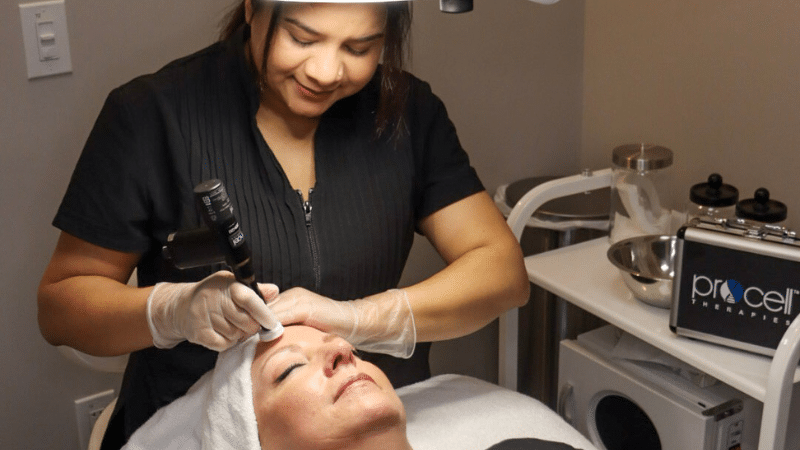
I’m Saloni Bhandari, founder of SA Blissful Spa and a licensed esthetician. I’ve guided hundreds of clients in determining if a chemical peel safe for their unique concerns. I’m here to help you make an informed decision backed by professional expertise.

Chemical peel safe? terms made easy:
A chemical peel is a cosmetic treatment that uses a specialized solution to trigger controlled exfoliation. By removing damaged outer skin layers, it prompts your body to heal and regenerate, increasing cell turnover and collagen production. The result is fresher, smoother, and firmer skin. For more details, see our guide on what is a chemical peel.
Peels are categorized by depth:
Choosing the right peel depends on your skin type and goals, which is why professional expertise is crucial in determining if a chemical peel safe for you. Explore your options in our guide on types of chemical peels.

Chemical peels are remarkably versatile, effectively treating a wide range of concerns:
In some cases, peels can even treat precancerous spots (actinic keratosis), promoting overall skin health. Find all the ways peels can help in our article on the benefits of chemical peel.
Is a chemical peel safe? Yes, but with a critical qualifier: it must be performed by a qualified dermatologist or licensed esthetician. With over 50 years of professional use, chemical peels have a proven safety record. The danger lies in at-home attempts. The FDA has issued warnings about DIY peel products due to reports of severe chemical burns, infections, and permanent scarring. A trained professional understands which acid, concentration, and timing is right for your skin, something you cannot replicate at home. For more safety information, see resources from The Aesthetic Society and the American Society of Plastic Surgeons.

Understanding potential side effects is key. Most are mild, temporary, and part of the healing process, including redness, swelling, peeling/flaking, and temporary skin color changes.
More serious, though rare, risks include:
Professional-grade solutions should never be used at home. The FDA warns that high-concentration acids can cause severe burns. See the full FDA alert on at-home peels and learn more on at-home chemical peels.
Yes, with the right professional approach. For sensitive skin, superficial peels with gentler acids (like lactic acid) offer gentle exfoliation without irritation. For darker skin tones, expertise is even more critical due to a higher risk of post-inflammatory hyperpigmentation or hypopigmentation. However, an experienced provider can safely perform superficial peels, often combined with a special pre-treatment regimen, to achieve excellent results. At SA Blissful Spa, we create a personalized plan for every client. Learn more about types of chemical peels and how we customize them.
Chemical peels are not for everyone. You should avoid them or exercise caution if you:
A thorough consultation is essential to determine if a chemical peel safe for you.
The actual peel is just one part of the journey. The best results come from combining the treatment with proper preparation and dedicated aftercare. At SA Blissful Spa, we guide you through every stage, ensuring you feel confident and prepared.
Proper preparation is essential for ensuring your chemical peel safe and effective. Your provider will create a pre-peel skincare plan, often starting 2-8 weeks prior.
Key preparation steps include:
Recovery varies by peel depth, but following aftercare instructions is always crucial.
For all peels, gentle cleansing, moisturizing, and mandatory daily sunscreen (SPF 30+) are non-negotiable. Do not pick at flaking skin, and avoid strenuous exercise for at least 48 hours. For other ways to pamper your skin, explore our facial treatments.
The timeline and longevity of your results depend on the peel’s depth.
The single most important factor in maintaining your results is sun protection. Daily SPF 30+ is essential. See the incredible changes possible in our before and after results for acne scars.
While chemical peels are powerful, they aren’t the only option for enhancing your natural beauty. Two other popular treatments are lash lifts and microdermabrasion. For all these services, the common thread for safety is professional application. A trained expert makes the difference between a great experience and a potential disaster.
A lash lift is like a perm for your lashes, curling them upward for a longer, fuller look that lasts 6-8 weeks. But is a lash lift safe? Yes, when performed by a trained technician. Risks from inexperience include eye irritation, allergic reactions, over-processing (which can damage lashes), or chemical burns if the solution enters the eye.
This is why a patch test 24-48 hours before your appointment is crucial. A professional will protect your eyes, select the right tools, and time the solutions perfectly to avoid damage. Trust your eyes only to an expert. Explore our safe lash services.
For those who prefer physical exfoliation over chemical, microdermabrasion is a great alternative. This non-invasive treatment gently buffs away the outer layer of dead skin cells, revealing a fresh glow underneath. It’s a professional-grade polish for your face.
Microdermabrasion is generally very safe for most skin types, with minimal risks. You might experience temporary mild redness or sensitivity. The downtime is minimal, making it a perfect “lunch break” treatment. It’s excellent for maintaining healthy skin or for those with sensitivity to chemical peels. If you’re interested in physical exfoliation, you might also learn about similar treatments like Dermaplaning.
Whether you choose a peel, lash lift, or microdermabrasion, safety and beautiful results come from choosing a qualified professional.
Here are answers to common questions about chemical peel safety, helping you decide if a chemical peel safe for you.
As cosmetic treatments, chemical peels are not typically covered by insurance. Costs vary based on peel type, location, and provider expertise. Based on average internet data, you can expect a wide range: light peels may range from $100 to $1,500+, medium peels from $500 to $6,000+, and deep peels from $2,500 to $18,000+. These are average costs and not the actual prices for SA Blissful Spa. We provide personalized pricing during your consultation. For more insight, see our guide on chemical peel costs.
The number of treatments depends on the peel depth and your goals.
We create a custom plan during your consultation. For more on treating acne, see our guide on how many peels are needed for acne scars.
The sensation varies by peel depth.
Your comfort is our priority. We will discuss pain management with you to ensure your experience is as comfortable as possible.
After exploring chemical peels, lash lifts, and microdermabrasion, one truth is clear: your safety and results depend entirely on the expertise of your provider.
These treatments can be transformative, but they are not DIY projects. FDA warnings about at-home chemical peels highlight the real risks of severe burns and permanent scarring. With over 50 years of professional use, a chemical peel safe in the hands of a trained esthetician. The same principle applies to all advanced treatments.
At SA Blissful Spa, our licensed estheticians prioritize your well-being. We don’t use a one-size-fits-all approach. We start with a thorough consultation to examine your skin, discuss your goals, and honestly assess if a treatment is right for you. Your trust is our priority, and we will only recommend what is in your best interest.
Our spa in Burlington, MA, is your retreat for expert care in a serene setting. We’re here to guide you, whether you’re considering your first peel or exploring other rejuvenation options.
Ready to see the difference expert care can make? Schedule a consultation and let’s create a personalized plan for your skin. Find an expert esthetician near you and begin your journey to radiant health with SA Blissful Spa.


Book your first appointment online and enjoy 15% off your first service (one-time offer).
Use code NEWCLIENT15
