Chemical peeling for acne scars is an effective treatment that many people turn to for smoother, healthier-looking skin. Here’s what you should know:
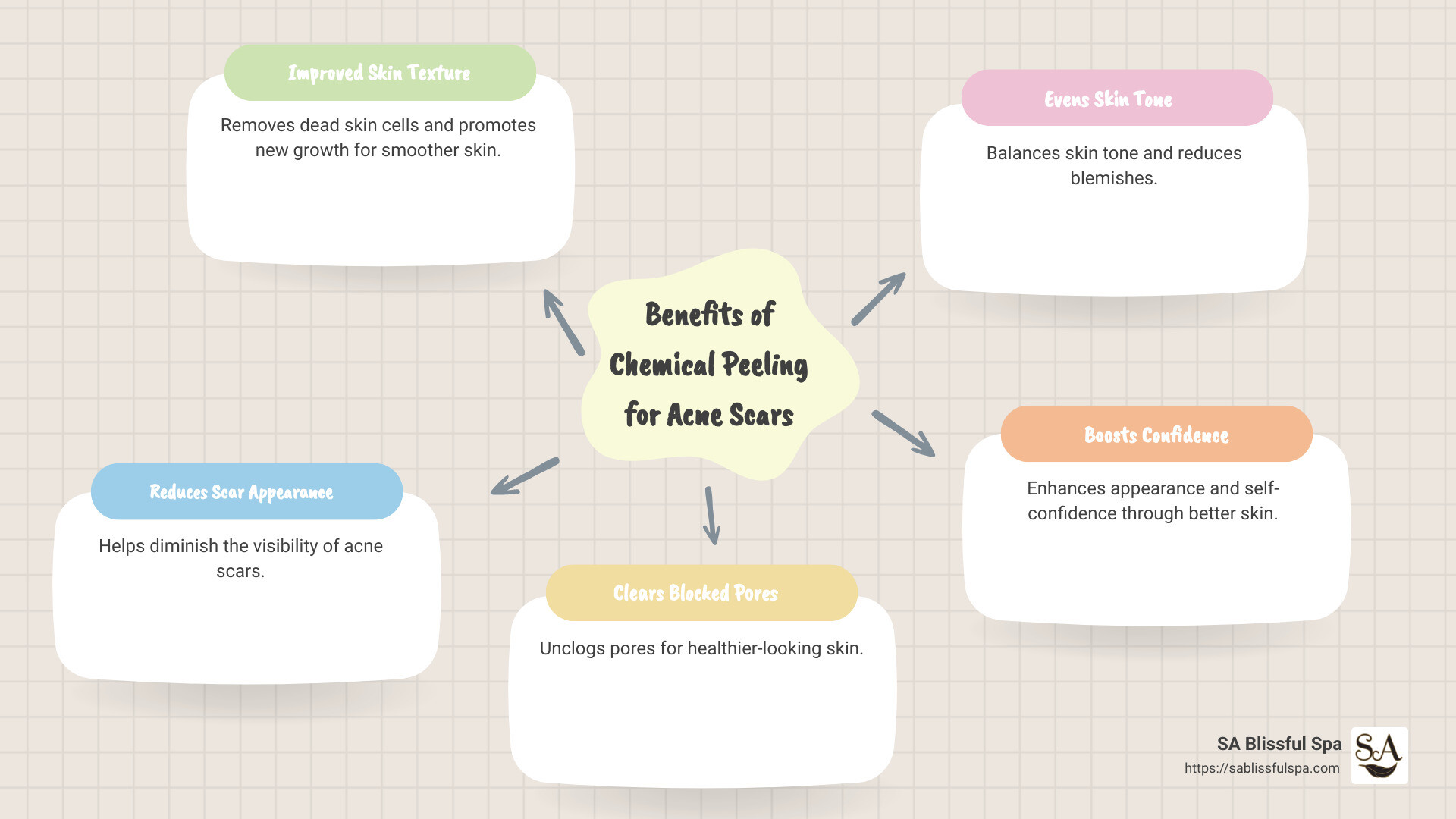
Chemical peels can improve your skin by exfoliating and renewing it. They clear blocked pores, even out skin tone, and improve overall appearance, reducing the visibility of acne scars.
I’m Saloni Bhandari, an experienced esthetician and founder of SA Blissful Spa. With a deep understanding of skin care, I’ve helped many clients benefit from chemical peeling for acne scars. Let’s explore how peels can transform your skin and confidence.
Basic chemical peeling for acne scars terms:
– microneedling vs chemical peel for acne scars
– how much do chemical peels for acne scars cost
– chemical peel facial
A chemical peel is a treatment that uses a chemical solution to improve the texture and appearance of your skin. It’s like giving your skin a fresh start by removing old, damaged layers and encouraging new growth.
Exfoliation is a key part of a chemical peel. It involves removing the outermost layer of dead skin cells. This process not only makes your skin feel smoother but also helps with issues like acne scars. By clearing away these dead cells, your skin can better absorb skincare products and look more vibrant.
The magic of a chemical peel lies in the chemical solution used. Common ingredients include glycolic acid, salicylic acid, and trichloroacetic acid (TCA). Each chemical works differently, targeting specific skin concerns. For instance, glycolic acid is great for normal and oily skin, while salicylic acid helps unclog pores for acne-prone skin.
After the exfoliation, your skin begins a process of renewal. New skin cells replace the old ones, which helps fade acne scars and improve skin tone. This renewal process is essential for achieving that youthful, glowing look.
One significant benefit of chemical peels is the stimulation of collagen production. Collagen is a protein that keeps your skin firm and smooth. When a chemical peel triggers collagen production, it helps fill in acne scars and reduces fine lines, giving your skin a firmer appearance.
By understanding these elements of a chemical peel—exfoliation, chemical solution, skin cell renewal, and collagen production—you can see why it’s a popular choice for those looking to improve their skin’s texture and reduce acne scars. With the right peel, you can achieve smoother, more refreshd skin.
Chemical peels come in different strengths, each serving a unique purpose. Understanding these types can help you choose the best option for your skin needs.
Light peels are the gentlest type of chemical peels. They typically use glycolic acid or salicylic acid, which are mild acids that work on the surface of the skin. These peels are perfect for exfoliating and brightening the skin, making them ideal for treating mild acne scars and improving overall skin texture.

Medium-depth peels go a step further, penetrating deeper into the skin layers. They often use trichloroacetic acid (TCA), which is effective for treating more pronounced acne scars and hyperpigmentation. These peels can result in more visible peeling and require a longer recovery period.

Deep peels are the most intense and are typically used for severe skin issues, such as deep wrinkles and significant acne scarring. These peels often involve phenol, which penetrates deeply and provides dramatic results. However, they come with a longer recovery time and increased risks, including potential heart and kidney issues.

Each type of chemical peel offers unique benefits, and the best choice depends on your specific skin concerns and the results you desire. At SA Blissful Spa, our experienced estheticians can guide you to the right peel for your needs, ensuring a safe and effective treatment process.
Chemical peels are a powerful tool in treating acne scars. They work by promoting collagen production and increasing skin cell turnover. Let’s break down how these processes help with different types of acne scars.
Collagen is a protein that gives skin its structure and firmness. When chemical peels are applied, they stimulate the production of new collagen. This is crucial for filling in atrophic scars, which are depressed scars like ice pick or boxcar scars. By boosting collagen, chemical peels help to smooth out these uneven areas over time.
Chemical peels improve skin cell turnover, meaning they help shed old, damaged layers of skin. This process reveals fresh, new skin underneath, which is smoother and more even in tone. This is particularly beneficial for treating post-inflammatory hyperpigmentation, those dark spots that linger after an acne breakout. By removing the outer layers of skin, the dark spots gradually fade.
Hyperpigmentation is a common concern for many dealing with acne scars. Chemical peels help lighten these dark areas by exfoliating the top layers of skin where excess melanin (the pigment that causes dark spots) accumulates. Over time, this leads to a more uniform skin tone.
This type of hyperpigmentation happens after an acne lesion heals. Chemical peels are effective in treating these spots by speeding up the skin’s natural renewal process. This results in a brighter complexion and reduced visibility of dark spots.
Chemical peels offer a non-invasive way to improve the appearance of acne scars. With consistent treatment, you can achieve smoother, clearer skin. At SA Blissful Spa, our expert team can tailor a peel to address your specific skin concerns, ensuring optimal results.
When it comes to chemical peeling for acne scars, there are several effective options. Each type of peel targets different skin concerns and works in unique ways to improve your skin’s appearance.
Glycolic acid is great for exfoliation and increasing skin cell turnover. It’s an alpha hydroxy acid (AHA) that penetrates the top layers of the skin, helping to fade mild acne scars and improve skin texture. These peels are especially effective for treating post-inflammatory hyperpigmentation and can lead to a brighter, more even skin tone.
Salicylic acid is a beta hydroxy acid (BHA) known for its ability to penetrate deeper into the skin. It’s oil-soluble, making it perfect for oily and acne-prone skin. Salicylic acid peels help unclog pores, reduce acne, and prevent future breakouts. They are also effective in minimizing the appearance of acne scars by promoting skin renewal.
TCA peels are more intense and are used for deeper exfoliation. They stimulate collagen production, which is vital for filling in atrophic scars like ice pick scars. TCA is applied directly to the scar, encouraging new skin cell growth and improving skin texture. However, it’s important to note that TCA peels are best suited for lighter skin tones due to the risk of hyperpigmentation in darker skin.
Jessner’s peel is a combination of lactic acid, salicylic acid, and resorcinol. This peel is effective for treating acne scars and hyperpigmentation. It provides a medium-depth exfoliation, which helps in reducing the appearance of scars and improving overall skin clarity. Jessner’s peel is known for its strong exfoliating properties, making it a popular choice for those with persistent acne scars.
The VI Peel is a blend of TCA, salicylic acid, and other ingredients that offer a gentle yet effective peeling process. It’s suitable for all skin types and helps improve acne scars, pigmentation, and fine lines. The VI Peel promotes collagen production and improves skin texture, resulting in a smoother and more youthful appearance.
At SA Blissful Spa, our experienced estheticians can guide you in choosing the best peel for your specific skin needs. With the right peel, you can achieve clearer, more radiant skin.
When undergoing chemical peeling for acne scars, it’s important to know what to expect from the procedure to recovery. Here’s a simple breakdown:
Chemical peeling involves applying a chemical solution to your skin. This solution causes the top layers of skin to exfoliate and peel off, revealing newer, healthier skin beneath. During the treatment, you might feel a warm to slightly hot sensation followed by stinging. This usually lasts a few minutes. A cool compress may be used to alleviate any discomfort.
Recovery times vary depending on the depth of the peel:
After a chemical peel, your skin is more sensitive to the sun. Using a broad-spectrum sunscreen with SPF 50 is crucial. Limit sun exposure and wear protective clothing, hats, and sunglasses when outdoors. This helps prevent hyperpigmentation and further skin damage.
By understanding these aspects, you can better prepare for your chemical peel and ensure optimal results. Always follow your esthetician’s aftercare instructions and schedule follow-up appointments as needed.
While chemical peeling for acne scars can offer great results, it’s important to be aware of the potential risks and side effects. Knowing these can help you make informed decisions and manage expectations.
Redness is a common side effect post-peel, similar to a sunburn. It typically fades over time but can last longer with deeper peels. In some cases, if the peel is not applied correctly or the skin is not cared for properly afterward, scarring might occur. Always follow post-treatment care instructions to minimize this risk.
Hyperpigmentation refers to dark spots that can appear after a peel, particularly if you don’t protect your skin from the sun. Conversely, hypopigmentation is when lighter patches form on the skin. This is less common but can happen, especially in individuals with darker skin tones. To reduce these risks, avoid sun exposure and use sunscreen diligently.
Although rare, infections can occur if the skin is not kept clean or if blisters from deep peels are picked at or scratched. Following proper hygiene and aftercare is crucial to prevent infections.
This is a very rare risk and mainly associated with deep peels using phenol. Phenol can be absorbed into the body and may affect organs like the heart, kidneys, and liver. This is why deep peels should only be performed by a qualified professional, and patients should be carefully monitored.
By understanding these potential side effects, you can take steps to minimize them and enjoy the benefits of a chemical peel. Always discuss any concerns with your esthetician or dermatologist before proceeding with treatment.
Yes, chemical peeling for acne scars can be effective, especially for reducing the appearance of atrophic scars and hyperpigmentation. Chemical peels work by exfoliating the skin and boosting collagen production, which helps smooth out indented scars and even out skin tone. However, the results can vary based on the type and depth of the peel, as well as individual skin characteristics. For best outcomes, consult with a skincare professional who can tailor the treatment to your specific needs.
The choice between a chemical peel and microneedling depends on the type of acne scars and your skin type. Chemical peels are great for treating surface-level scars and pigmentation issues. They accelerate skin cell turnover and improve skin texture. On the other hand, microneedling is more effective for deeper scars because it stimulates collagen production from within the skin. Some people find that combining both treatments yields the best results. Discussing with a dermatologist can help determine the best approach for your skin.
The cost of chemical peels varies based on several factors, including the type of peel, the provider’s experience, and the location. On average, a cosmetic peel can cost around $750, according to the American Society of Plastic Surgeons. At SA Blissful Spa, prices for specific peels, like the V Carbon System designed to reduce acne scarring, are about $200. It’s advisable to have a consultation to discuss your goals and get a precise estimate custom to your treatment plan.
At SA Blissful Spa, we believe that achieving radiant skin is not just about treatments—it’s about the personalized care and expertise we offer to every client. Our luxurious spa environment in Burlington, MA, is designed to provide a serene escape where you can focus on enhancing your skin health and beauty.
Our expert treatments are custom to meet your unique skin needs. Whether you’re dealing with acne scars or simply aiming for a more youthful glow, our skilled estheticians use top-tier products and advanced techniques to ensure you see real results. We understand that every skin type is different, so we customize our approach to maximize effectiveness and comfort.
Chemical peeling for acne scars is one of our specialized services. This treatment helps improve skin texture and reduce the appearance of scars by encouraging collagen production and skin cell renewal. Our estheticians are well-versed in selecting the right type of peel for your specific skin concerns, ensuring the best possible outcomes.
With our focus on skin health, we don’t just treat the surface. We aim to improve your overall skin vitality, leaving you feeling refreshd and empowered. Our commitment to personalized care means we take the time to understand your goals and craft a treatment plan that aligns with your lifestyle and skin aspirations.
Ready to transform your skin? Visit our SA Blissful Spa Peels page to learn more about our offerings and book your consultation today. Let us guide you on your journey to healthier, more beautiful skin.


Book your first appointment online and enjoy 15% off your first service (one-time offer).
Use code NEWCLIENT15