If you’re interested in achieving a healthy glow, a chemical peel facial could be the perfect solution. This popular treatment works wonders for facial rejuvenation by removing dead skin cells and revealing fresher, smoother skin underneath. At SA Blissful Spa, we provide a welcoming and serene environment where each client can find a custom solution custom to their skin care needs.
As an experienced esthetician, I’m Saloni Bhandari, founder of SA Blissful Spa. My background in chemical peel facial treatments enables me to deliver expert care and personalized approaches for your unique skin concerns. Stay tuned as we dig into what a chemical peel facial involves.
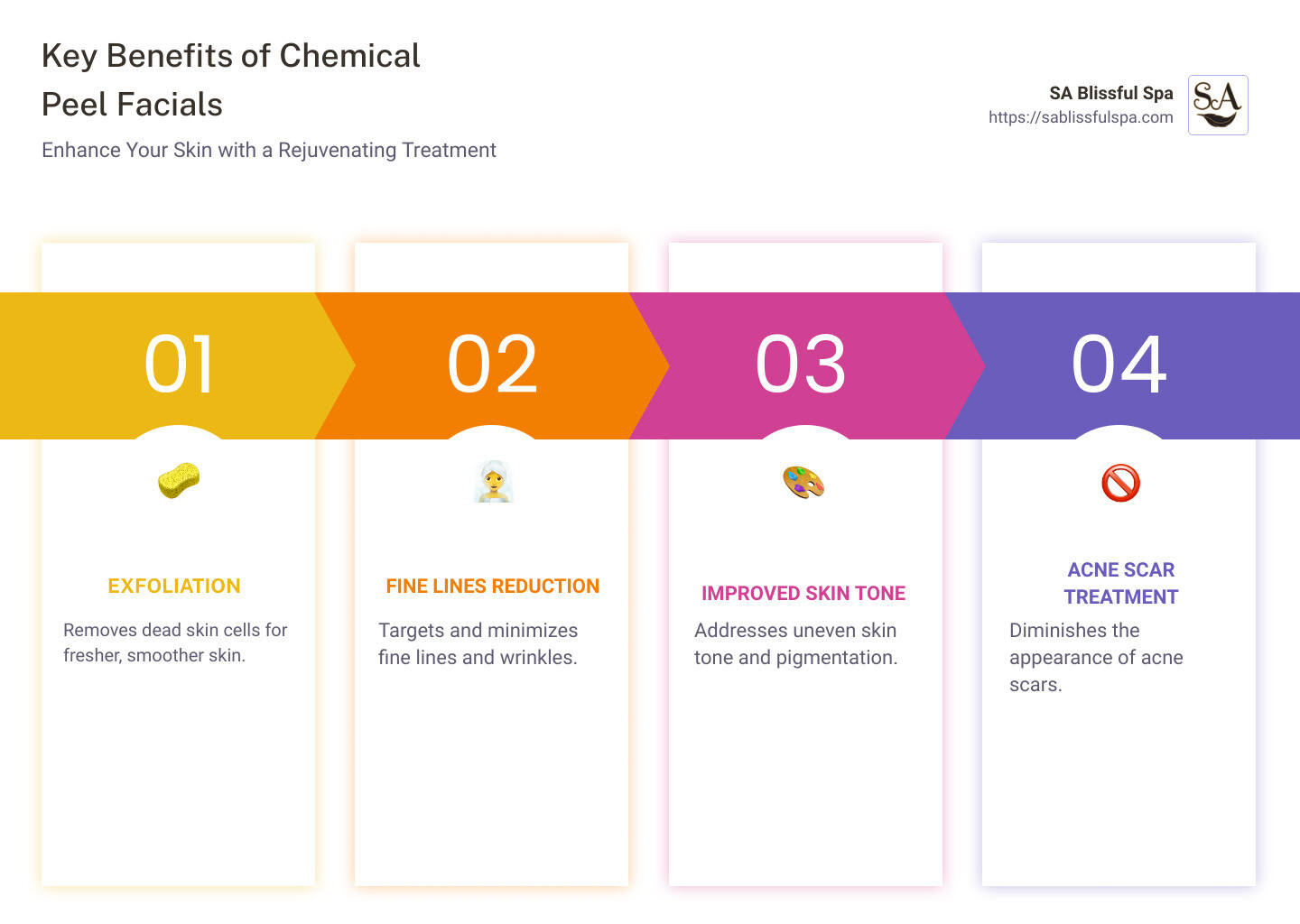
A chemical peel facial is a skin care treatment that involves applying a chemical solution to the skin. This solution works to exfoliate and remove the outer layers of your skin. The process reveals a new layer of skin that is often smoother and more youthful-looking.
When the chemical solution is applied, it causes a controlled injury to the skin layers. This might sound intimidating, but it’s actually a safe and effective way to stimulate the skin’s natural healing processes. As the treated skin peels away, it takes with it fine lines, wrinkles, and other imperfections.
Chemical peels can target different depths of the skin, from superficial layers to deeper ones, depending on the type of peel used. This makes them versatile for treating various skin issues.

Many people notice a significant improvement in their skin’s texture and tone after just one session. With continued treatments, the results can be even more dramatic, offering long-lasting rejuvenation.
In summary, a chemical peel facial is a transformative treatment that can address a wide range of skin concerns, from fine lines to acne scars. By revealing more youthful skin, it offers a refreshed and revitalized appearance.
Chemical peels come in three main types: light, medium, and deep. Each type serves different skin needs and targets different layers of the skin. Let’s explore these options to see which might be the best fit for your skin care goals.
A light chemical peel, also known as a superficial peel, is the gentlest option. It primarily uses mild acids like glycolic acid or salicylic acid to exfoliate the outermost layer of the skin. This type of peel is perfect for addressing:
The recovery time for a light peel is minimal, making it a popular choice for those seeking a quick refresh.
A medium chemical peel penetrates deeper, reaching the upper part of the dermis. It often includes trichloroacetic acid (TCA) and sometimes glycolic acid. This peel is effective for:
While the recovery time is longer than a light peel, typically about a week, the results are more pronounced. It’s important to protect your skin from the sun after this treatment to avoid complications like hyperpigmentation.
The deep chemical peel is the most intensive option, using strong agents like carbolic acid (phenol) to deeply penetrate the skin. This peel is best suited for severe skin issues such as:
Due to its intensity, a deep peel requires significant recovery time, often several weeks. Sun protection is crucial during this period to protect the new skin. It’s worth noting that deep peels are typically performed in a controlled medical setting due to the potential risks, such as heart and organ damage from phenol absorption.
In summary, the type of chemical peel facial you choose should align with your skin’s specific needs and your desired outcomes. Whether you’re looking for a gentle refresh or a significant change, there’s a chemical peel that can help you achieve a radiant, youthful appearance.
Chemical peel facials offer a wide range of benefits for your skin, making them a popular choice for many looking to refresh their appearance. Let’s explore the key advantages:
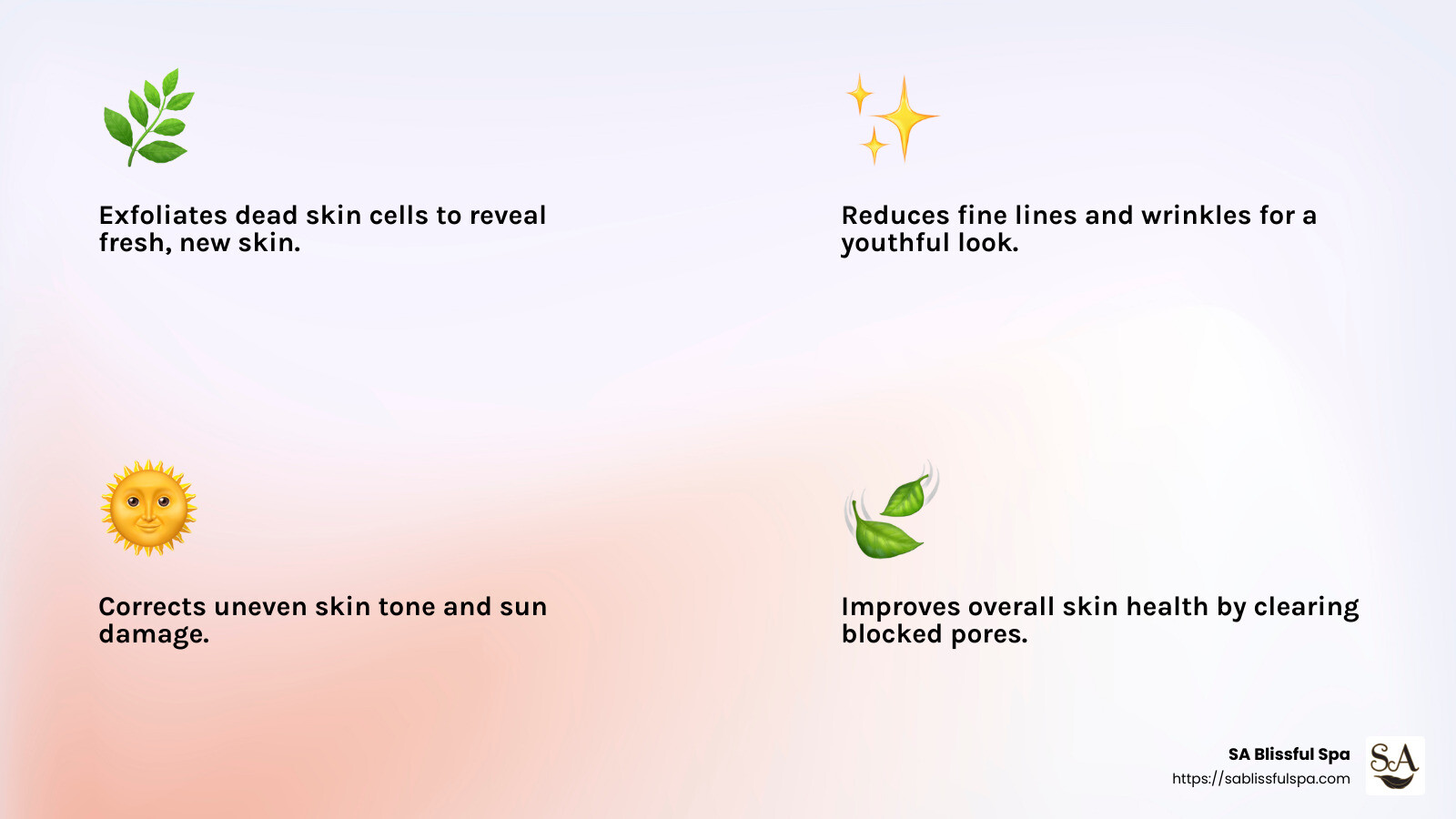
A chemical peel facial works by applying a chemical solution that exfoliates the skin, revealing fresh, new skin cells underneath. This process not only helps in removing dead skin cells but also stimulates the production of new cells, leading to a more youthful and vibrant complexion.
One of the most sought-after benefits of chemical peels is their ability to reduce fine lines and wrinkles. By promoting skin cell turnover, peels help to smooth out these signs of aging, giving your skin a more youthful look. Superficial peels are particularly effective for fine lines, while deeper peels can tackle more pronounced wrinkles.
Chemical peels are excellent for correcting uneven skin tone and pigmentation issues. They can significantly reduce the appearance of sun damage, age spots, and melasma. By removing the outer layer of damaged skin, peels help to even out your complexion and reduce discoloration.
Melasma, a condition characterized by brown or gray patches on the skin, can also be effectively treated with chemical peels. The exfoliation process helps to lighten these patches, providing a more even skin tone.
In addition to specific concerns like wrinkles and pigmentation, chemical peels contribute to overall skin health. They help to clear blocked pores, reduce blemishes, and improve skin texture. As a result, your skin not only looks better but feels healthier too.
Incorporating chemical peels into your skincare routine can lead to significant improvements in your skin’s appearance and health. Whether you’re dealing with sun damage, fine lines, or uneven pigmentation, a custom chemical peel facial can help you achieve a smoother, more radiant complexion.
While a chemical peel facial can offer transformative results for your skin, it’s crucial to be aware of potential risks and side effects. Understanding these will help you make an informed decision and prepare for your treatment.
By understanding these risks and side effects, you can better prepare for your chemical peel facial. Always consult with a qualified professional to ensure the treatment is suitable for your skin type and condition.
Next, we’ll explore how to prepare for a chemical peel facial to ensure the best possible results and minimize risks.
Getting ready for a chemical peel facial involves several important steps to ensure the best results and minimize risks. Here’s what you need to know:
Before your peel, your doctor will review your medical history. Be prepared to discuss any past or current medical conditions, medications, and previous cosmetic procedures. This information helps determine if a chemical peel is right for you and which type would be most effective.
Your doctor will examine your skin to decide the best type of peel for your needs. They’ll consider factors like skin tone and thickness, which can affect the outcome of the treatment.
It’s crucial to have a conversation about your goals and expectations. Talk about what you hope to achieve and understand the potential risks involved. This discussion helps set realistic expectations and outlines how many treatments you may need.
If necessary, your doctor might prescribe antiviral medication before and after the procedure. This is to prevent viral infections, especially if you have a history of herpes simplex.
Using a retinoid cream, such as tretinoin, for a few weeks before the peel can help your skin heal better. It prepares your skin by thinning the outer layer, allowing the peel to penetrate more evenly.
To reduce the risk of side effects like hyperpigmentation, your doctor may recommend a bleaching agent like hydroquinone. This is especially important for individuals with darker skin tones.
Avoiding sun exposure is critical. Too much sun before the procedure can lead to permanent irregular pigmentation. Discuss sun protection strategies with your doctor to ensure your skin is adequately protected.
About a week before your peel, stop using hair removal treatments like electrolysis or depilatories. Also, avoid facial masks, scrubs, and hair treatments. Don’t shave the areas to be treated 24 hours before your peel.
By following these steps, you’ll be well-prepared for your chemical peel facial, setting the stage for a successful treatment and beautiful results.
Next, we’ll walk you through what to expect during the procedure itself.
When you arrive for your chemical peel facial, the first step involves preparing your skin. Your esthetician will thoroughly clean your face to remove any dirt or oil. This ensures the chemical solution can penetrate evenly.
Your hair will be carefully protected with a cap or band to keep it away from the treatment area. For your eyes, protective gear like goggles or ointment is used to shield them from the chemicals.
Next, the chemical solution is applied. For a light peel, a brush or cotton ball is used to apply a solution containing glycolic or salicylic acid. You might feel a mild stinging sensation as the solution works on the surface of your skin. After a few minutes, a neutralizing solution or wash is applied to stop the chemical reaction.
For a medium peel, a stronger solution, often with trichloroacetic acid, is applied. This may cause a more intense stinging or burning sensation, lasting up to 20 minutes. Cool compresses or a hand-held fan can help soothe your skin.
A deep peel is more intensive, often using phenol. This requires anesthesia because it penetrates deeper into the skin layers. You might experience a burning sensation as the solution works. Afterward, your skin will need significant time to heal.
Immediately after the procedure, your skin may appear red and feel tight. Some irritation and swelling are normal, especially with medium and deep peels. A protective ointment is often applied to help soothe and protect the skin.
Healing times vary based on the depth of the peel. Light peels may heal in a few days, while medium peels can take a week. Deep peels require a longer recovery, sometimes up to two months.
During this healing period, sun protection is crucial. Your new skin is sensitive, and exposure to sunlight can lead to complications like hyperpigmentation. Use a broad-spectrum sunscreen and avoid direct sun whenever possible.
It’s important to follow your esthetician’s post-care instructions closely. This will help minimize side effects and ensure the best possible results from your chemical peel facial.
Yes, a chemical peel facial can be very beneficial for your face. It works by exfoliating the top layers of your skin, revealing fresh and youthful skin underneath. This process can help reduce the appearance of wrinkles and fine lines, making your skin look smoother and more vibrant. It also addresses sun damage, helping to even out your skin tone and improve overall texture.
The longevity of the results from a chemical peel depends on the type of peel you receive. Medium peels can provide noticeable improvements that last for several months, while deep peels can offer more dramatic results that may last even longer. However, keep in mind that ongoing sun exposure and natural aging can gradually affect these results. Regular maintenance peels and a good skincare routine can help extend the benefits.
Three days after a chemical peel facial, your skin may still be in the healing phase. You might notice some dryness and irritation, as well as swelling and flakiness as your skin begins to peel. This is a normal part of the process as the old skin sheds to reveal the new skin underneath. Discoloration or a temporary change in skin tone can also occur, but it typically resolves as your skin continues to heal.
It’s essential to follow post-care instructions and use gentle skincare products to support your skin during this time. Avoid picking or peeling the skin to prevent scarring and ensure the best outcome.
At SA Blissful Spa, we believe that everyone deserves to feel confident and radiant in their skin. Our personalized care and expert treatments are designed to improve your skin’s health and beauty, leaving you with a refreshd appearance.
Our chemical peel facials offer a powerful solution for addressing various skin concerns, from fine lines and wrinkles to uneven skin tone and acne scars. By choosing a custom approach, we ensure that each treatment is customized to meet your unique skin needs. This means you’ll receive the most effective peel for your specific concerns, whether you need a light, medium, or deep peel.
We take pride in creating a serene environment where you can relax and refresh. Our skilled estheticians use top-tier products and advanced techniques to deliver exceptional results. With our focus on safety and comfort, you can trust that you’re in good hands.
If you’re ready to transform your skin and experience the benefits of a chemical peel facial, we invite you to visit us at SA Blissful Spa. Let us help you achieve the glowing, youthful skin you deserve. Book your consultation today and take the first step towards a more confident you.


Book your first appointment online and enjoy 15% off your first service (one-time offer).
Use code NEWCLIENT15