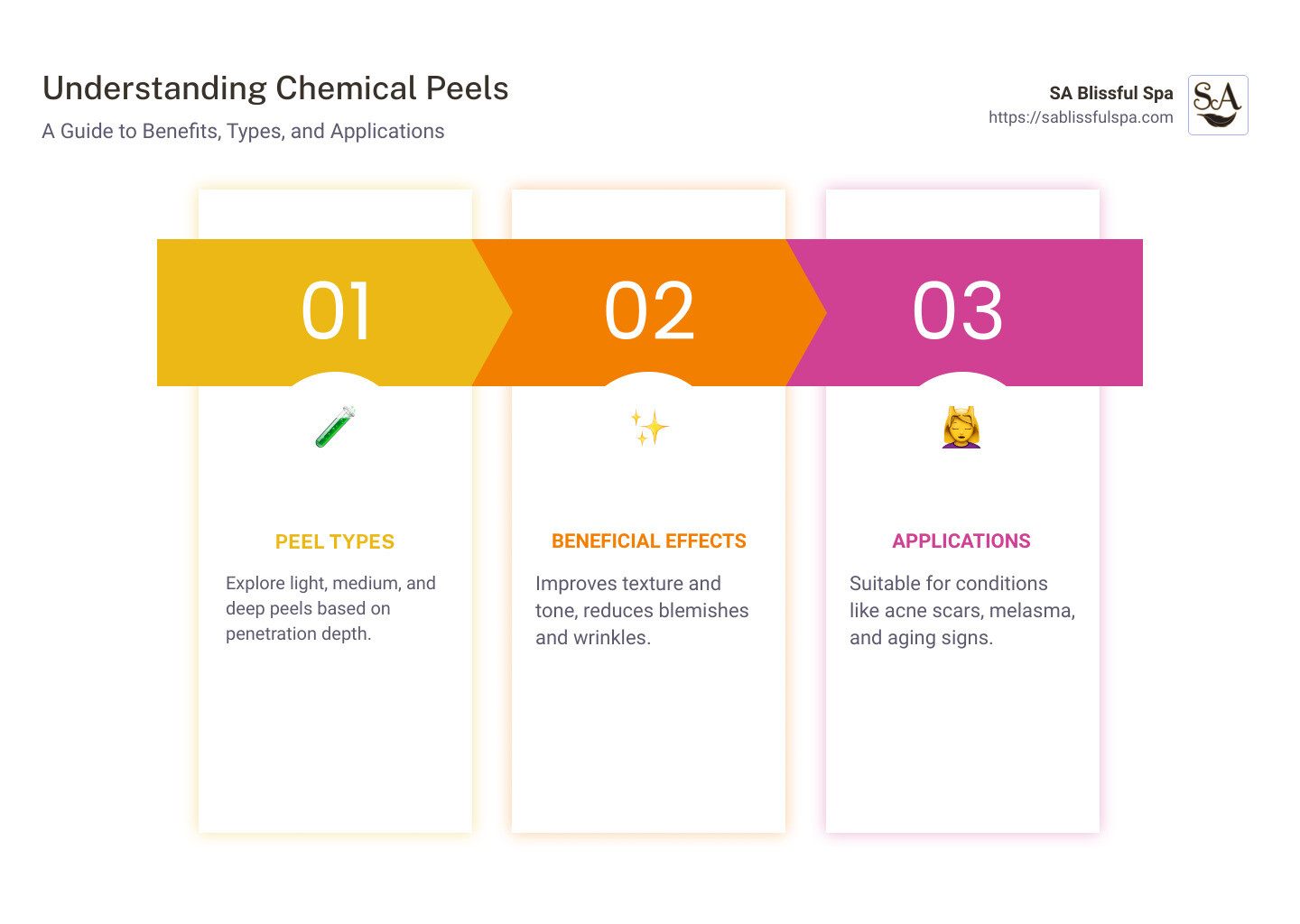
What is a chemical peel? It’s a skincare procedure that gently removes the outer layers of skin using a specialized chemical solution. This process helps to refresh and refresh the skin, revealing a smoother and more youthful complexion. Here’s a quick breakdown:
– Types: Light, medium, deep based on penetration depth.
– Benefits: Improved texture, tone, reduced blemishes, and wrinkles.
– Application: Used for conditions like acne scars, melasma, and aging signs.
Chemical peels offer a quick and effective way to improve your skin’s appearance. They can help diminish fine lines, manage acne scars, and even out skin tone. From addressing mild texture issues with a light peel to more dramatic changes with a deep peel, this treatment can meet various skin improvement needs.
My name is Saloni Bhandari, and I’ve dedicated my career to skincare as an experienced esthetician and the founder of SA Blissful Spa. Through my extensive experience with what is a chemical peel, I’ve crafted personalized treatments that cater to diverse skin needs, ensuring each client feels radiant and refreshd.
A chemical peel is a skincare treatment designed to improve the appearance of your skin by using a chemical solution to exfoliate the outer layers. This process reveals new skin that is typically smoother and has fewer wrinkles than the old skin. Let’s explore how these peels work and the different types available.
Chemical peels work by creating a controlled injury to the skin. This might sound intense, but it’s a carefully managed process that encourages your skin to heal and regenerate. Here’s how it works:
Chemical peels come in three main types, each varying in intensity and depth of skin penetration:
Each type of peel is designed to address specific skin concerns, from mild exfoliation to more intensive skin rejuvenation. Choosing the right peel depends on your skin type, concerns, and goals.

Chemical peels are an effective way to achieve smoother skin and fewer wrinkles. By understanding the different types and how they work, you can make an informed decision about which peel might be right for you.
Chemical peels offer a range of benefits for various skin issues, making them a popular choice for skin rejuvenation. Let’s explore some specific conditions that can be improved with chemical peels:
By targeting these specific skin conditions, chemical peels offer a versatile solution for improving skin health and appearance. Each treatment is custom to address particular concerns, ensuring effective results for a wide range of skin issues.
A chemical peel is typically an outpatient procedure, meaning you can go home the same day. Here’s what you can expect during the process:
Preparation: Before the procedure, your doctor will cleanse your face and protect your hair. They might apply ointment, gauze, or goggles to shield your eyes.
Application: The type of peel you receive—light, medium, or deep—determines the chemicals used. For a light peel, your doctor may use a solution with glycolic or salicylic acid. This will be applied using a brush or cotton ball, and you may feel a mild stinging. Medium peels often use trichloroacetic acid, sometimes combined with glycolic acid, applied with a cotton-tipped applicator. You might feel a stinging or burning sensation for up to 20 minutes. For deep peels, stronger chemicals are used, and anesthesia might be necessary to manage discomfort.
Pain Management: Light peels usually don’t require pain relief. However, for medium and deep peels, you might receive a sedative or painkiller to help with any discomfort.
Cooling Measures: After a medium peel, your doctor may apply cool compresses or provide a hand-held fan to soothe your skin.
Proper aftercare is crucial for healing and achieving the best results. Here’s how you should care for your skin following a chemical peel:
Sun Protection: Your skin will be sensitive after the peel, so avoiding direct sun exposure is essential. Use a mineral-based sunscreen to shield your skin.
Skin Sensitivity: Your skin may feel tender. Avoid picking or peeling the skin as it heals to prevent scarring.
Bandages and Soothing: For deep peels, bandages might be applied to protect the treated area. You can use a moldable icepack or a bag of frozen vegetables to reduce swelling and discomfort.
Follow-Up Care: Regular follow-up visits with your doctor are important to monitor your skin’s healing process. They can address any concerns and ensure your skin is recovering well.
Gentle Cleansing: Use a gentle cleanser and pat your skin dry with a soft towel. Avoid rubbing or using a washcloth.
Moisturizing: Apply a non-comedogenic moisturizer after cleansing to keep your skin hydrated.
For those undergoing medium to deep peels, additional steps such as vinegar soaks may be recommended to reduce bacterial overgrowth and aid healing.
By following these post-treatment care steps, you can help your skin heal properly and enjoy the rejuvenating benefits of a chemical peel.
While chemical peels can offer numerous benefits, they also come with potential risks and side effects. Understanding these can help you make an informed decision.
After a chemical peel, some people may experience a temporary change in skin color. This is more common in individuals with darker skin tones, particularly those with Fitzpatrick skin types III to VI. It’s important to discuss this with your clinician if you’re concerned about pigmentation changes.
Though rare, scarring can occur in certain areas of the face after a chemical peel. If you have a history of scarring, it’s crucial to inform your doctor. Fortunately, if scarring does happen, it can usually be treated effectively.
Chemical peels can increase the risk of bacterial, viral, or fungal infections. If you have an active infection, it’s advisable to postpone the procedure until it resolves. Your clinician might also recommend antiviral medication if you have a history of herpes outbreaks to prevent reactivation.
This condition involves dark spots appearing on the skin after inflammation. It is more common in individuals with darker skin tones. Using a hydroquinone cream before and after the procedure can help reduce this risk by inhibiting melanin production.
For those with a history of herpes simplex virus, there’s a small chance that a chemical peel could reactivate cold sores. Discuss preventive measures with your doctor, who may prescribe medication to manage this risk.
Not everyone is an ideal candidate for chemical peels. If you’re pregnant, breastfeeding, or have recently used isotretinoin (a medication for severe acne), it’s best to avoid this treatment. Additionally, individuals with poor wound healing or certain skin types may be advised against peels. Always consult with a healthcare professional to determine if a chemical peel is right for you.
The level of discomfort during a chemical peel varies based on the type of peel you choose. Light peels typically cause a mild stinging sensation that is very manageable. These are often compared to having a slight sunburn.
Medium peels, on the other hand, can lead to more noticeable stinging and burning sensations that might last for up to 20 minutes. During these procedures, your clinician may provide a cool compress or a hand-held fan to soothe your skin.
For deep peels, the discomfort is more intense. These procedures might require sedation, numbing the treatment area, and intravenous fluids to help manage pain and ensure comfort.
The effects and recovery time of a chemical peel depend on its depth:
The cost of a chemical peel varies based on the type of peel and the ingredients used. Here’s a general idea:
At SA Blissful Spa, we offer a range of pricing options to fit different budgets and skin needs, ensuring you get the best value for your investment in skin health.
At SA Blissful Spa, we believe in the transformative power of chemical peels and their ability to refresh and improve your skin’s health and appearance. Our expert treatments are custom to meet your unique skin care needs, ensuring that each client receives personalized care in a serene and relaxing environment.
We understand that achieving healthy, radiant skin is not just about the treatment itself but also about the experience and the care that goes into it. Our team of experienced estheticians is dedicated to providing you with the highest quality service, using advanced techniques and top-tier products to ensure optimal results.
Whether you’re looking to reduce fine lines, treat acne scars, or improve skin texture, our chemical peels are designed to address a variety of skin concerns. Our personalized approach means that we carefully assess your skin type and condition to select the most suitable peel for you, ensuring both safety and effectiveness.
At SA Blissful Spa, we are committed to helping you achieve the skin of your dreams while providing a sanctuary where you can escape the stress of everyday life. Experience the benefits of our expert treatments and see the difference in your skin’s health and appearance.
Ready to refresh your skin? Explore our range of peels and schedule your appointment today!
Your journey to healthier, more beautiful skin starts with us.


Book your first appointment online and enjoy 15% off your first service (one-time offer).
Use code NEWCLIENT15