Can chemical peels help with acne? In short, yes. Chemical peels are a popular treatment for tackling both active acne and acne scars. By exfoliating the skin and unclogging pores, they offer a promising solution for those seeking clearer skin. Here’s a quick overview of how they can make a difference:
Acne is more than a teenage dilemma. For many adults, it lingers on as a stubborn reminder of adolescent woes. Maintaining skin health becomes essential to prevent the occurrence of acne and its aftermath—scarring. Chemical peels offer an effective route to address these skin issues, providing a path to healthier, brighter skin.
As an experienced esthetician and founder of SA Blissful Spa, I’m Saloni Bhandari. With years of expertise in skincare and a passion for using the benefits of chemical peels, I guide clients on improving their skin health with this powerful treatment. Next, we’ll explore what makes chemical peels a top choice for conquering acne.
Quick look at can chemical peels help with acne:
– chemical peel facial
– facial and peeling
– what is a chemical peel
A chemical peel is a skin treatment where a chemical solution is applied to the skin, causing it to exfoliate and eventually peel off. This process reveals newer, smoother skin underneath, offering a refreshed and refreshd appearance.
Chemical peels are categorized based on how deeply they penetrate the skin. Each type is suited for different skin concerns and desired outcomes.
These are the mildest form of chemical peels. Superficial peels, often called “lunchtime peels,” primarily target the epidermis, the outermost layer of skin. They use mild acids like glycolic acid or salicylic acid. These peels are excellent for treating mild skin issues like dyschromia, acne, and post-inflammatory hyperpigmentation. They are suitable for all skin types and have minimal downtime, typically resulting in smoother, brighter skin.
Medium-depth peels penetrate the papillary to the upper reticular dermis, making them more effective for treating moderate skin issues. They often use trichloroacetic acid (TCA). These peels are ideal for addressing solar keratoses, lentigines, and superficial scars. Patients may experience some peeling and redness, but the results often include improved skin tone and texture.
Deep peels go deeper into the mid-reticular dermis and are used for severe skin concerns like deep wrinkles, photoaging, and precancerous lesions. Phenol is commonly used in these peels. Due to their intensity, deep peels require a more extended recovery period, but they can provide dramatic improvements in skin appearance.

Each type of peel is custom to specific skin needs, ensuring that you get the most out of your treatment. When considering a chemical peel, consult with a professional to determine the best option for your skin type and concerns.
Chemical peels are a popular treatment for acne because they address multiple factors that contribute to breakouts. Let’s explore how different types of chemical peels can help improve acne-prone skin.
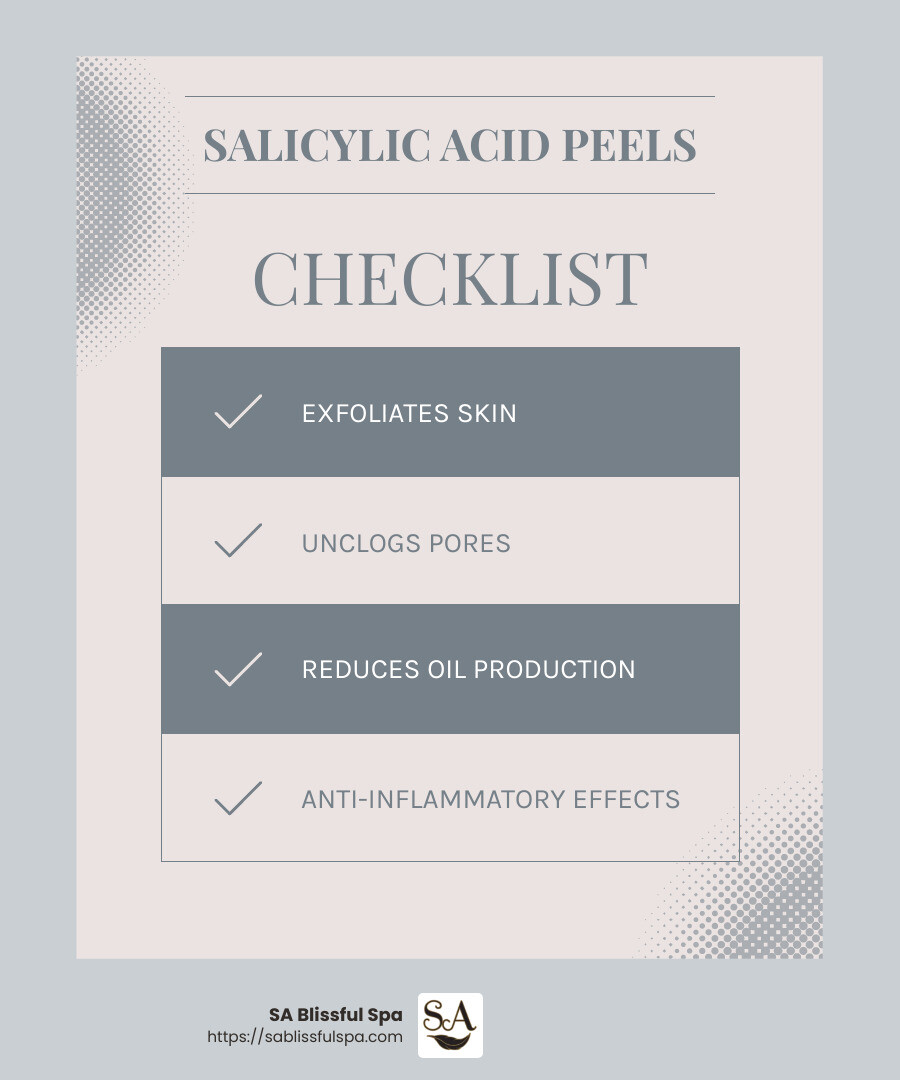
Salicylic acid is a powerhouse when it comes to treating active acne. It’s a type of beta hydroxy acid (BHA) known for its ability to exfoliate the skin and unclog pores. By removing dead skin cells from the surface, salicylic acid peels prevent pores from becoming blocked, which reduces the formation of pimples.
Glycolic acid is an alpha hydroxy acid (AHA) that excels in skin rejuvenation. It penetrates the skin to promote the shedding of dead skin cells and the generation of new ones.
TCA peels are often used for treating acne scars and improving skin texture. They work by removing the outer layers of skin, which encourages new skin growth.
Each type of chemical peel offers unique benefits, making them versatile tools in the fight against acne. Whether it’s reducing oil, unclogging pores, or improving skin texture, chemical peels can be a valuable addition to any skincare routine.
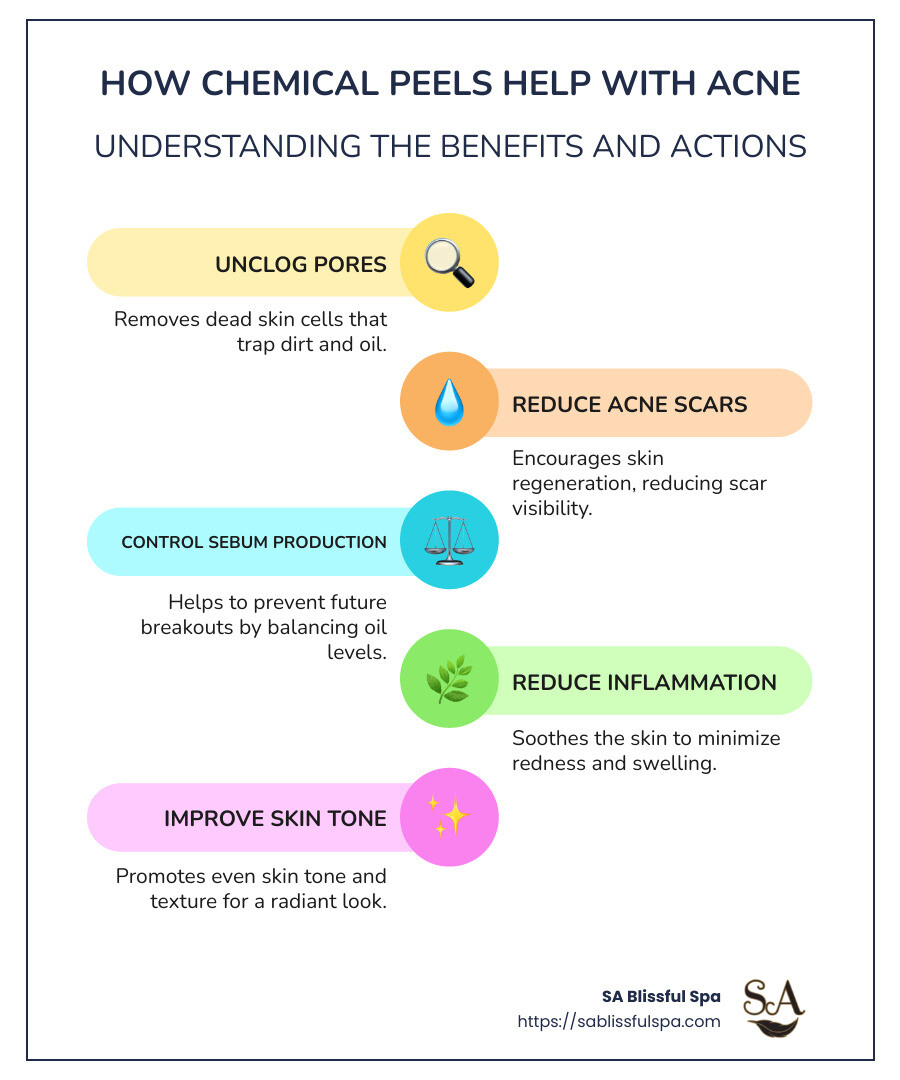
When it comes to tackling acne and its aftermath, chemical peels are a game-changer. They offer a range of benefits that can lead to clearer, healthier skin.
Chemical peels work wonders on active acne by addressing the root causes of breakouts. Here’s how they help:
For those dealing with the scars left behind by acne, chemical peels offer a path to smoother skin:
In summary, chemical peels are a versatile treatment that can reduce acne, improve scars, and improve overall skin tone and texture. They offer a clear path to better skin, addressing both current acne issues and the lingering effects of past breakouts.
When considering chemical peels for acne treatment, it’s crucial to understand their safety across different skin types. While these treatments can be highly effective, they are not without risks. Here’s what you need to know.
Chemical peels can offer significant benefits, but they also come with potential side effects. These include:
The choice between professional and at-home chemical peels is significant. While at-home options might seem convenient, they carry more risks.
While chemical peels can be safe for most skin types, professional supervision is key to minimizing risks and maximizing benefits. Always consult with a skincare expert to determine the best approach for your unique skin type and concerns.
When it comes to treating acne, salicylic acid peels are often the top choice. This is because salicylic acid is excellent at exfoliating the skin and penetrating deep into the pores to remove impurities. It helps reduce oil production and has anti-inflammatory properties, which can significantly improve acne-prone skin.
Another option is glycolic acid peels, known for their ability to refresh the skin and stimulate collagen production. These peels can help improve skin texture and reduce the appearance of acne scars, making them a good choice for those dealing with post-acne marks.
For more stubborn acne scars, trichloroacetic acid (TCA) peels may be recommended. TCA peels are effective at resurfacing the skin and improving its overall texture, which can help reduce the visibility of scars.
The frequency of chemical peels depends on several factors, including the type of peel, your skin type, and the severity of your acne. Salicylic acid peels are typically mild and can be done every two weeks. Glycolic acid peels might be recommended every three to four weeks, while TCA peels are usually spaced out more due to their intensity, often every six to eight weeks.
It’s essential to consult with a skincare professional to create a personalized treatment plan. They will consider your skin’s needs and adjust the frequency of treatments accordingly.
Hormonal acne can be particularly challenging to manage, but chemical peels can be part of an effective treatment strategy. Salicylic acid peels are beneficial for hormonal acne because they help control oil production and reduce inflammation, which are common issues in hormonal breakouts.
However, it’s important to have a professional, like those at SA Blissful Spa, assess your skin. They can recommend the best treatment options and ensure that the peels are used safely and effectively.
In conclusion, while chemical peels can be a valuable tool in managing acne, including hormonal acne, they should be part of a comprehensive treatment plan custom by a professional.
At SA Blissful Spa, we believe in the power of personalized care to transform your skin and improve your overall well-being. Our expert estheticians are dedicated to providing top-tier chemical peels that cater to your unique skin concerns, whether you’re dealing with active acne, acne scars, or other skin issues.
Expert Treatments for Skin Health Improvement
Chemical peels are a versatile treatment option that can help you achieve clearer, healthier skin. By exfoliating the top layers of skin, they unclog pores, reduce oil production, and diminish the appearance of acne scars. Our team at SA Blissful Spa is skilled in selecting the right type of peel for your skin type and concerns, ensuring optimal results.
We offer a range of chemical peels, from salicylic acid for exfoliation and oil control, to glycolic acid for skin rejuvenation and collagen stimulation, and trichloroacetic acid (TCA) for improving skin texture and reducing stubborn scars.
Personalized Care in a Serene Environment
At SA Blissful Spa, we understand that every client’s skin is different. That’s why we take the time to assess your skin and create a customized treatment plan that fits your needs. Our serene spa environment is designed to provide relaxation and rejuvenation, allowing you to escape the stresses of daily life while receiving expert skincare.
If you’re ready to start on a journey to healthier, more radiant skin, we invite you to find the benefits of chemical peels at SA Blissful Spa. Our personalized approach ensures that you receive the best care possible, custom to your skin’s unique needs.
Experience the change with our customized chemical peels and take the first step towards better skin health today.


Book your first appointment online and enjoy 15% off your first service (one-time offer).
Use code NEWCLIENT15