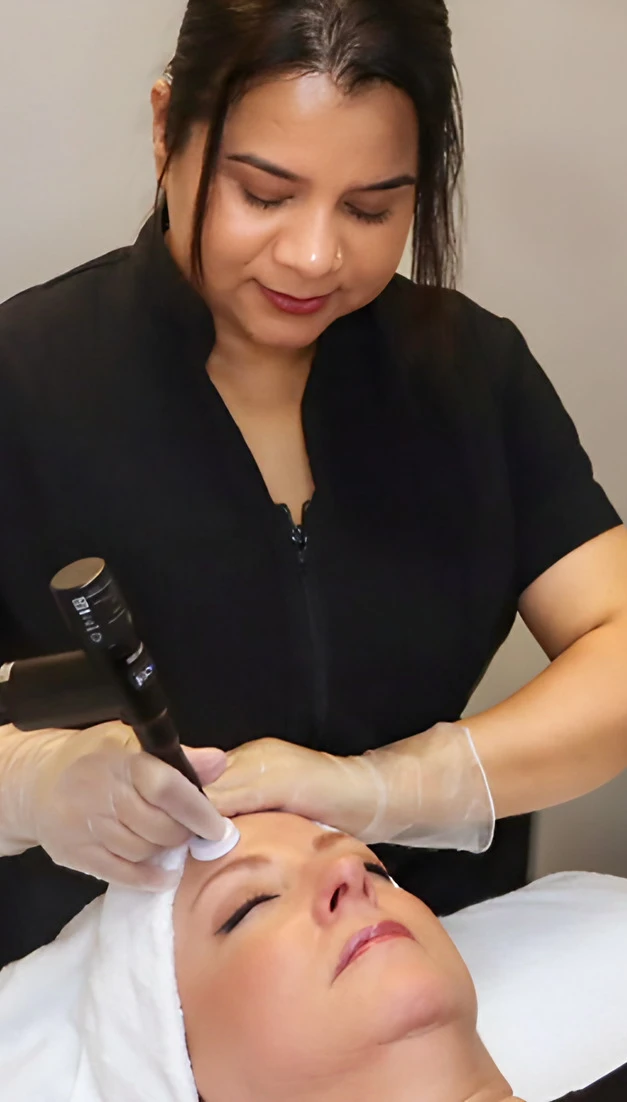
Showing the Benefits of a Chemical Facial Peel
Considering a treatment to refresh your skin? The
benefits of a chemical facial peel are truly remarkable, offering a pathway to healthier, more radiant skin. A chemical peel involves applying a specialized solution to your skin, which gently exfoliates its top layers. This process encourages new, healthier skin to emerge, leading to significant improvements in your complexion.
Here are the key benefits you can expect:
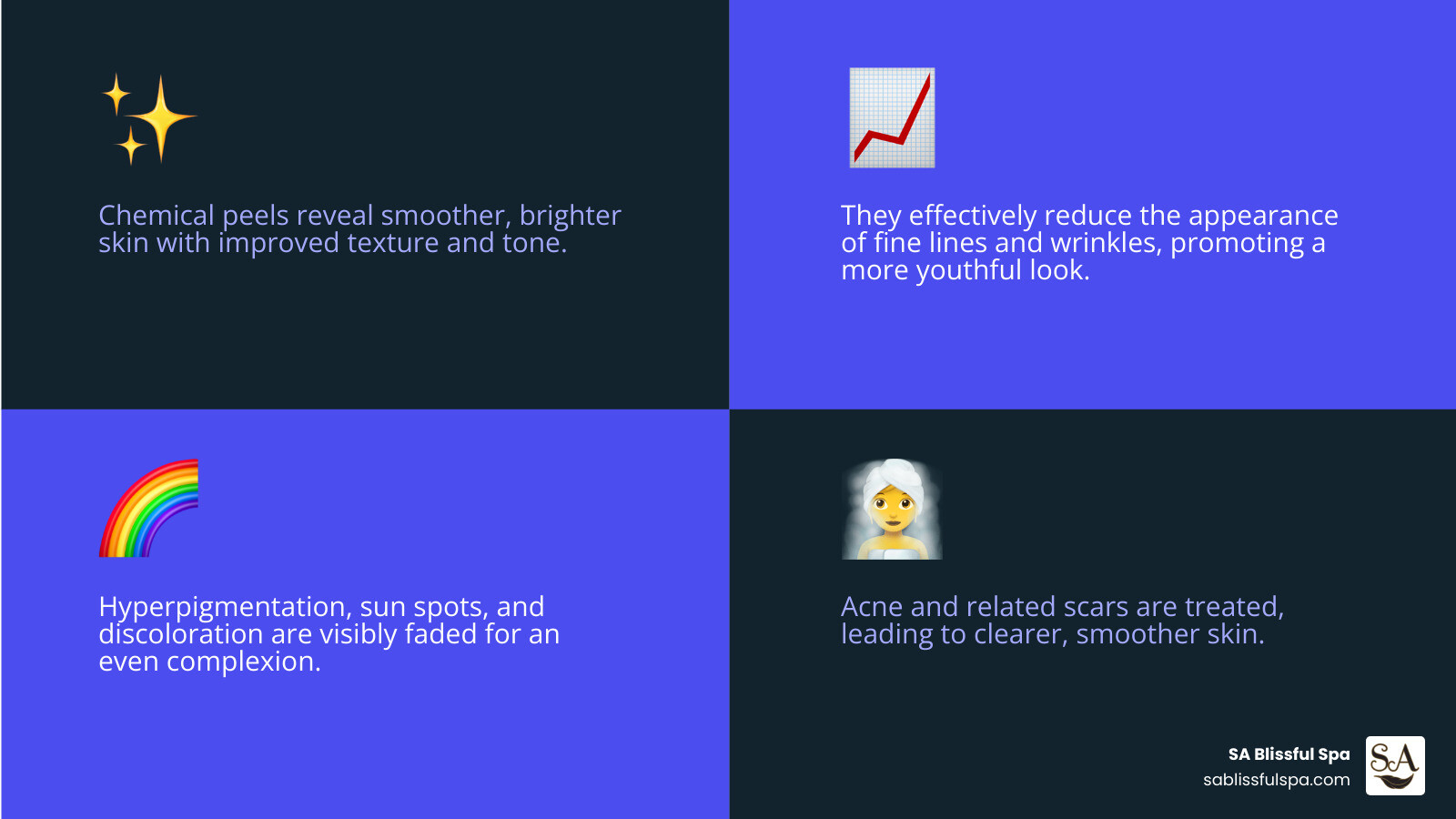
- Improves skin texture and tone: Reveals smoother, brighter, and more even skin.
- Reduces fine lines and wrinkles: Promotes a more youthful appearance.
- Fades hyperpigmentation: Minimizes sun spots, age spots, and discoloration.
- Treats acne and acne scars: Helps clear breakouts and smooths imperfections.
- Improves product absorption: Allows your skincare products to work more effectively.
- Stimulates collagen production: Boosts skin elasticity and firmness.
- Addresses precancerous growths: Can remove certain problematic skin lesions.
As an experienced esthetician and founder of SA Blissful Spa, I've seen the transformative
benefits of a chemical facial peel. My expertise lies in crafting personalized skincare journeys, helping clients achieve radiant, healthy skin through advanced techniques and dedicated care.
The Top 7 Surprising Benefits of a Chemical Facial Peel
Ever wondered what magic a chemical peel can work on your skin? We're often asked, "What exactly can a chemical peel do for my skin?" Well, this cosmetic procedure is a minimally invasive yet incredibly effective way to significantly boost your skin health and overall appearance. It works by accelerating cellular turnover and stimulating collagen production, revealing the fresh, vibrant skin underneath.
Millions of chemical peels are performed each year, and it’s no wonder! Their proven efficacy speaks for itself. Let's dive deeper into the truly surprising
benefits of a chemical facial peel that can transform your complexion and leave you glowing from the inside out.
More info about what a chemical peel is
1. Improves Overall Skin Texture and Tone
One of the most immediate and noticeable
benefits of a chemical facial peel is the dramatic improvement in your skin's texture and tone. If you've been battling dull skin, rough patches, or an uneven complexion, a peel can be a true game-changer. By gently removing the outermost layer of dead, damaged skin cells, we reveal the fresh, new skin beneath.
This process results in a significantly smoother complexion, a more radiant glow, and a visibly more even skin tone with improved clarity. It's truly like pressing the "reset" button for your skin, leaving it feeling incredibly soft and looking beautifully uniform.

2. Reduces Fine Lines and Wrinkles
Who doesn't want to turn back the clock a little? Chemical peels are fantastic anti-aging allies in your skincare routine. They effectively reduce the appearance of fine lines and wrinkles, including those pesky crow's feet around the eyes, forehead lines, and lines around the mouth.
But this isn't just about surface improvement! The controlled exfoliation triggers your skin's natural healing process, stimulating the production of new collagen and elastin. Think of collagen as the scaffolding that keeps our skin firm and youthful. Boosting its production helps plump up the skin from within, diminishing wrinkles and contributing to a wonderfully youthful appearance.
More on anti-aging peels
3. Helps Manage and Treat Acne
For those battling persistent acne, chemical peels can be a powerful and often surprising tool. They are particularly effective in managing and treating various forms of acne, including common acne vulgaris. The specialized acids in the peel work wonders to unclog pores by dissolving dead skin cells and excess oil that contribute to pesky breakouts.
Beyond just exfoliation, certain acids like salicylic acid offer fantastic anti-inflammatory properties and can even help kill acne-causing bacteria, reducing redness and preventing future flare-ups. Glycolic acid peels also provide significant
benefits of a chemical facial peel by promoting healthy cell turnover, which helps keep pores clear and skin less prone to congestion. Here at SA Blissful Spa, we've seen incredible results in helping our clients achieve clearer, healthier skin.
A study on chemical peels for acne and
More on glycolic peels for acne
4. Fades Hyperpigmentation, Sun Spots, and Discoloration
Do sun spots, age spots, melasma (those dark patches often caused by hormonal changes), freckles, or post-inflammatory hyperpigmentation (the dark marks left after acne or injury) make your complexion appear uneven or aged? Chemical peels are highly effective in fading these various forms of discoloration.
By gently removing the pigmented outer layers of skin, the peel encourages new, evenly toned skin to surface. This significantly reduces the visibility of dark spots, leading to a brighter, more uniform skin tone. It’s truly like using a magic eraser on years of sun exposure and skin imperfections!
More on hyperpigmentation removal
5. Minimizes the Appearance of Scars
While it's important to note that chemical peels cannot remove deep, pitted scars, they can significantly minimize the appearance of mild acne scars and other superficial scars. The peeling process helps to resurface the skin, smoothing out irregularities and improving overall texture.
This makes shallow scars less noticeable and blends them more seamlessly with the surrounding skin. For clients looking to achieve a more even and refined skin surface after experiencing acne, this is a truly valuable
benefit of a chemical facial peel.
See before and after photos
6. Improves Skincare Product Efficacy
Think of your skin like a sponge. If it's covered in a layer of dead, dry cells, it simply can't absorb moisture or active ingredients very well. A chemical peel acts like a deep, refreshing cleanse, expertly removing this dead skin barrier. This allows your precious skincare products to penetrate deeper and work
much more effectively.
What does this mean for you? It means your expensive serums, luxurious moisturizers, and targeted treatments will deliver their full potential, maximizing their results and truly giving you more bang for your buck. It perfectly boosts your entire home care regimen, ensuring every product works its hardest for you.
7. Can Address Precancerous Growths
This is perhaps one of the most surprising and medically significant
benefits of a chemical facial peel. Certain deeper chemical peels, particularly those designed to address significant sun damage, can effectively treat precancerous growths known as actinic keratoses.
These are rough, scaly patches that typically develop on sun-exposed skin. If left untreated, they carry a small risk (around 5-10%) of developing into squamous cell carcinoma, a type of skin cancer. By carefully removing these problematic cells, chemical peels offer a valuable medical benefit that extends beyond just cosmetic improvement, helping to maintain your long-term skin health. Of course, any concerns about precancerous growths should always be discussed with a dermatologist.
Information on actinic keratosis
Understanding the Different Types of Chemical Peels
With such a wide range of
benefits of a chemical facial peel, it's clear that not all peels are created equal. Choosing the right peel depends on your specific skin concerns, your desired results, and your skin type. This is why a professional consultation is crucial. We work with you to determine the best approach for your unique skin.
More on the types of peels
Light, Medium, and Deep Peels Explained
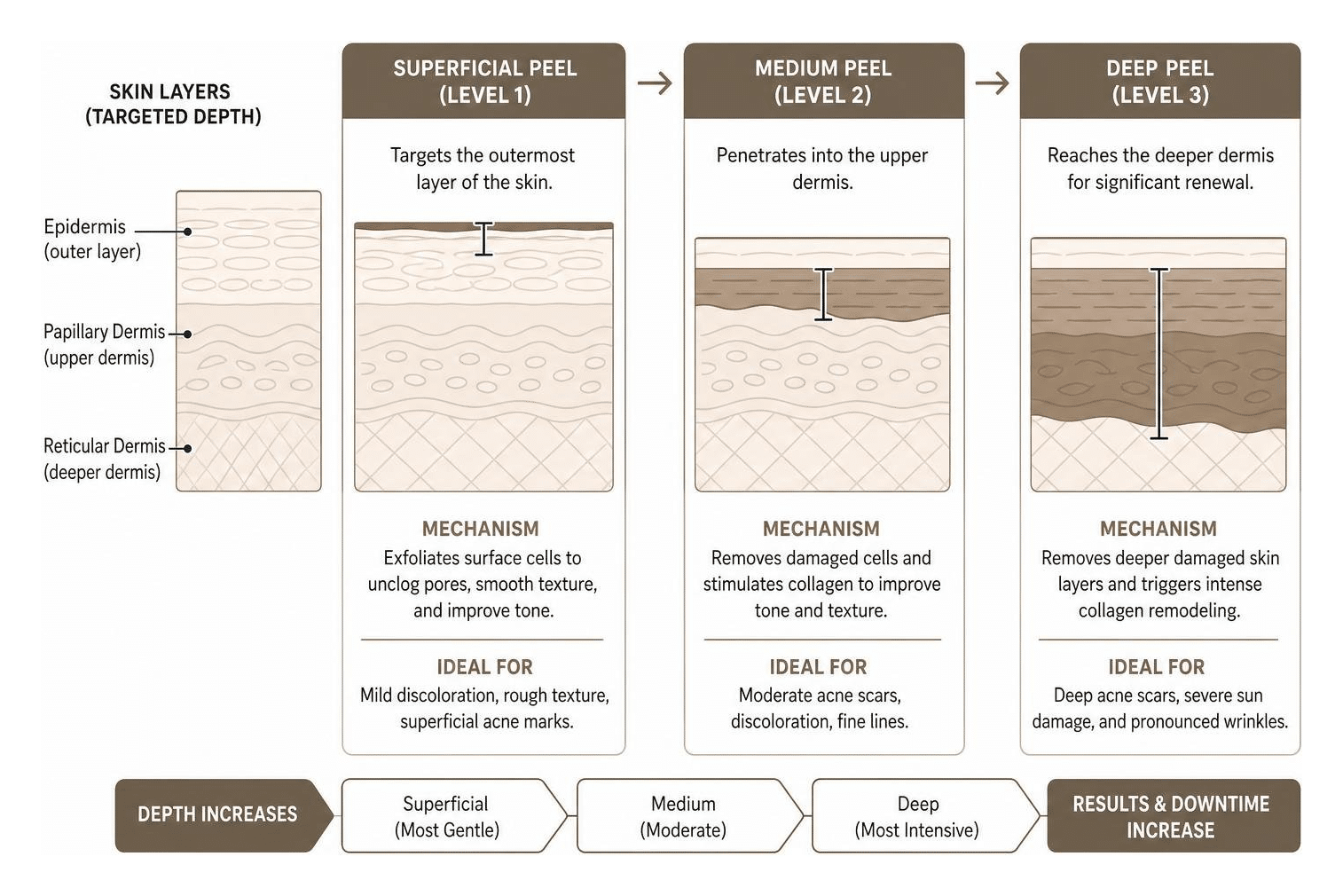
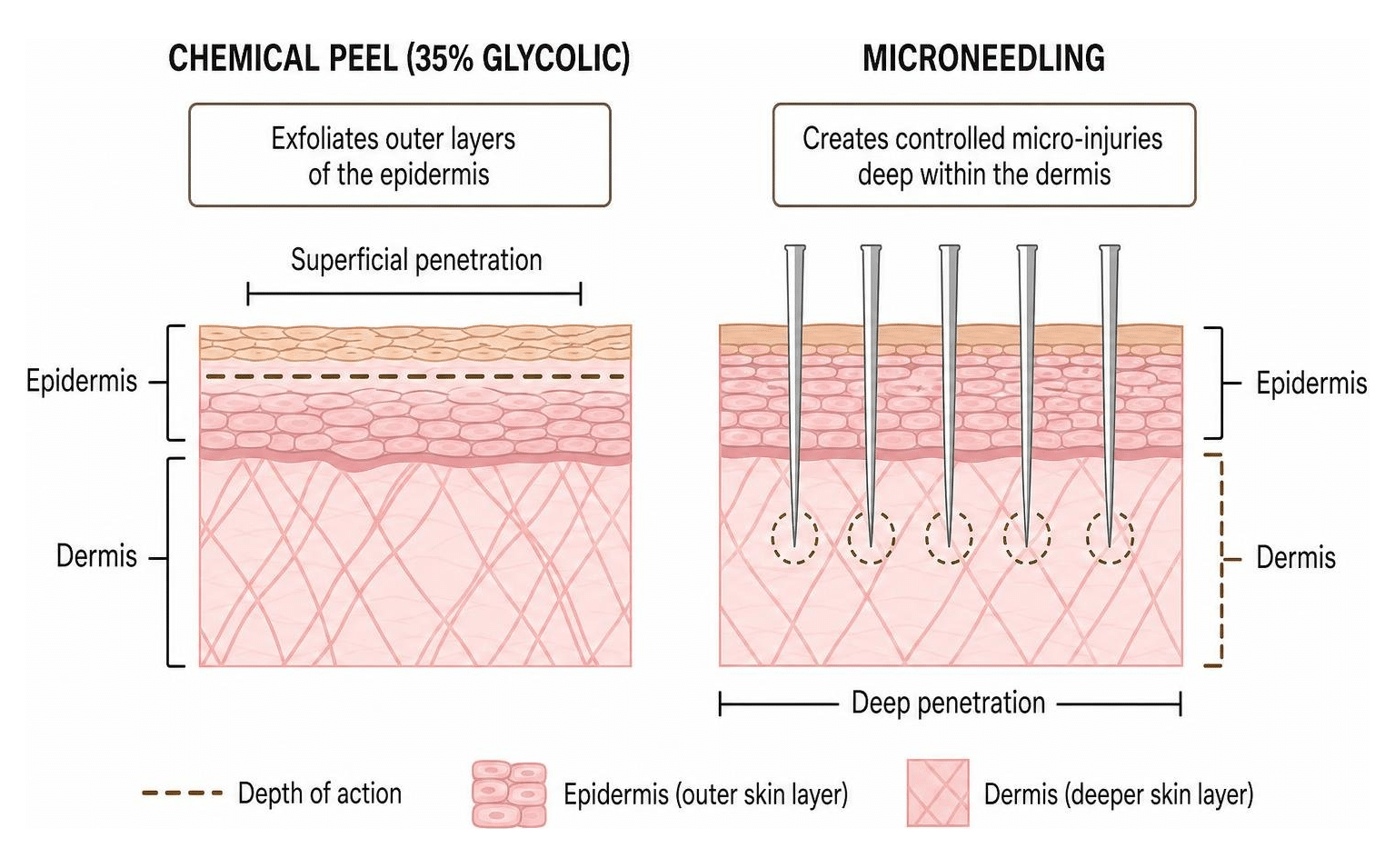
Chemical peels are broadly categorized by their depth of penetration into the skin: light (superficial), medium, and deep. Each type targets different layers of the skin and addresses varying degrees of concerns.

| Feature |
Light (Superficial) Peel |
Medium Peel |
Deep Peel |
| Depth of Penetration |
Epidermis (outermost layer) |
Epidermis and upper dermis |
Epidermis and mid-to-lower dermis |
| Common Acids Used |
Alpha Hydroxy Acids (AHAs like Glycolic, Lactic, Mandelic), Beta Hydroxy Acids (BHAs like Salicylic) |
Trichloroacetic Acid (TCA) in various concentrations, sometimes combined with other acids like Glycolic or Jessner |
Phenol (Carbolic Acid), high-strength TCA |
| Skin Concerns Addressed |
Fine lines, mild acne, superficial hyperpigmentation (freckles, sun spots), dullness, rough texture |
Wrinkles, acne scars, more significant hyperpigmentation (age spots, melasma), sun-damaged skin, some precancerous growths |
Deep wrinkles, severe sun damage, deep scars, precancerous growths (actinic keratoses) |
| Typical Recovery Time |
1-7 days (mild redness, flaking, dryness, similar to sunburn) |
7-14 days (significant redness, swelling, blistering, crusting, peeling) |
14-21 days (severe redness, swelling, crusting, oozing, requires surgical dressing) |
| Recommended Frequency |
Every 2-5 weeks for maintenance or a series of 3-6 initially |
Every 6-12 months |
One-time treatment (effects can last up to 10 years) |
Who is an Ideal Candidate for a Peel?
Generally, individuals with fair skin and light hair tend to be ideal candidates for chemical peels, as they have a lower risk of post-inflammatory hyperpigmentation. However, many chemical peels can be safely and effectively performed on darker skin tones with careful selection of the peel type and experienced professional application. Superficial peels, in particular, can often be used on all skin types.
However, there are several contraindications or reasons to avoid the procedure:
- Active Infections or Open Wounds: If you have cold sores (herpes simplex), bacterial, fungal, or viral infections in the treatment area, or any open sores, you should postpone the peel until these conditions resolve. Prophylactic antiviral medication may be prescribed if you have a history of cold sores.
- Pregnancy or Breastfeeding: Chemical peels are generally not recommended for pregnant or breastfeeding individuals.
- Recent Isotretinoin Use: If you've been on oral isotretinoin (like Accutane) within the past 6-12 months, your skin may be too fragile for a peel due to increased sensitivity and impaired healing.
- History of Keloids or Abnormal Scarring: Individuals prone to keloid scarring may be at higher risk for adverse reactions.
- Certain Medical Conditions: Conditions like uncontrolled diabetes, autoimmune diseases, or a compromised immune system can affect healing.
- Recent Procedures: Avoid peels if you've had recent facial surgery, radiation therapy to the face, or certain laser treatments.
- Specific Medications: Discuss all medications, including retinoids (like Retin-A), with your esthetician, as some may need to be stopped prior to the peel.
A thorough evaluation by a qualified professional is essential to determine if a chemical peel is right for you.
An overview from the AAD
What to Expect: The Procedure and Recovery Process
Undergoing a chemical peel is typically an outpatient procedure performed in a comfortable spa or clinic setting. Here’s a general idea of what you can expect:
During the Procedure:
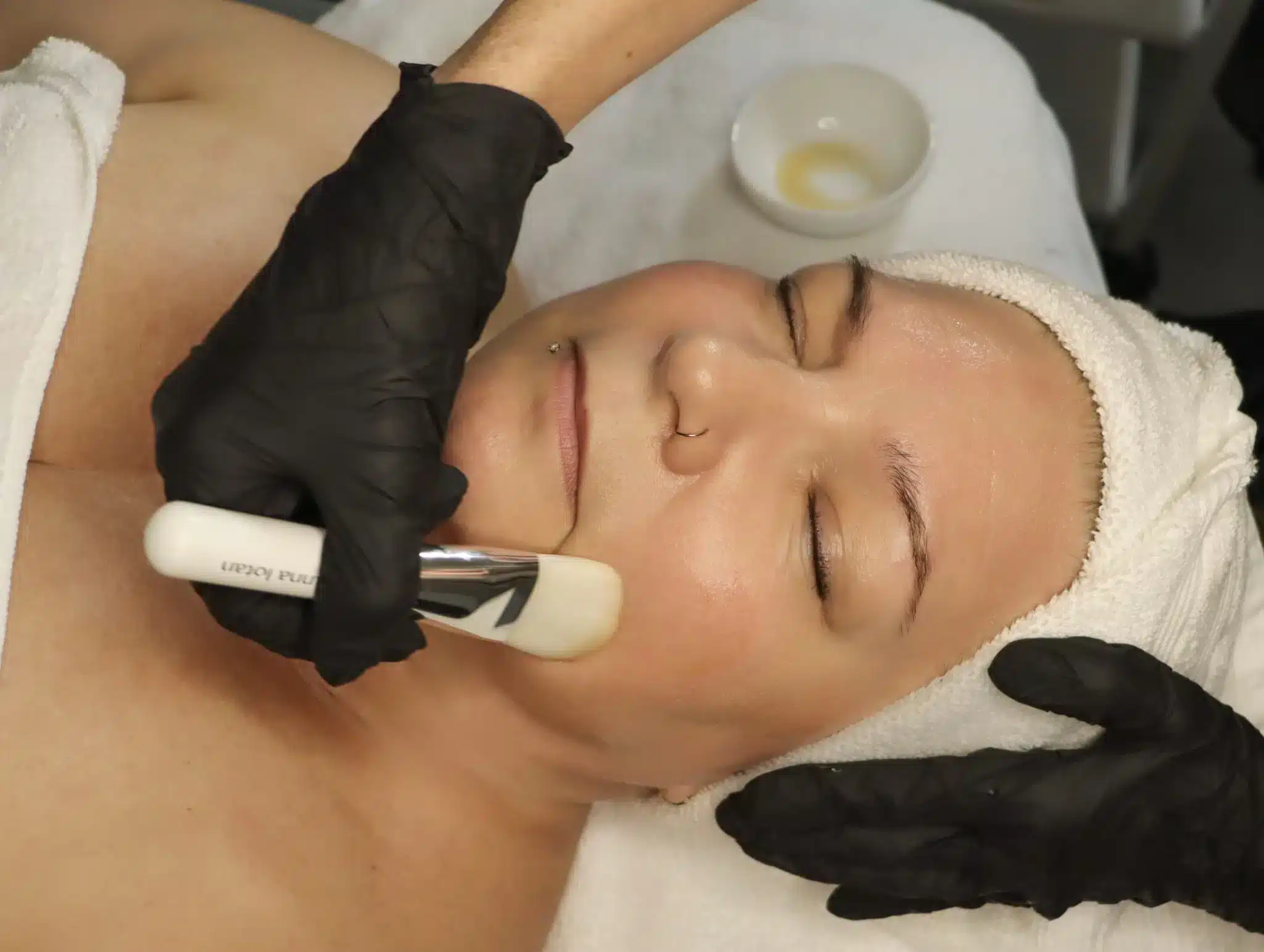
First, your skin will be thoroughly cleansed to remove any oils or makeup. Your eyes and hair will be protected. Then, the chemical solution is carefully applied to your skin.
- Light Peels: You might feel a mild tingling or stinging sensation for a few minutes. The solution might be left on for a specific time or neutralized after application.
- Medium Peels: The sensation can be more intense, often described as a burning or warm feeling that lasts about 5-10 minutes, followed by some stinging. Cooling compresses or a fan may be used to improve comfort.
- Deep Peels: These often involve local anesthetic or sedation to manage discomfort. The solution is applied in sections, and cardiac monitoring may be used due to the nature of the chemical used (phenol).
Aftercare and Recovery:
The recovery process varies significantly with the depth of the peel, but diligent aftercare is crucial for all types to ensure optimal results and minimize risks.
- Light Peels: You'll experience redness, tightness, and some scaling or flaking, similar to a mild sunburn. This typically resolves within 3-7 days. You can usually return to normal activities immediately, but strict sun protection is paramount. Makeup can often be applied after a day or two.
- Medium Peels: Expect more pronounced redness, swelling, and a sunburning sensation. Blistering and crusting may occur, followed by peeling that can last 7-14 days. It's common to experience discomfort, which can be managed with over-the-counter pain relievers. We recommend staying home during the most intense peeling phase. Sun exposure must be completely avoided for several weeks, and redness can persist for months.
- Deep Peels: This is the most intensive recovery. Your skin will be severely red, swollen, and may require surgical dressings. Significant crusting and peeling will occur over 14-21 days. Pain medication is usually necessary. You'll need to remain at home during the initial healing. Redness can last for several months, and new skin will be extremely sun-sensitive indefinitely. Sun protection becomes a lifelong commitment.
For all peels, we emphasize the critical importance of sunscreen. New skin is incredibly fragile and susceptible to sun damage. Using a broad-spectrum SPF 30+ daily is not just a recommendation; it's a necessity to protect your investment and maintain the
benefits of a chemical facial peel.
Potential Risks, Limitations, and Average Costs
While the
benefits of a chemical facial peel are truly wonderful for many, it's also super important to have all the facts. Making an informed decision means understanding everything – from the amazing results to the potential risks, what peels can't do, and, of course, the financial side. Our top priority at SA Blissful Spa is always your safety, satisfaction, and ensuring you have realistic expectations.
Are There Risks or Side Effects?
When a chemical peel is performed by a qualified professional, it's generally a very safe procedure. However, just like with any cosmetic treatment, there are some potential risks and side effects to be aware of. Most of these are temporary and a normal part of your skin's healing journey:
You can expect some
temporary redness, swelling, and scabbing. The intensity and how long these last will depend on how deep your peel is. Think of it as your skin working hard to reveal its new, fresh self!
While rare, especially with lighter and medium peels, there's a small risk of
scarring. This risk goes up if aftercare instructions aren't followed carefully, or if your skin is prone to keloids (raised scars).
Sometimes, peels can lead to
changes in skin color. This might show up as hyperpigmentation (darker spots) or hypopigmentation (lighter spots). People with darker skin tones have a slightly higher chance of hyperpigmentation. But don't worry, we minimize this risk by carefully choosing the right peel for you, sometimes suggesting skin preparation before your peel, and always stressing how crucial sun protection is afterward.
Infection is very rare, but it can happen if the treated area isn't kept clean during healing. Also, if you have a history of cold sores, a peel could
reactivate a cold sore. We often recommend taking antiviral medication beforehand to prevent this.
Finally, with deep phenol peels (which are very intensive and rarely done), there's an extremely rare risk of
organ damage. These peels are always done under strict medical supervision with careful monitoring to keep you safe.
It’s also good to know what chemical peels
can’t do. They have certain
limitations:
- They cannot fix sagging skin. Peels work on the skin's surface and texture, but they don't tighten loose skin that's succumbed to gravity. Other procedures might be better for that.
- They cannot remove deep scars. While they do wonders for superficial scars and texture, very deep, pitted acne scars or other significant scarring might need different, more intensive treatments.
- They cannot change pore size or remove broken blood vessels. Peels can help clear out clogged pores, making them look less noticeable, but they don't actually shrink your pore size. And for those pesky broken capillaries or spider veins, laser treatments are usually the answer.
How Much Does a Chemical Peel Cost?
The cost of a chemical peel can vary quite a bit. This depends on several factors like the specific type of peel (light, medium, or deep), where the spa or clinic is located, the experience of your provider, and how many sessions you might need to achieve your goals.
Just a friendly heads-up: the prices you see below are average costs based on general internet data. They are
not the actual prices for services at SA Blissful Spa. We encourage you to give us a call or stop by for a consultation to get our current service fees and a personalized treatment plan!
- Light Peels: These are usually the most budget-friendly, often ranging from $150 to $500 per session. Since light peels often work best in a series, remember to factor in the cost of multiple treatments for the best results.
- Medium Peels: These fall in the middle price range, typically costing anywhere from $1,000 to $3,000 per session. Because they penetrate deeper and offer more dramatic results, you generally won't need as many sessions as with light peels.
- Deep Peels: These are the most significant investment, often ranging from $3,000 to $9,000 or more for a full facial treatment. Deep peels are usually a one-time procedure due to their intensity and incredibly long-lasting effects.
It’s important to know that chemical peels are almost always considered cosmetic treatments. This means they are
generally not covered by insurance. We'll always discuss all financial aspects with you during your consultation so you can plan comfortably.
More on peel costs
Frequently Asked Questions about Chemical Peels
We know you have questions! Here are some of the most common inquiries we receive about chemical peels:

How many chemical peels are needed to see results?
The number of chemical peels needed to see optimal results largely depends on the type of peel, your specific skin concerns, and your individual skin's response.
- Light Peels: For significant improvement, a series of 3 to 6 light peels, spaced 2 to 5 weeks apart, is often recommended. Think of it as a cumulative process, building up to a beautiful, sustained glow. After the initial series, maintenance peels every few months can help prolong the benefits of a chemical facial peel.
- Medium Peels: Typically, 1 to 2 medium peels per year are sufficient to achieve and maintain desired results. Their deeper action means less frequent application.
- Deep Peels: A deep chemical peel is usually a one-time treatment for the face. Its profound effects can last for up to 10 years, making it a powerful long-term solution for severe skin damage.
The best approach is always personalized. During your consultation, we'll assess your skin condition and discuss your goals to create a custom treatment plan.
More on peel frequency for acne
Do chemical peels hurt?
The sensation experienced during a chemical peel varies significantly based on the peel's depth and your individual pain tolerance.
- Light Peels: You'll typically feel a mild tingling, itching, or stinging sensation, which is usually quite tolerable and subsides quickly once the solution is neutralized or removed. It's often compared to a slight sunburn.
- Medium Peels: The sensation can be more intense, described as a warm to hot burning or stinging feeling that can last for 5-10 minutes. We use cooling compresses or a fan to provide relief during the procedure. Discomfort during the recovery phase is manageable with over-the-counter pain relievers.
- Deep Peels: These are the most intense and often require local anesthetic, sedation, or even general anesthesia to ensure your comfort. You'll be closely monitored throughout the procedure. Post-procedure pain is managed with prescribed painkillers.
Rest assured, our priority is your comfort and safety. We'll discuss pain management options and what to expect during your consultation.
While there are many at-home exfoliating products marketed as "peels," a professional chemical peel is a very different procedure. We strongly advise against attempting to perform a true chemical peel on yourself at home. Here's why:
- Risk of Chemical Burns and Scarring: Professional peels use medical-grade acids in concentrations that require expert knowledge and careful application. Without proper training, you risk severe chemical burns, permanent scarring, and disfigurement.
- Uneven Results: Achieving an even application and consistent penetration is nearly impossible without professional technique, leading to patchy results, hyperpigmentation, or even untreated areas.
- Lack of Neutralization and Aftercare Expertise: Professionals know precisely when and how to neutralize the peel and provide specific aftercare instructions to prevent complications. Incorrect neutralization can lead to prolonged chemical activity and severe damage.
- Assessment of Contraindications: A trained professional can properly assess your skin type, medical history, and any contraindications to ensure the peel is safe for you.
At-home "peels" typically contain very low concentrations of acids, offering mild exfoliation but not the transformative
benefits of a chemical facial peel you'd get from a professional treatment. For your safety and to achieve the best possible results, always entrust your skin to trained and certified professionals.
Reveal Your Glow with a Professional Peel
Wow, we've covered a lot, haven't we? It's truly amazing to see just how many incredible
benefits of a chemical facial peel there are! From giving you a wonderfully
smoother texture and more even skin tone, to smoothing out those pesky
fewer wrinkles, helping you achieve
clearer skin free from acne, and even fading away sun spots or addressing certain precancerous growths – it truly is a powerful way to refresh your skin. This comprehensive approach offers a pathway to looking and feeling your best.
Here at SA Blissful Spa, we genuinely believe that achieving beautiful, healthy skin is a wonderful journey – and we're here to walk every step of it with you. Our amazing team of experts is passionate about providing
personalized treatment that's not only safe and effective but also incredibly relaxing. We're dedicated to helping you achieve that radiant, healthy skin you dream of, all within our serene and luxurious spa environment.
Ready to peel back the layers and truly
reveal your glow? We'd love to chat! Let's connect for an
expert consultation to discuss your unique skin and how a professional chemical peel can help you achieve all your skin goals. Your journey to beautiful, refreshd skin starts right here at SA Blissful Spa.
Book your professional chemical peel consultation today