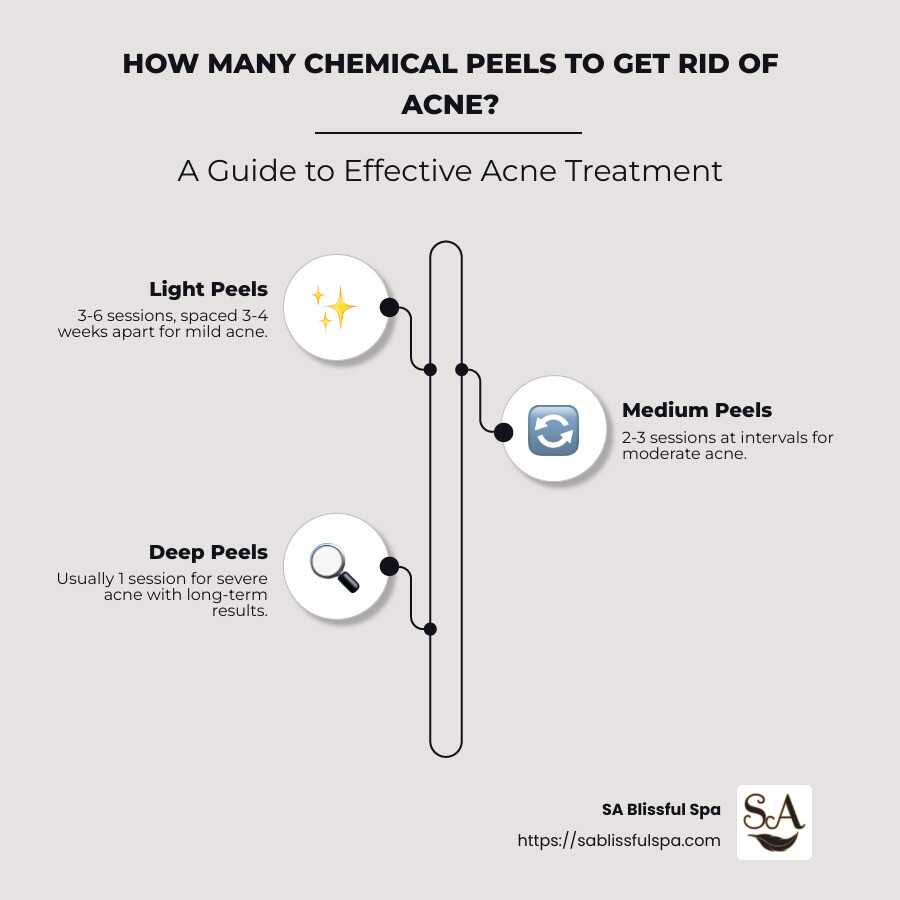
If you’re wondering how many chemical peels to get rid of acne, the answer is generally between 3 to 6 sessions. Superficial peels often require 3 to 6 treatments spaced 3-4 weeks apart, while medium peels* might need 2-3 sessions for optimal results. Deep peels typically deliver significant improvement with a single treatment.
Chemical peels are a celebrated skincare solution, offering not just an acne treatment but a comprehensive approach to skin rejuvenation. This procedure involves applying a specialized chemical solution to the skin, which exfoliates and eventually peels off. This process removes the outermost layer, showing a refreshed layer of skin beneath. It’s a favorite for tackling acne and various skin imperfections.
Welcome to a world where radiant skin isn’t just a dream. I’m Saloni Bhandari, an experienced esthetician and founder of SA Blissful Spa. With years of expertise in skincare, my focus is on helping you find the perfect path to conquer acne through custom chemical peels. Let’s dig deeper into achieving a luminous complexion.
How many chemical peels to get rid of acne vocab to learn:
– are chemical peels good for acne
– what is a chemical peel
– chemical peel facial
Chemical peels are a popular skincare treatment designed to improve the appearance and texture of the skin. They work by applying a chemical solution to the skin, which causes the outer layers to exfoliate and eventually peel off. This process reveals the smoother, fresher skin underneath.
There are three main types of chemical peels: light, medium, and deep. Each type varies in strength and depth of skin penetration, catering to different skin concerns and desired results.
The magic of chemical peels lies in the acid application. When applied, the chemical solution reacts with the skin layers, breaking down the bonds that hold dead skin cells together.
Chemical peels offer a versatile approach to skincare, providing solutions for various skin issues, from acne to aging. By understanding the different types and how they work, you can choose the right peel to achieve your desired skin change.
When it comes to how many chemical peels to get rid of acne, the number of sessions needed can vary based on the severity of the acne and the type of peel used. Let’s break it down by the type of peel:
Light peels, often using alpha hydroxy acids (AHAs) like glycolic acid, are great for mild acne. These peels focus on the outermost skin layer, helping to unclog pores and reduce minor breakouts. Because they are gentle, you can have them more frequently.
Regular treatments can maintain clear skin and prevent future breakouts. They’re perfect for those looking for a superficial treatment with minimal downtime.
Medium peels penetrate deeper than light peels, making them suitable for moderate acne and acne scars. They often use trichloroacetic acid (TCA) to target both the epidermis and the upper dermis.
These peels require a bit more recovery time due to possible redness and peeling but offer more significant results in reducing acne and improving skin texture.
Deep peels are the most intensive and are used for severe acne and deep acne scars. They use powerful agents like phenol to reach the deeper layers of the skin, offering long-term results.
Due to their intensity, deep peels come with extended downtime but can provide dramatic improvements that last for years.
Choosing the right chemical peel depends on your specific skin concerns and desired outcomes. Consulting with a skincare professional can help tailor a treatment plan that best suits your needs.
Chemical peels offer a range of benefits for those struggling with acne. They not only help in treating active acne but also improve the overall appearance of the skin. Let’s explore the immediate and long-term benefits of chemical peels for acne.
Chemical peels can provide quick, noticeable improvements to your skin. Here are some of the immediate benefits you can expect:

With consistent use, chemical peels can offer significant long-term benefits for acne-prone skin:
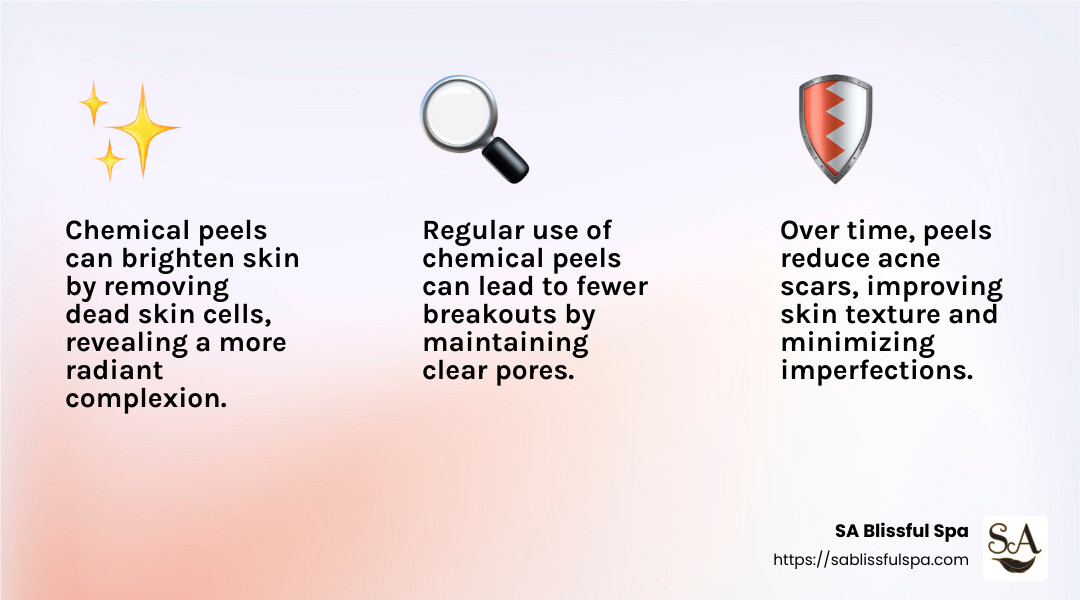
Chemical peels are a versatile treatment option that can significantly improve skin quality. Whether you’re dealing with mild acne or more severe scarring, these peels can be custom to meet your specific needs, providing both immediate relief and lasting improvements.
While chemical peels offer many benefits for acne treatment, they also come with potential side effects and risks. Understanding these can help you make informed decisions and manage any issues that might arise.
Chemical peels can make your skin more sensitive. Common side effects include redness, peeling, and increased sensitivity to the sun.
Following post-treatment care instructions is crucial. Use recommended skincare products and avoid harsh ingredients like retinoids and exfoliants for at least a week after treatment. Keeping your skin moisturized helps reduce irritation and supports healing.
Chemical peels aren’t suitable for everyone. Knowing when to avoid them is important:
By being aware of these potential side effects and risks, you can better prepare for your chemical peel treatment and ensure a smoother recovery process.
The number of chemical peels needed to see results depends on the type of peel and the severity of your acne. Light chemical peels are gentle and often require multiple sessions, typically every 2 to 4 weeks, to achieve noticeable improvements. For medium peels, you might see results after one session, but 2 to 3 treatments spaced a few months apart can provide optimal outcomes. Deep peels are usually a one-time treatment due to their intensity and longer recovery time. They offer dramatic results for severe acne but are less commonly used for this purpose.
Yes, chemical peels can help reduce the appearance of acne scars. They work by exfoliating the skin and promoting new cell growth, which can improve skin texture and tone. Light peels may help with minor scars and hyperpigmentation, while medium peels can address more noticeable scars. Deep peels are effective for severe scarring but require significant downtime. It’s essential to consult with a skin care professional to determine the best peel type for your scars.
Chemical peels can be safe for most skin types, but it’s crucial to choose the right type of peel. People with darker skin tones should be cautious, as they are more susceptible to hyperpigmentation. A specialized pre-treatment regimen may be recommended to minimize risks. Always consult with a qualified dermatologist to assess your skin type and any underlying conditions before proceeding with a chemical peel.
At SA Blissful Spa, we believe in the power of personalized care and expert treatments to help you achieve your skin goals. Our team of experienced estheticians specializes in tailoring chemical peel treatments to meet your unique needs. We understand that every individual’s skin is different, and we take the time to assess your skin type, concerns, and desired outcomes before recommending a treatment plan.
Our approach ensures that you receive the most effective and safe peel for your acne concerns. Whether you need a series of light peels for mild acne or a more intensive medium peel for stubborn scars, we are committed to guiding you through every step of the process. We use top-tier, skin-rejuvenating products to ensure that your skin not only looks better but also feels healthier.
We invite you to experience the rejuvenating effects of our chemical peels in a serene and relaxing environment. With our focus on enhancing your skin health and beauty, you can trust us to help you achieve a clearer, more radiant complexion.
Ready to start your journey to healthier skin? Schedule a consultation with us today and find how our personalized chemical peel treatments can make a difference for you.


Book your first appointment online and enjoy 15% off your first service (one-time offer).
Use code NEWCLIENT15