The Truth About Achieving a Comfortable Waxing Experience
Painless waxing isn't a complete myth, but it requires the right approach. While completely pain-free hair removal may not be realistic, a significantly more comfortable waxing experience is absolutely possible.
Quick Answer for Painless Waxing:
- Hard wax for sensitive areas (adheres only to hair, not skin)
- Hair length should be 1/4 inch (grain of rice size)
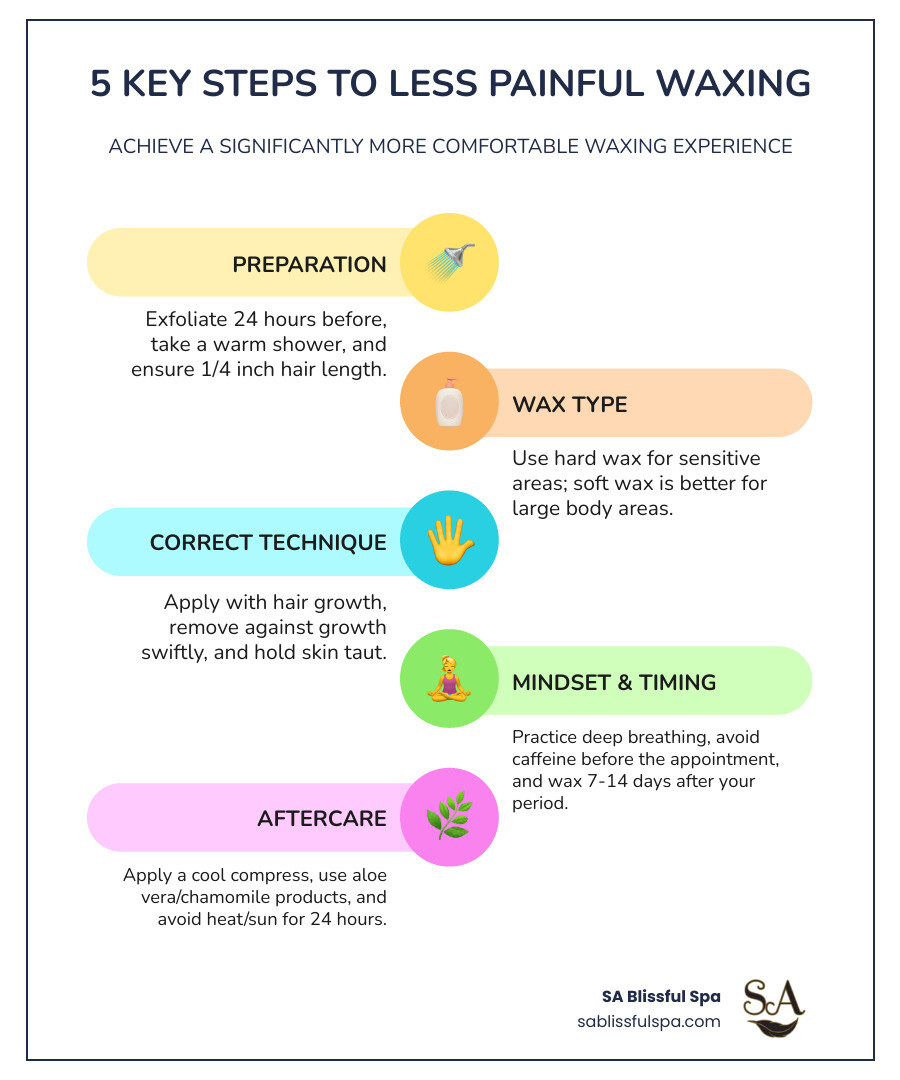
- Timing matters - avoid your period, wax 7-14 days after
- Preparation includes exfoliation, warm shower, avoiding caffeine
- Regular waxing makes hair finer and less painful over time
- Post-care with soothing products prevents irritation
Waxing pain varies based on the person and body area. The face, bikini line, and underarms are typically more sensitive, and factors like hair thickness, skin type, and your menstrual cycle all play a role.
What many don't realize is that
preparation is everything. Small changes like choosing the right wax and timing your appointment correctly make a huge difference. Regular waxing also leads to finer, less dense hair, which significantly reduces discomfort over time.
As
Saloni Bhandari, founder of SA Blissful Spa and a licensed esthetician, I've seen that proper technique and personalized care can make waxing comfortable for even the most sensitive clients. With the right approach, you can achieve smooth skin without unnecessary discomfort.
 Painless waxing
basics:
The Foundation of a Less Painful Wax: Preparation is Everything
The secret to a comfortable waxing experience is thoughtful preparation that happens hours and even days before your appointment. Proper prep can transform your experience from dreaded to surprisingly manageable because your skin and hair will be in the right condition for the wax to work efficiently.
The Golden Rule of Hair Length
The length of your hair can make or break your waxing experience. Getting it right is crucial for
painless waxing.
Your hair should be about
a quarter-inch long—roughly the size of a grain of rice. If hair is too short, the wax can't get a good grip, requiring multiple passes and increasing discomfort. If it's too long, it can tangle in the wax, making the removal more painful.
Don't worry if your hair is too long; we can easily trim it to the perfect length before your service. This simple step ensures the wax adheres properly for a smoother, more comfortable pull.
For specific areas like underarms, you might find our detailed guide on
how long does armpit hair need to be to wax particularly helpful.
Skin Prep Secrets for Minimal Discomfort
Your skin's condition on waxing day dramatically impacts your comfort level. Follow these steps to create the perfect canvas for hair removal.
- Gentle exfoliation 24 to 48 hours before your appointment removes dead skin cells that can trap hair. This gives the wax a clear path to grip each hair directly. Avoid aggressive scrubbing, which will leave your skin irritated and more sensitive.
- Cleansing your skin thoroughly before waxing removes oils and lotions that could interfere with the wax's grip. Clean, dry skin allows the wax to work more effectively.
- Take a warm shower right before your appointment. The warmth opens your pores and softens hair follicles, making hair removal significantly easier.
- Avoid caffeine on waxing day, as it can heighten skin sensitivity and make your skin more reactive.
- Avoid alcohol for 24 hours before your appointment. It can thin your blood and increase sensitivity, potentially leading to more discomfort and bruising.
- Stay hydrated in the days leading up to your wax. Well-hydrated skin is supple, recovers more quickly, and is less prone to irritation.
These small preparation steps create the foundation for a much more comfortable experience. For more on why waxing is a great choice, check out our guide on
why waxing is the best hair removal option: everything you need to know.
Even with perfect preparation, the actual waxing technique and choice of wax can make the difference between a painful session and a comfortable one. This is where professional expertise transforms your experience, turning clients with past painful waxes into converts to
painless waxing.

Choosing Your Wax: Hard vs. Soft for Pain Reduction
Not all wax is created equal. The type of wax used can dramatically impact your comfort, especially in sensitive areas. At SA Blissful Spa, we select the perfect wax based on your skin type and the area being treated.
| Feature |
Hard Wax |
Soft Wax (Strip Wax) |
| Adhesion |
Adheres primarily to the hair, not the skin. |
Adheres to both the hair and the top layer of the skin. |
| Sensation |
Generally considered less painful for sensitive areas. |
Can be more intense due to skin adhesion. |
| Strips Needed |
No strips required; hardens and is pulled directly. |
Requires cloth or paper strips for removal. |
| Best For |
Small, sensitive areas: bikini, face, underarms. |
Large areas: legs, arms, back. |
| Application |
Applied thicker, allowed to cool and harden. |
Applied thinly, removed quickly with a strip. |
Hard wax is often the hero for sensitive areas like the bikini line, face, and underarms. It shrink-wraps around each hair without grabbing your delicate skin, meaning less tugging and irritation. Many clients are amazed at the difference it makes. Learn more in our guides on
Hard Wax and the
Best Face Wax for Sensitive Skin.
The Correct Technique for a near painless waxing experience
Even the best wax is ineffective without proper technique. Our skilled estheticians understand the art of wax application and removal for a manageable experience.
- Application Direction: The golden rule is to apply wax in the direction of hair growth and remove it against the growth. This ensures a clean pull from the root. For hard wax, we sometimes apply against the growth for a better grip, a technique detailed in our article Do You Apply Hard Wax Against Hair Growth?.
- Swift Removal: A quick, decisive pull is always less painful than a hesitant one. Our estheticians are trained for this precision.
- Hold Skin Taut: Before each pull, we hold the skin taut. This crucial step stabilizes the area, preventing skin from lifting and reducing the tugging sensation.
- Apply Pressure: The moment the wax is removed, we apply gentle pressure to the area. This calms nerve endings and provides instant relief.
- Never Re-Wax: We never re-wax the same spot multiple times. This can cause irritation, bruising, or skin lifting. If a few stubborn hairs remain, we use tweezers instead, which is especially important for delicate areas as explained in our Face Waxing for Women guide.
Combining the right wax with expert technique creates a gentle and effective waxing experience.
The Mind-Body Connection: How Your Lifestyle Impacts Waxing Pain
Your mental state and daily habits are just as important as the wax type for a comfortable experience. The mind-body connection is real science that can make
painless waxing more manageable. Your hormones, breathing, and stress levels all influence how your body processes discomfort. Understanding these connections allows you to work with your body, not against it.

Timing is Everything: Waxing and Your Menstrual Cycle
Your menstrual cycle dramatically impacts skin sensitivity. During your period, your body produces more prostaglandins, hormones that make pain receptors more active. This heightened sensitivity can make waxing feel more intense.
The sweet spot for scheduling is
seven to fourteen days after your period ends. During this window, higher estrogen levels increase your pain tolerance, making the experience much more comfortable. This is especially crucial for sensitive treatments like a
Brazilian Bikini Waxing. Research confirms that
hormone levels affect pain perception, so planning ahead pays off.
Breathing Techniques and the Power of Relaxation
Your breath is a powerful tool for managing discomfort. When anxious, shallow breathing amplifies pain signals. Deep, deliberate breathing activates your body's relaxation response. Try this: as the wax is applied,
breathe in deeply, then exhale quickly as the wax is removed. This distracts your brain and calms your nervous system.
Staying relaxed also helps. Tense muscles can make waxing feel more intense. Focus on relaxing your shoulders and jaw. Whatever helps you feel at ease—chatting, listening to music, or focusing on your breath—is the right approach.
For those who are particularly sensitive,
topical numbing agents can be helpful. These creams, usually containing lidocaine, temporarily desensitize the skin's surface. They won't make waxing completely sensation-free, but they can significantly reduce the initial sting.
Apply the cream
thirty to forty-five minutes before your appointment for it to work effectively. Always do a patch test first to check for reactions. These products work best on smaller, sensitive areas.
The Role of Regularity in Achieving Painless Waxing
Consistency is the secret to progressively more comfortable sessions. Sticking to a
regular waxing schedule (every 4-6 weeks) has several benefits:
- Finer, less dense hair: Consistently removing hair from the root disrupts the growth cycle, so it grows back finer and sparser, making it easier to remove.
- Weaker follicles: Over time, hair follicles become weaker, and some may stop producing hair altogether.
- Skin adaptation: Your skin becomes accustomed to the process, and the initial sensitivity diminishes over time.
While your first few sessions might be uncomfortable, regular appointments truly pay off. For more on timing, see our guide on
How Long Does Leg Waxing Last?
After the Wax: Soothing Your Skin for a Blissful Finish
Your
painless waxing journey isn't over after the last strip. What you do next determines whether your skin feels calm and smooth or angry and irritated. Proper aftercare is essential, as your freshly waxed skin is vulnerable with open hair follicles.

Essential Post-Wax Care Steps
The first few minutes and hours after your wax are crucial. At SA Blissful Spa, we begin aftercare immediately with professional-grade soothing products.
- Apply Cool Relief: A cool compress or ice pack wrapped in a cloth works wonders to reduce redness and calm irritation by constricting blood vessels.
- Use Soothing Ingredients: Look for products with aloe vera, the gold standard for soothing skin. Other gentle heroes include chamomile, witch hazel, calendula, and cucumber extract. For hydration and healing, seek out hyaluronic acid, panthenol (Vitamin B5), and allantoin.
- Avoid Heat: For 24-48 hours, avoid hot showers, baths, saunas, and intense workouts. Heat can irritate open pores. Stick to lukewarm showers.
- Protect from the Sun: Freshly waxed skin is prone to sunburn. Avoid direct sun and tanning beds for at least 24-48 hours and use a broad-spectrum sunscreen if you go outside.
- Wear Loose Clothing: Opt for loose, breathable fabrics like cotton to prevent friction and irritation.
- Moisturize Daily: After 24 hours, begin moisturizing with a fragrance-free lotion to keep skin hydrated and help prevent ingrown hairs.
- Gently Exfoliate: After 48 hours, resume gentle exfoliation to prevent dead skin cells from clogging hair follicles.
For specific instructions for intimate areas, see our guide on
Brazilian Wax Aftercare Tips. Following these steps protects your skin and ensures your results last as long as possible.
Frequently Asked Questions about Painless Waxing
Here are the honest answers to the questions we hear most often at SA Blissful Spa about making waxing more comfortable.
Does waxing really get less painful over time?
Yes, waxing absolutely gets less painful over time! This is due to a few key reasons:
- Follicle Damage: Repeatedly pulling hair from the root causes damage to the follicle. This means the hair that grows back is often finer, softer, and easier to remove.
- Sparser Hair Growth: Some follicles eventually stop producing hair altogether. Less hair means less to wax, and therefore less pain.
- Skin Desensitization: Your skin and nerve endings become more accustomed to the process over time.
The key is
consistency. Stick to a regular 4-6 week schedule and avoid shaving in between appointments. Most clients notice a significant difference after just 3-4 sessions.
Are topical numbing creams effective for waxing?
Yes, topical numbing creams can be effective, especially for new clients or those with very sensitive areas. These creams contain agents like
lidocaine that temporarily block nerve signals in the skin.
For best results, apply the cream
30-45 minutes before your appointment. While they don't eliminate pain entirely, they can take the edge off, particularly for small areas like the upper lip or bikini line. Always perform a
patch test 24 hours prior to ensure you don't have a reaction.
Why shouldn't you wax the same spot multiple times?
This is a critical safety rule. Waxing removes not just hair but also a thin layer of dead skin cells. Re-waxing the same spot can remove living skin cells, causing painful
skin lifting, which looks like a raw, shiny patch.
It also leads to
increased irritation, redness, and bruising, as each pull becomes more traumatic to the already-sensitive skin.
A professional esthetician will aim to get it right the first time. If a few stray hairs remain, they will use tweezers instead of re-waxing the area. Your skin's health is the top priority, as we detail in our
Face Waxing for Women guide.
Painless waxing is about working with your skin, not against it.
Conclusion
Painless waxing is an achievable goal when you work with your body. As we've covered, the four pillars that transform a dreaded appointment into a comfortable one are
thorough preparation, expert technique, smart timing, and gentle aftercare.
While your first wax might feel intense, you'll likely notice a significant decrease in discomfort by your third or fourth session as your hair grows back finer and your skin adapts. Many of our clients at SA Blissful Spa now look forward to their appointments.
The biggest factors for success are
consistency and expertise. Regular waxing every 4-6 weeks weakens hair follicles, while an experienced esthetician who uses high-quality hard wax and proper technique ensures your skin stays healthy and comfortable.
Your journey to comfortable waxing starts with professional care that puts your comfort first. What begins as anxiety can become confidence in your smooth, beautiful skin.
Ready to find out how different waxing can feel when it's done right?
Experience a comfortable, professional hair wax removal service at SA Blissful Spa. We're here to make your path to smooth skin as blissful as possible.