Is hard wax or soft wax better for sensitive skin? If you’ve ever wondered which waxing method will be gentlest on your delicate skin, you’re not alone. Many busy professionals struggle with finding a hair removal solution that delivers smooth results without the irritation, redness, or discomfort that can follow a waxing session.
Quick Answer:
The key difference comes down to what each wax grabs onto. Hard wax creates a “shrink-wrap effect” around your hair without adhering to your skin, while soft wax sticks to both your hair and the top layer of your skin. This means when soft wax gets pulled off, it takes some of your skin with it – ouch!
Why does this matter for your skin? Because soft wax can cause more redness, irritation, and that stinging sensation that makes you think twice about your next appointment. Hard wax, on the other hand, is gentler and allows professionals to make multiple passes over the same area if needed, without compromising your skin’s integrity.
As Saloni Bhandari, an experienced esthetician and founder of SA Blissful Spa, I’ve helped countless clients steer the question of is hard wax or soft wax better for sensitive skin through personalized waxing treatments that prioritize both effectiveness and comfort. My expertise in advanced waxing techniques has shown me that the right wax choice can transform your entire hair removal experience from dreaded to delightful.
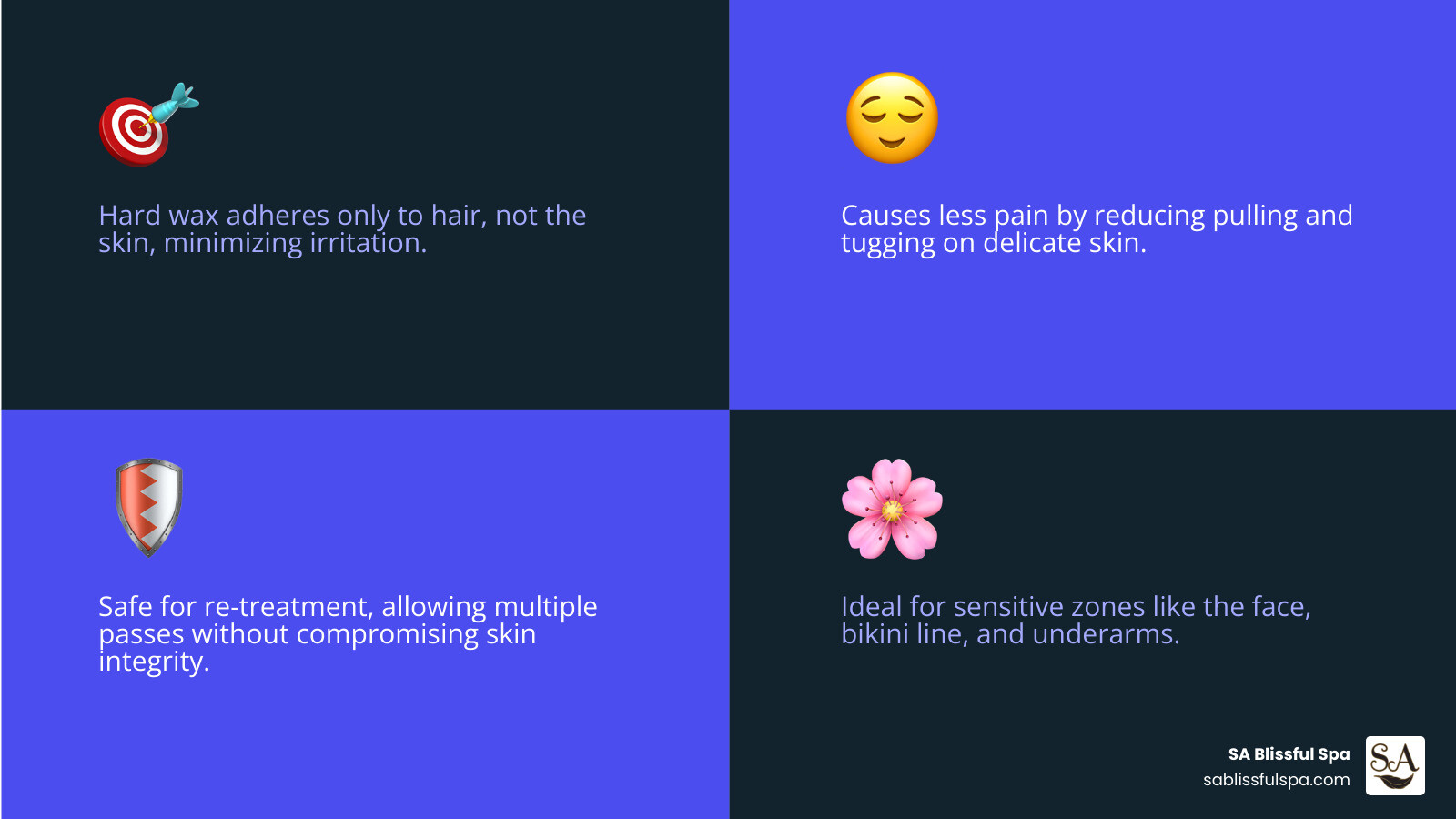
Quick look at is hard wax or soft wax better for sensitive skin:
When you’re trying to figure out is hard wax or soft wax better for sensitive skin, understanding how these two waxing methods actually work makes all the difference. Think of it like choosing between a gentle hug and a firm handshake – both get the job done, but one feels much more comfortable on delicate skin.
The biggest game-changer between these two waxing methods comes down to what they grab onto. Hard wax is like a selective friend – it only sticks to your hair, leaving your skin completely alone. Soft wax, on the other hand, is less picky and grabs onto both your hair and the top layer of your skin.
| Attribute | Hard Wax | Soft Wax |
|---|---|---|
| Adhesion | Adheres primarily to the hair, not the skin. | Adheres to both the hair and the top layer of the skin. |
| Removal Method | Hardens and is removed without strips (peel-able). | Remains pliable and requires cloth or paper strips for removal. |
| Pain Level | Generally less painful due to skin-sparing adhesion. | Can be more painful as it pulls on the skin directly. |
| Best For | Smaller, sensitive areas (face, bikini, underarms); coarse hair. | Larger, less sensitive areas (legs, arms, back); fine hair. |
| Skin Impact | Gentler, less irritation, minimal redness. | May cause more redness and irritation; can exfoliate the skin. |
| Application | Applied thicker, then allowed to harden. | Applied in a thin layer. |
| Temperature | Typically heats to around 130°F (54°C). | Typically heats to 86-104°F (30-40°C). |
Here’s how the application process works differently for each method. Hard wax gets applied in a thicker layer and then does something pretty cool – it hardens around your hair like a custom-made shell. Once it’s solid, your esthetician simply peels it off without needing any strips. It’s this “shrink-wrap effect” that makes hard wax so much gentler on sensitive skin.
Soft wax takes a different approach with its removal technique. It goes on thin and stays sticky, which means it needs cloth or paper strips pressed on top to pull it off. When that strip gets yanked away, it takes the wax, your hair, and yes – some of your skin cells too. This gives you a bit of exfoliation, but it can also leave sensitive skin feeling pretty irritated.
The wax temperature might surprise you. Even though hard wax heats up to around 130°F compared to soft wax’s 86-104°F, it actually feels more comfortable during removal because it’s not pulling on your skin. It’s like the difference between a hot shower that feels amazing versus touching something hot that burns – temperature isn’t everything.
The exfoliation effect is where soft wax has both its benefit and its downside. Yes, removing those dead skin cells can leave your skin feeling smoother, but for sensitive skin types, this extra exfoliation often means more redness, irritation, and that stinging sensation that makes you want to avoid your next appointment.
One major advantage of hard wax is safety for repeat application. If your esthetician misses a few hairs, they can safely go over the same area again without worrying about damaging your skin. With soft wax, you get one shot – going over the same spot twice can actually lift your skin, which is definitely not the smooth experience you’re looking for.
For more detailed information on one of our most popular waxing options, explore More info about Hard Wax Hair Removal.
Here’s the truth: is hard wax or soft wax better for sensitive skin? The answer is overwhelmingly hard wax. If you’re someone who dreads waxing appointments because of the burning, redness, or bumps that follow, you’re probably dealing with the wrong type of wax.
Think of it this way: sensitive skin needs gentle handling, not aggressive treatment. When you have reactive skin, every product and technique matters. Your skin doesn’t need the added stress of having wax stick to it and then get ripped off. That’s exactly what happens with soft wax, and it explains why you might experience more pain, irritation, and those angry red bumps that make you want to hide for days.
Professional estheticians consistently recommend hard wax for clients with sensitive skin, especially for delicate areas like the face, bikini line, and underarms. The reason is simple: hard wax works smarter, not harder. Instead of grabbing everything in its path, it targets only what needs to go – the hair.
The magic of hard wax lies in its hair-only adhesion. When applied, it creates what we call a “shrink-wrap effect” around each hair follicle without bonding to your skin. This means when it’s removed, there’s no harsh tugging on your delicate skin surface.
Less pain is probably what you’ll notice first. Many clients describe the sensation as firm pressure rather than that sharp, stinging pull you might associate with waxing. This is especially noticeable in sensitive zones where the skin is thinner and more nerve-rich.
The reduced irritation that follows is equally impressive. Because hard wax doesn’t traumatize your skin during removal, you’ll see significantly less redness, swelling, and inflammation afterward. This means you can actually schedule your waxing appointment closer to important events without worrying about looking like you had a wrestling match with your hair removal method.
Here’s something that sets hard wax apart: safety for repeat application. If a few stubborn hairs survive the first round, your esthetician can go over the same area again without risking skin damage. This ensures thorough hair removal while keeping your skin intact and happy.
Hard wax is also particularly effective on coarse hair – the thick, stubborn type often found in sensitive areas. It grips these hairs firmly and extracts them completely from the root, giving you longer-lasting smoothness.
For more expert insights, Dermatologist Hadley King explains hard wax benefits, noting that since hard wax only sticks to hair, professionals can treat and retreat areas without damaging the skin. You can also explore our detailed guide on Best Face Wax for Sensitive Skin for specialized facial care.
Soft wax operates on a completely different principle, and unfortunately, it’s not gentle on sensitive skin. The main issue is skin adhesion risks – soft wax doesn’t discriminate between hair and skin. It sticks to both, and when that strip gets pulled off, it’s taking the top layer of your skin with it.
This creates an increased pain potential that many people with sensitive skin simply can’t tolerate comfortably. The direct pulling and tugging on your skin creates that sharp, stinging sensation that makes your eyes water and your body tense up.
Skin lifting is a real concern, especially for those with very delicate or mature skin. When soft wax adheres too strongly or is removed incorrectly, it can actually lift or tear the skin’s surface. This can lead to scabbing, prolonged healing time, and even permanent marks.
Unlike hard wax, soft wax cannot re-treat areas safely. If your esthetician misses some hairs on the first pass, going over the same spot again with soft wax would cause severe irritation or skin damage. This means you might end up with incomplete hair removal or need alternative methods to catch the stragglers.
The potential for more redness is also higher with soft wax. That immediate inflammation you see right after waxing? It tends to be more intense and longer-lasting when soft wax is used on sensitive skin.
If you’re still concerned about facial waxing safety, our comprehensive guide Is Face Waxing Safe for Sensitive Skin addresses all your concerns and provides expert recommendations for protecting your delicate facial skin.
When it comes to choosing between hard wax and soft wax, your body isn’t just one uniform canvas. Different areas have their own unique needs, sensitivities, and hair characteristics that influence which wax will give you the best results. Think of it as understanding your body’s “geography” – what works beautifully on your legs might not be the best choice for your face.

The hair on your legs is typically much finer and grows in different patterns compared to the coarser, thicker hair you’ll find in your bikini area. Meanwhile, your facial skin is incredibly delicate – almost paper-thin in some spots – while the skin on your back can handle more robust treatment. These differences aren’t just cosmetic details; they’re crucial factors that determine which wax type will be most effective and comfortable for each area.
Service speed and efficiency also play a role in our recommendations. If you’re getting your legs waxed, you probably want the process to be quick and thorough. But when it comes to your upper lip or bikini line, taking a bit more time with a gentler approach often makes all the difference in your comfort level and results.
For the most sensitive areas of your body, hard wax consistently proves to be the champion. These delicate zones include your face, bikini area, and underarms – areas where the skin is naturally thinner, more reactive, and where hair tends to be stubbornly coarse.
Your face deserves special attention. Whether you’re dealing with upper lip hair, chin whiskers, or shaping your eyebrows, facial skin is incredibly sensitive. Hard wax allows us to work with precision, carefully targeting individual hairs without traumatizing the surrounding skin. This is especially important for eyebrow shaping, where millimeters matter and you definitely don’t want any unnecessary redness before an important meeting.
The bikini line and Brazilian area present their own unique challenges. The skin here is not only sensitive but also prone to ingrown hairs. The hair is typically thick and coarse, making it more challenging to remove. Hard wax’s ability to grip only the hair – not your skin – makes this potentially uncomfortable process much more bearable. Many of our clients are amazed at how much less painful their Brazilian wax becomes when we use hard wax instead of soft wax.
Underarms fall into the same category. The hair here grows in multiple directions and tends to be quite coarse, while the skin remains delicate. Hard wax can effectively grab these stubborn hairs from various angles without causing the pulling sensation that makes you want to grip the treatment table.
The beauty of hard wax in these areas is that we can re-treat spots if needed. Sometimes a few stubborn hairs need a second pass, and hard wax allows us to do this safely without compromising your skin’s integrity.
If you’re ready to experience the difference professional technique makes, you can Find Facial Hair Removal for Women Near Me or explore our Brazilian Wax services for a comfortable, thorough experience.
When we’re talking about larger surface areas like your legs, arms, and back, the conversation shifts toward efficiency and practicality. These areas typically have finer hair and less sensitive skin, making soft wax a viable and often preferred option for many clients.
Soft wax excels at covering ground quickly. For your legs and arms, we can apply thin layers of soft wax over large sections, then remove everything efficiently with strips. This makes your appointment faster and often more cost-effective. The fine to medium hair on these areas responds well to soft wax, and the natural exfoliation effect can leave your skin feeling incredibly smooth.
For backs and larger chest areas, soft wax’s efficiency really shines. These expansive areas can be treated relatively quickly, making the service more practical for busy schedules.
However – and this is important – we never compromise your comfort for speed. Even on larger areas, if you have particularly sensitive skin, we’ll recommend hard wax as an alternative. Yes, it takes more time and uses more product, which can affect pricing. While internet sources suggest full leg waxing with soft wax might average $50 to $150, using hard wax for the same area could range from $150 to $450 or more due to increased product usage and application time. These are average costs based on internet data and not actual costs for SA Blissful Spa.
The question “is hard wax or soft wax better for sensitive skin” doesn’t disappear just because we’re working on larger areas. Your skin’s needs come first, whether that’s a quick soft wax treatment on naturally resilient skin or a more thorough hard wax approach for sensitive areas.
During your consultation, we’ll discuss your skin’s specific needs and help you choose the best approach for each area. Ready to experience professional waxing that’s custom to your body’s unique needs? Explore our complete range of services at Find Waxing Services Near Me.
Getting smooth, gorgeous skin isn’t just about what happens during your waxing appointment – it’s about how you treat your skin before and after, especially when you’re dealing with sensitive skin. Think of it as giving your skin the VIP treatment it deserves!

The right preparation can make the difference between a comfortable waxing experience and one that leaves you red and irritated. And proper aftercare? That’s your secret weapon for preventing ingrown hairs and keeping your skin happy long after you leave the spa.
Setting the Stage: Pre-Wax Preparation
About 24-48 hours before your appointment, give your skin a gentle exfoliation. We’re talking light and loving here – not a scrub-fest that leaves your skin raw. This simple step removes dead skin cells and helps lift those hairs, making your wax more effective and reducing the chance of ingrown hairs later.
On the day of your wax, keep your skin clean and completely dry. Skip the lotions, oils, and deodorants on the area you’re getting waxed. These products create a barrier that prevents the wax from properly gripping your hair – and nobody wants a half-hearted wax!
Your hair should be about 1/4 inch long (think rice grain size) for the best results. Too short and the wax can’t grab it; too long and it might be more uncomfortable than necessary.
Here’s something important: if you’re using retinoids, alpha hydroxy acids, or certain acne medications, let your esthetician know. These products can make your skin extra sensitive and increase the risk of skin lifting – especially relevant when considering is hard wax or soft wax better for sensitive skin.
For those who tend to get bumpy after waxing, taking an antihistamine about 30 minutes before your appointment might help minimize reactions. Just check with your doctor first!
The Golden Hours: Post-Wax Care
Right after your wax, we’ll apply a soothing product or aloe vera gel to calm your skin immediately. Aloe vera is nature’s anti-inflammatory superhero, and it provides instant relief to freshly waxed skin.
For the next 24-48 hours, your skin needs to stay cool and comfortable. This means avoiding hot showers, saunas, steam rooms, and intense workouts that make you sweat. Your pores are open and your skin is sensitive – heat and friction are not your friends right now.
Sun protection is crucial during this time. If you must be outside, slather on high-SPF sunscreen on the waxed area. Your skin is more vulnerable to UV damage after waxing.
Keep your skin hydrated with a gentle, non-comedogenic moisturizer. Well-moisturized skin heals faster and is less prone to irritation and ingrown hairs. Think of it as feeding your skin the nutrients it needs to recover.
Starting 24-48 hours after your wax, begin gently exfoliating the area 2-3 times a week. This prevents dead skin cells from trapping new hair growth – your best defense against ingrown hairs.
And please, keep your hands off the freshly waxed area! Touching introduces bacteria and can lead to breakouts, which is the last thing you want after investing in smooth skin.
When to Worry
Some redness and tenderness are totally normal after waxing. But if redness or swelling sticks around for more than 2-3 days, or if irritation gets worse instead of better, don’t hesitate to contact us or consult a healthcare provider.
Following these care steps isn’t just about avoiding irritation – you’re investing in your skin’s long-term health and ensuring every waxing experience gets you closer to that blissfully smooth result you’re after.
After exploring every angle of the waxing world, we can confidently answer the question: is hard wax or soft wax better for sensitive skin? The winner is clear – hard wax takes the crown for sensitive skin, hands down.
Think of it this way: hard wax is like that gentle friend who knows exactly how to help without overstepping boundaries. It grips your hair firmly but leaves your delicate skin completely alone. Soft wax, while effective, is more like an overeager helper that grabs everything in sight – including your skin – which can leave you feeling raw and irritated.
The science backs this up beautifully. Hard wax’s unique “shrink-wrap” effect around individual hairs means significantly less pain, reduced redness, and the freedom to go over stubborn areas multiple times without traumatizing your skin. For anyone who’s ever winced through a bikini wax or dreaded their monthly eyebrow appointment, this is truly game-changing news.
Professional technique matters just as much as wax choice. Even the gentlest hard wax won’t deliver optimal results without skilled hands applying it. That’s where expertise becomes invaluable – knowing the perfect temperature, application thickness, and removal technique that transforms waxing from an ordeal into a surprisingly comfortable experience.
At SA Blissful Spa in Burlington, MA, we’ve made hard wax our specialty precisely because we understand sensitive skin. Our expert estheticians have mastered the art of gentle hair removal, serving clients throughout Massachusetts including Arlington, Bedford, Belmont, Billerica, Concord, Lexington, Lincoln, Melrose, North Reading, Reading, Stoneham, Wakefield, Watertown, Wilmington, Winchester, and Woburn.
Your skin deserves this level of care. We believe that smooth, confident skin shouldn’t come at the cost of discomfort or irritation. Our personalized approach means we take time to understand your unique skin needs, ensuring every session leaves you feeling pampered rather than punished.
Ready to find what a truly blissful waxing experience feels like? Book your professional Waxing Services today and let our skilled team show you the gentle difference that expert hard wax technique can make. Your sensitive skin will thank you.


Book your first appointment online and enjoy 15% off your first service (one-time offer).
Use code NEWCLIENT15