Why Wax Strips on Bikini Area Are Worth Considering
 Wax strips on bikini area
offer a convenient at-home solution for achieving smooth, hair-free skin that can last up to 4 weeks. While they're not always the most effective option for coarse pubic hair, they provide an accessible alternative to salon visits for basic bikini line maintenance.
Quick Answer: Wax Strips for Bikini Area
- What they are: Pre-waxed strips with soft wax that remove hair from the root
- Best for: Bikini line touch-ups and fine to medium hair
- Results: Smooth skin lasting 2-4 weeks
- Pain level: Moderate (more painful than hard wax)
- Cost: $5-20 for at-home kits vs $35-150+ for professional services
- Key limitation: Less effective on coarse, thick pubic hair
Many busy professionals find wax strips appealing because they're portable, require no heating, and can be used whenever convenient. However, the bikini area's sensitive skin and coarse hair present unique challenges that make proper technique essential.
The research shows that while wax strips work well for some areas,
soft wax adheres to both hair and skin, making it more painful and potentially irritating in sensitive regions. Additionally, the contours and folds of the bikini area can be difficult for strips to conform to properly.
As Saloni Bhandari, founder of SA Blissful Spa and experienced esthetician, I've helped countless clients steer their hair removal options, including the pros and cons of
wax strips on bikini area versus professional treatments. Through years of practice, I've learned that while strips can work for basic maintenance, understanding their limitations is crucial for safe, effective results.
Must-know
wax strips on bikini area terms:
Understanding Wax Strips: The Pros and Cons for Your Bikini Area
When it comes to hair removal in sensitive areas like your bikini line, knowing what you're working with makes all the difference.
Wax strips have become a go-to for many people wanting smooth skin without leaving home, but let's be honest – not all hair removal methods are created equal, especially when we're talking about such a delicate area.
So how do wax strips actually work? Picture thin strips of paper or fabric that come pre-coated with
cold wax – specifically soft wax that's ready to use right out of the package. You press the strip onto your skin, smooth it down firmly, then pull it off quickly. This action grabs the hair and pulls it straight from the root, which is why you get that smooth feeling that lasts so much longer than shaving.
The key difference here is that wax strips use
soft wax, which has some unique properties. Unlike hard wax that only sticks to your hair, soft wax attaches to both your hair and skin. This double-grip action can be effective for
pulling hair from the root, but it's also what makes the experience more intense – especially in sensitive areas.
When everything goes right, you can expect
results lasting up to 4 weeks. Some people even notice their hair growing back finer over time, which is definitely a nice bonus. But as with most things that sound too good to be true, there are some important trade-offs to consider.
Advantages: The Case for Convenience
Let's start with why so many people reach for
wax strips on bikini area maintenance in the first place. The biggest draw? Pure
convenience. There's something appealing about being able to tackle unwanted hair on your own schedule, without booking appointments or leaving your bathroom.
The
accessibility factor is huge too. You can grab wax strips at pretty much any drugstore, making them perfect for those "oh no, I need to be beach-ready tomorrow" moments. There's
no heating required – just a quick rub between your hands to warm them up, and you're good to go. This eliminates the worry about burns from hot wax, which is honestly a relief.
Their
portability makes them travel-friendly, so you can maintain smooth skin whether you're at home or on vacation. From a budget perspective, they're definitely
inexpensive compared to salon visits. A kit might run you $10 to $20 and give you multiple uses, while professional services can cost significantly more.
The
quick application is another win. Once you get the hang of it, you can be done in minutes rather than spending an hour at the spa. Plus, there's
less mess to deal with since the wax is already applied to the strips – no sticky pots or applicators to clean up afterward.
Disadvantages and Risks to Consider
Now for the reality check. While wax strips offer convenience, using
wax strips on bikini area comes with some significant challenges that you should know about upfront.
The
pain level is often higher than people expect. Because soft wax grips both your skin and hair, removing it from sensitive bikini area skin can be quite uncomfortable. Many of our clients tell us it's noticeably more painful than professional hard wax treatments.
Skin irritation is a real concern. The delicate skin in your bikini area can react poorly to the aggressive pull of soft wax, leading to
redness that can last for hours or even days. There's also a
bruising risk if the skin gets lifted during removal, which unfortunately happens more often than you'd think.
Here's where things get tricky: wax strips are often
ineffective on coarse pubic hair. Pubic hair tends to be thicker and more stubborn than hair on your legs or arms. Soft wax strips sometimes can't get a strong enough grip, leading to
broken hairs instead of clean removal from the root.
When hairs break instead of being pulled out completely, you're setting yourself up for
ingrown hair risk. Broken hairs that try to grow back can get trapped under the skin, creating painful bumps that defeat the whole purpose of waxing.
The
difficulty with bikini line contours is another major hurdle. Your bikini area has curves, folds, and angles that flat wax strips simply can't conform to well. This often means missed spots or having to go over the same area multiple times, which increases irritation.
For a deeper understanding of why professional waxing often delivers better results, especially for sensitive areas, check out
Why Waxing is the Best Hair Removal Option: Everything You Need to Know.
A Step-by-Step Guide to Using Wax Strips on the Bikini Area
Ready to tackle your bikini line at home? While we always recommend professional services for the best results and safety, we understand that sometimes you need a quick solution. Let's walk through the proper technique for using
wax strips on bikini area safely and effectively.
Think of this as your roadmap to smoother skin. But remember - safety comes first, especially in such a sensitive area.
Step 1: Preparation for using wax strips on the bikini area
The secret to successful waxing isn't just in the pulling - it's all about the prep work. Trust me, skipping these steps is like trying to paint a wall without cleaning it first.
Your
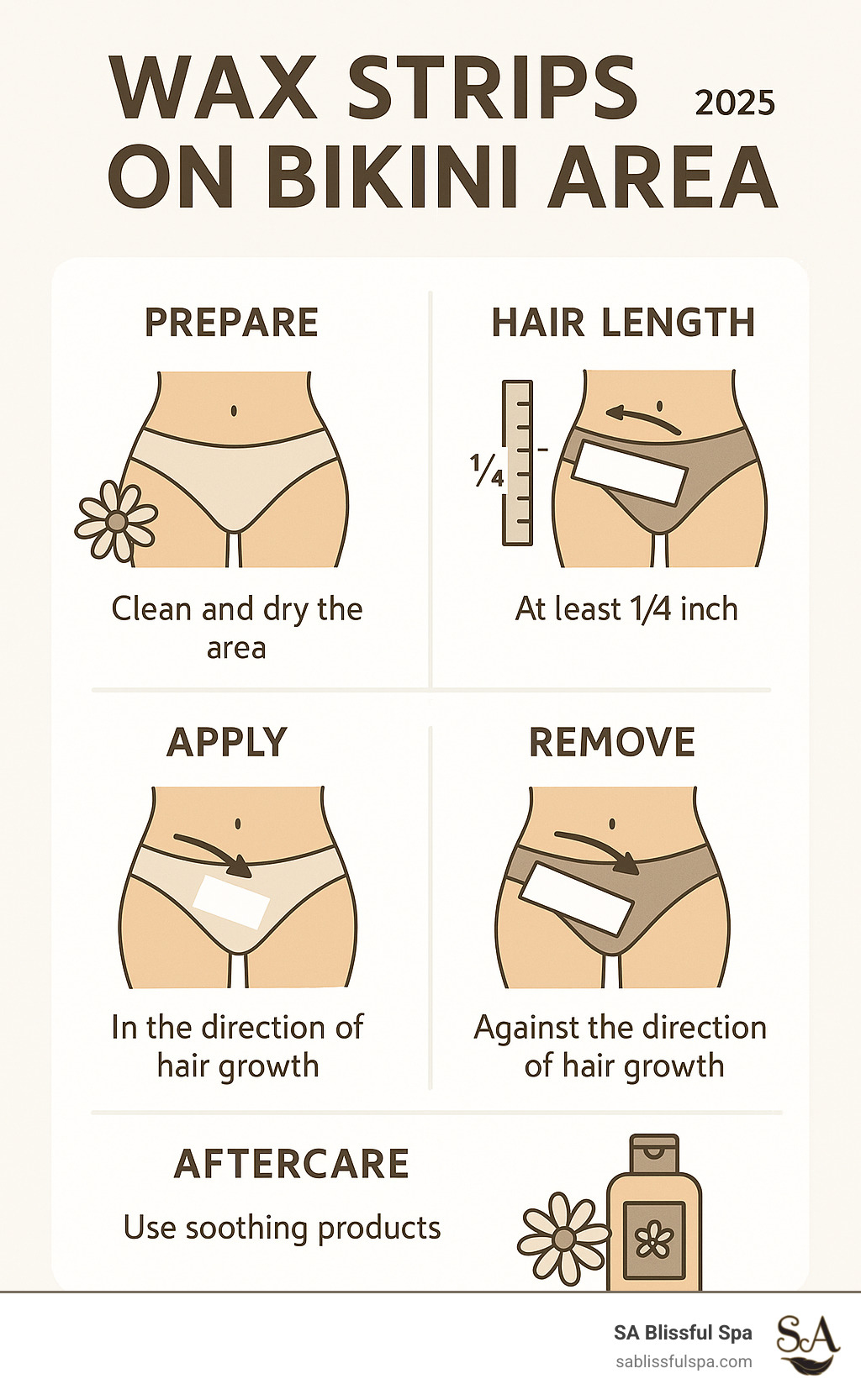
hair length needs to be just right - aim for about 1/4 inch, roughly the size of a grain of rice. Too short and the wax has nothing to grab. Too long and you're in for unnecessary pain. If your hair is longer than an inch, give it a quick trim first.
Exfoliation is your best friend here, but timing matters. About 24 to 48 hours before waxing, gently scrub the area with a loofah or washcloth in the shower. This removes dead skin cells that could trap new hair growth later. Just don't exfoliate right before waxing - your skin needs time to calm down.
On waxing day,
cleanliness is crucial. Wash the area thoroughly with mild soap and make sure it's completely dry. Any moisture, oils, or lotions will create a barrier between the wax and your hair, making the whole process less effective.
Here's something many people forget:
avoid all lotions and oils on the day you're planning to wax. I know it sounds counterintuitive when you want to pamper your skin, but these products will work against you.
The patch test is non-negotiable, especially if you have sensitive skin or you're trying a new product. Test a small strip on your leg at least 24 hours before tackling your bikini area. If you see excessive redness or irritation, don't proceed with the full treatment.
A light dusting of
baby powder or cornstarch can work wonders. It absorbs any remaining moisture and helps the wax grip the hair rather than sticking to your skin.
Step 2: The Waxing Process
Now comes the main event. Take a deep breath - you've got this! The key here is confidence and speed.
Start by
warming the strips between your palms for a few seconds. This makes the wax more pliable and easier to work with. When you separate the strips, do it slowly and gently to avoid wasting any wax.
Application direction matters enormously. Press the strip firmly onto your skin, smoothing it down repeatedly in the direction your hair grows. For the bikini area, hair usually grows outward from the inner thigh, but pay attention to each section since growth patterns can vary.
Here's where technique becomes crucial:
hold the skin taut with your free hand. This isn't just about reducing pain (though it helps!) - it prevents your skin from lifting when you pull the strip, which could cause bruising or tearing.
The moment of truth:
pull quickly against the hair growth direction. One swift, confident motion is what you're after. Keep your pulling hand close to the skin, moving parallel to the surface rather than straight up. Think of it like removing a bandage - hesitation only makes it worse.
Work in small sections rather than trying to tackle large areas at once. The bikini area has curves and folds that flat strips struggle to conform to. Take your time and be methodical. Never apply a strip to the same spot twice in one day - your skin needs time to recover.
Step 3: Essential Post-Wax Aftercare
Congratulations! The hard part is over, but don't neglect these final steps. Proper aftercare is what separates a good waxing experience from a great one.
Remove any sticky residue immediately using the post-wax wipes or oil that came with your kit. If you don't have these, baby oil works perfectly. This step soothes your skin while cleaning away any leftover wax.
Apply gentle pressure with your fingertips right after removing each strip. A cold compress wrapped in a soft cloth can also help calm any redness or irritation, especially if you've worked on larger areas.
For the next 24 hours,
avoid hot water completely. That means no hot showers, baths, saunas, or hot tubs. Hot water will irritate those newly opened follicles. Stick to lukewarm water instead.
Loose, breathable clothing is your friend for the next day or two. Cotton underwear and loose-fitting clothes prevent friction and irritation. Your skin needs room to breathe and heal.
Skip the gym for 24 hours. I know it's tempting to show off your smooth skin, but sweating and friction from exercise can cause irritation and increase your risk of ingrown hairs.
Stay out of direct sunlight and avoid tanning beds for at least a day. Your freshly waxed skin is more sensitive and prone to burning.
After the first 24 hours, start
moisturizing daily with a gentle, fragrance-free lotion. This keeps your skin hydrated and prevents the dryness that can lead to ingrown hairs.
Resume gentle exfoliation about 48 hours after waxing, doing it 2-3 times per week. This prevents dead skin cells from trapping new hair growth.
For more detailed aftercare guidance that applies to all types of bikini waxing, check out our comprehensive
Brazilian Wax Aftercare Tips.
When to Choose Professional Waxing Services
While at-home
wax strips on bikini area offer convenience, there are many instances where professional waxing services truly shine and become the superior choice. Let's be honest - sometimes the best investment you can make is putting your trust (and your sensitive bits) in the hands of an expert.
If you're considering
first-time waxing, I strongly recommend starting with a professional. The bikini area is incredibly sensitive, and there's something to be said for having an experienced esthetician guide you through the process. We understand the unique contours of this delicate area, know how to handle different hair growth patterns, and can minimize both discomfort and risks. Plus, we'll educate you on proper aftercare that's custom specifically to your skin type.
When it comes to a
full Brazilian wax, wax strips simply aren't up to the task. While some strips claim to work for the bikini area, they struggle with the coarse, thick hair and intricate folds involved in Brazilian waxing. Professional estheticians typically use hard wax for these services because it adheres only to the hair, not the skin - making it gentler and far less painful than the soft wax found on strips.
Those with
very sensitive skin will find that professional waxing makes all the difference. We can assess your skin type and choose the most appropriate wax formulation and technique to minimize redness and discomfort. If you're
prone to ingrown hairs, improper at-home waxing can actually make the problem worse. Professional estheticians are skilled in proper hair removal techniques that reduce the likelihood of ingrowns, and many spas offer specialized treatments to address existing issues.
When you're
seeking perfect results - that truly smooth, clean, and long-lasting finish - a professional's expertise is invaluable. We can ensure all hair is removed cleanly and efficiently, reaching those tricky, hard-to-access areas that can be nearly impossible to handle yourself. And let's not forget the time and effort savings. DIY waxing can be messy, awkward, and surprisingly time-consuming. Professional service takes all the hassle out of hair removal, allowing you to simply relax and leave with flawless results.
The average costs for professional bikini waxing services vary widely based on location, the type of wax used, and the extent of hair removal. Based on internet data, you might expect to pay anywhere from
$35 for a basic bikini wax to $150+ for a full Brazilian wax, with some premium services reaching even higher. These are average costs based on internet data and not actual costs for SA Blissful Spa.
For more detailed information on what a professional Brazilian wax entails and its benefits, explore our page on
Brazilian Bikini Waxing.
Frequently Asked Questions about Wax Strips on the Bikini Area
We hear these questions constantly from our clients who are curious about trying
wax strips on bikini area at home. Let's explore the most common concerns and give you the honest answers you need to make the best choice for your skin.

Are wax strips suitable for sensitive skin in the bikini area?
Here's the thing about the bikini area - it's already one of the most sensitive spots on your body. Add wax strips into the mix, and things can get tricky quickly. While some strips are designed with sensitive skin in mind, success really depends on your individual skin and the specific product you choose.
The golden rule?
Always do a patch test 24 hours before you go anywhere near your bikini area. This simple step can save you from a world of discomfort later. Apply a small strip to your leg or another less sensitive area and see how your skin reacts.
Look for
cream-based wax formulas that are specifically labeled for sensitive skin. These are typically fragrance-free, non-toxic, and dermatologically tested. They're formulated to be gentler than regular strips, but remember - they still use soft wax that sticks to both hair and skin.
Here's where it gets interesting:
hard wax is actually a gentler alternative for truly sensitive skin. Unlike the soft wax on strips, hard wax only grips the hair, not your delicate skin. This makes removal significantly less painful and reduces irritation. If you find that strips consistently cause redness or discomfort, it might be time to explore hard wax options or consider professional services instead.
Understanding your skin type is crucial for making the right choice. Resources like
What is sensitive skin? can help you better assess whether strips are right for you.
How can I prevent irritation and ingrown hairs when using wax strips on the bikini area?
Nobody wants to deal with angry, irritated skin or painful ingrown hairs after waxing. The good news? Most of these problems are totally preventable with the right approach.
Proper preparation is absolutely essential. Make sure your hair is about 1/4 inch long - not too short for the wax to grab, but not so long that removal becomes unnecessarily painful. Exfoliate gently 24-48 hours before waxing to remove dead skin cells, and ensure your skin is completely clean and dry before you start. A light dusting of baby powder can help create the perfect surface for waxing.
During the actual waxing process,
technique makes all the difference. Hold your skin taut, apply the strip firmly in the direction of hair growth, and remove it quickly against the hair growth direction, keeping your hand parallel to the skin. Hesitant or upward pulling often leads to broken hairs, which are the main culprit behind ingrown hairs.
Post-wax care is where many people drop the ball. Use the soothing oil that comes with your strips (or a fragrance-free moisturizer) to remove any sticky residue and calm your skin. Avoid hot baths, tight clothing, and sweaty workouts for the first 24 hours - your freshly waxed skin needs time to recover.
Once that initial 48-hour sensitivity period passes,
regular exfoliation becomes your best friend. Gently exfoliate 2-3 times a week to prevent dead skin cells from trapping new hair as it grows. For those particularly prone to ingrowns, specialized ingrown hair serums can be game-changers, helping existing ingrowns release while preventing new ones from forming.
If you're still struggling with ingrowns despite following all these steps, our
Brazilian Wax Service page offers additional insights that might help.
How long do the results of bikini waxing with strips last?
This is probably the question we get asked most often, and for good reason - nobody wants to go through the waxing process more often than necessary!
With
wax strips on bikini area, you can typically expect
smooth skin for up to 4 weeks. Most major brands promise this duration, with some even claiming results lasting up to 8 weeks. That's a significant improvement over daily shaving, which is why so many people make the switch to waxing.
But here's the reality check:
your individual hair growth cycle plays a huge role in how long results actually last. Everyone's hair grows at different rates, and some follicles might be in different growth phases when you wax. This is why you might notice some regrowth before the full 4-week mark - it's completely normal.
The exciting part?
Hair often grows back finer over time with consistent waxing. When you repeatedly pull hair from the root, many people notice their regrowth becomes softer, finer, and sparser. This means future waxing sessions become less painful, and your smooth results can appear to last even longer.
Consistency really is key to maximizing your results. Sticking to a regular waxing schedule every 3-4 weeks helps synchronize your hair growth cycles, leading to more uniform regrowth. Plus, it often makes the entire waxing process more comfortable over time as your skin adjusts to the routine.
While strips offer convenient at-home results, professional waxing often provides more thorough hair removal, which can sometimes translate to even longer-lasting smoothness. It's all about finding what works best for your lifestyle and comfort level.
Conclusion
Choosing the right hair removal method for your bikini area doesn't have to feel overwhelming. Throughout this guide, we've explored the ins and outs of using
wax strips on bikini area, giving you the complete picture of what works, what doesn't, and how to do it safely.
Wax strips certainly have their place in the hair removal world. They're wonderfully convenient for those busy mornings when you need a quick touch-up, incredibly accessible since you can grab them at any drugstore, and budget-friendly compared to salon visits. The promise of smooth skin lasting up to four weeks is genuinely appealing, especially when you're tired of the daily shaving routine.
But let's be honest about their limitations too. The bikini area presents unique challenges with its sensitive skin, coarse hair, and tricky contours. Soft wax strips can be more painful and irritating than other methods, and they don't always play nicely with the thick, stubborn hair that grows in intimate areas. The risk of broken hairs, ingrown bumps, and skin irritation is real – especially if you're new to waxing or have particularly sensitive skin.
Proper technique is absolutely crucial if you decide to go the DIY route. Remember those key steps: patch testing, getting your hair to the right length, applying with hair growth, and pulling swiftly against it. Don't skip the aftercare either – your skin will thank you for the gentle treatment with soothing oils and loose clothing.
For many of our clients, though, the peace of mind that comes with professional waxing is worth every penny. This is especially true for first-time waxers, anyone wanting a full Brazilian, or those with sensitive skin who've struggled with irritation from at-home methods.
At SA Blissful Spa, our expert estheticians bring years of experience to every appointment. We use advanced techniques like our virtually painless Poetic Waxing® method, which is specifically designed to minimize discomfort while delivering those perfectly smooth results you're after. We understand the unique needs of delicate skin and know exactly how to handle even the most stubborn hair with care and precision.
Whether you choose to start your waxing journey at home or prefer to leave it to the professionals from day one, the most important thing is that you feel confident and comfortable with your choice. Your skin deserves the best care possible.
Learn more about our professional hair wax removal services