Understanding Collagen Induction Therapies: Which Is Right For Your Skin?
If you're researching
microchanneling vs rf microneedling, here's a quick comparison to help you decide:
| Feature |
Microchanneling |
RF Microneedling |
| Mechanism |
Uses wire-based filaments to create uniform micro-channels |
Combines needle punctures with radiofrequency heat energy |
| Depth |
0.5-3.0 mm, fixed depth per device |
0.5-3.5 mm, adjustable during treatment |
| Best for |
Fine lines, texture, product absorption, minimal downtime |
Deep wrinkles, acne scars, skin laxity, fat reduction |
| Downtime |
60-90 minutes |
24-72 hours |
| Pain level |
Minimal ("light tickle") |
Moderate (numbing cream required) |
| Sessions needed |
3-5 sessions |
3-4 sessions |
| Results duration |
2-10 years depending on age/lifestyle |
1-3 years with maintenance |
Microchanneling vs rf microneedling represents two advanced skin rejuvenation techniques that work by triggering your body's natural healing response. While both treatments stimulate collagen production through controlled micro-injuries, they differ significantly in their approach and results.
Microchanneling uses a stamp-like device with uniform wire filaments to create consistent micro-channels in your skin, allowing for improved serum delivery - increasing absorption by up to 300%. The procedure is nearly painless with minimal downtime, making it perfect for busy professionals seeking quick rejuvenation.
RF microneedling takes the concept further by delivering radiofrequency energy deep into the dermis through insulated needles. This thermal energy amplifies collagen production beyond what needles alone can achieve, making it particularly effective for more significant concerns like deep wrinkles, acne scars, and skin laxity.
I'm Saloni Bhandari, founder of SA Blissful Spa and an experienced esthetician who has performed hundreds of
microchanneling vs rf microneedling treatments, helping clients determine which collagen induction therapy best suits their unique skin concerns and lifestyle needs.

Must-know
microchanneling vs rf microneedling terms:
-
difference between microchanneling and microneedling
-
microchanneling vs microneedling before and after
-
microchanneling vs microneedling for wrinkles
How Each Treatment Works
Ever wonder what's happening beneath the surface when you get a collagen induction treatment? It's actually quite fascinating how your skin responds to these tiny, controlled injuries!
When your skin experiences micro-injuries from either
microchanneling vs RF microneedling, it kicks off what dermatologists call the "wound-healing cascade" – a remarkable three-phase process where your skin essentially repairs itself from the inside out.
First comes inflammation (your body's initial response), followed by proliferation (when new tissue forms), and finally remodeling (where that new tissue gets organized and strengthened). During this process, your body naturally ramps up production of collagen and elastin – those magical proteins responsible for keeping skin firm, bouncy, and youthful.
As we age, our natural production of these proteins slows dramatically (we lose about 1% of collagen per year after age 20!), which explains why these treatments can deliver such impressive results.
"What makes these treatments so powerful is that they harness the body's own healing mechanisms," explains Dr. Rebecca Johnson, a board-certified dermatologist specializing in collagen induction therapies. "Instead of just applying products topically or using fillers, we're actually triggering your skin to heal and rebuild itself from within."
Let's dive deeper into how each treatment works its magic!
Microchanneling 101
Think of microchanneling as the gentler, more refined cousin in the collagen induction family. Unlike traditional microneedling, microchanneling uses ultra-fine micro-filaments arranged in a precise pattern to create uniform, pyramid-shaped channels in your skin through a controlled stamping motion.
The real superpower of microchanneling? Serum delivery. Those tiny, consistent channels act like little superhighways for nutrients, allowing specialized serums to penetrate far deeper than they could on untreated skin. Studies show this can boost absorption by up to
300% compared to simply applying products to the skin's surface.
"The beauty of microchanneling is that it's not just about the micro-injuries – it's about what we can deliver through those channels," says Melissa Chen, Lead Esthetician at SA Blissful Spa. "The stem cell-derived growth factors we infuse during treatment communicate directly with your skin cells, essentially giving them instructions to repair and refresh."
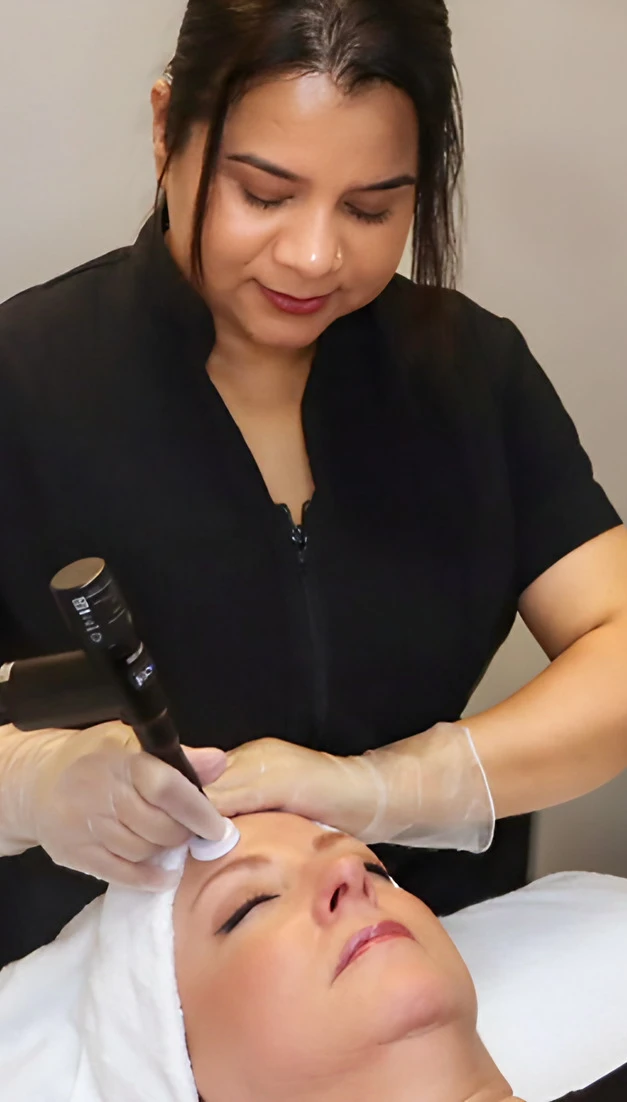
During your microchanneling treatment, we'll cleanse your skin thoroughly, possibly apply numbing cream (though many clients find it unnecessary!), load our Procell device with customized serums, and then gently stamp across the treatment areas before applying additional healing serums.
Most clients describe the sensation as a light tickle or mild pressure – making it one of the more comfortable options for those seeking significant skin improvement without significant discomfort.
More info about microchannelling service
How Does Microchanneling Work?
RF Microneedling 101
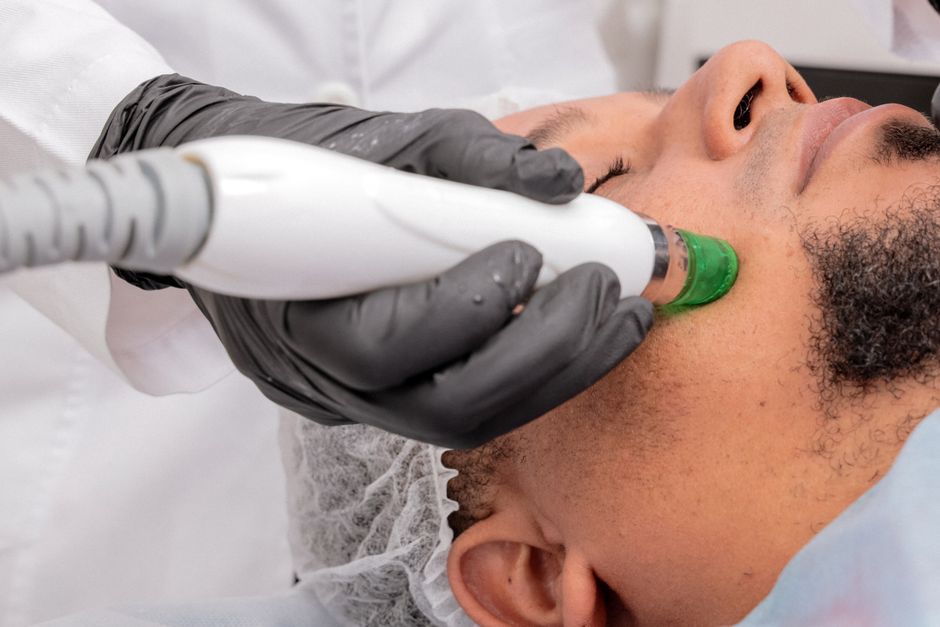
RF microneedling takes the concept of skin rejuvenation to another level by combining two powerful technologies: microneedling and radiofrequency energy. This dynamic duo uses insulated needles that deliver RF energy directly into your dermis – the layer where all the collagen-making magic happens.
The game-changer here is heat. When the RF energy releases through those precisely placed needles, it creates a controlled thermal effect that:
- Immediately tightens existing collagen fibers (hello, instant gratification!)
- Breaks down old, disorganized collagen to make way for fresh growth
- Boosts your fibroblasts (the cells that produce collagen) to work overtime
- Remodels fatty tissue in the treatment area for additional contouring benefits

"RF microneedling is essentially a two-in-one treatment," explains Dr. Michael Zhang, who has conducted extensive clinical research on various collagen induction therapies. "The needles create the mechanical stimulation while the RF energy adds a thermal component that amplifies results, particularly for concerns like skin laxity and deep scarring."
What makes RF microneedling particularly impressive is its customizability. Your practitioner can adjust both needle depth (typically from 0.5mm to 3.5mm) and RF energy intensity based on your unique skin concerns, treatment area, and comfort level. This precision targeting makes it extraordinarily effective for addressing everything from superficial texture issues to deep acne scars and significant skin laxity.
The treatment process involves thorough cleansing, application of topical anesthetic (this one definitely needs numbing!), customized settings for different facial zones, systematic application of the device, and finishing with cooling, healing products.
While RF microneedling typically involves more sensation and downtime than microchanneling, its ability to address deeper, more stubborn concerns makes it worth considering for those seeking more dramatic change.
Scientific research on RF microneedling efficacy
Microchanneling vs RF Microneedling: Side-by-Side Comparison
When it comes to
microchanneling vs rf microneedling, think of them as cousins rather than competitors. They're both part of the collagen induction therapy family, but each one shines in different situations. Let's break down what makes each unique so you can decide which might be your perfect skin match.
Device & Technique—microchanneling vs rf microneedling
The way these treatments work beneath your skin makes all the difference in your experience and results.
Microchanneling uses delicate wire filaments that create perfect little channels in your skin through a gentle stamping motion. Imagine creating tiny, uniform pathways without dragging or pulling on your skin. This precision is why many clients describe it as surprisingly comfortable.
"I love how microchanneling creates such clean, consistent channels," shares Sarah Miller, Master Esthetician at SA Blissful Spa. "There's no dragging or tearing like with older rolling devices, which means my clients heal faster and see more even results across their face."
RF microneedling takes a different approach by combining tiny needles with radiofrequency energy. It's like getting two treatments in one – the physical stimulation of the needles plus the warming effect of RF energy that penetrates deep into your skin layers. Your provider can customize both the needle depth and energy level during your treatment, adjusting as they move across different facial areas where skin might be thicker or thinner.
While microchanneling feels like light pressure or a mild tingling, RF microneedling is typically a bit more intense – most people describe a warm prickling sensation, which is why we always use numbing cream first to keep you comfortable.
Results & Collagen Production—microchanneling vs rf microneedling
Both treatments wake up your skin's natural collagen factory, but they take slightly different approaches to renovation.
Microchanneling excels at improving what's happening at the skin's surface. Those tiny channels increase your product absorption by an impressive 300%, meaning all those wonderful growth factors and peptides can actually reach where they need to go. The results build gradually and can last anywhere from 2-10 years depending on your age and lifestyle factors.
I've seen clients absolutely glow after microchanneling, especially those with fine lines, uneven texture, or mild discoloration. It's like hitting the refresh button on your skin.
RF microneedling brings extra power for more stubborn concerns. The heat component creates immediate tightening (you might actually feel this during treatment) while triggering more aggressive collagen production in the weeks that follow. This makes it particularly effective for deeper wrinkles, significant acne scarring, and skin that's starting to sag.
The science backs this up. Research from 2019 showed that RF microneedling improved acne scarring by about 60% after three sessions, while traditional microneedling achieved roughly 40% improvement with the same number of treatments.
"For my patients with mild concerns who want minimal downtime, microchanneling often provides beautiful results," notes Dr. Johnson. "But when I see deeper acne scars or significant skin laxity, the thermal component of RF microneedling typically creates more dramatic improvement."
What makes microchanneling special is how it improves your skin's ability to absorb those powerful growth factors and peptides we apply during treatment. Meanwhile, RF microneedling's unique heating ability makes it perfect for concerns that respond well to heat – like tightening loose skin or breaking down old scar tissue.
At SA Blissful Spa, we often find that the best treatment for you depends not just on your skin concerns, but also on your comfort preferences, downtime availability, and long-term skincare goals. That's why our consultations focus on understanding your complete skin story before recommending either
microchanneling vs rf microneedling for your unique needs.
Practical Considerations: Candidates, Cost, Prep & Aftercare
Let's talk about the real-world aspects of choosing between
microchanneling vs rf microneedling. After helping hundreds of clients make this decision, I've found that understanding who's an ideal candidate, what to expect cost-wise, and how to prepare can make all the difference in your experience.
Who is a Good Candidate?
Microchanneling welcomes almost everyone to the table. It's particularly wonderful for those with sensitive skin who still want effective results. I often recommend it to my clients in their late 20s and early 30s who are taking a proactive approach to aging. If you're looking for something with minimal downtime that will improve your skin's overall quality and texture, this is your treatment.
"I love recommending microchanneling to my busy professional clients," says Jennifer Lopez, our Clinical Director at SA Blissful Spa. "They can literally have the treatment during lunch and return to work with just a healthy glow—no one would know they had anything done."
RF microneedling, on the other hand, is my go-to recommendation for clients with more pronounced concerns. If you're dealing with acne scars that have bothered you for years, noticeable skin laxity, or deeper wrinkles, this treatment's thermal component gives it the extra power you need. The tradeoff is accepting a bit more downtime—typically 1-3 days when you might want to work from home or take it easy.
Both treatments work beautifully across all Fitzpatrick skin types, though we take extra care with RF settings for darker skin tones to ensure we avoid any risk of post-inflammatory hyperpigmentation.
There are some situations where we'd need to postpone either treatment. If you're pregnant or breastfeeding, have active skin infections, or have used Accutane within the past 6-12 months, we'll recommend waiting. The same goes if you have an autoimmune condition affecting healing, a history of keloid scarring, or if you're on blood thinners. Active rosacea flares or severe inflammatory acne also signal that we should hold off until those conditions calm down.
Cost Considerations
When clients ask about pricing, I always give them the full picture. Based on internet data (not reflecting SA Blissful Spa's actual pricing), here's what you might expect to invest:
For microchanneling, single sessions typically range from $300-$900, with package deals offering better value—a series of three might run $800-$2,400, while a comprehensive six-session package could be $1,500-$4,500.
RF microneedling generally commands higher pricing due to the technology involved and more intensive results. Single sessions average $600-$1,800, with three-session packages ranging from $1,500-$4,500, and four-session packages between $2,000-$6,000.
Many of my clients tell me that what initially seemed like a significant investment actually saved them money in the long run. When you're getting lasting results instead of constantly buying new creams and serums that provide only temporary benefits, the value becomes clear. Plus, most reputable spas (including ours) offer package pricing that significantly reduces the per-session cost.
More info about Microchanneling vs Microneedling Cost
Preparation & Aftercare
Proper preparation and aftercare can make or break your results with either treatment. I always tell my clients that what you do before and after is almost as important as the treatment itself.
For both treatments, you'll want to avoid sun exposure for at least a week beforehand—this reduces your risk of irritation and hyperpigmentation. I recommend pausing your retinol and exfoliating products 5-7 days before your appointment. If your doctor approves, temporarily stopping blood thinners (including aspirin) a week before can help minimize any potential bruising. And please, skip the alcohol and caffeine for 48 hours before—your skin will thank you!
The aftercare is where these treatments really differ. With microchanneling, you're looking at about 60-90 minutes of redness—I often tell clients it looks like a mild sunburn that fades quickly. You'll need to skip makeup for 24 hours and stick to the gentle cleansers and healing serums we recommend. By the next day, most clients are back to their normal routine, just with extra emphasis on sunscreen.
RF microneedling requires a bit more TLC afterward. Expect 24-72 hours of redness and possibly some swelling, which can be easily managed with cold compresses. You'll need to avoid makeup for up to 48 hours and be extra diligent with the healing serums we provide. Sun protection becomes absolutely non-negotiable for at least a week, and I suggest postponing that intense workout for 48 hours.

"I've found that clients who supplement with oral collagen, vitamin C, and lysine heal more quickly and see better results," Dr. Zhang notes. "Adding some red light therapy for 30 minutes daily can also make a significant difference in recovery time and outcome quality."
For optimal results with either treatment, we typically recommend a series of 3-6 sessions spaced about 4-6 weeks apart. After you've achieved your desired results, maintenance treatments every 6-12 months help preserve your investment in your skin.
Your skin is unique, and at SA Blissful Spa, we customize every aspect of your treatment plan to address your specific concerns and lifestyle needs. The best way to determine which treatment is right for you is through a personalized consultation where we can assess your skin and discuss your goals.
Expert Roundup: Dermatologist & Aesthetician Perspectives
When it comes to
microchanneling vs rf microneedling, there's nothing quite like hearing from the professionals who perform these treatments day in and day out. Their hands-on experience offers valuable insights that can help you make the right choice for your skin.
Dr. Amanda Chen, a Board-Certified Dermatologist with over 15 years of experience, takes a thoughtful approach to these treatments. "I actually don't see microchanneling and RF microneedling as competitors," she shares with a warm smile. "They're more like siblings in the same family—each with their own special talents. For my younger patients who are just beginning their anti-aging journey, microchanneling is often perfect. It gives them beautiful results with virtually no interruption to their busy lives. But when I see patients with deeper acne scars or skin that's really starting to lose its youthful bounce, that's when RF microneedling's thermal component really shines."
This balanced perspective is something Master Esthetician Jordan Williams agrees with wholeheartedly. "In my practice, I often create a skin journey for my clients," she explains. "We might start with a series of microchanneling treatments to improve their overall skin quality and boost how well their daily skincare products are absorbed. Then, for those specific areas of concern—maybe deep acne scars along the jawline or that bit of laxity under the chin—we might progress to targeted RF microneedling. It's all about using the right tool for the right job."

What's particularly exciting is how many practitioners are now combining these treatments in thoughtful ways. Dr. Michael Roberts, who specializes in helping his patients age gracefully without surgery, has developed what he calls "progressive collagen induction therapy."
"The skin is incredibly smart," he explains enthusiastically. "We begin with microchanneling to improve the overall skin quality and strengthen that all-important barrier function. Once we've built that foundation, we can then target specific concerns with RF microneedling. My patients love this approach because they see consistent improvement throughout their treatment journey, without having to schedule weeks of downtime."
When it comes to maintaining your results, most experts suggest specific timelines. For
microchanneling, a maintenance session every 3-4 months during the first year after your initial series is ideal, followed by twice-yearly treatments after that. This keeps your collagen production humming along nicely and can be safely performed year-round with proper sun protection.
For
RF microneedling, maintenance is typically scheduled every 6-12 months depending on your age and specific concerns. Many practitioners suggest scheduling these treatments during fall or winter months when sun exposure is naturally lower. Some also combine RF microneedling with treatments like PRP (platelet-rich plasma) for even more dramatic results.
"What I love most about both these treatments," says Dr. Elizabeth Taylor, who has conducted extensive research on collagen induction therapies, "is that they work with your body's natural processes. Unlike fillers that temporarily plump up an area, these treatments actually stimulate your own collagen production mechanisms. This means your results continue to improve over time and look completely natural—because they are!"
At SA Blissful Spa, our expert practitioners are trained in both microchanneling and RF microneedling techniques, allowing us to create truly personalized treatment plans based on your unique skin needs and goals.
Scientific research on combined RF and microneedling
Frequently Asked Questions
Is microchanneling better for sensitive skin?
If you have sensitive skin,
microchanneling might indeed be your better option. The gentle wire-based filaments create less trauma than traditional needles, and the fixed-depth approach significantly reduces the risk of penetrating too deeply. Most of my clients with sensitive skin love that microchanneling typically causes minimal inflammation – just 60-90 minutes of mild flushing after treatment, then back to normal!
"For my clients with rosacea, sensitive skin, or those who simply can't afford any downtime, microchanneling is often my go-to recommendation," says Rebecca Johnson, Senior Esthetician at SA Blissful Spa. "We can achieve beautiful improvements in skin quality without triggering inflammatory responses that might be problematic for sensitive skin types."
That said, don't completely rule out RF microneedling if you have specific concerns that would benefit from it. A skilled practitioner can customize both the needle depth and energy settings to create a gentler treatment protocol that works for your sensitive skin. It's all about finding the right balance for your unique needs.
How soon can I wear makeup after RF microneedling?
After RF microneedling, your skin needs a proper recovery period before you introduce makeup. Most practitioners (myself included) recommend waiting at least 24 hours before applying any cosmetics. This crucial waiting period allows those tiny micro-channels created during treatment to close properly, protecting you from potential irritation or infection.
"The skin barrier is compromised after any needling treatment, and introducing makeup too soon can potentially lead to complications," cautions Dr. Chen. "I tell my patients to think of their skin as having thousands of tiny open doorways that need time to close before it's safe to apply products that aren't specifically formulated for post-procedure use."
Microchanneling generally has a shorter makeup waiting period – about 24 hours – because it's less invasive and heals more quickly. Some practitioners might approve mineral-based makeup after just 12 hours if absolutely necessary, but I always recommend following your provider's specific instructions.
If you're concerned about appearing in public post-treatment, ask about specialized post-procedure mineral-based products specifically designed for freshly treated skin. These formulations are much safer than regular makeup during that critical healing window.
Can I combine both treatments in a single skincare plan?
Absolutely! In fact, I often recommend combining
microchanneling vs RF microneedling as part of a comprehensive skin rejuvenation strategy. These treatments complement each other beautifully when properly sequenced and timed.
Many of my clients have seen amazing results with what I call a "foundation and focus" approach. We use microchanneling to build a foundation of healthy, resilient skin with excellent barrier function, then focus on specific concerns with targeted RF microneedling treatments.
"I often recommend what I call a 'foundation and focus' approach," explains Jennifer Lopez from SA Blissful Spa. "We use microchanneling to build a foundation of healthy, resilient skin with excellent barrier function, then focus on specific concerns with targeted RF microneedling treatments."
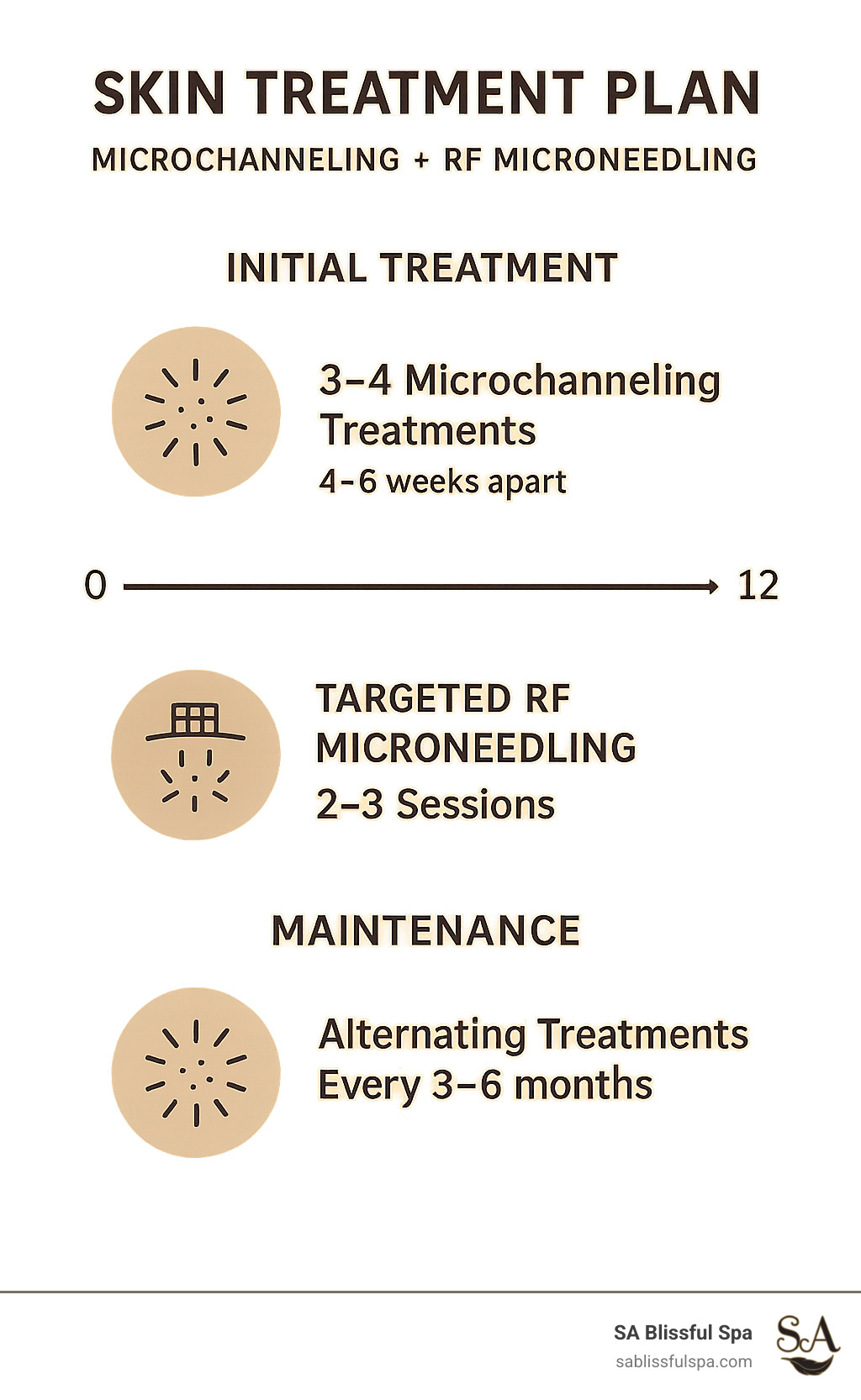
A typical combined protocol might look something like this: Start with 3-4 microchanneling treatments spaced about 4 weeks apart to improve overall skin quality and texture. Then, add 2-3 targeted RF microneedling sessions to address specific concerns like deeper wrinkles or acne scars. For maintenance, alternate between these treatments every 3-6 months to keep your results fresh and your skin constantly improving.
This balanced approach gives you the best of both worlds – the minimal-downtime convenience of microchanneling with the more intensive collagen stimulation of RF microneedling. It's truly comprehensive rejuvenation custom to your skin's unique needs.
Conclusion
When navigating the decision between
microchanneling vs rf microneedling, your perfect treatment depends on your unique skin story. Like choosing between two excellent paths up the same mountain, both will get you to better skin—just via different routes.
Microchanneling shines as a gentle yet effective entry into collagen induction therapy. With its ability to improve product absorption by a remarkable 300%, it works beautifully with therapeutic serums to transform your skin. If you're just beginning your anti-aging journey, have a busy schedule that can't accommodate downtime, or prefer gradual, natural-looking improvement, microchanneling offers impressive results that fit seamlessly into your lifestyle.
RF microneedling, meanwhile, brings more dramatic change for those deeper concerns we all eventually face—those stubborn acne scars that have bothered you for years, the more noticeable wrinkles, or areas where your skin has begun to lose its youthful firmness. The added radiofrequency energy creates both immediate tightening and improved collagen production that continues improving for months. Yes, you'll need to plan for a day or two of social downtime, but many clients find the more dramatic results well worth this minor inconvenience.
Here at SA Blissful Spa in Burlington, we believe the best skincare approach is as unique as you are. Our experienced estheticians are skilled in both techniques, allowing us to craft a treatment plan perfectly custom to your skin concerns, lifestyle needs, and aesthetic goals. Some of our most satisfied clients actually benefit from a strategic combination of both treatments—using microchanneling to build overall skin health and RF microneedling to target specific concerns.
We'd love to welcome you for a personalized consultation where we can analyze your skin, discuss your goals, and design your perfect treatment roadmap. During this relaxed, no-pressure conversation, we'll consider factors like your skin type, concerns, budget, and lifestyle to recommend the approach that will work best for you.
Investing in either of these collagen induction therapies means investing in lasting skin health—not just temporary improvement. Unlike quick fixes that fade within weeks, these treatments work with your body's own regenerative abilities to create improvements that continue developing and can last for years with proper maintenance.
Ready to find which treatment is right for your skin? We're here to guide you every step of the way toward your most radiant complexion.
More info about microchannelling service