
Is Waxing Worth It? What Really Happens to Your Hair Over Time
Does waxing thin hair? Yes — but not overnight, and not the same way for everyone.
Here's the quick answer:
- Waxing pulls hair out from the root, unlike shaving which only cuts at the surface
- Repeated waxing weakens hair follicles over time, causing them to produce finer, softer regrowth
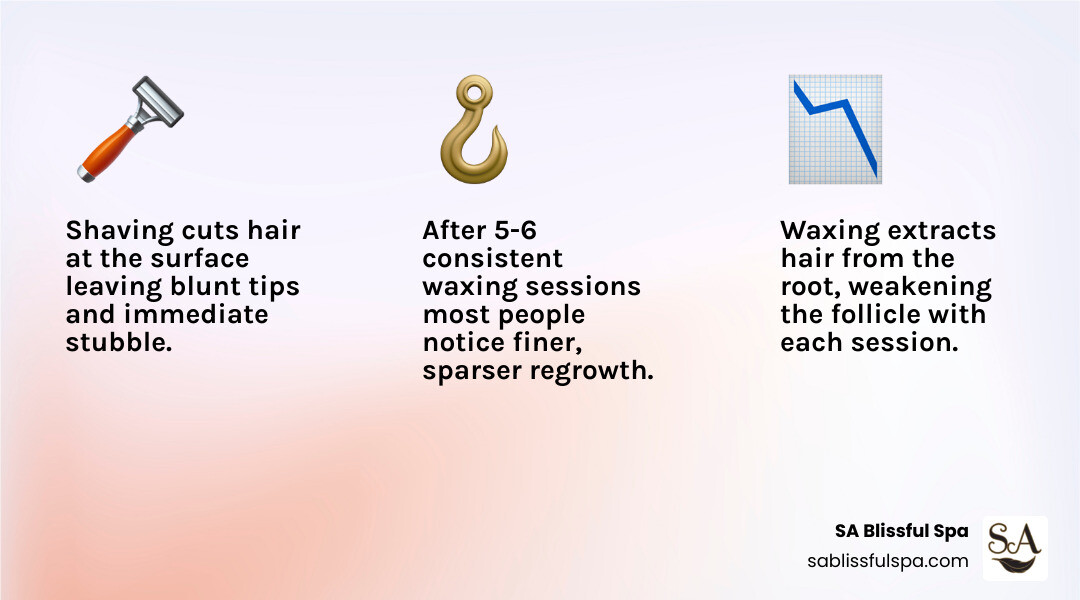
- Most people notice thinner, sparser hair after 5–6 consistent sessions spaced 4–5 weeks apart
- Results are progressive, not permanent — consistency is everything
- Genetics and hormones (like those affected by PCOS) can limit or slow results
So yes, waxing can thin your hair — but it takes time, commitment, and the right approach.
If you've ever wondered why your regrowth feels softer after a wax, or whether those regular appointments are actually making a difference, you're asking exactly the right questions. The short answer is that waxing works gradually — session by session, it stresses the hair follicle, weakens its structure, and over months and years, many people find their hair grows back finer, slower, and in some areas, barely at all.
But there's real science behind it, and just as importantly, there are real limits. Knowing both helps you set honest expectations and get the most out of every appointment.
I'm Saloni Bhandari, a licensed esthetician and founder of SA Blissful Spa, and after years of performing waxing services and helping clients understand does waxing thin hair for their specific skin and hair type, I've seen how transformative a consistent waxing routine can be. In this guide, I'll walk you through the science, the realistic timelines, and the tips that actually make a difference.
Glossary for Does waxing thin hair?:
The Science: How Does Waxing Thin Hair Over Time?
To understand how waxing changes your hair, we have to look beneath the surface. When we wax, we aren't just removing the visible hair; we are engaging in a mechanical tug-of-war with the hair follicle itself. Unlike shaving, which merely trims the hair at the skin's surface, waxing extracts the entire hair shaft, including the bulb.
This process creates a "micro-trauma" within the follicle. While that might sound scary, in hair removal, it’s exactly what we want. According to research on How Does Waxing Reduce Hair Growth? The Science Behind Hair Removal, this repetitive stress eventually exhausts the follicle, leading to a noticeable reduction in hair volume and quality.

Does waxing thin hair by damaging the follicle?
Every time a hair is forcibly removed from the root, the follicle must rebuild a new hair from scratch. Over time, this constant cycle of destruction and reconstruction takes its toll. The follicle essentially becomes "tired."
This cumulative damage results in follicle miniaturization. As the follicle weakens, it loses its ability to produce the thick, sturdy hairs it once did. Instead, it starts producing hairs that are smaller and less robust. Think of it like a garden where you keep pulling the weeds by the roots; eventually, the soil (or in this case, the follicle) doesn't support the same aggressive growth it once did. For a deeper dive into the mechanics, check out our More info about professional waxing services.
The transition from terminal to vellus hair
In biology, we categorize hair into two main types: terminal and vellus.
- Terminal hairs are the thick, dark, pigmented hairs we usually want to get rid of (like on the legs or underarms).
- Vellus hairs are the fine, light, "peach fuzz" hairs that are barely visible.
Through consistent waxing, we can actually encourage terminal hairs to "revert" to a state that resembles vellus hair. Because the anagen (growth) phase becomes shorter with repeated waxing, the hair doesn't have as much time to develop thickness or deep pigmentation. This is why many clients learn more about upper lip hair changes and notice that the hair regrows much lighter and softer than before.
Waxing vs. Shaving: Why Regrowth Feels Different
The most common question we hear at SA Blissful Spa is, "Why does my hair feel so much thicker after I shave?" The truth is, shaving doesn't actually change the thickness of your hair, but it does change the shape of the tip.
| Feature | Waxing | Shaving |
|---|---|---|
| Method | Root extraction | Surface cutting |
| Regrowth Tip | Tapered (soft) | Blunt (prickly) |
| Smoothness | 3–6 weeks | 1–3 days |
| Follicle Impact | Weakens over time | No impact |
| Skin Effect | Deep exfoliation | Potential razor burn |
When you shave, you cut the hair at its widest point, leaving a blunt, flat edge. As that hair grows out, it feels like sandpaper. Waxing, however, allows the hair to grow back with its natural, tapered tip. This is a major reason why The Benefits of Waxing Should Make it Your Go-To Hair Removal Method include a much more pleasant regrowth experience.
Why your hair feels softer after a wax
Because a waxed hair is a brand-new hair growing from the bottom of the follicle, it hasn't been "toughened" by the elements or cut into a blunt shape. It emerges with a fine, pointed tip that feels significantly softer to the touch.
Additionally, waxing acts as a form of physical exfoliation. It removes a thin layer of dead skin cells (the epidermis) along with the hair. This renewal of the skin surface makes the entire area feel smoother, which is why waxing is often the best hair removal option for those who struggle with "strawberry legs" or rough skin texture.
Does waxing thin hair more effectively than shaving?
Absolutely. Shaving is a temporary fix that requires daily or every-other-day maintenance. It does nothing to discourage future growth. Waxing, on the other hand, works toward long-term density reduction. By extracting the root, you are synchronizing the growth cycles. Over time, more of your hairs will begin to grow at the same time, meaning you'll have longer periods of complete smoothness between sessions.
Realistic Timelines: When Will You See Results?
We live in a world of instant gratification, but when it comes to the question of does waxing thin hair, patience is your best friend. You won't see a permanent change after one session. In fact, after your first wax, you might even feel like the hair is coming back quickly because of "mixed growth stages"—hairs that were just under the skin during your appointment are now surfacing.

The 5-6 session milestone
The "magic number" in the waxing industry is usually five to six. After 5–6 consistent sessions, typically spaced 4–5 weeks apart, most people see a dramatic shift.
- Sessions 1-2: Your skin feels smoother, but regrowth volume remains mostly the same.
- Sessions 3-4: You’ll notice the hair is softer and the "prickly" stage is less intense.
- Sessions 5-6: Significant sparse patches appear, and the hair that does grow back is noticeably finer.
According to data from Does Brazilian Waxing Make Hair Grow Back Thinner?, this is the point where the intervals between waxes can often be extended because the hair is growing so much slower. For more on maintaining this routine, see our smooth operator guide to waxing.
Why consistency is key for hair thinning
If you wax once, then shave two weeks later, you have effectively "reset" your progress. Shaving stimulates the skin and keeps the follicles active. To truly thin the hair, you must commit to the "no-shave" rule between appointments.
Skipping appointments also allows the follicles to recover. If you wait three months between waxes, the follicle has time to fully repair itself, undoing the weakening effect we worked so hard to achieve. Consistency is what keeps the follicle in a state of perpetual "exhaustion," which is the goal if you want to know does waxing cause more hair growth? (Spoiler: It doesn't, provided you stay consistent!).
Factors That Influence Hair Thinning and Regrowth
While we wish we could promise the same results to everyone, biology plays a huge role. Several factors determine how quickly (or if) your hair will thin out.
How hormones and PCOS affect waxing results
Hormones are the "engine" behind hair growth. Conditions like Polycystic Ovary Syndrome (PCOS) involve higher levels of androgens, which can keep hair follicles in a hyper-active state. For those with PCOS, waxing is often a better choice than laser hair removal, which can sometimes trigger "paradoxical hypertrichosis" (a rare side effect where laser actually increases hair growth in hormonal areas).
While waxing can still help thin the hair for those with PCOS, it may take more sessions to see results, and the thinning may not be as dramatic as it is for someone with a different hormonal profile. It's all about managing expectations and understanding that does waxing damage or lighten your skin? is a common concern, but for hormonal hair, waxing remains one of the safest maintenance methods.
Maximizing your hair-thinning benefits
If you want to get the most out of your sessions in Burlington or any of our surrounding locations like Lexington or Woburn, follow these pro tips:
- Exfoliate Regularly: Use a loofah or a gentle scrub 2–3 times a week. This prevents dead skin from trapping hairs, ensuring the wax can grab every single one from the root.
- Stay Hydrated: Well-hydrated skin releases hair much more easily, making the process less painful and more effective.
- Choose Hard Wax: At SA Blissful Spa, we often recommend hard wax for sensitive areas. It "shrink-wraps" the hair rather than pulling the skin, which minimizes trauma to the epidermis while maximizing the pull on the follicle.
Frequently Asked Questions about Waxing and Hair Thickness
Does waxing make hair grow back thicker or darker?
This is perhaps the biggest myth in the beauty world! Waxing does not make hair grow back thicker or darker. Hair thickness and color are determined by your genetics and your hormones, not by a mechanical pull at the surface. The reason some people think it grows back thicker is usually due to hormonal changes (like puberty or menopause) that happen to coincide with their waxing journey, or because they shaved in between and are feeling that blunt, prickly stubble.
Can waxing permanently stop hair growth?
For some people, yes—eventually. After years of consistent, monthly waxing, some follicles may become so damaged that they stop producing hair entirely. However, this is not a guarantee and should not be viewed as a "permanent" solution in the same way electrolysis is. Think of it as "permanent reduction" rather than "permanent removal." You will likely always need occasional maintenance.
What is the average cost of professional waxing in 2026?
Pricing for waxing varies significantly based on the area of the body and the region. Based on general internet data for 2026, here are some average price ranges you might see:
- Small Areas (Lip, Chin, Brows): $20 – $75
- Medium Areas (Underarms, Half-Arm): $40 – $130
- Large Areas (Full Leg, Brazilian, Back): $70 – $280+
Please note: These are average costs based on internet research across the United States and are not the specific prices for SA Blissful Spa. Prices in high-demand areas can often be 3x the national average.
Conclusion
At SA Blissful Spa, we believe that beauty should be a relaxing, empowering experience. Whether you are visiting us from Concord, Arlington, or right here in Burlington, MA, our expert estheticians are dedicated to providing personalized care in a serene environment.
Does waxing thin hair? With the right technique and a bit of patience, it certainly can. By choosing professional waxing over the daily chore of shaving, you aren't just getting smoother skin today—you're investing in easier, finer, and softer regrowth for the future.
Ready to start your journey toward effortless smoothness? We invite you to experience the difference that expert, tailored treatments can make. Book your next eyebrow waxing appointment or full-body service with us today and let us help you achieve the glowing, healthy skin you deserve.