Understanding the Science of Chemical Peels for Pimple Marks
Chemical peels for pimple marks are one of the most effective ways to fade dark spots, smooth uneven texture, and reveal fresher skin — without aggressive procedures or long recovery times.
Here's the quick answer:
- Chemical peels use acid solutions to remove damaged outer skin layers
- This triggers new cell growth and reduces the appearance of dark marks left by acne
- Superficial peels (glycolic, salicylic, lactic acid) target surface-level discoloration
- Medium-depth peels (TCA, yellow peel) reach deeper to address more stubborn marks and shallow scars
- Most people need 3 to 6 sessions to see significant, lasting improvement
- Results typically begin to show after just 1 to 2 treatments
Pimple marks — whether reddish, brown, or indented — are one of the most common frustrations I hear from clients. The breakout clears up, but the reminder lingers for months. As one clinical review put it, "the scars that are often left behind following breakouts can be even more challenging, especially because they typically last much longer than the breakout itself."
The good news? Gentle, professionally applied peels can make a real difference — even for sensitive or darker skin tones.
I'm Saloni Bhandari, licensed esthetician and founder of SA Blissful Spa, and I've helped many clients in Burlington, MA fade stubborn pimple marks using carefully selected chemical peels for pimple marks tailored to their skin type. In this guide, I'll walk you through exactly how they work, what to expect, and how to get the best results safely.
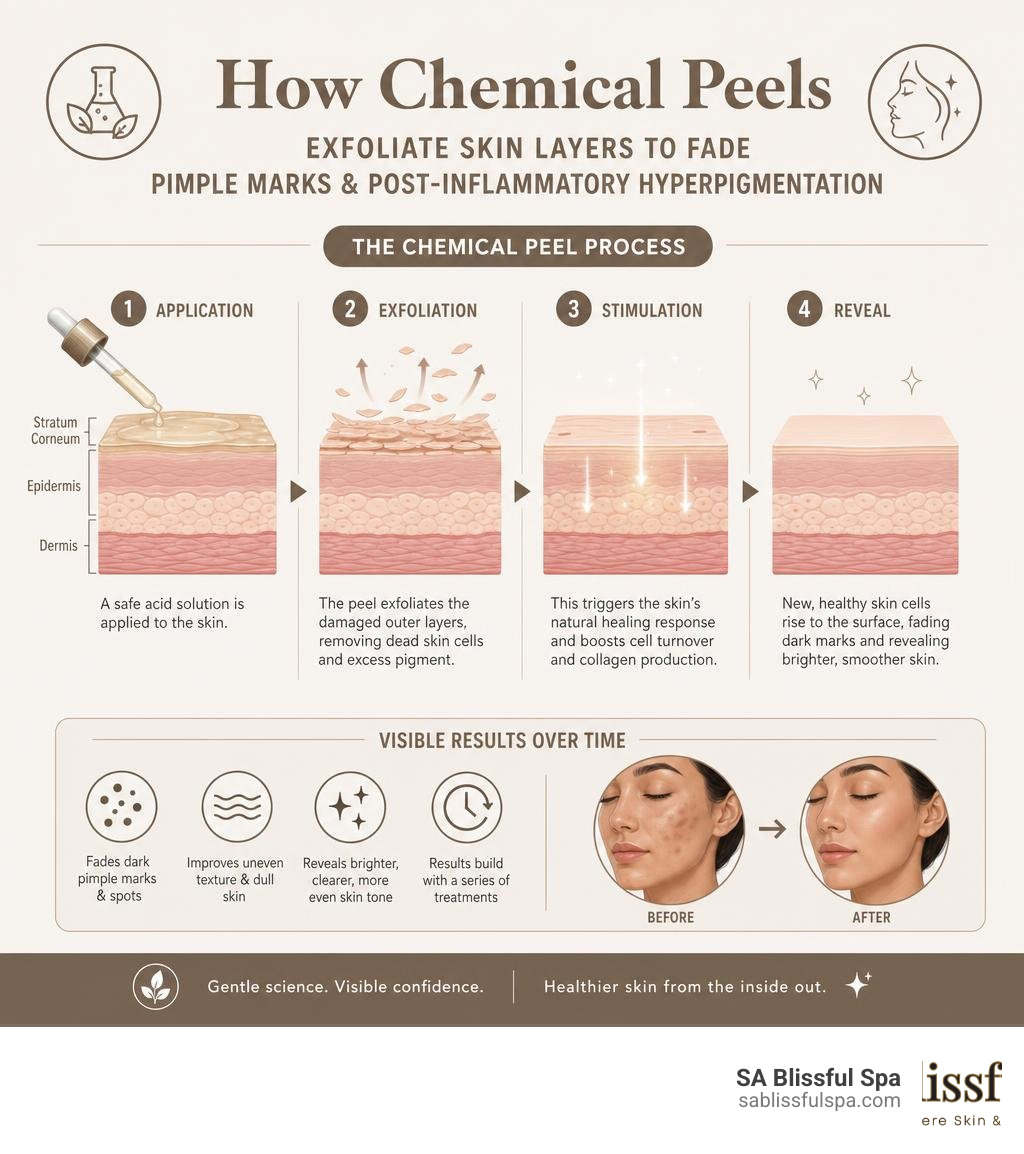
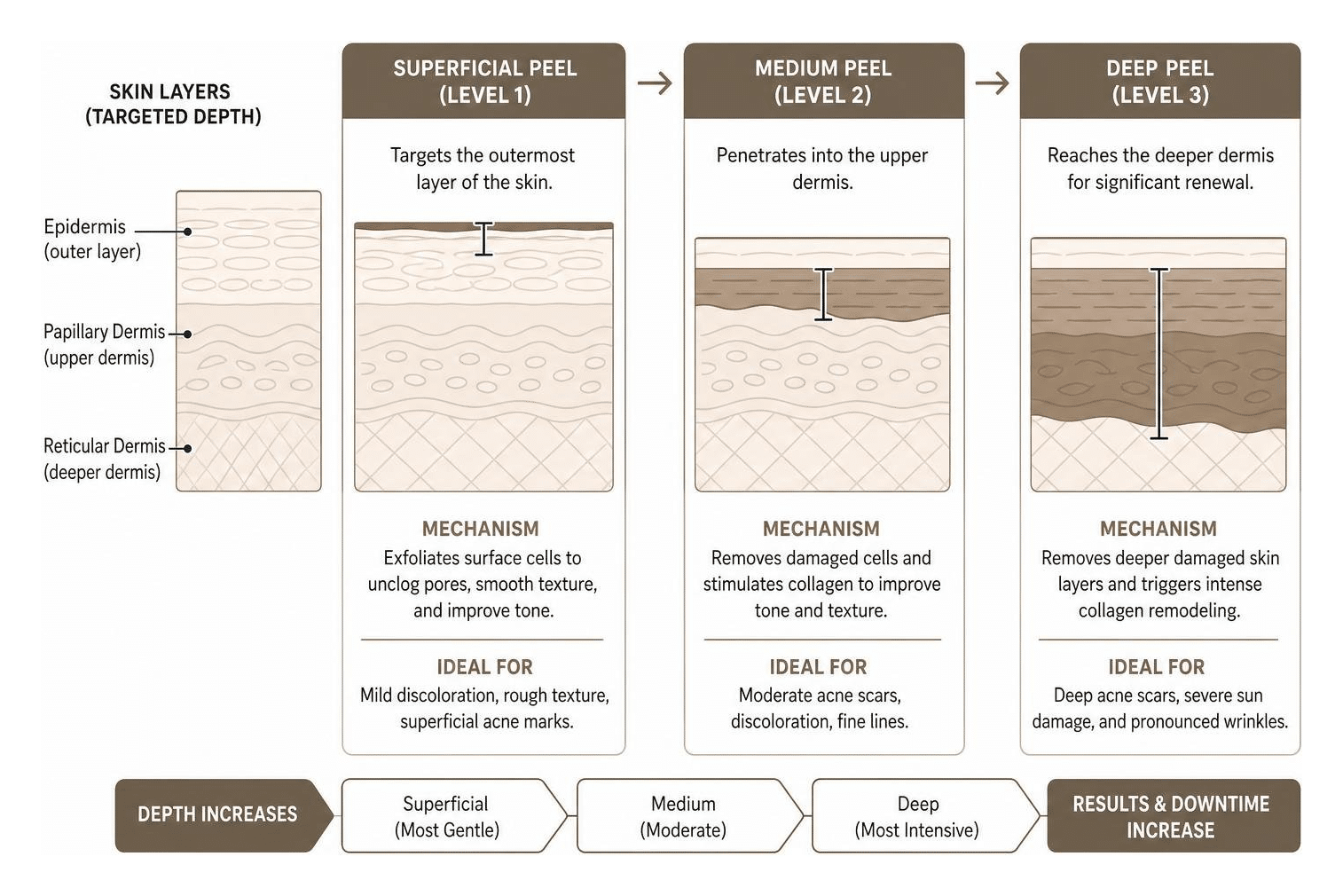
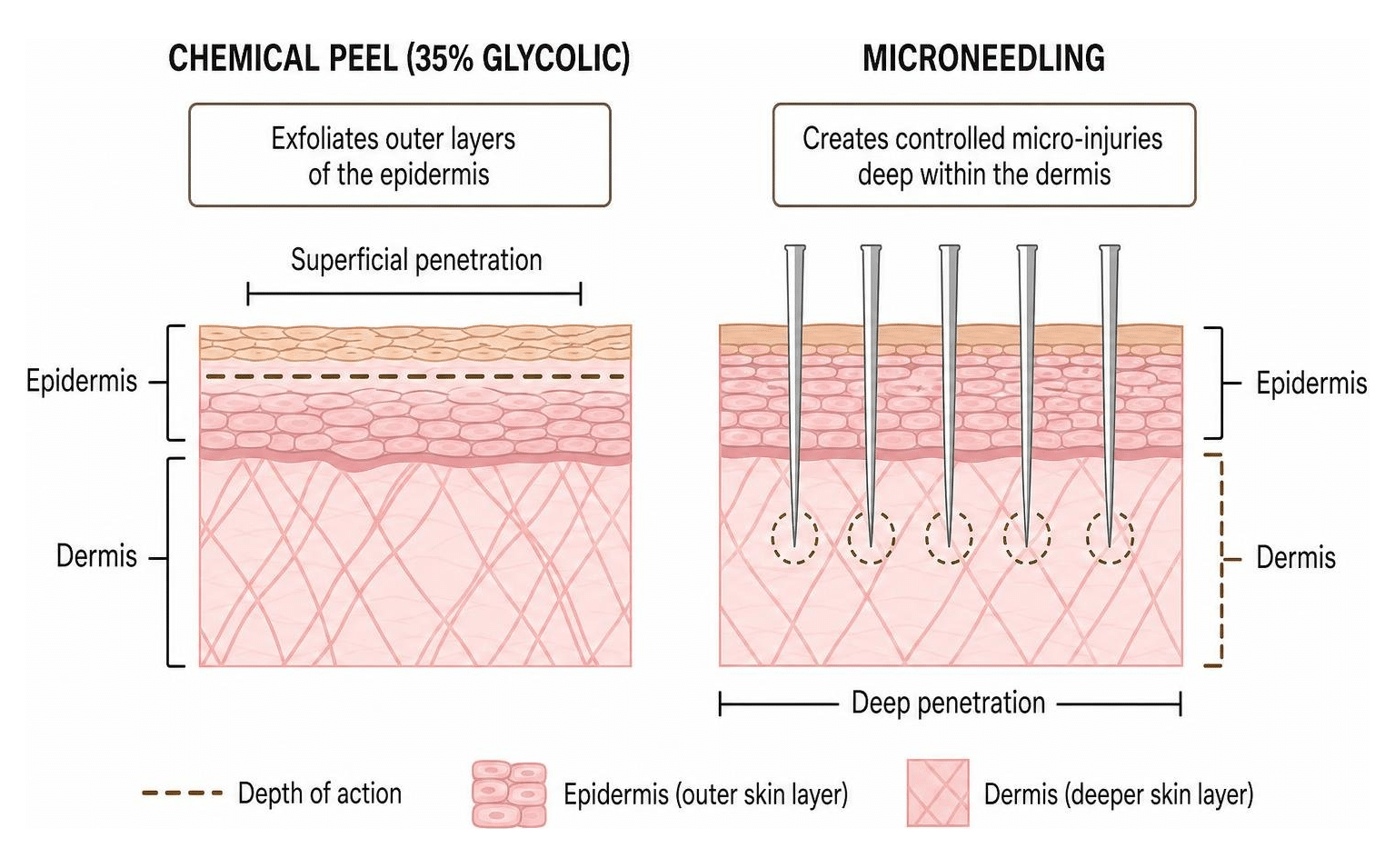
To understand how a chemical peel clears up the aftermath of a breakout, we have to look at the structure of our skin. The skin is divided into two primary layers: the superficial outer layer called the epidermis, and the deeper structural layer called the dermis.
When a pimple heals, it often leaves behind flat, discolored spots. These are either red (post-inflammatory erythema) or brown/black (post-inflammatory hyperpigmentation, or PIH). PIH occurs when inflammation triggers an overproduction of melanin (the pigment that gives skin its color) in the lower levels of the epidermis.
On the other hand, deep, pitted "pimple marks" are actually structural atrophic acne scars. These happen when a severe breakout destroys the collagen fibers in the deeper dermis, leaving the skin without its underlying support.
Chemical peels act as a controlled exfoliation method. By applying a specialized acid solution to the skin, we safely break down the microscopic bonds that hold dead, pigment-laden cells together. This process accelerates cellular turnover—the speed at which your skin produces fresh, new cells to replace old ones. As the outer layers gently flake away, the trapped melanin is dispersed, and the skin is stimulated to produce new collagen.
Over a series of treatments, this dual action of pigment dispersion and collagen synthesis dramatically improves both the color and the physical texture of the skin. For an in-depth look at how this biological process unfolds, you can read our guide on The Science Behind the Smooth: How Chemical Peels Tackle Acne Scars.
To help you visualize your options, here is a quick breakdown of how peel depths, active ingredients, and their target marks compare:
| Peel Depth | Primary Active Ingredients | Target Layer | Best For | Average Downtime |
|---|---|---|---|---|
| Superficial | Salicylic Acid, Glycolic Acid, Lactic Acid, Mandelic Acid | Epidermis (Stratum Corneum) | Flat red/brown marks (PIH), active breakouts, minor texture issues | 0 to 3 days (mild flaking) |
| Medium-Depth | Trichloroacetic Acid (TCA) 15–35%, Yellow Peel, Jessner's Solution | Epidermis down to Papillary Dermis | Shallow atrophic scars, stubborn hyperpigmentation, deeper texture issues | 7 to 10 days (moderate peeling) |
| Deep | Phenol, High-concentration TCA (>50%) | Reticular Dermis | Severe, deep ice-pick or boxcar scars, deep wrinkles | 14 to 21 days (significant peeling & crusting) |
Superficial Chemical Peels for Pimple Marks
Superficial peels are the most popular option for fading flat pimple marks because they carry very little downtime and are incredibly gentle. These formulations focus entirely on the stratum corneum (the very top layer of the epidermis), sweeping away the dead, pigmented cells that make your complexion look dull and uneven.
Several key acids are used in superficial chemical peels:
- Salicylic Acid: This is a oil-soluble beta-hydroxy acid (BHA). Because it can dissolve in oil, it penetrates deep into the pores to clear out sebum and neutralize acne-causing bacteria. It is highly effective at reducing active inflammatory lesions while simultaneously fading flat red and brown marks.
- Glycolic Acid: An alpha-hydroxy acid (AHA) derived from sugarcane. It has the smallest molecular size of all AHAs, allowing it to penetrate the skin rapidly. It acts as a powerful keratolytic agent, dissolving dead skin cells to reveal brighter, more evenly toned skin underneath.
- Lactic Acid: A gentler AHA that exfoliates while pulling moisture into the skin, making it an excellent option for dry or sensitive skin types.
- Mandelic Acid: Derived from bitter almonds, mandelic acid has a much larger molecular size than glycolic acid. It penetrates the skin slowly and evenly, making it highly tolerated by sensitive skin and dark skin tones prone to hyperpigmentation.
Clinical research supports the use of these gentle acids. A landmark study published in the journal BMJ Open titled Chemical peels for acne vulgaris: a systematic review of randomised controlled trials highlights that superficial peels are highly effective, well-tolerated treatments that produce significant improvements in skin clarity and texture without causing severe side effects.
Medium-Depth Chemical Peels for Pimple Marks
When pimple marks have evolved into physical indentations—such as rolling or boxcar scars—superficial peels may not be strong enough to rebuild the lost tissue. This is where medium-depth peels come in. These solutions penetrate past the epidermis to reach the papillary dermis (the upper portion of the deeper skin layer).
The gold standard for medium-depth peeling is Trichloroacetic Acid (TCA), often used in concentrations ranging from 15% to 35%. Another highly effective modern option is the yellow peel, which combines retinol with exfoliating acids like azelaic, phytic, and kojic acids to stimulate intense cellular renewal and collagen production.
By reaching the papillary dermis, medium-depth peels trigger a wound-healing response that forces the skin to organize its structure and synthesize fresh collagen and elastin. This helps to "plump" up atrophic scars from the inside out.
A clinical trial published in MDPI titled Cosmetic Benefits of Medium-Depth Chemical Peels for Moderate Acne Lesions and Atrophic Acne Scars demonstrated the power of these treatments. The study found that young adults undergoing a series of medium-depth peels experienced a median scar volume reduction of over 22% on their cheeks, along with a massive 85.7% reduction in inflammatory acne lesions.
Deep Peels and Phenol Solutions
Deep chemical peels utilize strong chemicals like phenol or high-concentration TCA to penetrate all the way down to the reticular dermis (the deepest layer of the skin). These treatments are designed to address severe, deep-set structural scarring.
Because phenol is absorbed into the bloodstream and can impact organ function, deep peels require a surgical setting, local anesthesia, and continuous cardiac monitoring during the procedure. The downtime is extensive, often requiring 14 to 21 days for the skin to fully re-epithelialize (grow back), during which the face is heavily bandaged, swollen, and crusty.
While deep peels can produce dramatic, permanent changes in severe scarring, they carry a high risk of permanent skin color changes (depigmentation) and scarring, especially in darker skin types. Because of these risks, we generally do not offer or recommend deep phenol peels at SA Blissful Spa, preferring to utilize safer, non-invasive cumulative treatments to achieve beautiful, smooth results.
Chemical Peels for Acne Scars: How They Work to Smooth Skin
To understand how we smooth out textured scars, it helps to look at the process step-by-step:
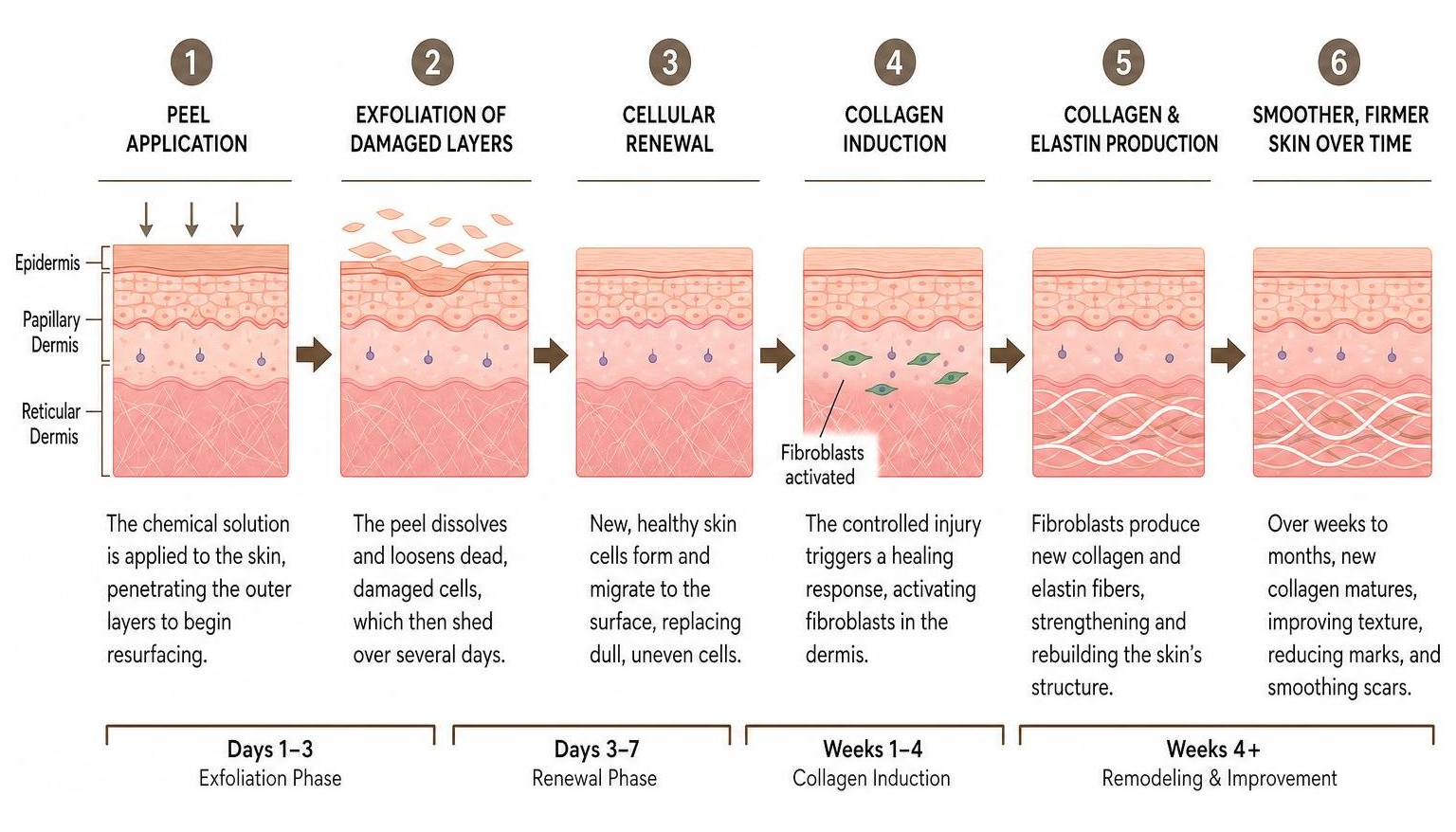
When a professional peel is applied, it immediately initiates a process of controlled chemical resurfacing. By gently removing the damaged, uneven outer layers of the skin, the peel stimulates the body's natural healing mechanisms.
For flat, dark marks (hyperpigmentation), the peel breaks apart the concentrated clusters of melanin, allowing them to shed away naturally. For indented scars, the magic lies in collagen induction. The acids signal the fibroblasts in the dermis to produce fresh, healthy collagen fibers. As these new fibers build up over several weeks, they raise the floor of depressed scars, making the overall skin surface look significantly smoother and more even.
If you are wondering whether a chemical peel is the right path forward for your specific type of scarring, you can read our detailed guide: Does a Chemical Peel Help with Acne Scars?.
Safety, Risks, and Considerations for Darker Skin Tones
One of the most common myths in skincare is that chemical peels are unsafe for darker skin tones. This is simply not true—however, darker skin does require a highly specialized, cautious approach.
In professional esthetics, we classify skin using the Fitzpatrick scale, which ranges from Type I (very fair, always burns) to Type VI (deeply pigmented, rarely burns). Darker skin types, including Hispanic, Black, and Asian skin (typically Fitzpatrick Types III to VI), have highly active melanocytes (pigment-producing cells).
If a chemical peel is too aggressive, it can trigger a defensive inflammatory response, leading to post-inflammatory hyperpigmentation (PIH)—ironically creating more dark marks than you started with. Conversely, aggressive deep peels can destroy melanocytes entirely, leading to permanent white patches (hypopigmentation).
To keep your skin completely safe, we follow several strict rules:
- We avoid deep peels: Phenol and high-strength TCA are contraindicated for Fitzpatrick Types IV-VI.
- We stick to gentle, progressive acids: Salicylic acid, mandelic acid, and low-strength glycolic or lactic acids are incredibly safe and effective for darker skin because they exfoliate without triggering deep inflammation.
- We pre-treat the skin: We often recommend using a gentle pigment inhibitor (like tyrosinase inhibitors) and daily broad-spectrum sunscreen for 2 to 4 weeks before the peel to "calm" the pigment-producing cells.
These safety guidelines are backed by extensive clinical research. For example, a comprehensive review titled Chemical Peels for Acne and Acne Scars in Asians: Evidence Based Review confirms that superficial peels using salicylic acid and glycolic acid are highly effective and safe for Asian skin, carrying a very low risk of complications when performed correctly.
Furthermore, the clinical paper Chemical peels in the treatment of acne: patient selection and perspectives emphasizes that proper patient selection, skin priming, and choosing the correct peeling agent are the keys to avoiding post-peel pigment complications in diverse populations.
What to Expect: Before, During, and After Your Treatment
Knowing what to expect can take all the anxiety out of your first chemical peel. The journey to smoother skin is divided into three simple phases:
1. Preparing for Your Peel (The Weeks Before)
Proper preparation ensures your skin heals evenly and minimizes the risk of side effects.
- Stop Retinoids: You must discontinue all topical retinoids (such as Retin-A, tretinoin, or retinol) and exfoliating acids (glycolic, salicylic) at least 5 to 7 days before your appointment.
- Avoid Sun Exposure: Do not get a sunburn or heavy tan in the 2 weeks leading up to your treatment.
- Antiviral Prophylaxis: If you have a history of cold sores, let us know. Peels can sometimes reactivate the virus, so taking an antiviral medication a few days before and after your peel is highly recommended.
- No Hair Removal: Avoid waxing, threading, or using depilatory creams on the treatment area for at least a week prior.
2. During the Procedure
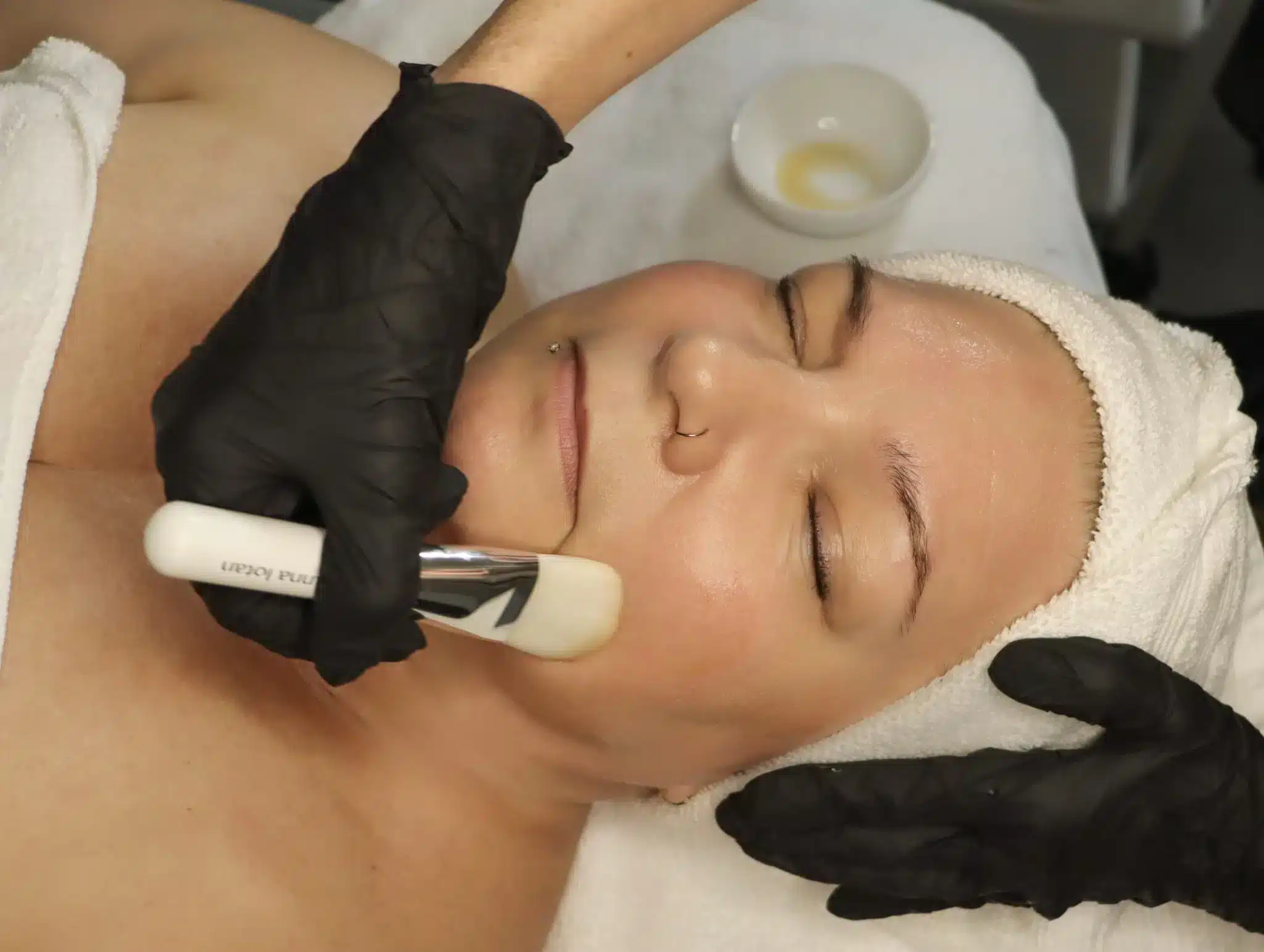
When you visit us at SA Blissful Spa in Burlington, MA, we start by thoroughly cleansing your skin to remove all oils. We then apply the peel solution evenly.
Depending on the type of peel, you may feel a warm, tingling, or slightly itchy sensation. We often use a small hand-held fan to keep your skin feeling cool and comfortable. Once the peel has reached its target depth, we either neutralize it or apply a calming post-peel treatment. The entire process takes about 30 minutes!
3. Aftercare and Recovery (The Weeks After)
Your skin will be temporarily more sensitive, so gentle care is essential:
- Keep it Simple: For the first 3 to 7 days, use only a gentle cleanser, a deeply hydrating moisturizer, and broad-spectrum SPF 30+ sunscreen.
- Do Not Pick: If your skin begins to flake or peel, do not pull, peel, or scrub it off. Let it shed naturally to avoid scarring or hyperpigmentation.
- Avoid Sweat and Heat: Skip intense workouts, saunas, and hot tubs for 48 hours post-treatment.
To see what this transformation looks like in real life, explore our guide on Chemical Peel Acne Scars Before and After. And remember, acne marks don't just happen on the face—if you are struggling with body breakouts, check out our specialized advice on Chemical Peels for Back Acne Scars.
Frequently Asked Questions About Smoothing Acne Scars
How many sessions are typically needed to see results?
While you will likely notice a brighter, smoother complexion after just 1 or 2 sessions, chemical peels work through cumulative benefits. To see a significant, lasting reduction in stubborn pimple marks and acne scars, most clients require a series of 3 to 6 sessions, spaced 2 to 4 weeks apart. Once you achieve your desired results, a maintenance peel every 4 to 6 weeks will keep your skin glowing, clear, and youthful.
Are chemical peels safe for active acne?
Yes! In fact, certain chemical peels are incredibly beneficial for active acne. Salicylic acid peels are highly comedolytic and anti-inflammatory. They penetrate deep into the pores to dissolve excess sebum, sweep away dead skin cells, and target the bacteria responsible for breakouts. This means a professional peel can simultaneously clear up your active pimples while fading the old marks left behind by previous breakouts. To learn more about how we target active breakouts, read our article: Are Chemical Peels Good for Acne?.
What is the average cost of a chemical peel?
The cost of a chemical peel can vary widely depending on the type of peel, the depth of the treatment, and your geographic location. Based on nationwide internet data, the average cost of a chemical peel ranges from $150 to $1,500+ per session (with superficial peels on the lower end and deep medical-grade or phenol peels on the high end).
Please note: These are average industry costs based on general internet data and do not reflect the actual, highly competitive pricing at SA Blissful Spa. For our current rates, please view our official pricing page.
Conclusion
Fading stubborn pimple marks and smoothing out acne scars doesn't have to involve harsh "burning" or weeks of hiding away at home. With the right selection of gentle, professional-grade chemical peels, we can safely and progressively reveal the clear, radiant complexion you deserve.
At SA Blissful Spa in Burlington, MA, we specialize in providing personalized, expert skincare in a serene and relaxing environment. Whether you live right here in Burlington or in one of our beautiful neighboring towns—like Lexington, Woburn, Winchester, Bedford, Concord, or Arlington—we are here to design a tailored treatment plan just for your skin's unique needs.
Ready to say goodbye to stubborn pimple marks? Schedule a consultation for professional chemical peels with us today, and let's start your journey to smooth, glowing skin!