The Truth About Upper Lip Waxing and Your Skin
Does upper lip waxing cause wrinkles? This common concern stops many people from trying this effective hair removal method. The good news is that it's largely a myth—when done correctly, waxing does not cause wrinkles.
Quick Answer:
- No, upper lip waxing does not cause wrinkles when performed with proper technique
- Any rough movements may irritate the skin temporarily, but they won't create permanent wrinkles
- The pulling motion of waxing is not strong enough to damage collagen or elastin
- Dermatologists confirm there is no significant correlation between waxing and wrinkle formation
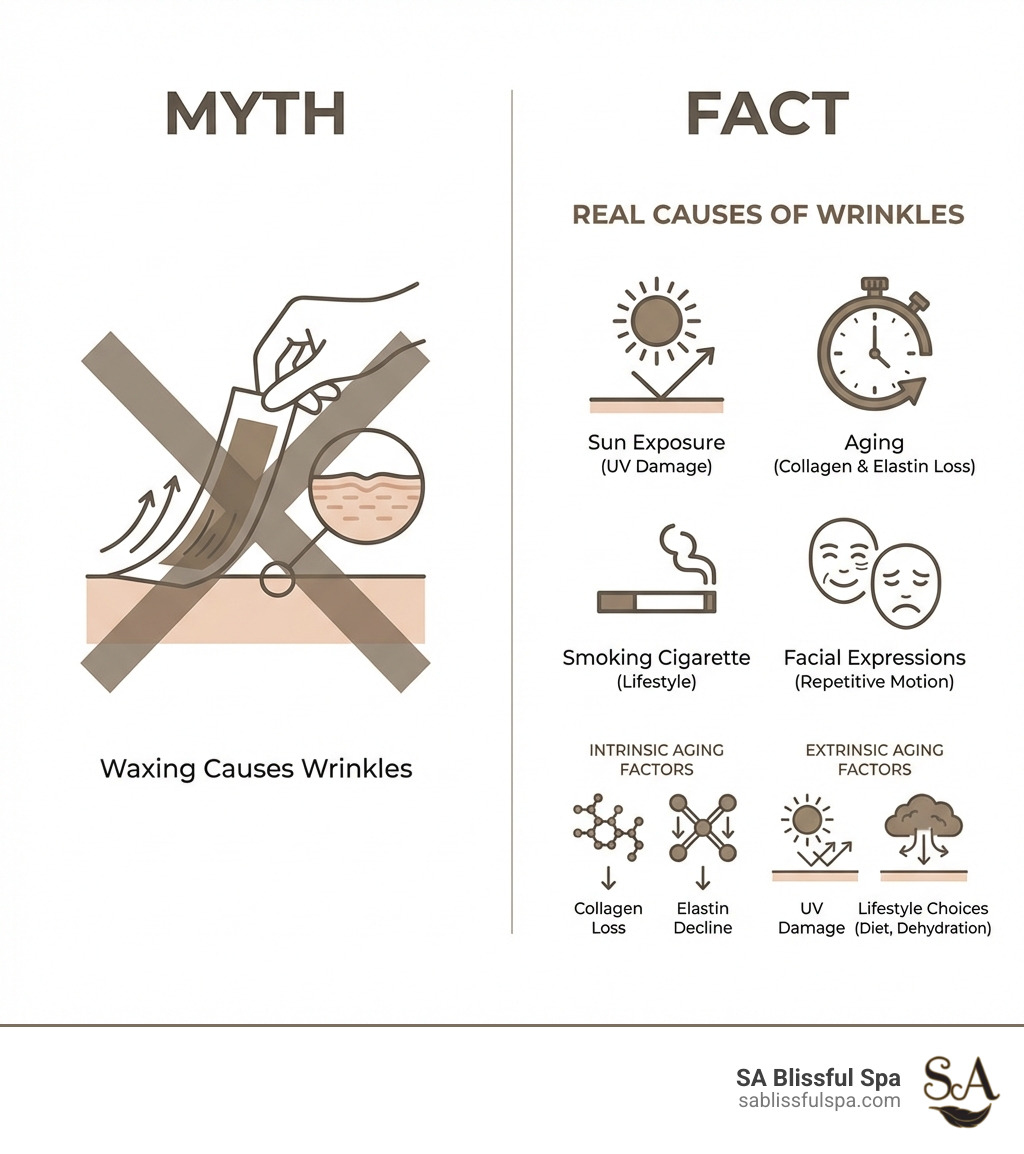
What Actually Causes Upper Lip Wrinkles:
- Natural aging (loss of collagen and elastin)
- Sun exposure and UV damage
- Smoking
- Repetitive facial expressions
- Dehydration and poor nutrition
It's totally normal to have facial hair, and choosing how to remove it shouldn't come with unfounded fears. If you've been avoiding waxing because you're worried about wrinkles, you can breathe a sigh of relief.
The real culprits behind those fine lines around your mouth are aging, sun exposure, and lifestyle factors—not your monthly waxing appointment. In fact, waxing can actually improve your skin texture by removing dead skin cells and stimulating gentle exfoliation.
As
Saloni Bhandari, founder of SA Blissful Spa, I've spent years helping clients understand that wondering "does upper lip waxing cause wrinkles" comes from a myth that needs debunking—proper waxing technique actually supports healthy skin. Through countless waxing sessions and conversations with concerned clients, I've seen how this misconception holds people back from smooth, hair-free skin.
We'll explore the science behind wrinkle formation, reveal what
actually causes upper lip lines, and share the best practices for safe, effective waxing that keeps your skin healthy and smooth.
The Verdict: Does Upper Lip Waxing Cause Wrinkles?
The answer to
does upper lip waxing cause wrinkles is no, according to leading dermatologists and skin care experts. This common concern is largely a myth that we at SA Blissful Spa are happy to debunk for our clients in Burlington, MA, and surrounding communities like Lexington and Winchester.
Any rough movement on the skin can cause temporary irritation, but this doesn't translate into permanent wrinkles. Even the pulling of the skin during waxing, when done correctly, won't lead to lasting damage or wrinkle formation. Dr. Charles, a renowned expert, agrees that this concept is simply a myth and states he hasn't found any significant correlation between waxing and wrinkles. The skin is far more resilient than we often give it credit for.
For more expert insights, you can read about how dermatologists address this concern in "Myth or Fact: Waxing Your Upper Lip Causes Wrinkles" from
SELF.
Why Experts Say the Answer to 'Does Upper Lip Waxing Cause Wrinkles' Is No
Our skin is an incredible organ, designed to stretch and return to its original state. The concern that waxing causes wrinkles often stems from a misunderstanding of how wrinkles actually form and the skin's natural elasticity, collagen, and elastin.
- Skin Elasticity and Resilience: Our skin possesses natural elasticity, allowing it to stretch and retract. The momentary pull of a wax strip is not enough to permanently damage these elastic fibers or the underlying collagen structure. Think about how your skin stretches when you make facial expressions; it doesn't immediately cause permanent wrinkles.
- Collagen and Elastin Basics: Collagen provides structural support, acting like the scaffolding of our skin, while elastin gives it flexibility and the ability to bounce back. Wrinkles form when this collagen and elastin break down over time, or their production slows significantly. The pulling motion of waxing simply isn't strong enough to disrupt these vital components in a way that leads to premature wrinkling.
- Temporary Irritation vs. Structural Change: While waxing can cause temporary redness or irritation, especially in delicate areas like the upper lip, this is a superficial response. It's not a deep, structural change that would lead to wrinkle formation. Even the minimal stretching required to keep the skin taut during waxing would only potentially lead to laxity if performed on a daily basis, which is far more frequent than anyone would wax their upper lip.

Can Waxing Have Any Positive Effects on Skin Texture?
Waxing can offer some welcome benefits for your skin's texture, going beyond just hair removal.
- Gentle Exfoliation: When wax is removed, it doesn't just take hair; it also gently exfoliates the outermost layer of dead skin cells. This natural exfoliation can leave the skin feeling smoother and looking brighter.
- Supporting Cell Renewal: The removal of dead skin cells and mild stimulation to the surface of the skin during waxing can encourage regular cell turnover. While waxing is not a substitute for targeted anti-aging treatments, this gentle renewal supports healthier-looking skin over time.
- Smoother Skin Appearance: By removing vellus (fine) hair and dead skin, waxing creates a smoother surface. Makeup applies more evenly, and skincare products can sit more nicely on the skin, enhancing your overall complexion.
For more information on how waxing can benefit your facial skin, explore our services dedicated to
face waxing.
Unmasking the Real Culprits: What Actually Causes Upper Lip Wrinkles?
Now that we've cleared up the myth around
does upper lip waxing cause wrinkles, let's turn our attention to the real reasons those fine lines appear around the upper lip area. Wrinkles are a natural part of aging, but their onset and severity are heavily influenced by a combination of internal and external factors that affect our skin's fundamental building blocks: collagen and elastin.
Beyond the Myth of 'Does Upper Lip Waxing Cause Wrinkles': Intrinsic and Extrinsic Aging
Wrinkle formation is a complex process driven by two main types of aging:
- Intrinsic Aging (Natural Aging): This is the natural, chronological aging process determined by our genetics. As we age, our bodies naturally produce less collagen and elastin, leading to a gradual loss of skin firmness and elasticity. The skin also becomes thinner and drier. The timing of upper lip lines varies widely from person to person, but the underlying mechanisms of collagen and elastin degradation are universal.
- Extrinsic Aging (Environmental Factors): These are external factors that accelerate the aging process and are largely within our control. They cause premature breakdown of collagen and elastin, leading to more pronounced wrinkles.
Dr. Ahmed El Muntasar, a skin expert, emphasizes that the skin around the mouth just gets thinner and thinner with time, making it more susceptible to environmental factors.
You can learn more about these causes from dermatologists in "These Are the Most Common Causes of Lip Wrinkles, According to"
Wellandgood.com.
Key Lifestyle Factors That Lead to Upper Lip Lines
While we can't stop intrinsic aging, we can certainly mitigate extrinsic factors. These are the primary culprits behind most upper lip wrinkles:
- Sun Exposure (Photoaging): Chronic sun exposure is a major, often overlooked, cause of upper lip wrinkles. UV radiation speeds up the degradation of collagen and elastin, leading to fine lines and wrinkles. This is why daily application of a broad-spectrum SPF is so important.
- Smoking ("Smoker's Lines"): Smoking is one of the top preventable causes of upper lip wrinkles. The repetitive puckering motion involved in smoking combined with the harmful chemicals in cigarettes (nicotine disrupts collagen production) significantly contributes to the formation of vertical lines around the mouth.
- Repetitive Facial Expressions: Constant movement of the delicate skin around the mouth from talking, eating, laughing, and even actions like sipping from straws can etch lines into the skin over time.
- Dehydration and Poor Nutrition: A lack of proper hydration can make existing lines more prominent and reduce skin's overall plumpness. Similarly, a diet lacking essential nutrients, particularly vitamin C (which is crucial for collagen synthesis), can hinder the skin's ability to repair itself and maintain its structure.
- Aggressive Skin Manipulation: Pulling and rubbing the skin, especially the delicate areas around the mouth, during makeup removal or due to allergies, can contribute to the breakdown of underlying structures and increase the appearance of lines.
Waxing Wisely: Best Practices for a Smooth Upper Lip
The good news is that you don't have to choose between a smooth upper lip and wrinkle-free skin. By understanding proper waxing techniques and diligent pre- and post-waxing care, you can enjoy the benefits of hair removal without contributing to premature aging. At SA Blissful Spa, we prioritize techniques that are gentle yet effective for our clients across Arlington, Bedford, and other nearby towns. For more details on this service, visit our
upper lip waxing page.
Gentle Techniques and The Right Type of Wax
The key to safe and effective waxing, especially in delicate areas like the upper lip, lies in the technique and the type of wax used.
- Holding Skin Taut: The skin should always be held taut during both the application and removal of the wax. This minimizes the pulling sensation and prevents unnecessary stress on the skin. It's crucial to remove the wax with a hand parallel and close to the skin, avoiding an upward pull that could tug on the skin structure.
- Hard Wax vs. Soft Wax: For delicate facial areas like the upper lip, hard wax is generally preferred. Hard wax "shrink wraps" around the hair as it cools and hardens, but it adheres less to the skin itself. This makes removal gentler on sensitive skin than soft wax, which adheres to both hair and skin and can cause more stress.
- Professional Application: The expertise of a trained esthetician cannot be overstated. Professionals are skilled in choosing the right wax, preparing the skin, applying the wax correctly, and removing it efficiently to minimize discomfort and skin trauma. They understand the nuances of facial skin and can adapt techniques for different skin types and sensitivities. If you have sensitive skin, professional services can be custom to be as gentle as possible. Learn more about is face waxing safe for sensitive skin?.
The Importance of Pre- and Post-Wax Care
Proper care before and after your waxing session is just as important as the waxing itself in maintaining healthy, youthful-looking skin.
- Pre-Wax Preparation: Moisturizing is important both before and after a wax treatment. When skin is consistently hydrated, it retains its flexibility and is better able to endure the waxing process. Ensuring your skin is clean and free of heavy makeup or oils also helps the wax adhere correctly to the hair, not the skin.
- Post-Wax Soothing: The skin around the upper lip is particularly sensitive, with many nerve endings, and it gets thinner as we age. Post-wax care focuses on soothing, hydrating, and protecting this vulnerable area.
- Cool Compresses: Even with low-temperature wax, the removal can leave a burning sensation. Cool compresses (fragrance-free body wipes, cotton pads, or a sterilized washcloth soaked in cool water) gently tapped on the area can provide immediate relief and reduce redness.
- Fragrance-Free Moisturizers: During the post-wax period, proper moisturization helps to close the pores and provides essential hydration. It's crucial that the moisturizer is fragrance-free to help prevent inflammation and acne breakouts.
- Key Ingredients: Look for post-depilatory creams and lotions enriched with soothing, restorative ingredients. Options like aloe vera can calm the skin and reduce visible redness. Menthol can offer a pleasant refreshing effect that helps with the sensation of heat. Natural oils can help remove wax residues and support the skin barrier.
- Temporary Cosmetic Break: Consider avoiding harsh soaps when cleaning your face and taking a break from heavy cosmetics for at least 24–48 hours after waxing. If you need to conceal redness, mineral foundation is a gentle choice.
For a deeper dive into optimal post-wax care, particularly for your upper lip, check out "SHOULD YOU MOISTURIZE AFTER WAXING UPPER LIP?" on
Beautyimageusa.com.
Waxing vs. Other Common Hair Removal Methods
When considering hair removal for the upper lip, many options come to mind. While we at SA Blissful Spa specialize in waxing, it's helpful to understand how it compares to other common methods in terms of skin impact, duration of results, and potential for irritation.
- Shaving: This method uses a razor to cut hair at the skin's surface. It's quick, inexpensive, and generally painless. However, results are short-lived (often just a few days), and it can cause razor burn, nicks, and ingrown hairs. Shaving does not affect the hair follicle or skin elasticity.
- Threading: An ancient technique that uses twisted cotton thread to roll over hair, pulling it from the follicle. Many people like how threading cleans up the face and leaves everything smooth. It can be precise but also causes a tugging sensation. Some users express concern about hygiene if the thread touches the practitioner's mouth and then the client's skin. Results typically last a couple of weeks.
- Sugaring: Similar to waxing, but it uses a natural paste made of sugar, water, and lemon. The paste is applied against the hair growth and then flicked off in the direction of growth. Some argue it's less painful and better for sensitive skin because the paste adheres primarily to hair, not skin cells.
- Laser Hair Removal: This method uses concentrated light to target and destroy hair follicles. It offers long-term hair reduction and can be very effective, but requires multiple sessions and can be more costly upfront. It's generally safe for the skin when performed by qualified professionals.
Impact on Skin Elasticity and Texture
When evaluating hair removal methods, the impact on skin elasticity and texture is a key consideration, especially around the delicate upper lip.
- Waxing's Exfoliation Effect: As mentioned, waxing provides a gentle exfoliation, removing dead skin cells along with the hair. This can lead to smoother skin and a brighter complexion. Over time, regular waxing can cause hair to grow back thinner and finer, which also contributes to a smoother feel. The long-term effects of regular, proper waxing on skin elasticity are generally neutral or even slightly positive due to exfoliation and cell turnover, rather than detrimental.
- Comparison to Other Methods:
- Shaving does not remove hair from the root, so there's no exfoliation or change to the hair follicle over time, nor does it impact elasticity. However, repeated shaving can irritate the skin, leading to razor burn or bumps.
- Threading pulls hair from the root, but the manual tugging motion can sometimes cause temporary irritation if not done carefully. It does not typically exfoliate the skin.
- Sugaring, like waxing, pulls hair from the root and can offer similar benefits in terms of hair regrowth and a smoother feel, often with less irritation for some people due to its simple ingredients and application method.
- Laser hair removal directly targets the follicle, leading to long-term hair reduction. It doesn't exfoliate in the same way as waxing or sugaring, but it significantly reduces the need for other hair removal methods, minimizing mechanical stress on the skin.
For a detailed comparison between shaving and waxing, you can refer to "Shaving vs. Waxing: What’s Better for Your Skin?" by
Cleveland Clinic.
| Feature |
Waxing |
Shaving |
Threading |
Sugaring |
Laser Hair Removal |
| Hair Removal |
From the root |
At skin surface |
From the root |
From the root |
Targets follicle, reduces growth |
| Duration |
Several weeks |
A few days |
Around 2–4 weeks |
Around 2–8 weeks |
Long-term reduction |
| Skin Impact |
Exfoliates, can cause temporary redness/irritation |
Can cause razor burn, nicks, irritation |
Can cause temporary redness/irritation |
Gentler exfoliation, may suit some sensitive skin |
Minimal irritation, light/dark skin considerations |
| Hair Regrowth |
Often thinner, finer over time |
Same thickness |
Can become finer over time |
Can become finer over time |
Significantly reduced and finer |
| Pain Level |
Moderate discomfort |
Generally painless |
Mild to moderate discomfort |
Often less painful than traditional waxing |
Mild discomfort |
| Cost (Average) |
$10–$75 per session (internet data, not SA Blissful Spa pricing) |
Very low (razors, cream) |
$10–$90 per session (internet data, not SA Blissful Spa pricing) |
$15–$100 per session (internet data, not SA Blissful Spa pricing) |
$50–$600+ per session (internet data, not SA Blissful Spa pricing) |
Note: Costs are average estimates from internet data and not SA Blissful Spa's pricing. Actual costs vary by location, provider, and individual needs.
Frequently Asked Questions about Upper Lip Waxing and Skin Health
We often hear many questions from our clients in areas like Billerica, Concord, and Lincoln about upper lip waxing and its effects on skin health. Here are some of the most common ones, addressed with expert insights.
How Often Should I Wax My Upper Lip to Avoid Skin Stress?
For optimal results and to minimize skin stress, we generally recommend waxing your upper lip every
3 to 4 weeks.
- Hair Growth Cycle: This frequency aligns with the natural hair growth cycle, allowing enough time for hair to grow to the ideal length (about 1/4 inch, or roughly 10–14 days of growth) for effective removal.
- Why Not Too Frequent? Waxing too frequently means the hair is too short for the wax to grip, which can lead to ineffective removal, extra pulling, and increased irritation.
- Why Not Too Infrequent? Waiting too long between sessions can mean the hair is longer, which can make the waxing process more uncomfortable. The first wax often sees quicker regrowth as hairs are on different growth cycles, but consistent waxing helps synchronize these cycles, leading to longer-lasting smoothness.
Regular waxing at the recommended interval helps weaken the hair follicle over time, often making subsequent sessions feel easier and resulting in finer hair growth. To plan your sessions, you might find our guide on
how long does an upper lip wax last? helpful.
Will Waxing Make My Upper Lip Hair Grow Back Thicker?
This is another pervasive myth that we love to debunk. No, waxing will
not make your upper lip hair grow back thicker, darker, or coarser. In fact, it tends to have the opposite effect.
- How Waxing Affects the Follicle: When hair is repeatedly pulled from the root (the follicle), the follicle itself can become weaker over time. This often leads to the new hair growing back softer, finer, and lighter in appearance.
- Why It Seems Thicker with Other Methods: The misconception often arises because when hair is shaved, it's cut at its thickest point, leaving a blunt end that feels coarser as it grows back. Waxing, by removing the entire hair, allows new hair to grow with a tapered, natural tip, making it appear and feel much finer.
If you're concerned about thicker hair growth, rest assured that waxing is more likely to lead to finer, sparser hair over time. For more on this, read
does waxing upper lip cause more hair growth?.
What Can I Do to Prevent or Treat Existing Upper Lip Wrinkles?
While waxing doesn't cause wrinkles, we understand the desire to prevent and treat them. Here's a focused approach to maintaining a smooth, youthful upper lip:
- Prioritize Sun Protection: Daily use of a broad-spectrum sunscreen with an SPF of 30 or higher is one of the most important steps. Apply it around your mouth, even on cloudy days. A lip balm with SPF is helpful too.
- Avoid Smoking: Quitting smoking can make a noticeable difference over time. It reduces the repetitive puckering motion and removes exposure to chemicals that disrupt collagen and elastin.
- Be Mindful of Repetitive Movements: Try to reduce habits like constantly sipping from straws or frequently pursing your lips when possible.
- Maintain a Consistent Skincare Regimen:
- Topical Retinoids: Vitamin A derivatives can help support collagen and improve skin texture. Start slowly to minimize irritation and follow professional guidance.
- Hydrating Ingredients: Hyaluronic acid and barrier-supporting moisturizers can keep the area plump and comfortable, making fine lines look softer.
- Antioxidants: Vitamin C and other antioxidants help defend against environmental stressors that accelerate aging.
- Stay Hydrated and Eat a Balanced Diet: Drinking enough water and eating foods rich in antioxidants, vitamins (especially C and E), and healthy fats supports overall skin health.
- Consider Professional Treatments: For existing lines, consult with a skin professional or a dermatologist. Options may include:
- Dermal Fillers: Injectable gels (often hyaluronic-acid-based) can add volume and smooth out deeper lines around the mouth.
- Botox: Can relax the muscles responsible for repetitive puckering, softening lines.
- Laser Skin Resurfacing, Chemical Peels & Microneedling: These can improve skin texture and support collagen.
- Clinical Medi-Facials: At SA Blissful Spa, we offer treatments like our Clinical Medi-Facials and Peels that are designed to target signs of aging and improve skin health and texture.
Conclusion
The worry that
does upper lip waxing cause wrinkles is a common misconception, but one that we're happy to clear up for our cherished clients in Burlington, MA, and neighboring areas like Reading, Woburn, and Melrose. When performed correctly by a skilled professional, upper lip waxing does not cause wrinkles.
The real culprits behind those fine lines around your mouth are the natural aging process, chronic sun exposure, lifestyle habits like smoking, and repetitive facial expressions. These factors lead to the breakdown of essential collagen and elastin in your skin, which are the true foundations of youthful firmness and elasticity.
Instead of causing wrinkles, proper waxing techniques actually offer benefits like gentle exfoliation and can contribute to a smoother skin texture over time, with hair often growing back finer and sparser. The key lies in utilizing gentle methods, such as hard wax, and following pre- and post-wax care routines, including moisturizing with fragrance-free products and soothing the skin with cool compresses.
At SA Blissful Spa, we focus on providing expert, custom waxing services that prioritize your skin's health and comfort. Our estheticians are trained in techniques that minimize irritation and support the best possible results, helping you enjoy a smooth, confident smile.
So, don't let myths hold you back from the hair removal method you prefer. If you are considering professional waxing and have questions about your skin, our team is happy to help you choose the safest, most effective approach for your needs.
Book your professional waxing service with us today!