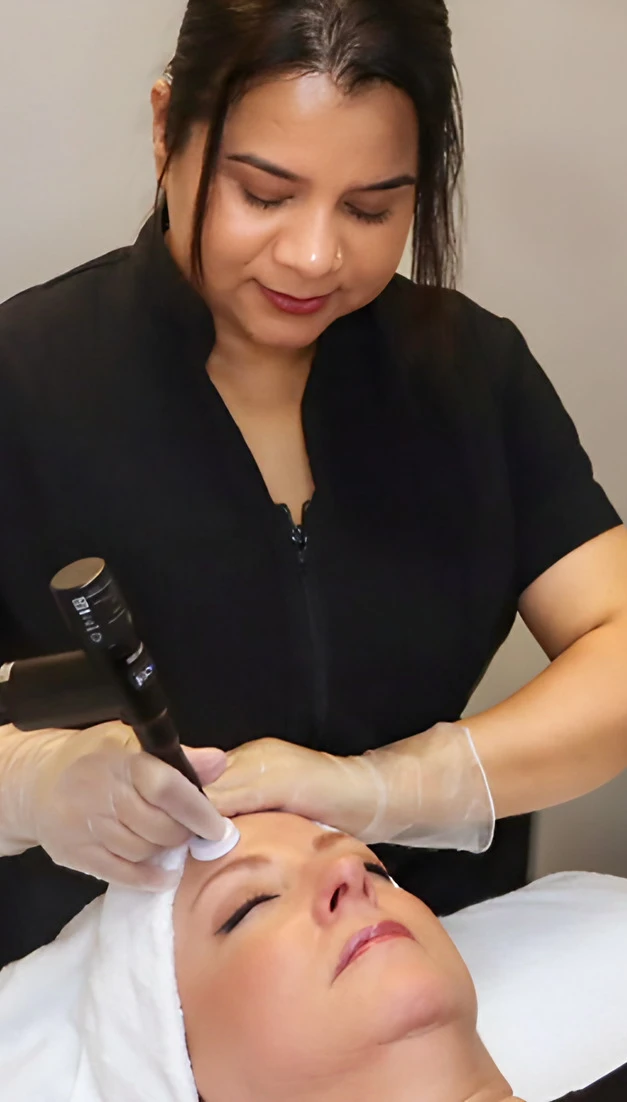
Understanding Upper Lip Waxing Duration
![woman getting upper lip wax - how long does an upper lip wax last]() How long does an upper lip wax last?
Typically between 2-6 weeks, with most people experiencing regrowth around the 3-4 week mark. Results vary based on individual factors:
- Average duration: 3-4 weeks of smoothness
- First-time waxers: May see regrowth in 1-2 weeks
- Regular waxers: Can experience up to 6 weeks of smoothness after multiple sessions
- Men: Usually see regrowth in 1.5-3 weeks due to coarser hair
- Salon vs. DIY: Professional waxing often lasts longer (3-6 weeks) than at-home waxing (1-4 weeks)
Love it or not, facial hair is a fact of life we all deal with. For many busy professionals, finding a hair removal method that offers lasting results without constant maintenance is essential. When it comes to smoothness and efficiency, few methods compare to the lasting effects of upper lip waxing.
Unlike shaving, which only cuts hair at the surface, waxing removes hair from the root. This not only creates a smoother finish but also means you'll enjoy fuzz-free days for weeks rather than days. With regular waxing sessions, many clients notice hair growing back finer and more sparsely over time.
I'm Saloni Bhandari, founder of SA Blissful Spa and a licensed esthetician with extensive experience performing upper lip waxes, and I've seen how
how long does an upper lip wax last varies from person to person based on their unique hair growth patterns and consistency of their waxing schedule.
 How long does an upper lip wax last
terms simplified:
-
does waxing cause dark upper lip
-
how to wax upper lip at home
-
best way to remove female mustache hair
How Long Does an Upper Lip Wax Last?
Ever wondered why that upper lip wax feels like such a game-changer? At SA Blissful Spa, we're asked about waxing longevity almost daily. The simple answer?
How long does an upper lip wax last varies from person to person, but typically you'll enjoy 2-6 weeks of smoothness, with most clients seeing regrowth around the 3-4 week mark.
This extended smoothness is what makes waxing so popular compared to shaving, which might only keep you fuzz-free for a day or two. Think about it: weeks of not worrying about that upper lip rather than daily maintenance!
Several factors influence your personal waxing timeline:
Your
hair growth cycle plays a major role. Hair grows in three distinct phases (anagen, catagen, and telogen), and since not all hairs are in the same phase simultaneously, some sneaky strands may reappear sooner than others.
Your
individual growth rate matters too. Some of us naturally regrow hair faster due to genetics and hormonal factors. What works for your friend might be different for you.
Waxing history makes a significant difference. If you're a regular at the waxing table, you'll likely enjoy longer periods of smoothness than newcomers to the practice.
The
technique and wax quality can't be overlooked. Professional salon waxing typically provides longer-lasting results than DIY attempts (though we'll share some home tips later!).

How Long Does an Upper Lip Wax Last for First-Timers?
First-timer? Your results might be a bit shorter-lived—typically about 1-2 weeks. Don't worry, this is completely normal and temporary! Here's why:
During your first wax, only the hairs in the active growth phase (anagen) are long enough to be caught by the wax. Those sneaky hairs in other growth phases (catagen and telogen) are too short to be grabbed but will make their appearance in the days following your treatment.
Plus, your body hasn't yet adjusted to this method of hair removal. Think of it as your skin saying, "What just happened?" Your follicles recover more quickly at first, but they'll begin to slow down with regular sessions.
The key is consistency. With regular waxing appointments every 3-4 weeks, your hair growth cycles will begin to synchronize, leading to those longer-lasting results you're hoping for.
How Long Does an Upper Lip Wax Last After 3+ Sessions?
Here's where the magic happens! After about three consistent waxing sessions, most of our clients at SA Blissful Spa notice significant improvements that make them true waxing believers.
Your hair growth cycles become more synchronized, meaning more hairs are removed at the same time. The regrowth becomes noticeably finer and sparser—so even when it does start to return, it's much less noticeable than before.
Many clients enjoy
4-6 weeks of smoothness between appointments after they've established a regular waxing routine. Some follicles may even become dormant, reducing overall hair density. This happens because repeated waxing weakens the hair follicles over time. The constant removal of hair from the root causes trauma to the follicle, making it more difficult for new hair to grow.
One of our regular clients recently shared: "After my sixth upper lip waxing appointment, I noticed I could go almost six weeks before needing another treatment. The hair that did grow back was so fine it was barely noticeable!"
While waxing doesn't permanently remove hair like laser treatments, it can significantly reduce hair growth with consistent sessions. It's the perfect middle ground between daily maintenance and permanent procedures.
Factors That Influence Upper-Lip Wax Longevity
Ever wonder why your friend's upper lip wax seems to last forever while yours grows back in what feels like days? The answer lies in several factors that influence
how long does an upper lip wax last. Understanding these can help you maximize your smooth-skin time between appointments.
Hair Characteristics
Your natural hair type plays a significant role in waxing longevity. If you have coarser, thicker hair, you might notice regrowth more quickly than someone with fine hair. This explains why men typically see results lasting only 1.5-3 weeks compared to women's 3-4 weeks.
Hair color matters too! If you have darker hair against lighter skin, regrowth becomes visible sooner—not because it's actually growing faster, but because the contrast makes even tiny hairs more noticeable. And if you have areas with more hair follicles packed closely together, they might appear to fill in faster simply because there are more hairs making their comeback.
Biological Factors
We can thank (or blame!) our parents for much of our hair growth patterns. Your genetic makeup significantly influences how quickly your hair regenerates after waxing. Some people just naturally regrow hair faster than others—no matter what removal method they choose.
Hormones are another major player in this game. If you've ever noticed your facial hair behaving differently during pregnancy, menopause, or certain times of your cycle, you're not imagining things! Hormonal fluctuations, especially those related to thyroid conditions or PCOS, can accelerate hair growth and reduce the time between waxing sessions.
Age brings some benefits—hair growth typically slows as we get older, which might mean more weeks of smoothness for mature clients. A small silver lining to those birthday candles!
Technical Factors
The type of wax used on your upper lip makes a difference. At SA Blissful Spa, we prefer hard wax for facial areas because it wraps around the hair rather than sticking to skin, resulting in more complete removal from the root. When hair is removed properly at the root, it takes longer to regrow.
Your esthetician's skill level matters tremendously. An experienced professional knows exactly how to apply and remove wax to capture the maximum number of hairs without breakage. When hairs break above the root instead of being fully removed, they'll reappear much sooner.
The timing of your wax is crucial too. Hair should be about ¼ inch long—roughly the size of a grain of rice—for optimal results. Too short and the wax can't grip it properly; too long and it's more likely to break during removal rather than coming out from the root.
Scientific research on hair growth confirms that nutrition, stress levels, and overall health can also impact regrowth rates after waxing. That post-vacation stress might actually be showing up on your upper lip!
Skin Sensitivity & Preparation
What you do before your appointment can significantly impact both your comfort and results. Proper preparation includes arriving with clean skin free of makeup, oils, and lotions, which can create barriers between the wax and hair.
If you're new to waxing or have particularly reactive skin, a patch test is a smart move. This helps determine if your skin will respond well to the waxing process before committing your entire upper lip.
Certain skincare ingredients don't play nicely with waxing. Pause retinoids 5-7 days before your appointment, and skip chemical exfoliants like AHAs and BHAs for at least 48 hours prior. Benzoyl peroxide treatments should be discontinued 24 hours before waxing to prevent increased sensitivity.
Timing your appointment strategically can also help—many women find their skin is more sensitive right before or during their period, so scheduling around these times can make for a more comfortable experience.
For more information about potential side effects and prevention strategies, check out our article on
does waxing cause dark upper lip.
Post-Wax Aftercare to Prolong Smoothness
What you do after your waxing appointment is just as important as the waxing itself. Proper aftercare not only soothes your skin but can actually extend how long your smooth results last.
Immediately after waxing, applying aloe vera gel or a specialized post-wax cooling product helps reduce redness and calm inflammation. At SA Blissful Spa, we always finish our waxing services with a soothing, alcohol-free solution that helps close pores and comfort the skin.
Sun protection becomes extra important after waxing. Freshly waxed skin is more vulnerable to UV damage and hyperpigmentation, so applying SPF daily is non-negotiable—even if you're just running errands.
For the first 24-48 hours, treat your upper lip like the sensitive area it is. Avoid hot showers, saunas, intense workouts, and direct sun exposure. Your skin barrier is temporarily compromised after waxing, making it more reactive to heat and potential irritants.
Give your skin a makeup break for at least 24 hours, and avoid harsh skincare ingredients for 2-3 days post-wax. Your skin will thank you by recovering more quickly and maintaining smoother results.
If you notice small bumps or irritation (completely normal for many people), gentle warm compresses can work wonders.
Scientific research on soothing bumps confirms that this simple remedy helps reduce inflammation and promotes faster healing.
Keep those hands away from your freshly waxed upper lip! Touching the area with unwashed hands can transfer bacteria and potentially cause breakouts.
After 48 hours have passed, start incorporating gentle exfoliation 2-3 times weekly. This prevents dead skin cells from trapping new hairs beneath the surface, which can lead to ingrowns and make your waxing results seem shorter-lived than they should be.
With these factors in mind, you'll be better equipped to extend the life of your upper lip wax and enjoy those smooth results for as long as possible!
Comparing Upper-Lip Waxing With Other Hair-Removal Methods
Let's face it—when it comes to removing unwanted upper lip hair, the options can feel overwhelming. At SA Blissful Spa, we often hear clients wondering if waxing is truly their best option. To help you decide, I've put together a friendly comparison of the most popular methods.
Waxing stands out for its impressive duration—
how long does an upper lip wax last is typically 2-6 weeks of smoothness, compared to just 1-3 days with shaving. While waxing does involve a quick moment of discomfort (that "rip!" we all know), the results are well worth those few seconds.

Threading offers similar longevity to waxing (2-4 weeks) and works wonderfully for those with sensitive skin since no chemicals touch your face. The downside? Finding a skilled threading technician can be challenging, and the precision work means appointments might take longer.
Shaving is quick and painless but offers the shortest-lived results by far. That stubble can return within 1-3 days, and many women notice it feels coarser when it grows back (though this is just perception—shaving doesn't actually change your hair structure).
Sugaring has gained popularity as a natural alternative to waxing. Using a simple mixture of sugar, lemon, and water, this method removes hair in the same direction of growth, potentially causing less irritation. Results typically last 3-5 weeks, similar to waxing.
Depilatory creams dissolve hair at the surface, making them painless but short-lived (3-5 days). While convenient, they often come with a chemical smell and can irritate sensitive skin—always patch test first!
For those considering a more permanent solution, laser hair removal offers impressive long-term results after multiple sessions. However, it comes with a higher price tag (typically $50-300 per session based on internet averages, not our specific pricing) and isn't suitable for all skin and hair types.
| Method |
Duration |
Pain Level |
Cost |
Pros |
Cons |
| Waxing |
2-6 weeks |
Moderate |
$12-40 per session |
Root removal, exfoliating benefits, progressively finer regrowth |
Temporary redness, requires some regrowth before next session |
| Threading |
2-4 weeks |
Moderate |
$8-30 per session |
Precise, good for sensitive skin, no chemicals |
Similar regrowth time to waxing, requires skilled technician |
| Shaving |
1-3 days |
Minimal |
$5-15 for razor |
Quick, painless, can do at home |
Very short-lasting, potential for cuts, stubble effect |
| Sugaring |
3-5 weeks |
Mild to moderate |
$15-45 per session |
Natural ingredients, less irritation than wax |
Similar regrowth time to waxing, less widely available |
| Depilatory Creams |
3-5 days |
None (possible irritation) |
$5-20 per bottle |
Painless, easy to apply |
Chemical smell, potential skin reactions, short-lasting |
| Laser Hair Removal |
Semi-permanent to permanent |
Moderate to high |
$50-300 per session (multiple needed) |
Long-term results, eventually no maintenance |
Expensive, requires multiple sessions, not suitable for all skin/hair types |
Pros & Cons Snapshot
When clients ask me about upper lip waxing at SA Blissful Spa, I'm always honest about both the benefits and drawbacks. The biggest advantage is definitely that
how long does an upper lip wax last is significantly longer than surface methods like shaving—weeks versus days!
Beyond duration, waxing offers wonderful exfoliation benefits, removing dead skin cells along with unwanted hair. This leaves your skin feeling smoother and looking brighter. With regular sessions, many clients notice their hair grows back finer and more sparsely over time—a definite win!
Of course, there are some downsides. You might experience temporary redness right after your appointment (though this typically fades within a few hours). You'll also need to let your hair grow to about ¼ inch before your next wax—about 3-4 weeks for most people. And yes, there is that brief moment of discomfort during removal, though most clients tell me it becomes less noticeable with regular sessions.
When to Choose Alternatives
While we love providing upper lip waxing services at SA Blissful Spa, I always want what's best for your unique skin. Consider alternative methods if:
You have extremely sensitive skin that reacts strongly to waxing. Threading might be gentler since it doesn't adhere to the skin itself, just the hair.
You're using prescription retinoids or other skin-thinning products. These make your skin more vulnerable to lifting during waxing—not something we want! Shaving might be safer until you can discontinue these products.
You have certain medical conditions like diabetes, varicose veins, or inflammatory skin conditions that might contraindicate waxing. Your health always comes first!
You're seeking permanent results and are willing to invest upfront. Laser hair removal, while more expensive initially, could save you time and money in the long run if you're committed to being hair-free forever.
You have a very low pain tolerance and the thought of waxing makes you anxious. Depilatory creams offer a pain-free alternative, though you'll need to reapply more frequently.
For a deeper dive into all your options, check out our comprehensive guide on the
best way to remove female mustache hair. We're here to help you find the method that works best for your skin, lifestyle, and comfort level!
Maximizing Results: Prep, Frequency, and DIY Tips
Getting the most out of your upper lip wax isn't just about the 15 minutes you spend in the treatment chair—it's about the preparation before and care after that truly makes the difference. Let me share some insider tips to help you enjoy that smooth upper lip for as long as possible.
Optimal Hair Length and Timing
Have you ever shown up for a wax only to be told your hair isn't quite long enough yet? That's because timing really matters! For best results, your upper lip hair should be about ¼ inch long—roughly the size of a grain of rice. This sweet spot allows the wax to grip effectively without causing unnecessary pain.
If your hair is too short, the wax won't have enough to hold onto, resulting in patchy removal and quicker regrowth. Too patient to wait? Unfortunately, there's no workaround here—give it a few more days for optimal results.
On the flip side, if your hair has grown beyond ½ inch, consider a light trim before your appointment. Excessively long hair can actually break above the root during waxing, which means you'll see regrowth much sooner than you'd like.
Wax Type Matters
At SA Blissful Spa, we're particular about the wax we use for different body areas. For the upper lip, we primarily use hard wax because it's simply superior for facial hair removal. Hard wax works by shrink-wrapping around each hair without sticking to your skin, making it gentler on sensitive facial areas while still effectively removing stubborn hairs.
This specialized wax can even capture hairs as short as 1/6 of an inch, which is particularly helpful for those fine, sometimes barely visible upper lip hairs. For clients with very fine hair, we occasionally use soft wax with strips to catch the smallest hairs, but this is less common for upper lip treatments.
Optimal Scheduling
How long does an upper lip wax last can be directly influenced by how consistent you are with your appointments. Think of regular waxing as training your hair growth cycles. For the best long-term results:
Aim for regular appointments every 3-4 weeks initially. This timing allows for adequate regrowth while preventing hairs from becoming too long or reverting to their original thickness.
Try to maintain consistent intervals between appointments. Your body will begin to adjust to this schedule, often resulting in synchronized hair growth that makes each waxing session more effective.
Resist the temptation to shave between sessions! This disrupts the synchronization we're working so hard to achieve and can undo the progress of multiple waxing sessions.
Be aware that you might need slight seasonal adjustments to your schedule. Many clients find they need more frequent waxing in summer months when increased circulation can speed up hair growth.

How to Wax Upper Lip at Home Safely
While we always recommend professional services for the best results (and to avoid potential mishaps), we understand that sometimes DIY is necessary. If you're going to wax your upper lip at home, please follow these safety guidelines to minimize irritation and maximize results:
First, choose the right product—select a hard wax specifically formulated for facial use. These waxes melt at lower temperatures to prevent burns on your delicate facial skin. Always test the temperature on your inner wrist before applying to your face. It should feel warm, never hot.
Proper preparation is crucial. Cleanse the area with a gentle, oil-free cleanser, apply a light dusting of talc-free powder to absorb excess moisture, and pull skin taut to create a smooth surface for application.
When applying the wax, always work in the direction of hair growth and leave a small "tab" at the end for easy gripping. Allow the wax to cool until it's no longer tacky but still pliable—this is the perfect moment for removal.
For removal, hold skin taut with one hand and pull the wax quickly in the opposite direction of hair growth. Pull parallel to the skin, not upward, to avoid unnecessary pain and irritation.
After removal, apply gentle pressure to soothe the area, use oil to remove any wax residue, and finish with a soothing, alcohol-free gel or lotion.
Common mistakes to avoid include rewaxing the same area multiple times (hello, irritation!), using wax that's too hot (can cause burns), pulling wax off too slowly (increases pain and reduces effectiveness), and waxing while using retinoids or after recent chemical peels.
For more detailed guidance, check out our comprehensive article on
how to wax upper lip at home.
How Long Does an Upper Lip Wax Last With Perfect Aftercare?
With meticulous aftercare, you can potentially extend your smooth results by an extra week or more. Here's what perfect aftercare looks like:
In the first 24-48 hours, treat your freshly waxed skin with extra care. Apply cooling gel with aloe vera immediately after waxing, avoid touching the area with unwashed hands, skip makeup and active skincare ingredients, and protect from sun exposure with SPF 30+ (physical/mineral sunscreens are gentlest on freshly waxed skin).
During days 3-7, begin gentle exfoliation to prevent ingrown hairs using a soft washcloth or gentle scrub. You can gradually return to your normal skincare routine, though continue avoiding harsh products and maintain sun protection.
For long-term care, exfoliate 2-3 times weekly to prevent dead skin buildup that can trap new hair growth. Keep skin well-hydrated, apply ingrown hair treatments if needed, and most importantly, maintain a consistent waxing schedule.
What to avoid? Shaving between waxing appointments (this completely disrupts the cycle we're trying to establish), picking at or tweezing stray hairs (which can cause scarring), and using harsh exfoliants too soon after waxing.
With perfect aftercare and consistent appointments, many of our clients at SA Blissful Spa find they can extend their results to the full 6-week mark, with hair growing back progressively finer and sparser over time. That's the true beauty of a consistent waxing routine—not just the immediate smoothness, but the long-term improvements in hair texture and density.
Frequently Asked Questions About Upper-Lip Waxing
Does waxing make upper-lip hair grow back thicker or darker?
One of the most persistent beauty myths I hear at SA Blissful Spa is that waxing causes hair to grow back thicker or darker. Let me put your mind at ease:
this simply isn't true.
When hair first reappears after waxing, it often has a blunt tip instead of the natural tapered end of undisturbed hair, creating an optical illusion that makes it appear thicker. Plus, newly emerged hair hasn't been exposed to the sun's natural bleaching effects, so it might look slightly darker at first glance.
What's really fascinating is that the opposite typically happens with regular waxing. Most of our long-term clients notice their hair actually grows back progressively finer and sparser over time as the follicles weaken from repeated removal. Scientific studies back this up – waxing doesn't alter your hair's fundamental structure or color. If anything,
how long does an upper lip wax last increases with regular sessions as hair growth becomes less noticeable.
What should I do if bumps or irritation appear after waxing?
Even with the gentlest technique, post-wax bumps can sometimes appear, especially if you're new to waxing or have particularly sensitive skin. Don't worry – this is usually temporary and easily managed.
For immediate relief, apply a clean, cold washcloth to reduce inflammation. Pure aloe vera gel works wonders for its natural anti-inflammatory properties – we actually apply this to all our clients immediately after their service at SA Blissful Spa. For more pronounced irritation, a 1% over-the-counter hydrocortisone cream can help calm things down.
While your skin recovers, be kind to it! Skip harsh products like exfoliants, retinoids, acids, and anything fragranced. Keep the area clean with a gentle, fragrance-free cleanser twice daily, and if the irritation extends to where clothing touches, opt for loose-fitting garments to avoid friction.
For future appointments, consider taking an anti-inflammatory like ibuprofen about 30 minutes before your service, and try scheduling when you're not menstruating, as skin tends to be more sensitive during this time.
How long does an upper lip wax last without irritation is greatly improved with these preventative steps.
Do seek medical attention if you notice severe redness, swelling, warmth, pain, or pus-filled bumps, as these could indicate an infection requiring professional care.
Is upper-lip waxing suitable for sensitive or acne-prone skin?
Many clients with sensitive or acne-prone skin worry that waxing might trigger a reaction, but with the right approach, upper-lip waxing can absolutely work for these skin types too.
At SA Blissful Spa, we take extra precautions for sensitive skin, using specialized gentle wax formulations designed specifically for delicate facial areas. We often apply pre-wax oils to create a protective barrier between the wax and your skin, and we primarily use hard wax, which adheres to the hair rather than the skin itself – much gentler for sensitive types.
For acne-prone clients, thorough cleansing before waxing removes surface oils that could contribute to breakouts. We're careful to avoid waxing over active breakouts or cystic acne, and we use antibacterial preparations before and after your service to minimize the risk of post-wax blemishes.
Important note:
how long does an upper lip wax last becomes irrelevant if you're using certain medications. If you're on isotretinoin (Accutane), waxing is completely off-limits due to increased skin sensitivity. For those using topical retinoids, we recommend discontinuing use 5-7 days before your appointment to prevent potential skin lifting or irritation.
Every person's skin responds differently, so we always recommend a consultation with our estheticians who can assess your specific needs and recommend the safest, most effective approach for your unique skin type.
Conclusion
Understanding
how long does an upper lip wax last helps you create the perfect hair removal schedule custom to your unique needs. While most people enjoy 3-4 weeks of smoothness, your results may vary based on your individual hair type, natural growth rate, and how diligently you follow aftercare recommendations.
After helping thousands of clients at SA Blissful Spa, I've seen how waxing results differ from person to person. The smooth, confident feeling after a professional upper lip wax is something my clients treasure – whether it lasts three weeks or six.
The key takeaways from our waxing wisdom:
Upper lip waxing typically provides
2-6 weeks of smoothness, with most people experiencing regrowth around the 3-4 week mark. First-timers often notice shorter results (sometimes just 1-2 weeks) until their hair growth cycles synchronize with regular treatments. The wonderful thing about commitment to waxing is that over time, you'll likely notice your regrowth becoming finer and sparser as the follicles gradually weaken.
I always tell my clients that professional waxing generally provides longer-lasting results than DIY methods. There's something about the expertise, angle of removal, and quality of products that makes a difference in longevity. Plus, proper aftercare can significantly extend your smooth results by preventing those pesky ingrown hairs and promoting healthier skin overall.
At SA Blissful Spa, our expert estheticians create personalized waxing experiences for clients throughout Burlington, Arlington, Bedford, Lexington, and surrounding Massachusetts communities. We understand that everyone's hair growth patterns and skin sensitivity levels differ, which is why we tailor our approach to your specific needs.
Whether you're new to waxing or a seasoned pro, we're here to help you achieve your smoothest, most confident self. Our comfortable, clean environment and skilled professionals ensure you receive the highest quality care for all your waxing needs.
Ready to experience the difference professional upper lip waxing can make? Visit our
waxing services page to learn more and book your appointment today.
Consistency is truly the key to achieving the best long-term results from upper lip waxing. By maintaining a regular schedule and following proper aftercare, you'll enjoy increasingly longer periods of smooth, hair-free skin with each session. Your future self will thank you for starting the waxing journey today!