Does hair grow back thicker after waxing upper lip? No, this is a common beauty myth. In fact, waxing removes hair from the root, which can lead to finer, sparser, and weaker regrowth over time. With regular waxing sessions, many people notice their upper lip hair becomes less dense and softer compared to when they first started.
Quick Answer:
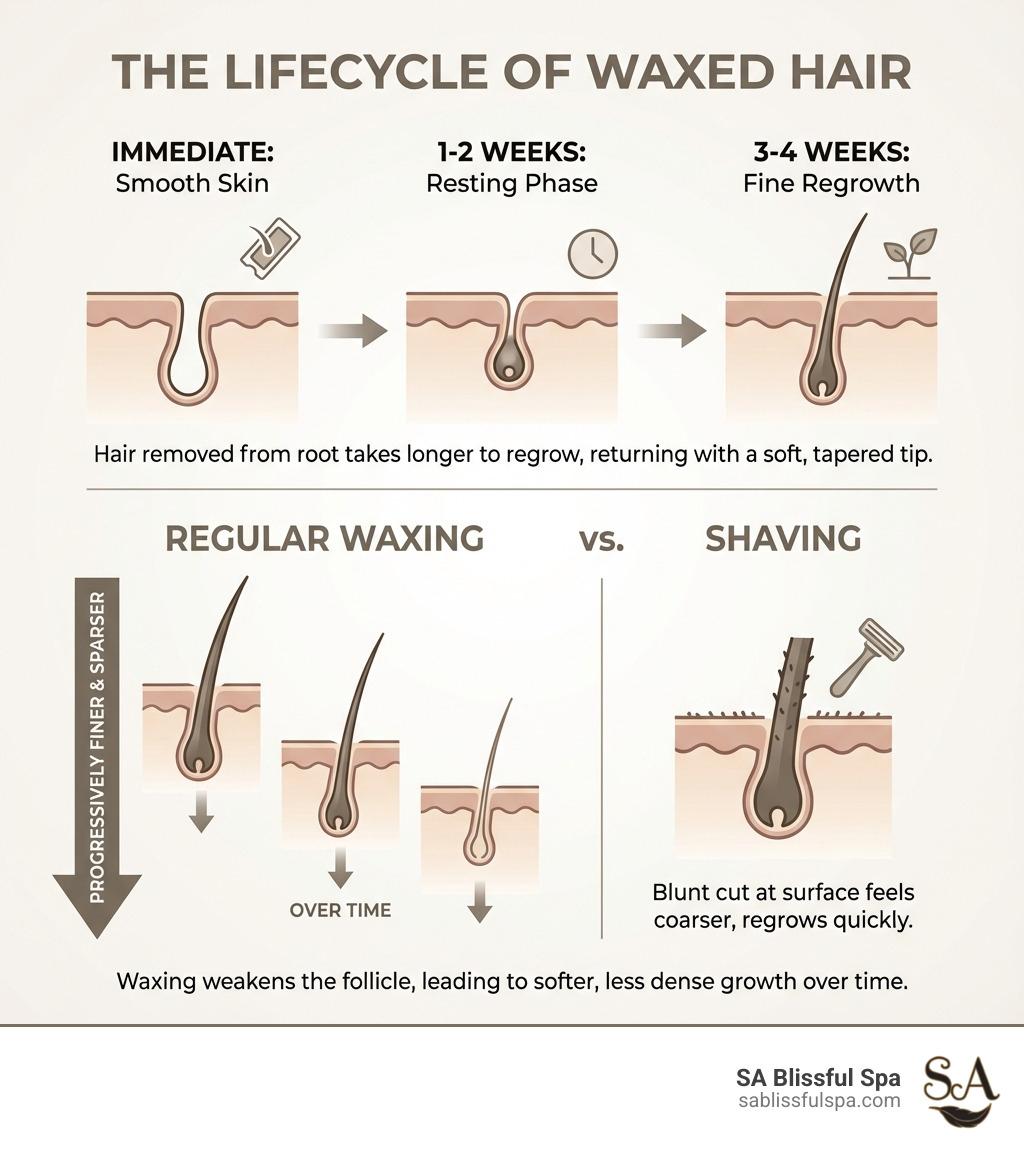
This misconception likely stems from confusion with shaving, which cuts hair at the surface and leaves a blunt, stubbly end that feels coarser. When you wax, you’re pulling the entire hair shaft from the follicle, allowing it to grow back with its natural, tapered tip.
The reality is quite the opposite of the myth. Because waxing removes hair from the root, it takes longer for regrowth to appear—typically three to four weeks. During this time, the hair follicle experiences a resting phase. With repeated waxing, the follicle can weaken, producing thinner, finer hair. Some clients even notice that certain areas stop producing hair altogether after years of consistent waxing.
Why does this myth persist? Several factors contribute to the confusion:
I’m Saloni Bhandari, founder and licensed esthetician at SA Blissful Spa in Burlington, MA. Over my years of helping clients achieve smooth, confident skin, I’ve addressed countless concerns about does hair grow back thicker after waxing upper lip, and I’m here to share the science-backed truth with you.
Glossary for does hair grow back thicker after waxing upper lip:
Let’s cut right to the chase and bust one of the most enduring beauty myths: does hair grow back thicker after waxing upper lip? The resounding answer from us, and from scientific research, is a definitive no. This common misconception often causes hesitation, especially for those considering facial waxing for the first time. The truth is, regular waxing can actually lead to finer, sparser, and softer hair regrowth over time, which is quite the opposite of the myth.
Waxing removes the hair from the root, a process that, with consistent application, can weaken the hair follicle. Think of it like this: continually plucking a plant from its roots eventually makes it harder for that plant to grow back strong, if it grows back at all. Our hair follicles behave similarly. Over time, this weakening can lead to the production of thinner, less pigmented hairs, and in some cases, even a reduction in the number of active follicles. This is a significant long-term benefit for anyone looking to manage unwanted facial hair.
Scientific American even published an article titled “Fact or Fiction?: If You Shave (or Wax), Your Hair Will Come Back Thicker” which unequivocally debunks this myth. The appearance of hair is not altered by how it’s removed at the surface. For more insights on facial hair removal for women, you can explore our guide on face waxing for women.
If the science is so clear, why does this myth persist? It’s all about perception versus reality. When we remove hair, especially from a delicate area like the upper lip, the way new hair emerges can play tricks on our minds.
The main culprit for this illusion is often confused with shaving. When you shave, you’re essentially chopping the hair shaft at its thickest point, leaving a blunt end. As this hair begins to grow back, it pushes through the skin with that blunt, coarse edge. This creates the sensation of stubble and makes the hair feel and look thicker and darker. It’s not that the hair itself has changed, but rather its appearance due to the cut.
With waxing, the hair is pulled from the root, so when it eventually regrows, it has a natural, tapered end, just like a brand new hair. This tapered end feels much softer and appears finer than a blunt, shaved tip. However, the contrast between perfectly smooth, freshly waxed skin and even this naturally fine regrowth can make any new hair feel more noticeable. We become more aware of our hair after a period of complete smoothness.
Furthermore, new hair, when it first emerges, can sometimes appear a little darker. This isn’t because it’s actually darker, but because it hasn’t yet been lightened by exposure to the sun, pollutants, or chemicals. This minute impact is temporary and does not signify a change in hair thickness or natural color. As noted in scientific literature, this initial darker appearance is fleeting.
The real magic of consistent upper lip waxing lies in its long-term effects on hair texture and density. Unlike shaving, which has no impact on the hair follicle, waxing directly affects the root.
As we consistently remove hair from the follicle, we’re essentially disrupting its growth cycle. Over time, regular waxing can lead to finer, sparser hair growth. This cumulative damage to the hair follicle makes it less productive. Weak follicles grow weak hairs, and eventually, some might even cease to produce hair at all. Many of our clients at SA Blissful Spa, whether they’re in Burlington, Lexington, or Woburn, MA, notice that with regular lip waxing sessions, their hair grows back finer and sparser.
This means you might find yourself needing to wax less frequently over time, and the regrowth you do experience will be much less noticeable. The hair that does grow back will have those lovely tapered ends, feeling softer and looking less prominent than before. This is one of the key reasons why we believe waxing is the best hair removal option for many of our clients. You can learn more about these benefits and why we advocate for this method in our guide, “Why waxing is the best hair removal option: Everything you need to know.”
Understanding the science of how hair grows is crucial to debunking the myth that does hair grow back thicker after waxing upper lip. Our hair is a fascinating biological structure, and how it responds to removal methods is rooted in the activity of the hair follicle.
When we wax, we’re pulling the entire hair shaft directly from the follicle. This is why waxing provides such long-lasting results compared to methods that only cut the hair at the surface. The hair follicle itself is a complex organ within the skin, responsible for producing hair. Its function, and the characteristics of the hair it produces (like thickness and color), are primarily determined by our genetics and hormones. Waxing, a topical hair removal method, does not alter the genetic blueprint or hormonal signals that dictate these intrinsic hair characteristics. For more detailed information on facial waxing, our face waxing page offers comprehensive insights.
All hair on our body follows a cyclical pattern of growth, rest, and shedding. This cycle has three main phases:
Because hair follicles work independently, not all hairs are in the same phase at the same time. This is why you might notice some regrowth even shortly after a wax – these hairs were likely in a different phase during your last session. However, consistent waxing helps to synchronize the growth cycles over time, leading to more uniform and longer periods of smoothness. As Beauty Image USA explains in their article, “WAXING MYTHS: WILL HAIR GROW BACK THICKER AND DARKER?“, understanding these phases is key to understanding hair growth patterns.
While waxing itself doesn’t make your hair grow back thicker, hormonal fluctuations can certainly influence hair growth patterns, sometimes leading to a mistaken belief that waxing is the cause.
Our hormones play a significant role in regulating hair growth throughout our lives. Key periods of hormonal change include:
If you notice a sudden, significant increase in upper lip hair thickness or density, it’s always wise to consult with a doctor to rule out any underlying hormonal issues. While waxing is an effective solution for managing unwanted hair, it’s important to understand that it’s not the cause of hormonally driven hair changes. For more information on potential considerations, you might find our article on the disadvantages of waxing facial hair helpful.
When considering hair removal for your upper lip, understanding how different methods affect regrowth is key. We often compare waxing to shaving, as they are two of the most common methods, but their impact on hair regrowth couldn’t be more different. For those looking for the best way to remove female mustache hair, this comparison is vital.
| Feature | Waxing | Shaving |
|---|---|---|
| Method of Removal | Pulls hair from the root | Cuts hair at the surface of the skin |
| Appearance of Regrowth | Hair grows back with a naturally tapered, finer, and softer tip. With regular waxing, hair can become sparser and less dense. | Hair grows back with a blunt, coarse, stubbly tip, making it feel and appear thicker and darker. |
| Regrowth Speed | Slower; typically 3-6 weeks for noticeable regrowth, as the entire hair needs to grow back from the follicle. | Faster; regrowth can be noticeable within hours to a day, as only the visible part of the hair is removed. |
| Long-Term Effects | Can weaken hair follicles, leading to finer, sparser, and sometimes reduced hair growth over time. | No long-term effect on hair follicle or hair growth characteristics; hair will always grow back with the same thickness and color. |
| Skin Feel | Smooth for weeks. | Stubbly within a day or two. |
The core difference between waxing and shaving lies in how the hair is removed.
The BBC program “Is it true that shaving causes hair to grow back faster and thicker than it was before? And is waxing any better?” confirmed that shaving does not make hair grow back faster or thicker. It merely changes the appearance of regrowth. Therefore, for a smoother finish and longer-lasting results, waxing is generally considered the superior option for the upper lip.
Achieving that perfectly smooth upper lip isn’t just about the wax itself; it’s also about proper preparation and diligent aftercare. Following best practices ensures not only optimal hair removal but also minimizes potential side effects and promotes healthy skin. While at-home waxing kits are available, we always recommend professional services, especially for sensitive areas like the upper lip. Our licensed estheticians at SA Blissful Spa in Burlington, MA, are trained to provide a safe, effective, and comfortable experience. We use high-quality hard wax, which is often preferred for facial areas due to its gentle yet effective nature. You can explore more about hard wax hair removal on our website.

Proper preparation is crucial for a successful and comfortable upper lip waxing experience.
The care you provide immediately after your waxing session is just as important as the waxing itself to prevent irritation and ensure the best results.
We often hear similar questions from our clients about upper lip waxing. Here are some of the most common ones, along with our expert answers.
The smoothness from an upper lip wax typically lasts between 3 to 4 weeks. However, this can vary depending on your individual hair growth cycle, genetics, and how regularly you wax. For some, it might be closer to 3 weeks, while others enjoy smooth skin for up to 6 weeks.
Your first wax might see regrowth appearing a bit faster, perhaps around 1.5 weeks. This is because not all hairs are in the same growth phase. With consistent, regular waxing (we usually recommend appointments every 3-4 weeks), you’ll likely notice that your hair grows back slower, finer, and sparser. Many people find that they need to wax less frequently over time as their hair growth diminishes. You can find more details on duration in our article, “How long does face waxing last?”
Let’s be honest, waxing involves pulling hair from the root, so it’s not entirely painless. However, for most people, the sensation of an upper lip wax is a quick, sharp sting that subsides almost immediately. It’s often described as a momentary discomfort rather than prolonged pain.
The level of discomfort can vary based on individual pain tolerance and the skill of the esthetician. Our licensed professionals at SA Blissful Spa are trained to perform waxing quickly and efficiently, minimizing discomfort. Many clients find that with regular waxing sessions, the pain becomes much less noticeable as the hair follicles weaken and the skin becomes accustomed to the process. If you’re concerned about pain, you can take an over-the-counter pain reliever like Advil about 30 minutes before your appointment. For more on managing waxing discomfort, see our guide, “Does waxing upper lip hurt?“.
This is a valid concern, but waxing itself does not directly cause a dark upper lip. The issue often referred to as a “dark upper lip” after waxing is usually post-inflammatory hyperpigmentation (PIH). PIH occurs when the skin is irritated or inflamed, causing it to produce excess melanin (pigment) as part of its healing process.
The upper lip area is particularly sensitive, and any irritation from waxing, especially if done improperly or if proper aftercare isn’t followed, can trigger PIH. The biggest culprit is sun exposure on freshly waxed, sensitive skin. If you expose inflamed skin to the sun, it can lead to darkening.
To prevent this:
With proper care, waxing should not cause your upper lip to darken. For more information on this topic, please refer to our article, “Does waxing cause dark upper lip?“.
We’ve explored the common question, does hair grow back thicker after waxing upper lip? and the answer is clear: it’s a myth. Waxing, when done correctly and consistently, actually works to your advantage. By removing hair from the root, it encourages finer, sparser, and softer regrowth over time. This leads to longer periods of smooth skin, reduced hair density, and a more refined appearance, especially for delicate areas like the upper lip.
We’ve digd into the science of hair growth cycles, debunked the perception of thicker regrowth stemming from shaving’s blunt cuts, and highlighted how hormonal changes, not waxing, are the true drivers of hair characteristics. We also provided best practices for both pre- and post-waxing care to ensure you achieve optimal results and maintain healthy skin.
At SA Blissful Spa, serving clients across Burlington, Arlington, Bedford, Lexington, and other nearby Massachusetts towns, we are dedicated to providing expert waxing services that deliver the results you desire. Our licensed estheticians use professional-grade products and techniques to ensure a comfortable experience and consistently smooth results. We believe in educating our clients so they can make informed decisions about their beauty routines.
If you’re ready to experience the true benefits of upper lip waxing and say goodbye to myths, we invite you to visit us. For expert care and consistently smooth results, the licensed estheticians at SA Blissful Spa can provide a comfortable and effective experience. Book your professional waxing service today and find the difference for yourself!


Book your first appointment online and enjoy 15% off your first service (one-time offer).
Use code NEWCLIENT15