Understanding Your Skincare Professional Options
When it comes to caring for your skin, the
dermatologist vs aesthetician decision can feel overwhelming. In an age of social media influencers and endless product recommendations, it's harder than ever to know who to trust with your skin's health and appearance. Both professionals play a vital role in skincare, but they serve very different purposes and possess distinct qualifications that are crucial to understand.
Quick Answer:
- Dermatologist: A medical doctor (MD or DO) who has completed over a decade of higher education to specialize in diagnosing and treating diseases of the skin, hair, and nails. They can prescribe powerful medications, perform surgery, and manage complex medical conditions.
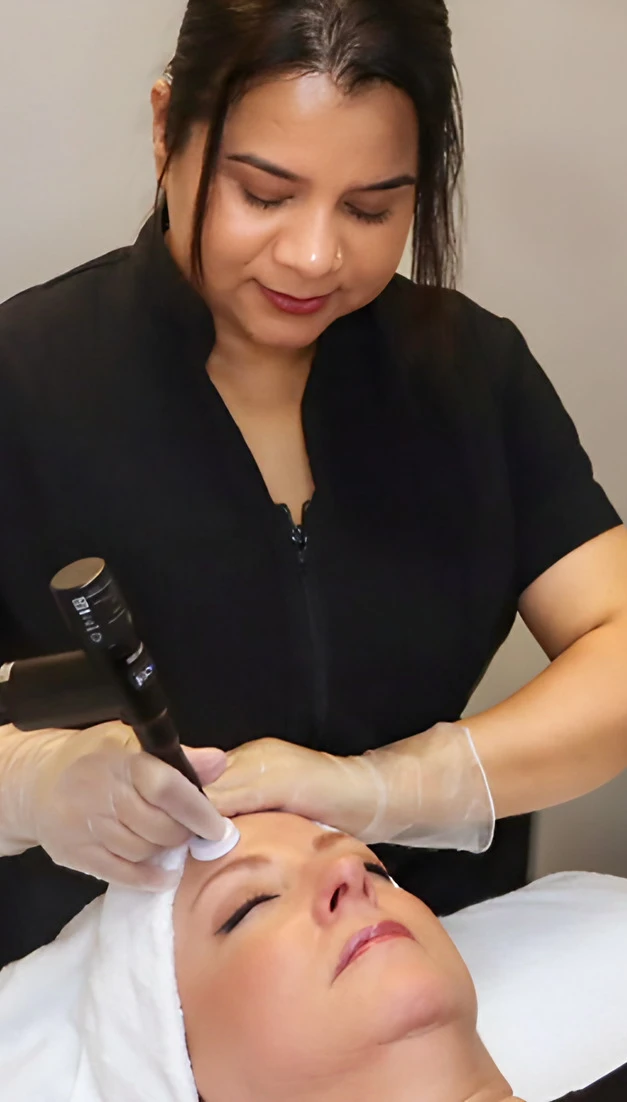
- Aesthetician: A licensed skincare specialist who has completed hundreds of hours of focused training on improving the skin's appearance. They provide cosmetic treatments like facials, chemical peels, and microdermabrasion to improve your skin's health and glow.
The key difference lies in their approach:
dermatologists treat medical skin conditions from a clinical perspective, while
aestheticians improve your skin's appearance and health through cosmetic, non-invasive treatments.
This distinction is more important than ever. According to industry data, dermatologists are equipped to diagnose and treat more than 3,000 different skin conditions. With a staggering 64.5% of people experiencing some form of skin abnormality in their lifetime, access to qualified medical care is essential. Simultaneously, the U.S. Bureau of Labor Statistics predicts a 29% increase in skincare specialist jobs by 2030, highlighting a massive cultural shift towards prioritizing professional skincare maintenance. Understanding these roles is the first step toward making empowered, informed decisions for your unique skin health journey.
As Saloni Bhandari, founder of SA Blissful Spa and an experienced aesthetician, I've helped countless clients steer the
dermatologist vs aesthetician choice throughout my career. My expertise in customized facial treatments and advanced skincare techniques has shown me how both professionals can work in harmony to achieve your best skin. For instance, a client might see a dermatologist to get a prescription for managing cystic acne, while visiting me for soothing, hydrating facials to counteract the dryness from medication and for gentle extractions to maintain clear pores. This collaborative approach often yields the best results.
This guide will walk you through everything you need to know, from the deep dive into their education and scope of practice to the specific services they offer and when to choose one over the other. By the end, you'll have the clarity you need to build your perfect skincare support team.
 Dermatologist vs aesthetician
terms at a glance:
Why this choice matters now: with so many at-home devices and potent over-the-counter actives available, it can be tempting to self-treat complex issues. The right professional helps you avoid trial-and-error that can waste money or irritate your skin. A thoughtful plan—medical when needed, cosmetic when appropriate—saves time and protects your skin barrier.
Quick scenarios to guide you:
- Choose a dermatologist when you notice rapidly changing or irregular moles, stubborn cystic acne, new or worsening rashes, chronic hives, persistent scalp issues or hair loss, painful nodules, or skin that’s not responding to routine care.
- Choose an aesthetician when you want regular maintenance, blackhead removal, improved glow and hydration, help choosing products, gentle support for mild breakouts, pre-event skin prep, or targeted support for texture and tone.
What collaboration can look like:
- Acne: A dermatologist may diagnose and prescribe medication; an aesthetician supports with non-irritating facials, gentle extractions, hydrating masks, and routine check-ins to keep the skin calm and balanced.
- Rosacea: The dermatologist confirms the condition and creates a medical plan; the aesthetician avoids triggers during treatments, focuses on barrier repair, and recommends soothing home care.
- Hyperpigmentation: The dermatologist rules out underlying causes and may use prescription topicals; the aesthetician layers in brightening facials and cautious superficial peels to improve radiance over time.
At SA Blissful Spa in Burlington, MA, we regularly welcome guests seeking that kind of balance—professional pampering that respects medical guidance. We proudly serve Burlington and nearby communities including Arlington, Bedford, Belmont, Billerica, Carlisle, Concord, Lexington, Lincoln, Melrose, North Reading, Reading, Stoneham, Wakefield, Watertown, Wilmington, Winchester, and Woburn. Whether you’re building a long-term skin plan or preparing for a special moment, our custom treatments are designed to complement any dermatologist-directed care.
The Core Differences: Dermatologist vs Aesthetician
Choosing the right skin professional can feel like navigating a maze, but once you understand the fundamental distinctions between a
dermatologist vs aesthetician, the path becomes much clearer. We often hear these terms used interchangeably, but they represent vastly different levels of training, expertise, and scope of practice.
Think of it this way: if your skin were a house, a dermatologist would be the structural engineer. They diagnose and fix critical issues like a cracked foundation (skin cancer), faulty wiring (nerve-related skin issues), or severe plumbing leaks (cystic acne). An aesthetician, on the other hand, is the expert interior designer. They handle the painting, decor, and finishes—making everything look beautiful, feel comfortable, and remain well-maintained through services that improve texture, tone, and overall radiance.
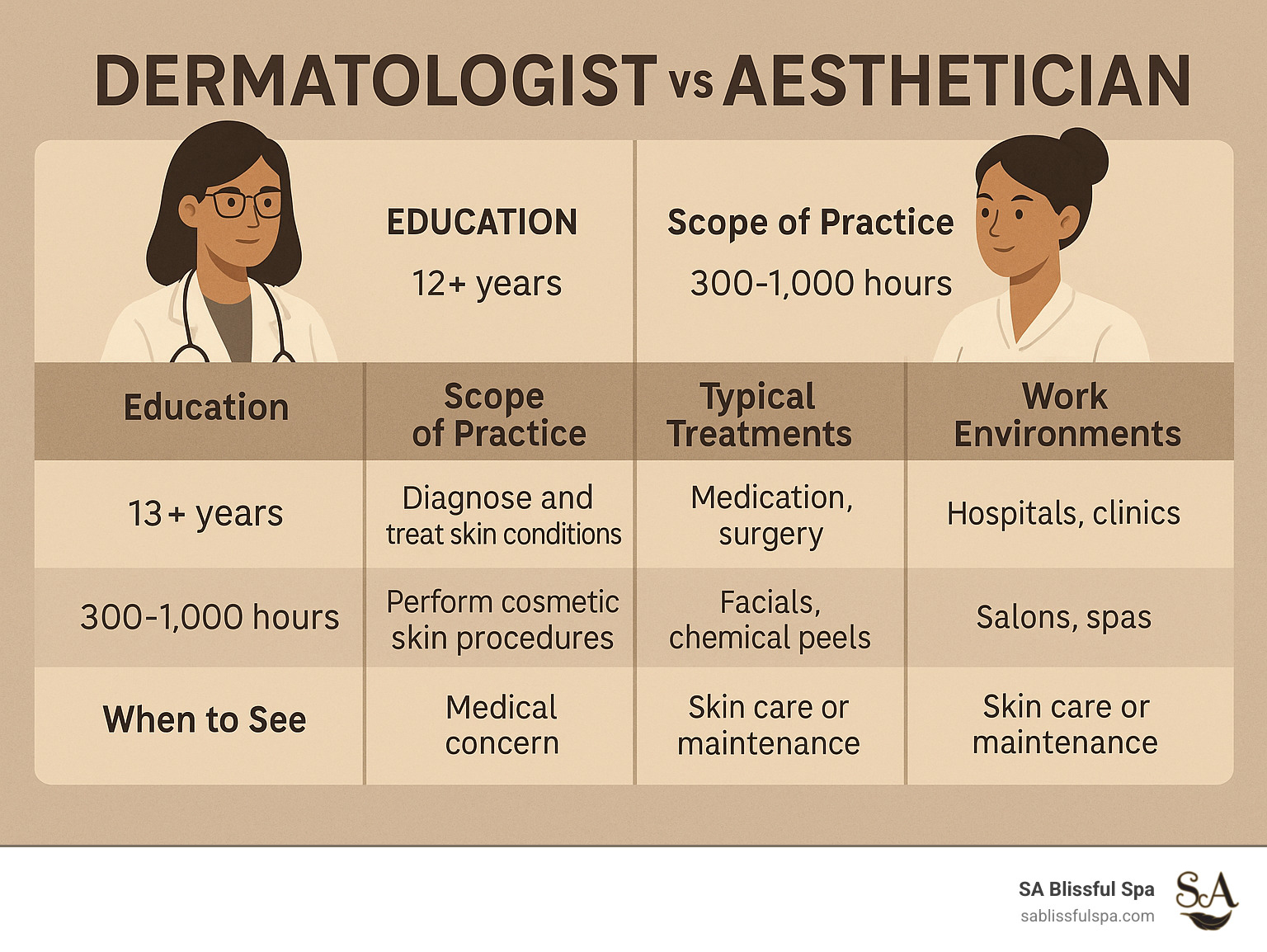
| Feature |
Dermatologist |
Aesthetician |
| Education & Training |
12+ years (medical degree + residency) |
300-1,000 hours |
| Scope of Practice |
Medical diagnosis, prescriptions, surgery |
Cosmetic treatments, skin improvement |
| Common Treatments |
Severe acne, skin cancer, rosacea, biopsies |
Facials, chemical peels, extractions, waxing |
| Work Environment |
Hospitals, medical clinics |
Spas, salons, wellness centers |
| Licensing & Certification |
Board certification required |
State licensure required |
Education and Licensing
The educational journey for these two professions couldn't be more different, which directly shapes their expertise.
Dermatologists are medical doctors who have dedicated over a decade to their craft. Their path includes:
- A 4-year bachelor's degree (pre-med).
- A 4-year medical degree (MD or DO), where they learn about the entire human body.
- A 1-year internship in general medicine.
- A 3-year dermatology residency, focusing exclusively on skin, hair, and nail diseases.
After this
12+ year journey, they must pass rigorous exams to become board-certified through the
American Board of Dermatology. This certification is a mark of the highest standard of care and expertise. Some dermatologists pursue further fellowships to sub-specialize in areas like pediatric dermatology, Mohs surgery for skin cancer, or cosmetic dermatology.
Aestheticians follow a more direct path focused on the art and science of skin beautification. They typically complete
300-1,000 hours of specialized training at accredited cosmetology or esthetics schools. This intensive curriculum covers skin anatomy, analysis, ingredient chemistry, sanitation protocols, facial massage techniques, and the proper use of skincare tools and machines. Upon completion, they must pass a state board exam to obtain
state licensure. Aestheticians are also committed to
continuing education to stay current with the latest skincare techniques, ingredients, and technologies in a rapidly evolving industry.
Important guardrails to know:
- Aestheticians do not diagnose medical conditions, prescribe medications, or perform invasive procedures. When they suspect a medical issue, they refer to a dermatologist.
- Dermatologists can evaluate the skin in the context of your whole health, order labs when needed, and coordinate care with other physicians if a skin concern reflects a deeper systemic issue.
Scope of Practice and Work Environment
Here's where the
dermatologist vs aesthetician distinction becomes crystal clear.
Dermatologists operate within the medical field. You'll find them in
hospitals and private medical clinics, where they diagnose and treat
medical skin conditions. Their authority allows them to
prescribe medications (like Accutane, antibiotics, or strong topical retinoids), perform
surgical procedures (like mole removal or biopsies), and
diagnose systemic diseases that manifest on the skin. They are the definitive experts for suspicious moles, severe acne, chronic conditions like eczema and psoriasis, hair loss, and skin cancer.
Aestheticians work in
spas, salons, and wellness centers, with some experienced professionals working as
medical estheticians in clinical settings alongside dermatologists. Their focus is on
cosmetic treatments that work on the
epidermis—the outermost layer of the skin. By cleansing, exfoliating, hydrating, and nourishing this layer, they
improve your skin's appearance, texture, and overall health. They are your go-to professionals for maintaining healthy, glowing skin and addressing non-medical concerns like dullness, dehydration, minor breakouts, clogged pores, or early signs of aging. They provide a personalized, hands-on approach to help you achieve your aesthetic goals.
What a typical visit looks like:
- With a dermatologist: medical history, targeted examination (and sometimes full-body skin check), a diagnosis, and a plan that may include prescriptions, procedures, or follow-up testing.
- With an aesthetician: lifestyle and product review, skin analysis, a carefully selected treatment (for example, a hydrating or clarifying facial), and a home-care routine designed to support results between visits.
Safety, regulations, and red flags:
- Always verify licensure. Dermatologists should be board-certified; aestheticians should hold an active state license.
- Ethical aestheticians will refer you out for medical concerns and will patch test new products or peels when appropriate.
- Be cautious of anyone promising overnight cures, dismissing sunscreen, or encouraging you to discontinue prescribed treatments without consulting your physician.
Career Outlook and Salary
The investment in education and the nature of their work are reflected in the career paths of each professional.
Dermatologists, due to their extensive medical training and ability to perform complex, often insurance-covered procedures, earn an average of
over $300,000 annually, according to the
Bureau of Labor Statistics data. This high earning potential corresponds to their high level of responsibility and the significant investment in their education.
Aestheticians typically earn a
median salary around $40,000, but this figure can vary significantly. Factors like location, specialization in high-demand services (like advanced peels or laser hair removal where permitted), building a loyal clientele, and entrepreneurship can lead to much higher earnings. The most exciting news is the field's growth. The
skincare specialist job outlook shows a projected
29% increase in jobs by 2030—much faster than the average for all occupations. This boom is fueled by a growing public interest in self-care, anti-aging solutions, and the understanding that beautiful skin is a result of consistent, professional care.
How they collaborate in real life:
- Dermatologists set the medical course and handle diagnoses and prescriptions.
- Aestheticians support skin comfort and appearance with customized treatments and product guidance, adjusting plans as seasons, stress, and lifestyle change.
- Together, they help you maintain results long term—minimizing flare-ups and supporting a calm, resilient skin barrier.
Local tip: Many guests at SA Blissful Spa in Burlington and the surrounding communities (Arlington, Bedford, Belmont, Billerica, Carlisle, Concord, Lexington, Lincoln, Melrose, North Reading, Reading, Stoneham, Wakefield, Watertown, Wilmington, Winchester, and Woburn) start with an aesthetician for non-urgent concerns, then consult a dermatologist if red flags or persistent issues appear. This stepwise approach is convenient, cost-conscious, and keeps your skin goals front and center.