Types of chemical peels offer a powerful way to refresh your skin by exfoliating away those surface layers that conceal your natural glow. If you’re seeking a quick answer about these rejuvenating skincare treatments, here’s what you need to know:
Chemical peels are a top choice for effective skin rejuvenation, smoothing out fine lines, and improving skin texture. They’re widely customizable to suit your specific needs.
I’m Saloni Bhandari, the founder of SA Blissful Spa, passionate about helping clients achieve radiant, healthy skin. With a deep understanding of types of chemical peels, my mission is to provide you with exceptional, personalized skincare treatments.
Quick types of chemical peels terms:
– are chemical peels actually effective
– benefits of chemical peel
A chemical peel is a cosmetic procedure that uses a chemical solution to improve the appearance of your skin. It’s like giving your skin a fresh start by removing the top layers, allowing new skin to emerge. This process is known as exfoliation.
Here’s how it works:
The beauty of chemical peels lies in their ability to be customized. Whether you’re looking for a light refresh or a deep change, there’s a peel that can meet your needs. At SA Blissful Spa, we specialize in tailoring these treatments to help you achieve the glowing skin you desire.
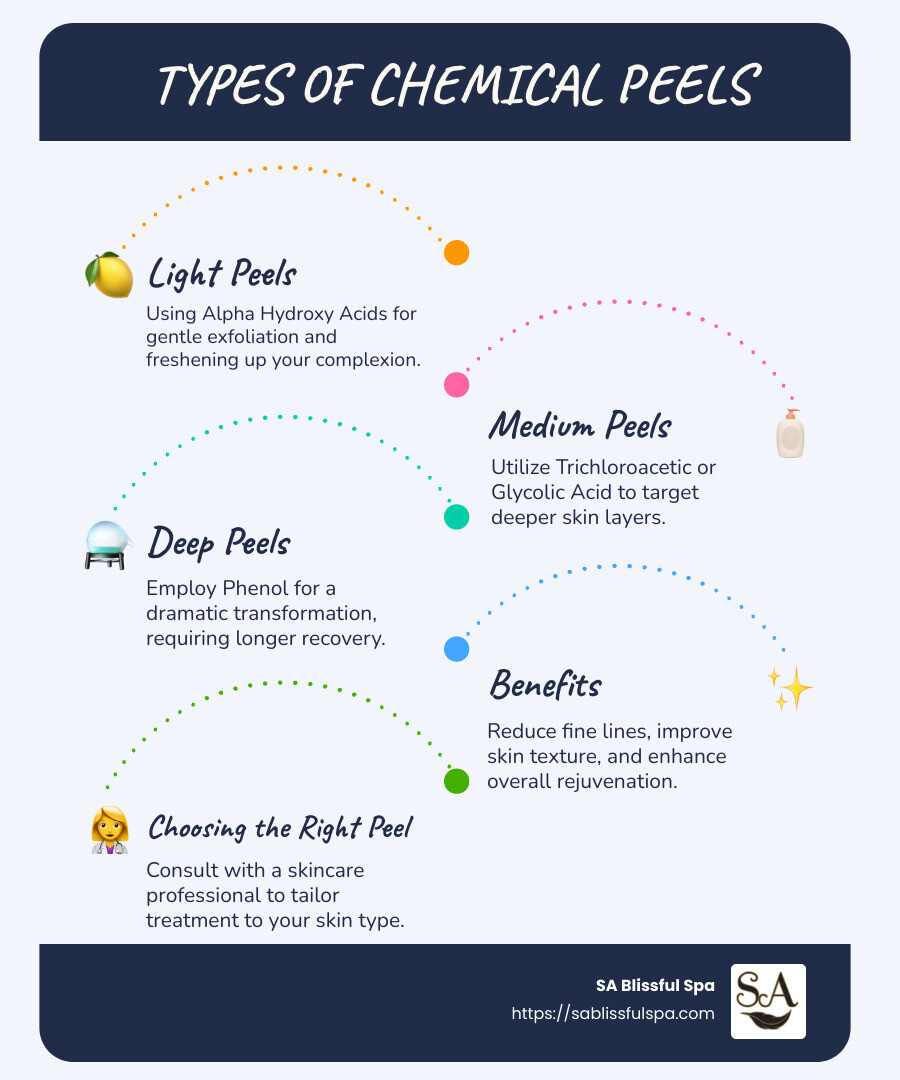
Chemical peels come in different strengths to suit various skin needs and concerns. Let’s break down the types of chemical peels into three main categories: light peels, medium peels, and deep peels.
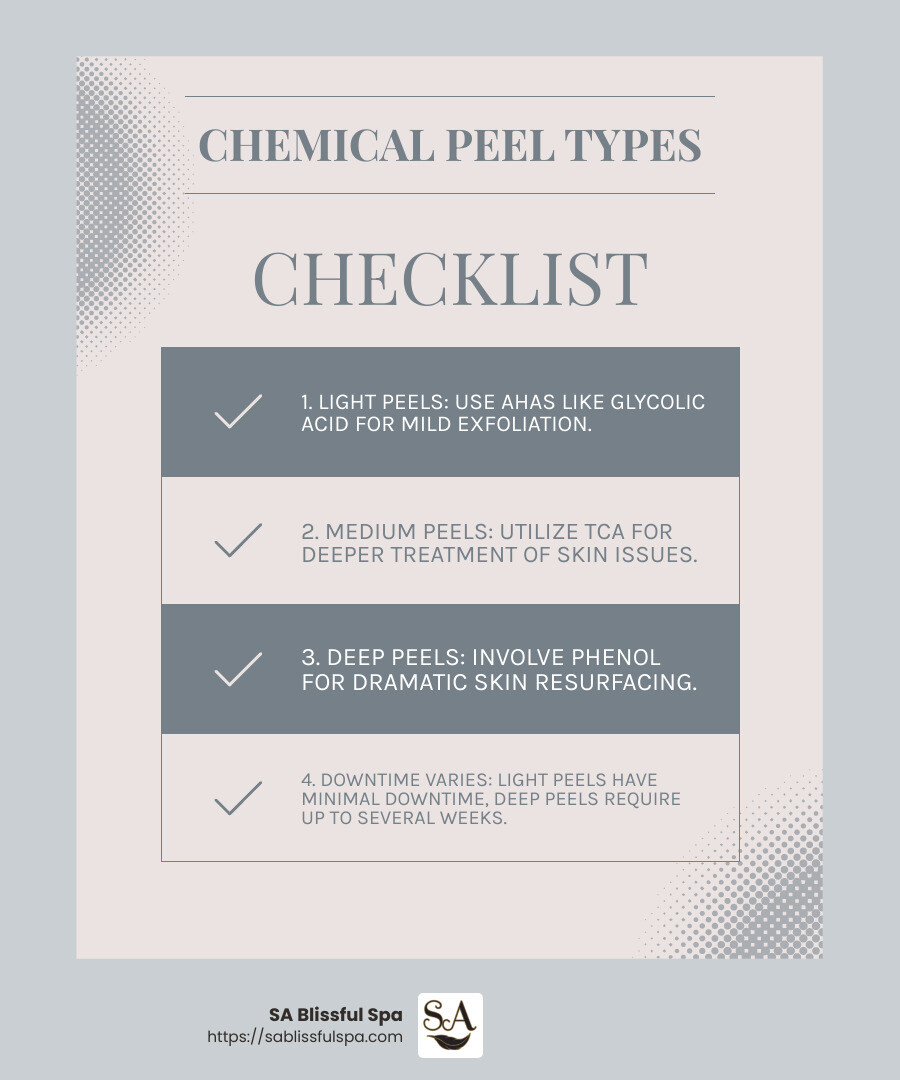
Light peels are the gentlest option and are often called superficial peels. They use mild acids like alpha hydroxy acids (AHAs) such as glycolic, lactic, and citric acids. These peels work on the outermost layer of the skin, making them perfect for a quick skin refresh.
Light peels can help with mild skin discoloration and rough texture. They typically require little to no downtime, making them a convenient choice for many.
Medium peels penetrate deeper into the skin compared to light peels. They often use trichloroacetic acid (TCA) and sometimes glycolic acid to reach the middle layers of the skin. This makes them more effective for treating moderate skin issues.
Medium peels usually require a few days of downtime, where the skin may appear red and start peeling. The results can be more noticeable, with smoother and more even skin.
For those seeking dramatic results, deep peels are the most intensive option. They use strong acids like phenol or high concentrations of TCA to penetrate the deeper layers of the skin.
Deep peels often involve significant downtime, sometimes up to several weeks, as the skin heals and regenerates. The change, however, can be remarkable, with visibly refreshd skin.
At SA Blissful Spa, we offer a variety of peels to suit your specific skin concerns. Whether you’re looking for a light refresh, a medium-depth treatment, or a deep change, our expert team is here to guide you through the process and help achieve your skincare goals.
Chemical peels offer a variety of benefits that make them a popular choice for skin rejuvenation. They can address several skin concerns and improve overall skin health.
Chemical peels are effective in reducing the appearance of fine lines and wrinkles. By removing the outer layer of damaged skin, peels stimulate collagen production, which helps to smooth and firm the skin. This process can result in a more youthful appearance, making fine lines less noticeable.
Acne scars can be a persistent concern for many individuals. Chemical peels, especially those containing alpha hydroxy acids (AHAs) or trichloroacetic acid (TCA), can help reduce the appearance of these scars. The peeling process encourages new skin growth, which can gradually diminish scar visibility and improve skin texture.
Hyperpigmentation, including melasma and age spots, can be effectively treated with chemical peels. The exfoliation process helps to lighten dark spots by removing the top layers of pigmented skin. Peels like Jessner’s, which combine multiple acids, are particularly effective for targeting these pigmentation issues.
Uneven skin texture and tone can make skin appear dull and lackluster. Chemical peels help to even out skin tone by promoting the shedding of dead skin cells and encouraging the growth of new, healthy skin. This leads to a smoother, more radiant complexion.
In summary, chemical peels can significantly improve skin appearance by addressing fine lines, wrinkles, acne scars, hyperpigmentation, and uneven texture. At SA Blissful Spa, our personalized approach ensures that each peel is custom to meet your unique skin needs, providing you with optimal results.
Chemical peels are a fascinating way to refresh your skin. They work through a process called chemical exfoliation. This involves applying a special solution to your skin that helps shed dead skin cells.
When you apply a chemical peel, it acts like a super-powered exfoliator. It goes deeper than a regular scrub, reaching into the layers of your skin to remove dead and damaged cells. This is why peels can make such a big difference in how your skin looks and feels.
As the old skin cells are removed, your body naturally starts to make new ones. This process is known as cell turnover. It’s like hitting the refresh button on your skin. New skin cells come to the surface, making your skin look brighter and more even.
Now, the word “trauma” might sound scary, but in this case, it’s a good thing! Chemical peels create a controlled trauma to the skin. This means they cause just enough stress to kick your skin’s natural healing process into gear. This healing process is what leads to healthier and more vibrant skin.
Once the peel does its work, your skin begins to heal. During this time, you might notice some peeling or redness. This is completely normal and part of the process. As your skin heals, it starts to produce new collagen. This helps with new skin growth, making your skin smoother and firmer.
Chemical peels work by exfoliating the skin, promoting new cell growth, and encouraging your skin to heal itself. This results in a fresh, refreshd look that many people love.
Next, we’ll explore how to choose the right chemical peel for your unique skin type.
Selecting the ideal chemical peel is all about understanding your skin type and condition. With the right choice, you can address your specific skin concerns effectively.
Your skin type plays a crucial role in determining which peel will work best for you. Generally, skin types are categorized as oily, dry, combination, or sensitive. Each type reacts differently to various chemical solutions.
Apart from skin type, consider any specific conditions you want to address. Whether it’s acne scars, hyperpigmentation, or fine lines, different peels target different issues.
Before jumping into a chemical peel, a consultation with a skincare professional is essential. At SA Blissful Spa, our experienced estheticians will evaluate your skin type and condition. This personalized approach ensures that the treatment aligns perfectly with your skincare goals.
During the consultation, you’ll discuss your skin concerns, and the esthetician will recommend a custom peel treatment. This personalized care is key to achieving the best results while minimizing risks.
At SA Blissful Spa, we pride ourselves on offering customized peel treatments that cater to your unique skin needs. Our team uses top-tier, skin-rejuvenating products and advanced exfoliation techniques to ensure your skin looks its best.
By choosing the right chemical peel, you can achieve a radiant and refreshd complexion. Next, let’s address some frequently asked questions about chemical peels.
When it comes to dramatic results, phenol peels are often considered the most effective. These deep peels penetrate the middle layer of the skin, offering significant improvement in skin texture and tone. They use carbolic acid to address deep wrinkles, scars, and severe sun damage. However, they require a longer recovery time and should be performed by a qualified professional due to their intensity.
Dermatologists use a range of chemical peels depending on the patient’s skin needs:
A level 3 chemical peel refers to a medium-depth peel, typically using trichloroacetic acid. This type of peel penetrates the skin’s epidermis and reaches the papillary dermis. It’s effective for treating age spots, moderate wrinkles, and sun damage. Recovery time can be longer than lighter peels, and the procedure should be conducted by a skilled professional to ensure safety and optimal results.
These FAQs should help explain some common concerns about chemical peels. Understanding the different types and their effects can guide you in choosing the best option for your skin.
At SA Blissful Spa, we believe in the power of personalized care to achieve radiant skin health. Our expert treatments are designed to refresh and improve your skin’s natural beauty, ensuring you leave feeling refreshed and confident.
Our chemical peels are custom to meet your unique needs. Whether you’re looking to reduce fine lines, address hyperpigmentation, or simply refresh your skin, our skilled estheticians will guide you through the process. We offer a serene environment where you can relax and enjoy the benefits of expert skincare.
By choosing the right chemical peel for your skin type and condition, you can experience significant improvements in skin texture and tone. Our team is dedicated to providing you with the highest quality care, using top-tier products and advanced techniques.
Find the transformative effects of our peels and let us help you achieve the beautiful skin you deserve. For more information on our personalized peel treatments, visit our SA Blissful Spa peel service page.
Accept the journey to healthier, more vibrant skin with us. We’re here to support you every step of the way.



Book your first appointment online and enjoy 15% off your first service (one-time offer).
Use code NEWCLIENT15
