What Is LED Light Therapy (And Does It Actually Work)?
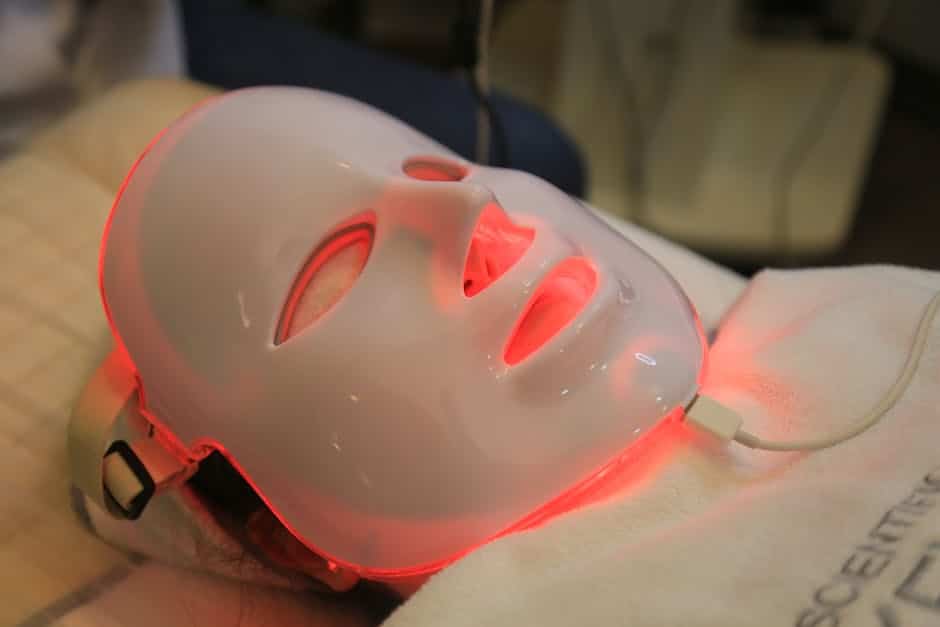
LED light therapy is a non-invasive skin treatment that uses specific wavelengths of colored light to penetrate the skin and trigger natural healing and rejuvenation processes.
Here's a quick overview:
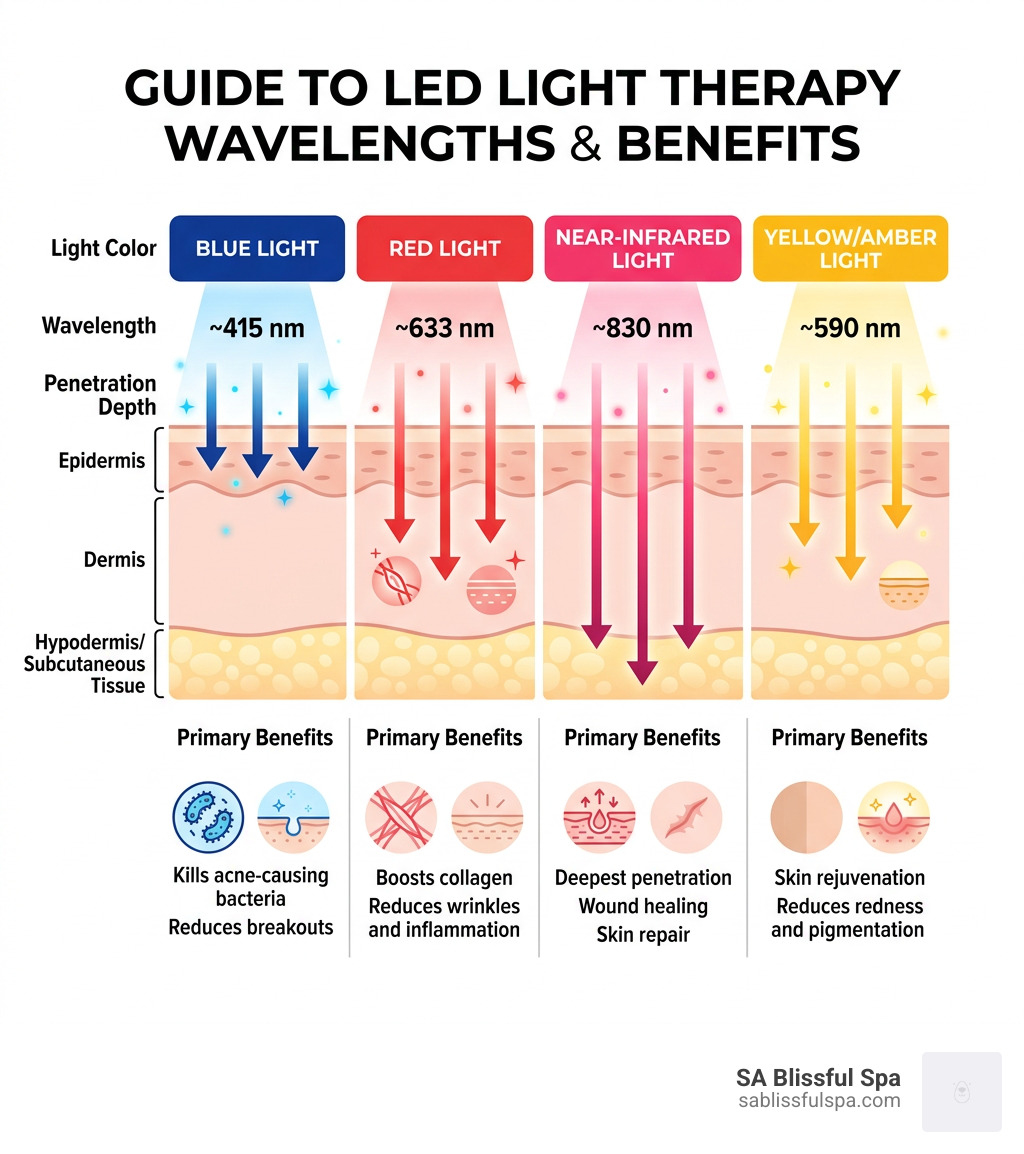
| Light Color | Wavelength | Primary Benefit |
|---|---|---|
| Blue | ~415 nm | Kills acne-causing bacteria, reduces breakouts |
| Red | ~633 nm | Boosts collagen, reduces wrinkles and inflammation |
| Near-infrared | ~830 nm | Deepest penetration, wound healing, skin repair |
| Yellow/Amber | ~590 nm | Skin rejuvenation, reduces redness and pigmentation |
Key facts at a glance:
- Originally developed by NASA in the 1990s for wound healing in space
- Used by dermatologists, estheticians, and spa professionals worldwide
- Backed by thousands of peer-reviewed studies
- Non-invasive, painless, and requires no downtime
- Works on all skin types
The science is genuinely promising. Clinical studies show blue and red light combined can reduce acne lesions by up to 81% over 12 weeks. Separate research found that over 95% of subjects showed measurable improvement in wrinkle severity with red and near-infrared LED treatments — compared to just 13% with a sham treatment.
That said, experts at institutions like Harvard caution that while the evidence is encouraging, many studies are still small-scale. The results are real, but they aren't magic — and expectations matter.
I'm Saloni Bhandari, a licensed esthetician and founder of SA Blissful Spa, and led light therapy is one of the most versatile tools I use to help clients achieve healthier, more radiant skin. In this guide, I'll walk you through exactly how it works, what it treats, and how to get the most out of it.
The Science Behind LED Light Therapy
To understand why sitting under a glowing panel of lights can change your skin, we have to look inside your cells—specifically at the mitochondria. Think of mitochondria as the "power plants" of your cells. When your skin absorbs specific wavelengths of light, it triggers a process called photobiomodulation.
As Zakia Rahman, MD, clinical professor of dermatology, explains, photobiomodulation is essentially the use of light to alter biology. When these light photons hit your cells, they stimulate the production of Adenosine Triphosphate (ATP). ATP is the energy currency of the cell; when cells have more energy, they can repair damage, replicate, and produce collagen much more efficiently.

The effectiveness of led light therapy depends entirely on the wavelength (measured in nanometers or nm). Different wavelengths reach different depths:
- 415nm (Blue): This stays near the surface, where it interacts with porphyrins produced by acne bacteria.
- 633nm (Red): This reaches the dermis, where your "youth cells" (fibroblasts) live. Scientific research on photobiological basics shows that this specific wavelength is a "sweet spot" for stimulating cellular activity.
- 830nm (Near-Infrared): This is the heavyweight champion of penetration. It travels deepest into the tissue to manage inflammation and accelerate deep healing.
Targeted Benefits for Skin Health
While many people think of led light therapy as just a beauty treatment, its roots are firmly planted in medical recovery. NASA originally utilized this technology to help astronauts heal wounds in space, where the body’s natural repair processes slow down.
Today, we use these same principles for a wide range of conditions:
- Wound Healing: Research on LED for wound healing has shown that LED-treated wounds can heal in nearly half the time (roughly 13.5 days compared to 26.8 days for untreated areas).
- Psoriasis: Clinical data indicates that combination therapy using 830nm and 633nm can lead to psoriasis clearance rates ranging from 60% to 100% in treated sites.
- Hair Growth: Red light has been shown to increase hair counts by stimulating blood flow (vasodilation) to the scalp, providing more nutrients to the follicles.
- Medical Dermatology: Beyond aesthetics, Nour Kibbi, MD, clinical assistant professor of dermatology, notes that red light has a long history of being used to treat precancerous lesions and thin skin cancers when used alongside specific topical medications.
Treating Acne with LED Light Therapy
If you struggle with breakouts, blue led light therapy is a game-changer. It works through a process called endogenous photodynamic therapy. Basically, the blue light causes the bacteria (C. acnes) to produce free radicals that eventually destroy the bacteria's own cell membrane.
The statistics are impressive:
- Blue light alone can reduce inflammatory acne by about 60% after 12 weeks.
- When we combine blue and red light, the results get even better. Research on blue light for acne highlights that this combination targets both the bacteria (blue) and the underlying inflammation (red).
- In patients with darker skin tones (Fitzpatrick Type IV), this combination has shown a 77.9% reduction in inflammatory lesions.
Anti-Aging Results from LED Light Therapy
For those of us looking to turn back the clock, red light is the star of the show. By stimulating fibroblasts, it encourages the production of new collagen and elastin—the proteins that keep our skin bouncy and firm.
One of the most cited studies in our industry showed that a staggering 95% improvement in wrinkle severity was observed in subjects treated with 633nm and 830nm wavelengths. Unlike aggressive lasers that "damage to repair," LED is a "non-thermal" energy, meaning it doesn't use heat to get results. This makes it a safe, gentle way to improve skin texture and soften fine lines over time.
The Power of Professional LED Light Therapy
You’ve likely seen LED masks for sale online or at drugstores. While these can be great for maintenance, they aren't in the same league as professional, medical-grade equipment.
Professional panels are significantly more powerful. Because they use high-output diodes and are precisely calibrated to specific wavelengths, they can deliver a much higher "dose" of light in a shorter amount of time. Professional devices also cover the entire face or body area evenly, whereas some home masks may have "cold spots" where the light doesn't reach the skin effectively.
Furthermore, Cleveland Clinic emphasizes the importance of professional guidance for skin treatments because an expert can tailor the wavelengths and frequency to your specific skin concerns. For example, we might use a specific "cocktail" of blue and red for an acne client, but switch to pure red and infrared for someone recovering from a chemical peel.
What does it cost? Based on internet data, the average cost for professional led light therapy sessions ranges from $35 to $450 per session. (Note: These are average costs based on internet data and not actual costs for SA Blissful Spa.) The wide range accounts for whether the light is a quick "add-on" to a facial or a standalone, high-intensity medical treatment.
Safety, Risks, and Frequently Asked Questions
One of the best things about led light therapy is its safety profile. It contains no UV rays, so there is no risk of tanning or sun damage. However, there are still some important precautions to keep in mind.
How many sessions are needed to see results?
LED is a cumulative treatment. You won't walk out of your first session looking ten years younger (though your skin will likely look brighter and less inflamed!).
- Initial Phase: We usually recommend 2 to 3 sessions per week for the first 4 to 8 weeks.
- Results Window: Most clients begin to see significant changes in acne or skin texture within 4 to 12 weeks.
- Maintenance: Once you've reached your goal, a monthly session helps "recharge" the cells and maintain that collagen production.
Is LED light therapy safe for all skin types?
Yes! Because it is non-thermal (no heat) and non-invasive, it is safe for all tones on the Fitzpatrick scale. Unlike some lasers that can cause hyperpigmentation in darker skin, LED is generally considered very low-risk. However, it is always wise to consult with a board-certified plastic surgeon or a qualified dermatologist if you have a history of skin cancer or specific skin conditions.
Can I use LED therapy with retinol or Accutane?
This is a very common question. Some medications and skincare products cause "photosensitivity," meaning they make your skin more sensitive to light.
- Accutane (Isotretinoin): You should generally avoid led light therapy while on Accutane or for a period after finishing it, as the medication significantly thins the skin and increases sensitivity.
- Retinol: While some people use them together, we often suggest skipping your retinol the night before a treatment to avoid any potential irritation.
- Other Meds: Medications like lithium or certain antibiotics can also increase light sensitivity. Always give us a full list of your current medications before we begin.
Side Effects: Side effects are rare and usually very mild. Some people experience temporary redness or slight swelling immediately after the session, but this typically fades within an hour. Eye protection is non-negotiable; we always provide specialized goggles to shield your eyes from the bright light.
Conclusion
At SA Blissful Spa in Burlington, MA, we believe that the best skincare results come from a blend of relaxation and high-tech science. Whether you are visiting us from nearby Lexington, Woburn, or Winchester, our goal is to provide personalized, expert-tailored treatments that help you feel confident in your own skin.
led light therapy is more than just a trend; it's a scientifically-backed method to help your skin heal itself from the inside out. Whether you’re looking to clear up stubborn acne, speed up recovery after a procedure, or simply give your collagen a much-needed boost, we are here to help you reach those goals in our serene and rejuvenating environment.
Ready to see the light? We invite you to experience the difference that professional, personalized care can make for your skin health.
Average pricing mentioned in this article is based on general internet data. For specific pricing and to see which of our luxury services—including facials, peels, and brow services—are right for you, please visit our pricing page or contact our Burlington office.