How Cancer Treatments Affect Your Skin (And What You Can Do Right Now)
Cancer skin care is one of the most overlooked parts of managing life during and after treatment. Here's a quick overview of what helps most:
- Use gentle, fragrance-free cleansers and moisturizers daily
- Apply broad-spectrum SPF 30-50 sunscreen (zinc oxide or titanium dioxide) every morning
- Moisturize on damp skin right after bathing to lock in hydration
- Avoid harsh ingredients like alcohol, sulfates, parabens, and synthetic fragrances
- Report any new rashes, open sores, or severe itching to your care team immediately
- Wear loose, soft clothing (preferably cotton or UPF-rated fabric) to reduce skin irritation
Cancer treatments like chemotherapy, radiation, and immunotherapy don't just target cancer cells. They also affect your skin's protective barrier, causing dryness, rashes, sensitivity, and discoloration. In fact, research shows that 69% of cancer patients experience dry skin during treatment — and these changes can deeply affect how you feel about yourself, not just physically, but emotionally too.
The good news? With the right routine and the right products, these effects are manageable.
I'm Saloni Bhandari, a licensed esthetician and founder of SA Blissful Spa in Burlington, MA, with hands-on experience helping clients navigate cancer skin care through personalized, oncology-safe treatments. In the sections ahead, I'll walk you through everything you need to protect and restore your skin — from daily routines to sun protection and beyond.
Common Skin Side Effects of Cancer Treatment
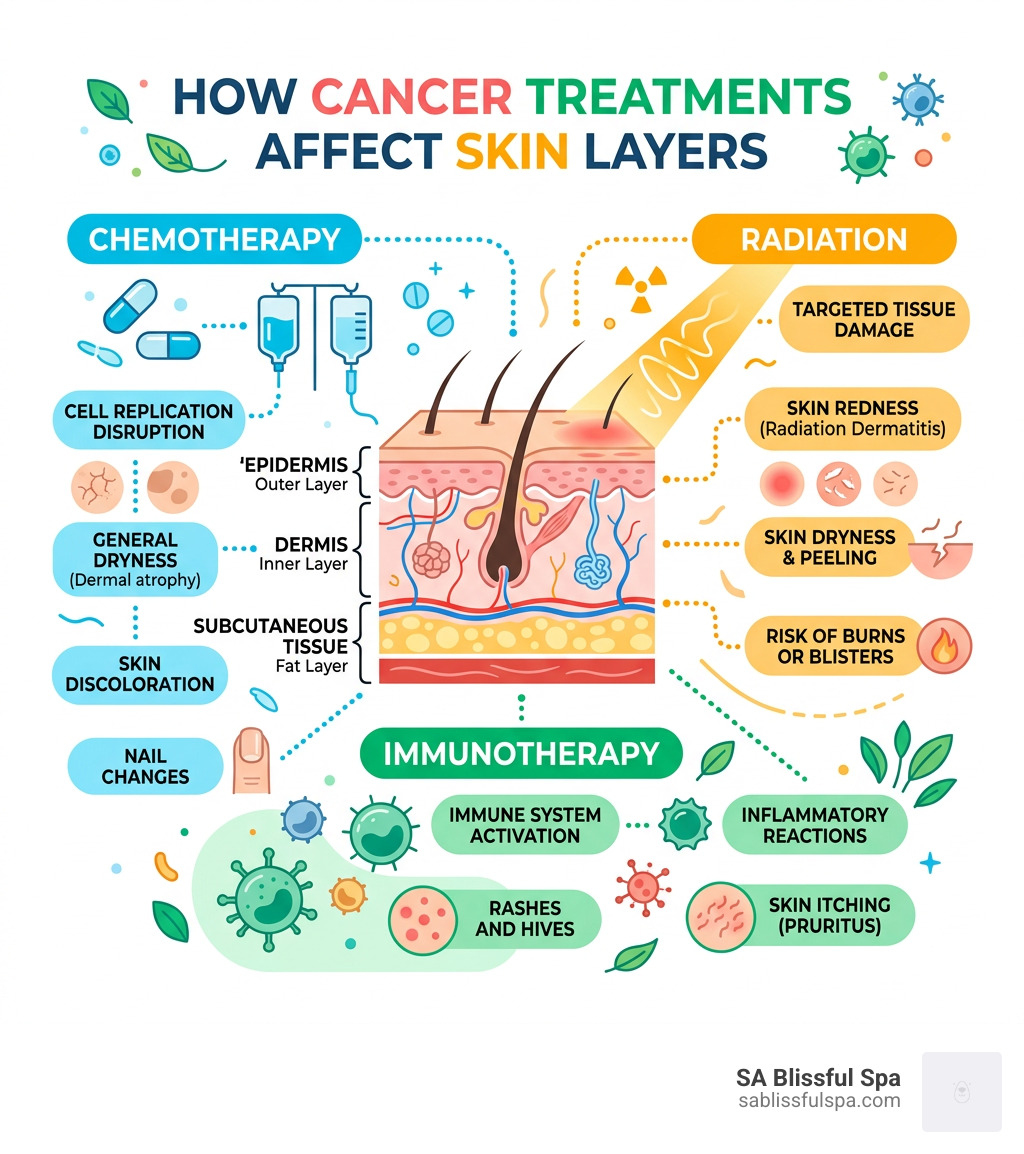
When we talk about cancer skin care, we have to address the "why" behind the changes you’re seeing. Different treatments affect the body in unique ways, but they all share a common goal: stopping rapidly dividing cells. Unfortunately, your skin, hair, and nail cells are some of the fastest-growing cells in your body, making them unintended targets.
Chemotherapy
Chemotherapy can lead to significant dryness, redness, and scaling. Some patients develop an "acne-like" rash, which, while frustrating, can sometimes be a sign that the medication is working effectively. You might also notice skin darkening (hyperpigmentation) or nails that become brittle, develop ridges, or even lift from the nail bed.
Radiation Therapy
Radiation is more localized, but its effects are intense. It often causes what looks and feels like a severe sunburn in the treated area. This can progress to peeling, thinning of the skin, and permanent sensitivity.
Immunotherapy and Targeted Therapy
These modern treatments can cause unique "dermatologic toxicities." Immunotherapy may trigger the immune system to attack the skin, resulting in widespread rashes, intense itching (pruritus), or inflammation known as dermatitis. Targeted therapies frequently cause hand-foot skin reaction (HFSR), where the palms and soles become red, painful, and sometimes blistered.
Research indicates that these side effects aren't just cosmetic; they significantly impact a patient's quality of life. According to scientific research on skin toxicity and quality of life, proactive skin management can reduce the severity of these symptoms and help patients stay on their treatment schedules.
| Side Effect | Chemotherapy | Radiation Therapy |
|---|---|---|
| Dryness/Itching | Widespread across the body | Concentrated in treatment area |
| Photosensitivity | Temporary (months) | Permanent in treated area |
| Color Changes | General darkening or yellowing | "Tanned" or red appearance |
| Blistering | Rare (except Hand-Foot Syndrome) | Common in high-dose areas |
Understanding Radiation Dermatitis
Over 90% of patients undergoing radiation will experience some level of radiation dermatitis. It typically presents as erythema (redness) and can progress to "dry desquamation" (peeling) or "moist desquamation" (sores). This usually appears within a 90-day window of starting treatment.
To manage this, we focus on barrier repair. Using expert guidance on treating radiation-induced skin changes can help prevent infections and soothe the burning sensation. It is vital to avoid applying anything to the radiation site right before a session, as some products can interfere with the beam's accuracy or cause a "bolus effect," worsening the burn.
Identifying Warning Signs
While many skin changes are "normal" side effects, some require immediate medical attention. We always tell our clients in Burlington and surrounding towns like Lexington and Woburn to watch for:
- Yellowing of the skin or the whites of the eyes (jaundice)
- Severe, persistent itching that prevents sleep
- New, unexplained bruising or tiny purple spots
- Open sores that are oozing, smelling, or won't heal
- A sudden, spreading rash accompanied by a fever
If you notice these, contact your oncology team immediately. Early intervention is the key to preventing a minor irritation from becoming a major complication.
Building a Daily Cancer Skin Care Routine

A solid cancer skin care routine doesn't have to be complicated. In fact, simpler is almost always better. The goal is to support the skin barrier without introducing irritants.
- Cleansing: Use a pH-balanced, non-soap cleanser. Avoid hot water, which strips natural oils. Stick to lukewarm water and use your hands rather than a rough washcloth.
- Drying: Never rub your skin dry. Gently pat with a soft cotton towel.
- Moisturizing: This is the most critical step. Apply your moisturizer while the skin is still slightly damp to "trap" the water. Look for thick creams or ointments rather than thin lotions, which often contain more alcohol and preservatives.
- Frequency: Moisturize at least twice a day, or more if you feel "tight" or itchy.
For those looking for professional support, you can find more info about oncology safe skincare to see how specialized treatments can complement your home care.
Essential Ingredients for Cancer Skin Care
When reading labels, look for these "skin heroes":
- Hyaluronic Acid & Glycerin: These are humectants that pull moisture into the skin.
- Ceramides: These are lipids that help "glue" the skin barrier back together.
- Urea & Lactic Acid: In low concentrations, these help gently dissolve scaly, dry skin without harsh scrubbing.
- Jojoba Oil: This closely mimics the skin’s natural sebum and is excellent for cuticles and dry scalps.
- Shea Butter & Aloe Vera: Classic soothers that provide a protective layer and reduce inflammation.
If you’re feeling overwhelmed by choices, more info about oncology solutions can guide you toward curated products that eliminate the guesswork.
Choosing the Right Sunscreen for Cancer Skin Care
Many cancer treatments cause "photosensitivity," meaning your skin will burn much faster than usual. For chemotherapy patients, this sensitivity is often temporary, but for radiation patients, the treated area may be permanently more vulnerable to UV damage.
We recommend:
- Broad-Spectrum Protection: Must protect against both UVA and UVB rays.
- Physical Blockers: Choose sunscreens with Zinc Oxide or Titanium Dioxide. These sit on top of the skin and reflect light, rather than chemical filters that can sting sensitive skin.
- SPF 30 to 50: Higher isn't always better if it feels heavy or greasy, but SPF 30 is the minimum.
- Reapplication: Every two hours if you are outdoors.
- Scalp Care: If you have experienced hair loss, your scalp is now highly exposed. Always wear a hat or apply sunscreen to the top of your head.
To help restore the glow that treatment can sometimes dim, you can find more info about oncology facials, which focus on deep hydration and sun damage repair in a safe environment.
Advanced Protection and Long-Term Maintenance
Beyond creams and cleansers, physical protection is your best defense. This is especially true because patients who have undergone radiation face an elevated risk of secondary skin cancers later in life. In fact, some studies show a significantly higher incidence ratio for basal cell carcinoma in previously radiated areas decades after treatment.
- UPF 50+ Clothing: A standard white cotton T-shirt only has an SPF of about 5. Specialized UPF clothing blocks 98% of UV rays.
- Wide-Brimmed Hats: Aim for at least a 3-inch brim to protect the ears, neck, and face.
- Shade Seeking: Avoid the sun during peak hours (10 AM to 4 PM).
- Monthly Self-Checks: Perform a "skin audit" once a month. Look for new moles, changes in existing spots, or sores that don't heal. Use a mirror or ask a partner to check your back and scalp.
Managing Vitamin D Without Sun Exposure
Because we are asking you to avoid the sun, you might be at risk for Vitamin D deficiency. Vitamin D is crucial for bone health and immune function.
- Dietary Sources: Oily fish (salmon, mackerel), red meat, and egg yolks.
- Fortified Foods: Many cereals and dairy alternatives are fortified with Vitamin D.
- Supplements: In regions like Massachusetts, especially during the winter, a 10-microgram daily supplement is often recommended.
Always consult your physician before starting supplements to ensure they don't interfere with your specific medications. For peer support on navigating these lifestyle changes, you can visit the Cancer Chat forum for patient support.
Lifestyle and Nutrition for Skin Health
What you put into your body shows up on your skin.
- Hydration: Aim for 2-3 quarts of fluid daily (water, herbal tea, or clear broths) to keep skin cells plump.
- Antioxidant-Rich Diet: Berries, leafy greens, and nuts help fight the oxidative stress caused by treatment.
- Friction Reduction: Switch to silk or satin pillowcases. They are much gentler on fragile hair and sensitive facial skin than cotton.
- Loose Cotton Clothing: Avoid synthetic fabrics like polyester that can trap heat and sweat, leading to rashes.
Frequently Asked Questions about Oncology Skincare
When should I contact my oncology team about skin changes?
You should report any change that is painful, spreading, or looks infected. If a rash covers a large portion of your body or you develop a fever, call immediately. Don't wait for your next scheduled appointment; early management can prevent treatment delays.
Are specialized oncology products better than standard skincare?
While you don't have to buy "cancer-branded" products, specialized formulations are often superior because they are strictly fragrance-free, non-toxic, and tested for clinical tolerability on compromised skin. Statistics show that patients using specialized kits saw dry skin rates drop from 69% to 21% in just four weeks. You can find more info about oncology spa solutions to understand how these targeted products improve daily comfort.
How much do professional oncology skincare treatments cost?
The cost of cancer skin care can vary widely depending on the level of specialization. Based on average internet data (and not actual costs for SA Blissful Spa), here is a general range of what you might expect to see in the market:
- Specialized Oncology Facials: $75 to $450 per session.
- Oncology-Safe Skincare Kits: $50 to $300 for a full regimen.
- Medical-Grade Mineral Sunscreens: $25 to $95 per bottle.
Note: These are average costs based on internet data and not actual costs for specific providers.
Conclusion
Navigating cancer skin care can feel like just one more task on an already long list, but it is truly an act of self-preservation. Taking the time to soothe your skin can restore a sense of normalcy and provide a much-needed moment of relaxation during a challenging time.
At SA Blissful Spa in Burlington, MA, we are dedicated to providing a serene environment where your skin health is our top priority. We serve clients throughout the region, including Bedford, Winchester, and Billerica, offering personalized care that respects the sensitivity of your journey. Whether you are currently in treatment or are focused on long-term recovery and rejuvenation, we are here to help you feel like yourself again.
Ready to give your skin the specialized care it deserves? Book an oncology-safe skincare consultation with us today.