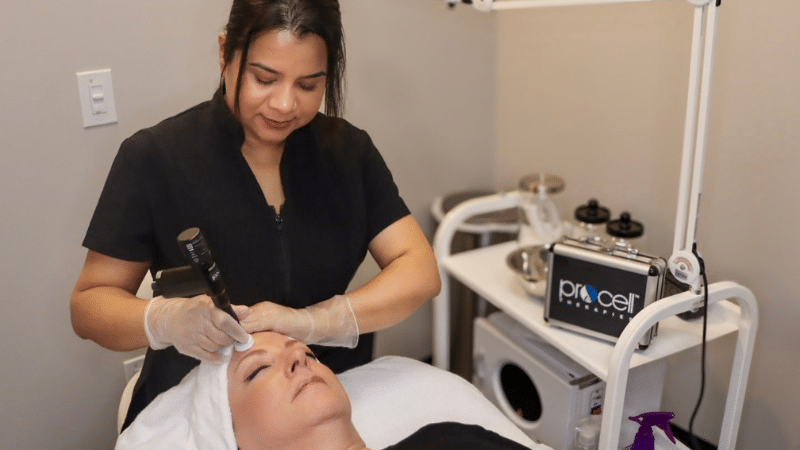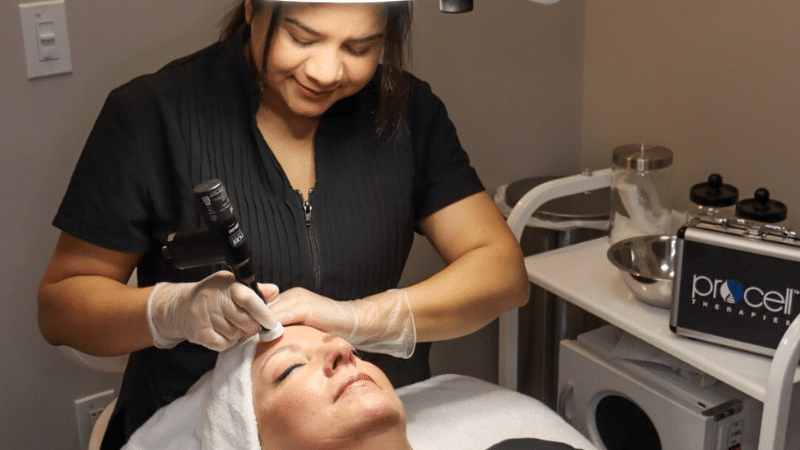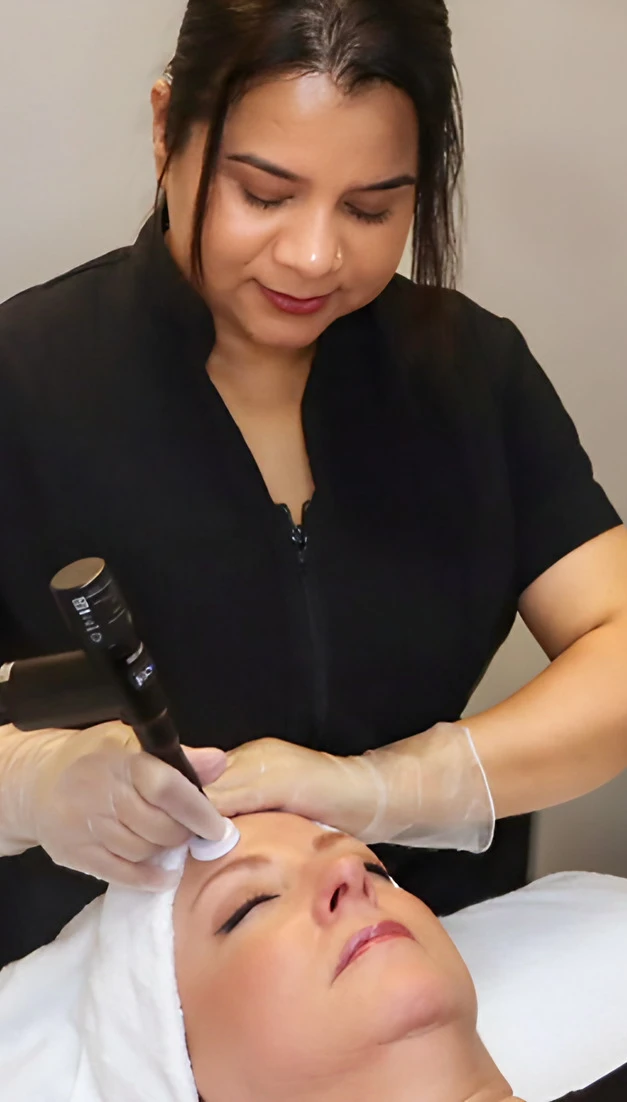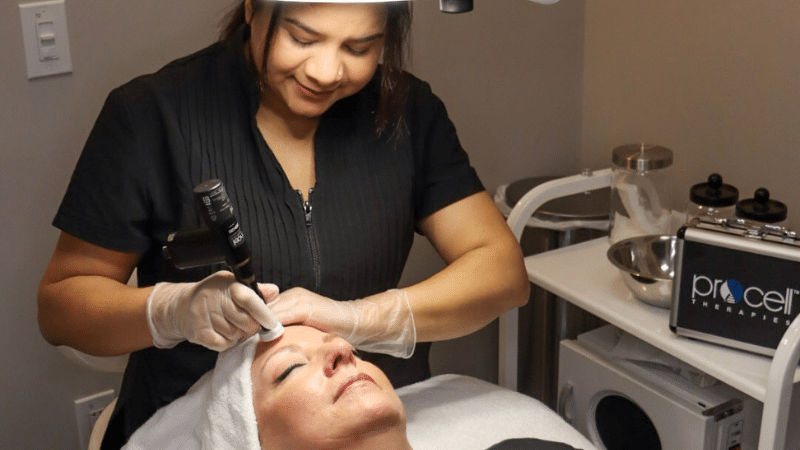
What Is Microchanneling and Why Is It Trending in Skin Care?
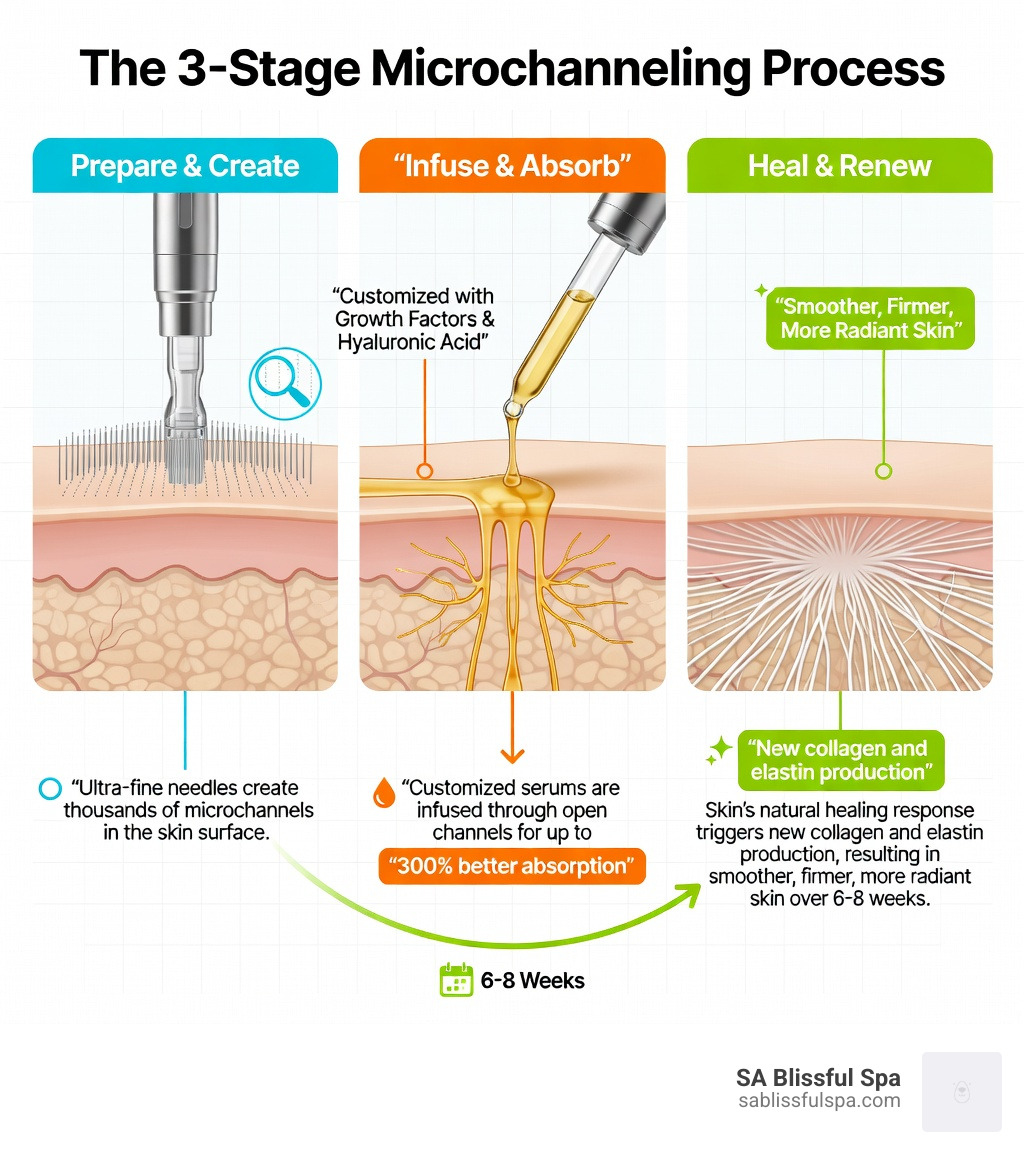
Microchanneling is a minimally invasive skin treatment that uses ultra-fine needles to create tiny, controlled channels in the skin — stimulating your body's natural collagen production and dramatically improving how well active serums absorb.
Here's a quick look at what it does and why people love it:
| What It Treats | Key Benefit | Downtime |
|---|---|---|
| Fine lines & wrinkles | Boosts collagen & elastin | Less than 24 hours |
| Acne scars | Improves skin texture | Mild redness only |
| Enlarged pores | Tightens & smooths skin | Back to normal fast |
| Dull or uneven skin tone | Enhances serum absorption | Minimal |
| Stretch marks | Stimulates healing response | Low |
It's one of the fastest-growing non-surgical skin treatments — and for good reason. Unlike more aggressive procedures, microchanneling works with your skin's own healing system rather than against it. The result? Fresher, firmer, more radiant skin — without the extended recovery time that keeps busy people away from the treatment table.
If you've been curious about skin rejuvenation but worried about downtime, discomfort, or whether it's right for your skin type, you're in the right place.
I'm Saloni Bhandari, licensed esthetician and founder of SA Blissful Spa, and I've helped countless clients achieve glowing, healthier skin through advanced techniques including Microchanneling. In this guide, I'll walk you through everything you need to know — from the science behind it to what a real session actually feels like.
Key terms for Microchannelling:
Understanding the Evolution of Microchannelling
If you’ve spent any time researching skincare, you’ve likely heard of microneedling. Think of Microchannelling as its more sophisticated, gentler, and highly effective younger sibling. While traditional methods paved the way, this treatment represents a significant leap forward in how we approach skin rejuvenation.
At its core, Microchannelling is often described as the Microchanneling as the next generation of microneedling. The primary difference lies in the delivery. Instead of a dragging or rolling motion, we use a vertical stamping technique. This precision is vital because it protects the epidermal integrity—the outermost layer of your skin. By keeping the epidermis intact while creating hundreds of thousands of micro-perforations, we stimulate keratinocytes. These are the cells responsible for signaling your body to produce fresh collagen and elastin.
This "stimulation rather than damage" approach is what makes our microchanneling services so popular in areas like Burlington and Lexington. We aren't trying to tear the skin down to build it back up; we are whispering to the skin’s natural healing centers to wake up and get to work. Because the needles enter and exit the skin perfectly vertically, there is no "sideways" trauma, which leads to a much smoother recovery and more uniform results.
Microchanneling vs. Microneedling: A Side-by-Side Comparison
When clients visit us from nearby towns like Winchester or Woburn, the first question they usually ask is: "What’s the difference?" It’s a great question because, on the surface, they look similar. However, the "Hole Truth" is in the mechanics.
Traditional microneedling often uses a handheld pen or a roller that moves across the skin. If the needles are moving while they are inside your skin, they can create microscopic tears or "v-shaped" wounds. This "dragging technique" increases trauma, which leads to more inflammation and longer downtime.
In contrast, Microchannelling uses a linear stamping motion. The needles go straight in and straight out. This eliminates the risk of micro-tears and reduces the inflammatory response.
| Feature | Traditional Microneedling | Microchannelling |
|---|---|---|
| Needle Motion | Rolling or Gliding (can cause dragging) | Vertical Stamping (clean entry/exit) |
| Trauma Level | Moderate to High | Low to Minimal |
| Downtime | 24–72 hours of redness/swelling | ~60-90 minutes of redness |
| Pain Level | Often requires heavy numbing | Often described as a "light tickle" |
| Serum Delivery | Topical application after treatment | Immediate infusion through channels |
So, is microchanneling better than microneedling? For many of our clients, the answer is yes. It offers greater consistency and is generally safer for all Fitzpatrick skin types (skin tones). Because there is less trauma, there is a significantly lower risk of post-inflammatory hyperpigmentation, making it a fantastic option for those with deeper skin tones who might be wary of more aggressive lasers or peels.
The Science of Collagen Stimulation and Serum Delivery
The magic of Microchannelling isn't just in the needles—it’s in what those needles allow us to put into the skin. Your skin is a brilliant barrier designed to keep things out. Normally, only about 1-2% of the serums you apply at home actually penetrate deep enough to make a difference.
When we create these micro-channels, we are essentially building a temporary highway into the dermis. Research shows that this process can allow for up to 300% better product penetration. We often use specialized serums containing human-derived growth factors (often from bone marrow stem cells) and hyaluronic acid. These growth factors are naturally anti-inflammatory and promote "scarless" healing.
Instead of your body rushing to "patch" a wound with thick, fibrous scar tissue, these serums encourage the production of high-quality, organized collagen. This is why the skin looks plump and "bouncy" rather than just tight.
The Benefits of Microchannelling for Skin Texture
Whether you are dealing with the remnants of teenage breakouts or the natural progression of time, Microchannelling addresses texture like few other treatments can. We see incredible microchanneling before and after results when treating:
- Acne Scars: By breaking down old scar tissue and stimulating new collagen, we can "fill in" depressed scars from the bottom up.
- Fine Lines and Wrinkles: It’s like a natural filler. The boost in elastin and collagen smooths out those pesky lines around the eyes and mouth.
- Stretch Marks: While difficult to treat, a series of sessions can significantly fade the appearance and improve the texture of stretch marks on the body.
- Skin Tightening: It helps firm up "crepey" skin, especially in delicate areas like the neck and décolletage.
What to Expect: Procedure, Costs, and Aftercare
If you’re coming in from Bedford or Billerica for a session, we want you to feel completely relaxed. A typical Microchannelling appointment at SA Blissful Spa takes about 60 minutes.
We start with a deep cleanse and a skin assessment. While many clients find the treatment very tolerable without it, we do offer topical numbing options to ensure you are 100% comfortable. The actual stamping process feels like a rhythmic, vibrating pressure—most people describe it as a "prickly" sensation but not painful.
One of the best parts? The downtime. Immediately after, your skin will look like you have a mild sunburn. For most people, this redness fades within just 60 to 90 minutes. By the next morning, you can usually apply makeup and go about your day in Arlington or Reading without anyone knowing you had a "procedure" done.
Regarding the financial investment, many people wonder how much does microchanneling cost. Based on internet research and industry data, the average pricing for this type of treatment can range anywhere from $200 to $1,500 per session. (Note: These are internet average costs based on national data and are not actual prices for SA Blissful Spa services. Factors like the area treated and the specific serums used will influence the final cost.)
Is Microchannelling Painful?
We get it—needles can be scary! But the "Hole Truth" is that Microchannelling needles are incredibly fine—thinner than a human hair. Because we aren't dragging them across the skin, the sensation is much more of a "pin-prick" or a light vibration.
Most of our clients in the Concord and Lincoln areas report that it’s far more comfortable than traditional microneedling. You might feel a bit of post-treatment tightness, similar to how your skin feels after a day at the beach, but this typically resolves within a few hours.
Recommended Session Frequency and Results
While you might see a "glow" just a few days after your first treatment, Microchannelling is a journey, not a sprint. We are essentially retraining your skin to behave like younger skin.
- For General Rejuvenation: We typically recommend a series of 3 to 4 treatments spaced about 4 weeks apart.
- For Deep Scarring or Stretch Marks: You may need 6 or more sessions to see dramatic changes.
- Maintenance: Once you’ve achieved your goals, a maintenance session every 3 to 6 months keeps that collagen production humming along.
Conclusion
At SA Blissful Spa, we believe that advanced skincare shouldn't be a mystery. Microchannelling is a scientifically-backed, evolution of skin therapy that offers real results with minimal interruption to your life. Whether you are a busy professional in Burlington or a parent in Stoneham, you deserve skin that makes you feel confident and radiant.
Our team of beauty experts is dedicated to providing personalized care in a serene environment, ensuring every treatment is tailored to your unique skin concerns. Ready to see what your skin is truly capable of?
Book your Microchannelling treatment today and let us help you uncover your most beautiful skin yet. We look forward to welcoming you at our Burlington location and serving our neighbors from Wakefield to Wilmington and beyond!