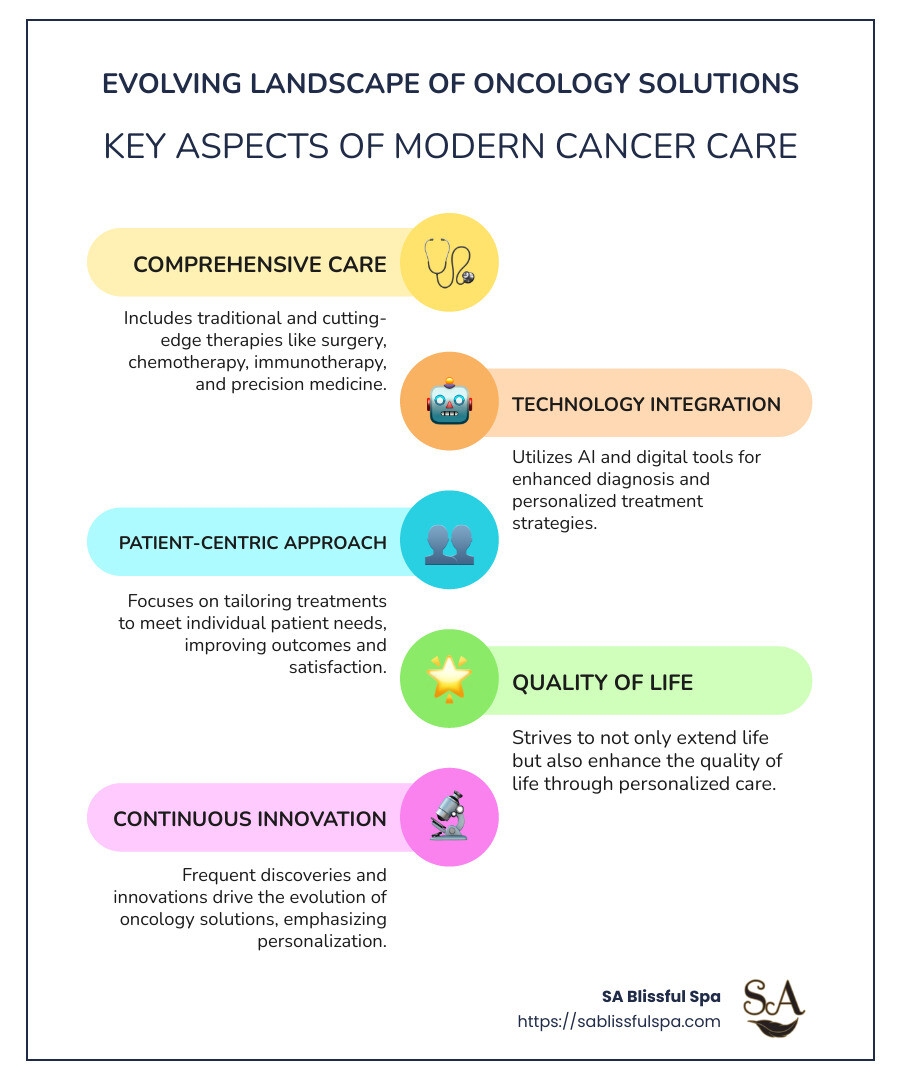
Oncology solutions are pivotal in today’s evolving landscape of cancer care. With rapid advancements in medical technology and treatment strategies, the approach to fighting cancer has transformed considerably. Here’s a quick guide:
The field of cancer care is not just about extending life; it’s about enhancing the quality of life. In an industry where new findies and innovations happen frequently, personalization is key to meeting the unique needs of each individual.
As Saloni Bhandari, the founder of SA Blissful Spa with a background in skincare and esthetic techniques, my passion lies in helping people look and feel their best. My experience with oncology solutions has given me insights into the importance of personalized care in making a significant impact on client wellness.
Cancer treatment is a complex field, and oncology solutions are essential in tackling this challenging medical area. Let’s explore the three main types of oncology solutions: medical, radiation, and surgical oncology.
Medical oncology focuses on treating cancer with medications, including chemotherapy, immunotherapy, and targeted therapy. This type of treatment is often used to shrink tumors, slow cancer growth, or relieve symptoms.
Radiation oncology uses high-energy radiation to destroy cancer cells. It’s a localized treatment, meaning it targets specific areas of the body.
Radiation therapy can be used alone or in combination with other treatments to increase effectiveness.
Surgical oncology involves the physical removal of cancerous tumors. It’s often the first step in cancer treatment, especially for solid tumors.
Each type of oncology solution plays a crucial role in the comprehensive treatment of cancer. Combining these approaches can lead to better outcomes and improved quality of life for patients.

Understanding these solutions helps patients and their families make informed decisions about their care. With advancements in technology and personalized care, the future of oncology looks promising.
The field of oncology is rapidly evolving, driven by several key trends that are reshaping how cancer care is delivered. Let’s explore these trends: precision medicine, value-based care, and democratized innovation.
Precision medicine is changing cancer treatment by tailoring therapies to individual patients based on their genetic makeup. This approach allows for more effective and targeted treatments, minimizing side effects and improving outcomes. Targeted therapy, a component of precision medicine, exemplifies this trend by attacking specific cancer cells without harming normal cells. This personalized approach is not just a future concept but a present reality in many cancer treatments today.
Value-based care is about improving patient outcomes while controlling costs. In oncology, this means focusing on treatments that provide the best results for patients, rather than simply administering more treatments. By prioritizing patient outcomes and cost-effectiveness, healthcare providers can deliver more efficient and effective care. This trend is supported by the integration of the four Ps—payers, providers, patients, and platforms—ensuring all parties access the same information to foster collaboration and informed decision-making.
Democratized innovation in oncology refers to making advanced treatments and technologies accessible to a broader range of patients. This includes expanding the geographic coverage of therapies and moving treatments into earlier lines of therapy. By doing so, more patients can benefit from the latest advancements in cancer care, regardless of their location or economic status. This trend is vital for addressing the unmet needs in oncology, especially for cancers with poor patient outcomes and limited treatment options.
These trends are not just buzzwords; they are actively changing the landscape of cancer treatment. By embracing these innovations, the oncology field is moving towards a future where cancer care is more personalized, effective, and accessible for all patients.
The world of oncology is embracing cutting-edge technologies to revolutionize cancer care. Let’s explore some of the advanced technologies that are making a big impact: AI-powered solutions, precision image-guided therapy, and digital solutions.
Artificial Intelligence (AI) is changing how we approach cancer treatment. By analyzing vast amounts of data quickly and accurately, AI can identify patterns and predict outcomes that might be missed by humans. This can lead to earlier diagnosis and more personalized treatment plans.
For example, AI can help oncologists determine the most effective treatment options based on a patient’s unique profile. This not only improves outcomes but can also reduce unnecessary treatments, saving time and resources. It’s like having a super-smart assistant that helps doctors make the best decisions for their patients.
Precision image-guided therapy is another game-changer in oncology. This technology uses advanced imaging techniques to target cancer cells with pinpoint accuracy. By doing so, it minimizes damage to surrounding healthy tissue and reduces side effects.
Imagine a GPS system for cancer treatment. Doctors can see exactly where the cancer is and deliver treatment directly to that spot. This precision leads to more effective treatments and a better quality of life for patients.
Digital solutions are enhancing every step of the cancer care journey. From digital health records to telehealth services, these technologies make it easier for patients and providers to connect and collaborate.
Digital tools can help manage appointments, track treatment progress, and even provide reminders for medication. This keeps patients informed and engaged in their care, leading to better outcomes. It’s all about using technology to make cancer care more accessible and efficient.
These advanced technologies in oncology solutions are not just about fancy gadgets; they are about making real improvements in how cancer is treated. By integrating these technologies, healthcare providers can offer more precise, personalized, and effective care to their patients.

Navigating cancer treatment can be overwhelming. That’s why navigation programs are becoming essential. These programs guide patients through every step of their cancer journey, ensuring they receive the right care at the right time.
Think of navigation programs as a personal GPS for cancer patients. They help coordinate care, manage appointments, and provide emotional support. This ensures that patients don’t feel lost in the complex healthcare system.
For instance, an NCI-designated cancer center launched a navigation program that significantly improved patient experience. By focusing on individual needs, the program made the cancer journey less stressful and more manageable for patients.
Every cancer journey is unique. Patients face different challenges and have different needs. Personalized care is key to addressing these differences.
A personalized approach means tailoring treatment plans to fit each patient’s specific situation. This can involve adjusting therapies based on a patient’s lifestyle, health status, and preferences. It’s about making sure patients feel seen and heard throughout their treatment.
Personalized care goes beyond medical treatment. It includes providing emotional and psychological support. Oncology-trained professionals, like those at SA Blissful Spa, understand the importance of holistic care. They help patients feel comfortable and supported, which can improve overall well-being.
Incorporating personalized care into oncology solutions can lead to better health outcomes and a more positive patient experience. It’s about treating the whole person, not just the disease.
By focusing on navigation, understanding the patient journey, and providing personalized care, healthcare providers can greatly improve the patient experience. This approach ensures that patients receive comprehensive support, making their cancer journey as smooth as possible.
Medical Oncology: This type focuses on treating cancer with medications, including chemotherapy, immunotherapy, and targeted therapy. Medical oncologists are the main coordinators of a cancer patient’s treatment plan, working closely with other specialists.
Radiation Oncology: This involves using high-energy radiation to destroy cancer cells. Radiation oncologists design treatment plans that target tumors while sparing healthy tissue. This precise approach can be crucial for cancers that are difficult to reach surgically.
Surgical Oncology: Surgical oncologists perform operations to remove tumors and surrounding tissue. They play a key role in diagnosing cancer, determining the stage, and sometimes even curing the disease by completely removing cancerous growths.
Oncology specialties can be quite lucrative, but some stand out more than others:
MOHS Surgeon: Known for treating skin cancer, MOHS surgeons perform a specialized technique to remove cancerous skin with minimal damage to surrounding tissue. This precise method contributes to their high earning potential.
Hematologist Oncologist: These specialists focus on blood cancers like leukemia and lymphoma. They often work in collaboration with other specialists, making them vital in the oncology field.
Radiation Oncologist: With their expertise in designing precise treatment plans, radiation oncologists are in high demand. Their work is critical in treating many types of cancer, which reflects in their compensation.
The oncology drug market is vast, but a few stand out as top sellers:
Keytruda: Known for its use in treating various cancers, including lung and melanoma, Keytruda has become a leading immunotherapy drug due to its effectiveness in boosting the immune system to fight cancer cells.
Revlimid: This drug is commonly used for multiple myeloma and certain types of lymphoma. Its ability to slow or stop cancer cell growth makes it a staple in cancer treatment protocols.
Opdivo: Another immunotherapy drug, Opdivo is used for different types of cancer, including lung and kidney. Its role in enhancing the immune response against cancer cells has made it a popular choice among oncologists.
These drugs represent significant advancements in oncology solutions, offering hope and improved outcomes for many cancer patients.
At SA Blissful Spa, we understand the importance of providing personalized care, especially for clients undergoing cancer treatments. Our oncology-trained professionals are dedicated to delivering safe and soothing skincare experiences custom to the unique needs of each individual.
We believe that everyone deserves to feel pampered and cared for, particularly during challenging times. Our team is equipped with the knowledge and expertise to ensure that our services improve both your well-being and skin health. Whether you’re seeking a relaxing facial or a rejuvenating peel, our treatments are designed to be both effective and comforting.
Our commitment to personalized care means that we take the time to understand your specific skin concerns and adapt our treatments accordingly. This approach not only ensures optimal results but also fosters a nurturing environment where you can truly relax and refresh.
Find more about how we integrate oncology-safe skincare into our services by exploring our Oncology Skincare page. Here, you’ll find detailed information on how our custom treatments can support your journey to wellness.
At SA Blissful Spa, your comfort and care are our top priorities. Our oncology-trained professionals are here to provide you with the best possible spa experience, helping you to feel your best inside and out.



Book your first appointment online and enjoy 15% off your first service (one-time offer).
Use code NEWCLIENT15
