• 280 Cambridge St., Burlington, MA, 01803
  • Gift Certificates
  • Book Now
  • (781) 295-0011

Sensitive Skin SOS – Can You Safely Wax Your Face?


Can Sensitive Skin Handle Face Waxing?

Dealing with unwanted facial hair is challenging with sensitive skin. Many wonder, is face waxing safe for sensitive skin? It’s a valid concern, as sensitive skin can react with irritation, redness, and discomfort.

Here’s the short answer:

  • Yes, face waxing can be safe for many.
  • However, it requires careful prep, the right wax, and proper technique.
  • Always consider your skin’s unique needs.
  • When in doubt, consult a professional.

With nearly half of Americans reporting sensitive skin, understanding proper hair removal is crucial. This guide covers everything you need to know for a smooth, healthy result.

I’m Saloni Bhandari, founder of SA Blissful Spa. My passion is helping clients achieve radiant skin, and I have a deep understanding of how to safely perform services like face waxing for sensitive skin to provide serene, rejuvenating experiences.
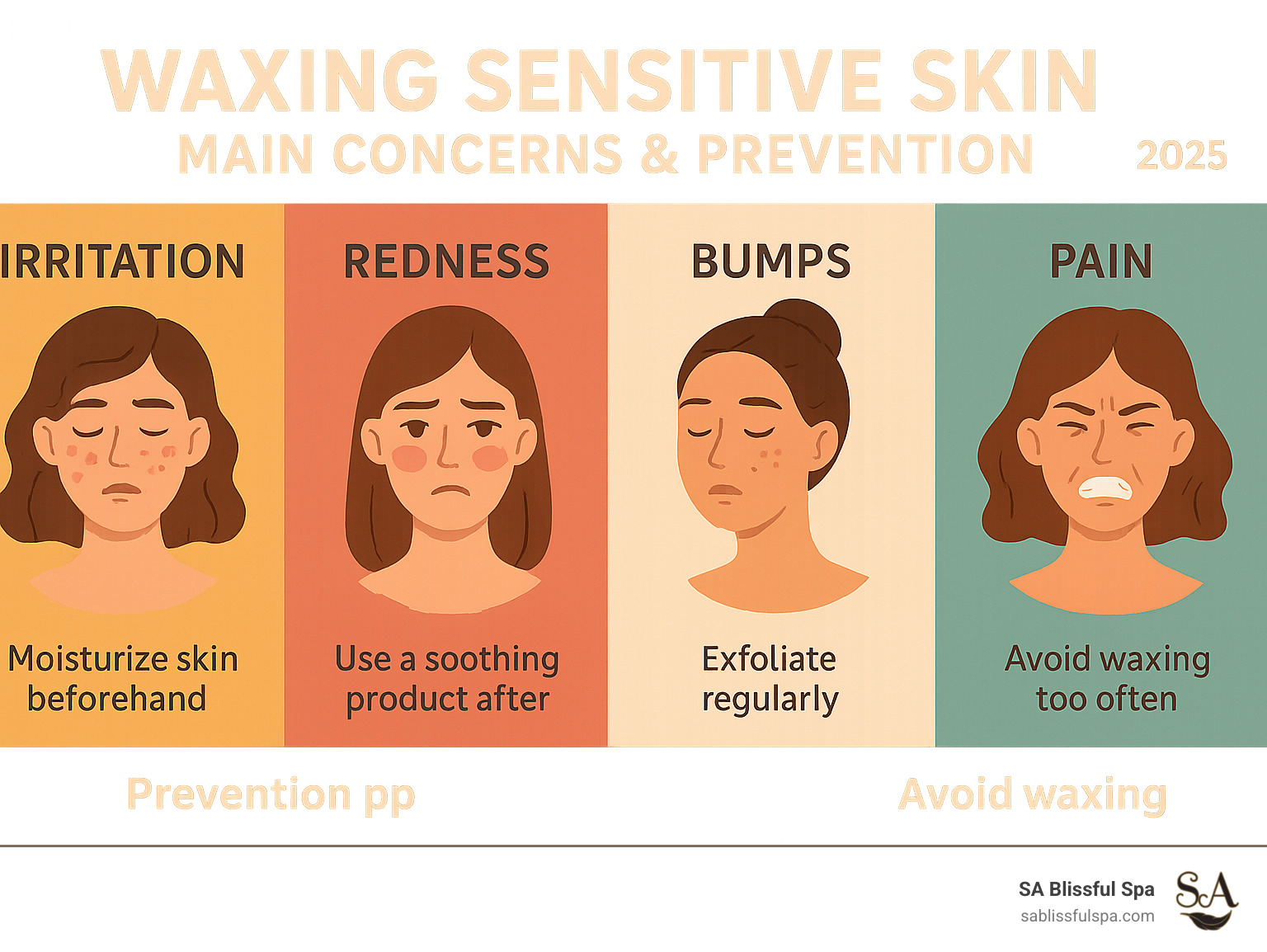
Infographic detailing main concerns of waxing sensitive skin: irritation, redness, bumps, and pain, with tips for prevention - is face waxing safe for sensitive skin infographic

Understanding Sensitive Skin and Why Waxing is a Concern

Sensitive skin isn’t a “type” like oily or dry, but a condition where the skin is hyper-reactive. Its protective barrier is weaker, making it prone to irritation, redness, itching, or stinging from various triggers.

This condition is very common, with about 44.6% of Americans reporting their skin is sensitive. It can be caused by genetics, harsh skincare products, environmental factors like pollution, or health conditions like eczema and rosacea. Certain medications can also increase skin sensitivity.

This is especially relevant for facial waxing because the skin on our face is naturally thinner and has more nerve endings than elsewhere on the body. Areas like the upper lip, eyebrows, and chin are particularly delicate. When a compromised skin barrier meets a delicate area, the risk of irritation from waxing increases. This is why knowing if is face waxing safe for sensitive skin depends entirely on using the correct approach.

At SA Blissful Spa, we understand the importance of gentle care for sensitive skin. We offer specialized treatments designed for you. Learn more about our facials: More info about our facials.

microscopic view of a healthy vs. compromised skin barrier - is face waxing safe for sensitive skin

What are the signs of sensitive skin?

Recognizing the signs of sensitive skin is the first step to proper care. Common signals include:

  • Redness: Flushed areas or blotches.
  • Itching or Stinging: An urge to scratch or a sharp, tingly feeling.
  • Burning Sensations: A warm, uncomfortable feeling.
  • Dry Patches: Rough, flaky, or tight areas.
  • Rashes or Bumps: Small, irritated spots that appear after exposure to a trigger.
  • Tightness: A feeling that the skin is stretched.
  • Flaking: Visibly peeling or shedding skin.

These symptoms highlight why a gentle, personalized approach to all skincare, including hair removal, is so important.

Why is facial skin uniquely vulnerable during waxing?

The delicate nature of your face makes it extra vulnerable during waxing for several reasons:

  • Thinner Epidermis: The top layer of facial skin is much thinner than on your legs. Waxing removes hair and a bit of this top layer, which can be more intense on the face.
  • Dense Hair Follicles: Areas like the upper lip and chin have many hair follicles in a small space. Removing so many hairs at once affects a larger skin area.
  • Increased Irritation Risk: The combination of thin skin, numerous nerve endings, and the physical pull of wax can easily lead to redness, inflammation, and micro-tears. These tiny openings can allow bacteria to enter, potentially causing breakouts.
  • Post-Wax Sun Sensitivity: Freshly waxed skin has a temporarily weakened protective barrier. This makes it much more susceptible to sun damage and hyperpigmentation (dark spots). Always use sun protection after a wax.

Understanding these vulnerabilities is key to treating facial skin with the care it deserves, ensuring a safe and gentle waxing experience.

The Potential Side Effects of Face Waxing on Delicate Skin

It’s important to be aware of the potential side effects of face waxing, especially for sensitive skin. Some common reactions include:

  • Pain and Irritation: The physical act of hair removal can cause a temporary sting, redness, and inflammation.
  • Bumps and Breakouts: Small bumps, pimples, or folliculitis (inflamed hair follicles) can occur, often due to bacteria entering open pores. Poor hygiene, like “double-dipping” wax applicators, increases this risk.
  • Ingrown Hairs: Hair can become trapped under the skin as it regrows.
  • Minor Bleeding: Pinpricks of blood can occur as hair is pulled from the root.

For a detailed look at these concerns, see this article: Face Wax Side Effects: Sensitive Skin, Strips, and Damage to Your Skin .

Freshly waxed skin also has increased sun sensitivity, making it more vulnerable to sun damage and hyperpigmentation (dark spots). For concerns about this, read: Does Waxing Cause Dark Upper Lip?. While rare, there is a small risk of scarring if the skin is lifted or burned, highlighting the importance of proper technique.

Common Reactions vs. Allergic Reactions

Knowing the difference between a normal reaction and an allergic one is key.

Feature Common Post-Wax Reaction Allergic Reaction
Appearance Mild to moderate redness, temporary bumps/welts, slight swelling. Hives (itchy, raised red welts), severe redness, blistering, significant swelling, persistent rash that spreads or lasts beyond 24-48 hours.
Sensation Mild tenderness, slight stinging, fades quickly. Intense itching, burning, significant pain.
Duration Typically resolves within a few hours to 24 hours. Can worsen over time, last for days, or require medical attention.
Cause The physical act of hair removal; skin’s natural response. An immune response to a specific ingredient in the wax.

If you suspect an allergic reaction, consult a healthcare professional. A patch test can help prevent this.

How can waxing lead to ingrown hairs and breakouts?

Ingrown hairs and breakouts can occur for a few reasons:

  • Hair Breakage: If a hair breaks below the skin’s surface, it can curl back and become trapped as it grows.
  • Clogged Follicles: Dead skin cells and wax residue can clog follicles, trapping new hair growth.
  • Bacteria: Waxing creates tiny openings in the skin. Without proper hygiene, bacteria can enter these pores, leading to inflammation and breakouts. Proper aftercare is essential to prevent this.

The Ultimate Guide: Is Face Waxing Safe for Sensitive Skin When Done Right?

The answer to is face waxing safe for sensitive skin is yes—when done correctly. Smooth, irritation-free skin is possible with the right preparation, products, technique, and aftercare.

Patch testing is a non-negotiable first step. Apply a small amount of wax to a discreet area (like behind your ear) 24 hours before your session to check for adverse reactions.

We strongly recommend professional services over DIY kits. A trained professional uses proper techniques and hygiene standards (like no double-dipping applicators) to minimize risks like burns, skin lifting, and infection, which are higher with at-home waxing.

esthetician performing a patch test on a client's jawline - is face waxing safe for sensitive skin

What types of wax are best for sensitive facial skin?

Choosing the right wax is critical. Not all waxes are suitable for delicate facial skin.

  • Hard Wax: Often the best choice for sensitive areas. It adheres mainly to the hair, not the skin, reducing irritation. It also has a lower melting point, making it gentler.
  • Sugar Wax (Sugaring): A natural paste of sugar, lemon, and water. It’s applied against hair growth and removed with it, causing less trauma to the skin.
  • Cream-Based & Hypoallergenic Waxes: These are gentler than traditional honey-based waxes and are formulated to reduce the risk of allergic reactions.

Good Ingredients to Look For: Waxes with soothing ingredients like Chamomile, Aloe Vera, Azulene, Zinc Oxide, and plant oils are beneficial.

Ingredients to Avoid: Steer clear of waxes with artificial fragrances, dyes, and harsh chemicals. For sensitive facial skin, it’s best to avoid soft wax and pre-made wax strips, as they can be too aggressive and cause irritation.

How should sensitive skin be prepared before a face waxing session?

Proper prep is key to a smooth experience.

  • Gentle Exfoliation: Exfoliate 24-48 hours before waxing (not the day of) to remove dead skin cells.
  • Avoid Harsh Products: Stop using retinol, AHAs, BHAs, and prescription acne medications for several days to a week before your appointment. For Isotretinoin (Accutane), you must stop for at least six to twelve months.
  • Cleanse and Dry: On the day of your wax, use a mild, pH-balanced cleanser and ensure your skin is completely dry.
  • Moisturize Beforehand: Keep skin well-hydrated in the days leading up to your session, but don’t apply moisturizer right before.
  • Allow Hair Regrowth: Hair should be at least ¼ inch long (the size of a grain of rice) for the wax to grip properly.
  • Avoid Sun Exposure: Do not wax sunburnt or irritated skin. Avoid sun and tanning beds for several days prior.

Following these steps gives your skin the best chance for a calm, clean wax. For more details, see: Can You Wax Facial Hair?.

What techniques minimize irritation during face waxing?

A skilled esthetician uses specific techniques to minimize irritation:

  • Holding Skin Taut: This reduces pulling on the skin, minimizing discomfort and the risk of lifting.
  • Proper Application/Removal: Wax is applied in the direction of hair growth and removed swiftly, parallel to the skin (not upwards).
  • Working in Small Sections: This allows for more precision and reduces stress on the skin.
  • Avoiding Re-Waxing: A professional will not re-apply wax to the same area to prevent over-irritation.
  • Correct Wax Temperature: The wax should be comfortably warm, never hot, to prevent burns.

What is the proper aftercare to prevent adverse reactions?

Post-wax care is just as crucial as prep for soothing skin and preventing reactions.

post-wax care products like aloe vera gel and a cold compress - is face waxing safe for sensitive skin

  • Apply a Cold Compress: Immediately after, use a cold compress to reduce redness and inflammation.
  • Use Soothing Products: Apply an alcohol-free toner or gel with ingredients like aloe vera, witch hazel, or chamomile.
  • Avoid Heat, Sun, and Sweat for 24-48 Hours: Steer clear of hot showers, saunas, intense workouts, and direct sun.
  • Wear Broad-Spectrum SPF: Protect freshly waxed skin with SPF 30 or higher to prevent sun damage and hyperpigmentation.
  • Moisturize: Use a gentle, fragrance-free, non-comedogenic moisturizer.
  • Don’t Touch: Avoid touching the waxed area to prevent transferring bacteria.
  • Avoid Irritants: For at least 24 hours, skip products with perfumes or active ingredients like retinoids or AHAs.
  • Exfoliate Later: Gently exfoliate 48-72 hours after waxing to prevent ingrown hairs.

Diligent aftercare helps your skin recover quickly. For more on potential downsides, read: Disadvantages of Waxing Facial Hair.

When to Avoid Waxing and What to Try Instead

Knowing when to avoid waxing is just as important as knowing how to do it right. There are certain times and conditions where it’s best to choose another method.

calendar with certain days crossed out, symbolizing when to avoid waxing - is face waxing safe for sensitive skin

When is face waxing not safe for sensitive skin or certain conditions?

Your safety is our top priority. You should not wax your face if you have any of the following contraindications:

  • Active Skin Issues: Do not wax over active acne, open wounds, rashes, warts, sunburn, or severely irritated skin.
  • Certain Skin Conditions: Avoid waxing areas affected by an active flare-up of eczema, psoriasis, or rosacea.
  • Use of Certain Medications: This is crucial. Avoid waxing if you use:
    • Isotretinoin (Accutane): Discontinue for at least 6-12 months prior to waxing.
    • Topical Retinoids (Retin-A, Differin) or strong AHAs/BHAs: Stop use for at least a week before waxing.
    • Blood Thinners: These increase the risk of bruising.
  • Recent Skin Procedures: Wait until your skin has fully healed from chemical peels, microdermabrasion, or laser treatments.
  • Certain Health Conditions: Always disclose your full health history, including conditions like diabetes or circulatory issues, to your esthetician.

We are committed to your well-being and offer specialized care for unique needs, including More about our oncology-safe skincare.

What are gentler alternatives to face waxing for sensitive skin?

If waxing isn’t right for you, consider these gentler alternatives:

  • Trimming: Using small facial scissors is a non-irritating option for fine hairs.
  • Dermaplaning: A facial razor can remove fine hair and exfoliate, but requires a gentle touch.
  • Tweezing: Ideal for removing individual stray hairs with precision.
  • Threading: Uses a cotton thread to remove hair from the follicle. It’s chemical-free but can be painful for some.
  • Sugaring: Often gentler than waxing as the paste adheres less to the skin.
  • Laser Hair Removal: A long-term solution that targets the hair follicle. It requires multiple sessions and is a significant investment.
  • Depilatory Creams: These dissolve hair but can be very irritating due to chemicals. Always patch test first.

Always consult a skincare professional to find the best method for your sensitive skin.

Frequently Asked Questions About Sensitive Skin Face Waxing

Here are answers to common questions about whether is face waxing safe for sensitive skin.

How can I tell if my skin is too sensitive for face waxing?

The best way is to perform a patch test. Have your esthetician apply a small amount of wax to a discreet area, like behind your ear or on your jawline. Wait 24 hours to see if a reaction occurs. Severe redness, swelling, hives, blistering, or intense itching are signs that waxing may be too harsh for your skin. If you have a diagnosed condition like severe rosacea or eczema, or your skin is generally very reactive, consult a dermatologist or experienced esthetician first.

Is it better to get a professional wax or do it at home for sensitive skin?

For sensitive skin, we always recommend a professional wax. An esthetician has the expertise to choose the right products and use the correct technique to minimize pain and irritation. Professionals also adhere to strict hygiene standards, like no double-dipping, to prevent infections. DIY kits carry a much higher risk of burns, skin lifting, and breakouts. Your delicate facial skin deserves expert care.

Learn more about what to expect from a professional session: Face Waxing for Women.

Just a quick note on pricing: while we can’t share our specific costs here, we can tell you that based on general internet data, professional facial waxing prices can vary quite a bit. For example, upper lip waxing might range from $10 to $60+, eyebrow waxing from $15 to $90+, and a full face wax could be anywhere from $40 to $240+. These are just average ranges found online and not our actual costs at SA Blissful Spa.

How long does the redness last after waxing sensitive skin?

Redness after waxing sensitive skin is normal and typically subsides within a few hours to 24 hours. The duration depends on your individual skin sensitivity, the technique used, the type of wax, and your aftercare. Applying a cold compress and soothing gels can help redness fade faster.

If redness persists beyond 48 hours, worsens, or is accompanied by severe pain, swelling, or signs of infection, consult a healthcare professional immediately.

Your Path to a Smooth, Irritation-Free Experience

So, is face waxing safe for sensitive skin? We hope this guide has shown you that with the right approach, a smooth, irritation-free result is entirely possible.

The key takeaway is that safety and success depend on knowledge, proper preparation, the right products (like hard wax), expert technique, and diligent aftercare. It’s about treating your delicate skin with the respect it deserves. We’ve covered the best practices, what to avoid, and gentler alternatives for when waxing isn’t the right choice.

Listening to your skin is paramount. While DIY waxing is an option, for guaranteed safety and the best results on sensitive skin, seeking professional help is the smartest choice.

At SA Blissful Spa, our professionals are trained to handle sensitive skin with the utmost care, ensuring a serene and customized experience. We believe you can achieve radiant, smooth skin without compromising its health.

Ready to experience the difference that professional expertise can make?

Book your professional hair removal service with us today!

 

is face waxing safe for sensitive skin

Table Of Contents

Unwind. Rejuvenate. Repeat.
Let us pamper you from head to toe— book your appointment and discover true tranquility.
Footer Logo
A place to relax, renew and be pampered. Allow tranquility to embrace you as you enter our blissful oasis of comfort. We are here, committed to fulfilling your every need.
Spa Hours
Monday: Closed
Tuesday: 10AM – 8PM
Wednesday: 10AM – 8PM
Thursday: 10AM – 8PM
Friday: 9AM – 7PM
Saturday: 9AM – 5PM
Sunday: 10AM – 5PM
Company
280 Cambridge St.,
Burlington, MA, 01803
BACC Logo
Copyright © 2026 | All Rights Reserved | SA Blissful Spa | Page List | Digital Marketing by AQ Marketing