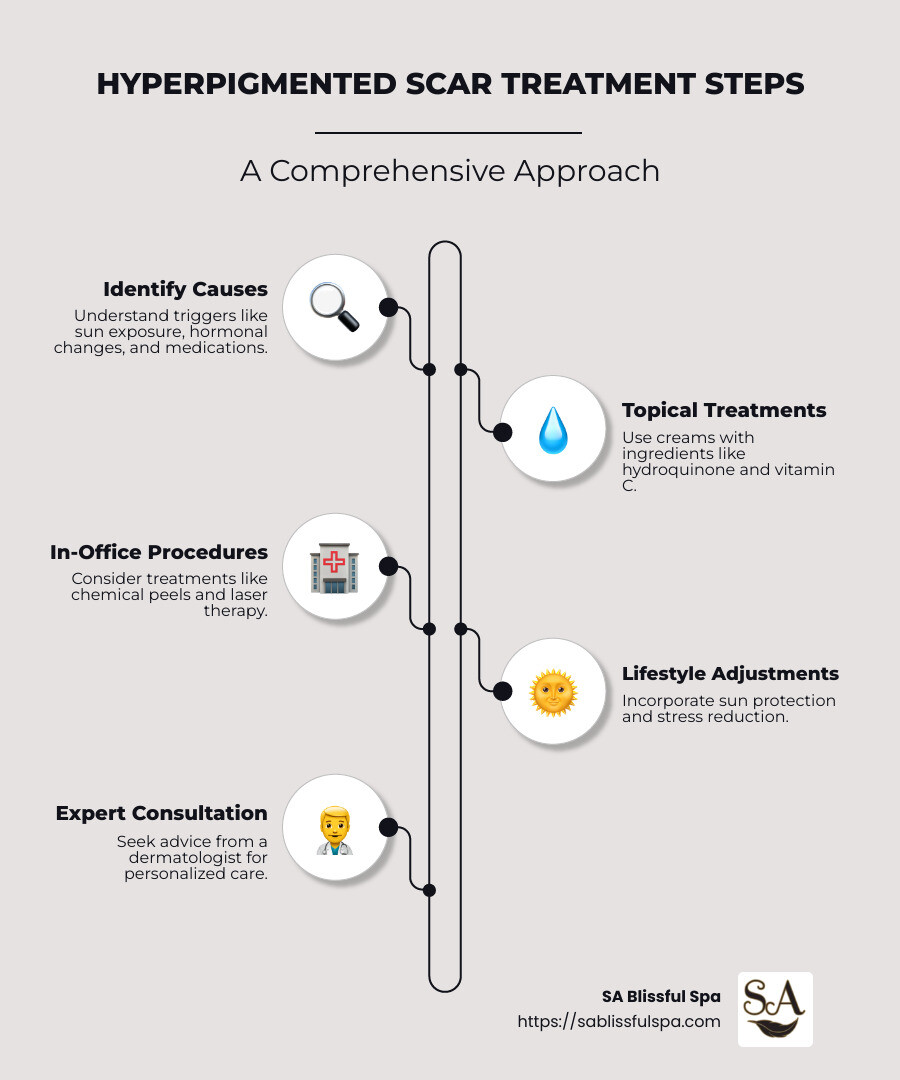
Hyperpigmented scar treatment is a journey toward reclaiming bright and even-toned skin. Hyperpigmentation occurs when an area of your skin becomes darker than the rest due to the overproduction of melanin—a natural pigment. Here’s a quick look at how you can tackle those stubborn scars:
As the founder of SA Blissful Spa and an experienced esthetician, I specialize in hyperpigmented scar treatment. With a commitment to enhancing natural beauty, I provide expert care using advanced and personalized treatments to meet individual skin needs.
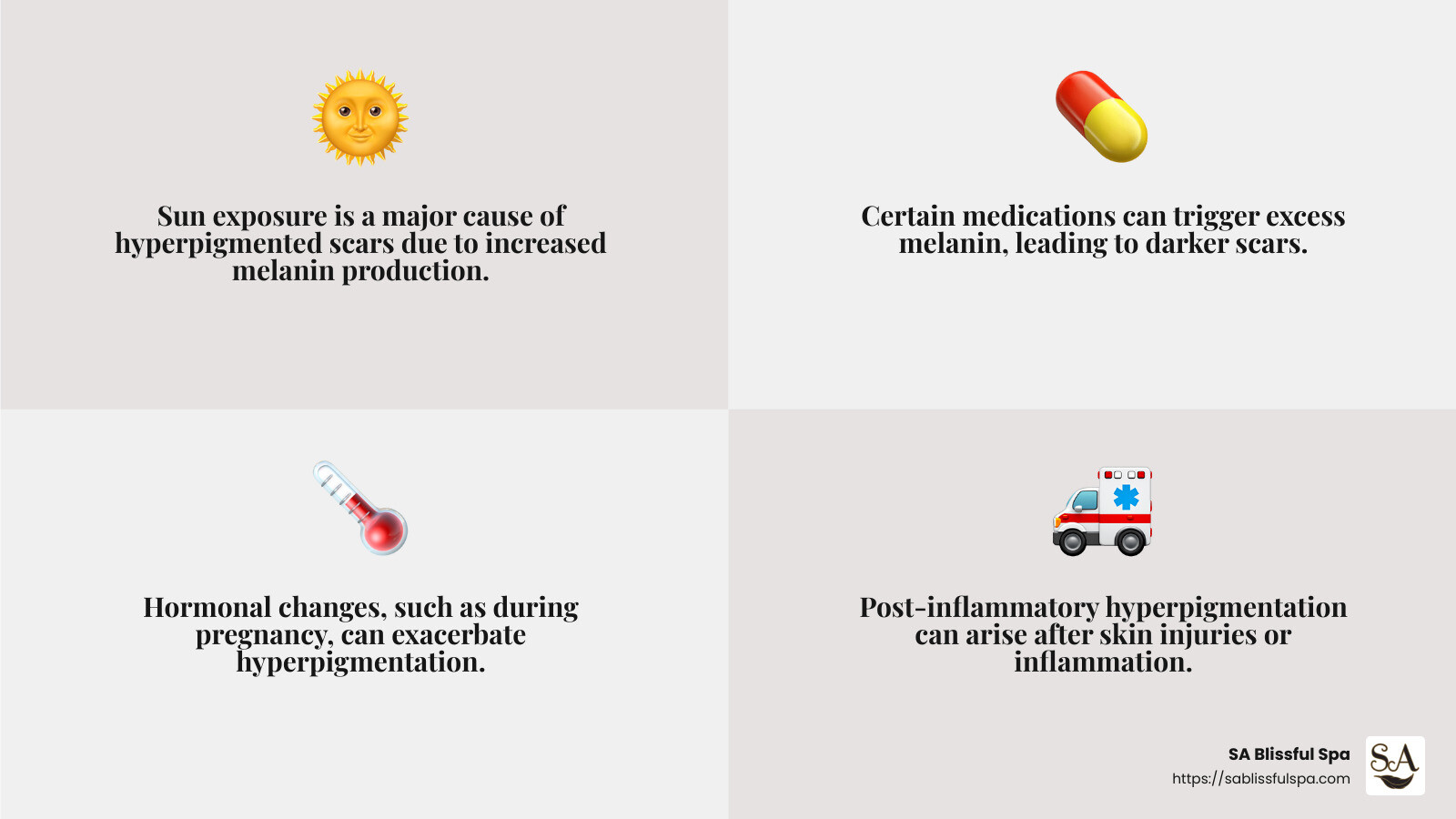
Hyperpigmented scars are a common skin concern that many people face. These scars result from an excess production of melanin, the pigment responsible for the color of our skin, hair, and eyes. When melanin production goes into overdrive, it can lead to dark patches on the skin, particularly noticeable on scars. Let’s explore the main factors that contribute to hyperpigmented scars:
Melanin is produced by cells called melanocytes, which reside in the skin’s outer layer. Various factors can trigger these cells to produce more melanin, leading to hyperpigmentation. While melanin acts as a natural sunscreen by absorbing harmful UV rays, too much of it can create uneven skin tone and dark spots.
Post-inflammatory hyperpigmentation is a common type of hyperpigmentation. It occurs when the skin darkens after an injury or inflammation, such as acne or a cut. The skin’s healing process can sometimes lead to an overproduction of melanin, resulting in dark spots that can linger for months or even years.
Sun exposure is a significant contributor to hyperpigmented scars. UV rays stimulate melanin production, which can darken existing scars and create new dark spots, often referred to as sun spots or age spots. This is why wearing sunscreen is crucial in preventing and managing hyperpigmentation.
Hormonal fluctuations, particularly during pregnancy or with the use of certain birth control pills, can lead to a type of hyperpigmentation known as melasma. This condition causes dark, blotchy patches on the skin, often on the face. Hormones can increase melanin production, making hyperpigmented scars more pronounced.
Certain medications can also cause hyperpigmentation as a side effect. Drugs such as some antibiotics, chemotherapy agents, and anti-seizure medications can lead to increased melanin production in the skin. If you notice darkening of scars after starting a new medication, discuss this with your healthcare provider.
Understanding these factors is the first step in effectively managing and treating hyperpigmented scars. By identifying the root causes, we can better tailor treatments to reduce their appearance and prevent new ones from forming. In the next section, we’ll explore topical treatments that can help lighten these stubborn dark spots.
Dealing with hyperpigmented scars can be frustrating, but topical treatments offer a promising way to lighten those dark spots over time. Let’s explore some of the most effective options:
Hydroquinone is a popular skin-lightening agent known for its ability to reduce melanin production. This ingredient works by inhibiting the enzyme tyrosinase, which plays a crucial role in melanin synthesis. Many people use hydroquinone creams to fade dark spots and even out skin tone. However, use this treatment under the guidance of a dermatologist to avoid potential side effects like irritation or further discoloration.
Derived from fungi, kojic acid is a natural ingredient often used in skincare products for its melanin-inhibiting properties. It’s particularly effective for treating hyperpigmented scars because it helps to prevent the formation of new melanin, reducing the appearance of dark spots. Kojic acid is a gentle alternative for those with sensitive skin who may not tolerate stronger treatments like hydroquinone.
Azelaic acid is both an anti-inflammatory and a depigmentation agent, making it a versatile option for treating hyperpigmented scars. It helps to calm inflammation and reduce melanin production, which can be especially beneficial for those dealing with post-inflammatory hyperpigmentation (PIH) from acne. Azelaic acid is generally well-tolerated and can be a great addition to your skincare routine.
Retinoids are vitamin A derivatives that promote cell turnover and deep penetration into the skin. By accelerating the shedding of old skin cells and encouraging the growth of new ones, retinoids can help fade hyperpigmented scars over time. They also boost collagen production, which can improve the overall texture and tone of the skin. Retinoids are powerful, so it’s important to start with a lower concentration and gradually increase usage to minimize irritation.
Known for its brightening and antioxidant properties, vitamin C is an excellent choice for reducing hyperpigmented scars. It helps to neutralize free radicals and inhibit melanin production, leading to a more even skin tone. Vitamin C serums are a popular option for those looking to brighten their complexion and protect their skin from further damage.
Using these topical treatments consistently and as directed can lead to gradual improvement in the appearance of hyperpigmented scars. It’s important to be patient, as these treatments can take time to show noticeable results. Always remember to pair these treatments with daily sunscreen use to protect your skin and improve the effectiveness of the products.
In the next section, we’ll dig into in-office procedures that offer more intensive solutions for hyperpigmented scars.
When topical treatments aren’t enough, in-office procedures can provide more intensive solutions for hyperpigmented scars. These treatments often require professional expertise and specialized equipment, offering a range of options to address stubborn pigmentation.
Chemical peels are a popular choice for treating hyperpigmented scars. They work by applying a chemical solution to the skin, which exfoliates the damaged outer layers. This process encourages the growth of new, healthier skin. Alpha hydroxy acids (AHAs), beta hydroxy acids (BHAs), and trichloroacetic acid (TCA) are commonly used in these peels. Each type targets different skin concerns, from mild exfoliation to deeper resurfacing. Chemical peels can improve the appearance of sun spots, age spots, and acne scars.
Microdermabrasion is a non-invasive procedure that gently removes the epidermis, or outermost layer of the skin. It’s especially effective for superficial scarring and minor pigmentation issues. This treatment involves using a device with fine crystals or a diamond tip to exfoliate the skin, promoting cell turnover and revealing a fresher, more even complexion. Microdermabrasion is a great option for individuals seeking a quick recovery and minimal discomfort.
Laser treatments are a powerful option for more severe hyperpigmentation. Ablative lasers remove layers of skin, while non-ablative lasers stimulate collagen growth without damaging the surface. Both types can be effective, depending on the severity of the scars and the patient’s skin type. Laser therapy can target specific areas, breaking down excess melanin and promoting the production of new collagen, which helps in smoothing and rejuvenating the skin.
Intense Pulsed Light (IPL) therapy, also known as a photofacial, uses broad-spectrum light to target pigmentation. This treatment is less intense than laser therapy and works by penetrating the skin to break down melanin deposits. IPL not only addresses pigmentation but also stimulates collagen production, which can improve skin texture and elasticity. It’s a versatile option for those looking to improve overall skin tone and reduce the appearance of hyperpigmented scars.
Microneedling involves creating tiny punctures in the skin using fine needles. This process stimulates the body’s natural healing response, promoting collagen production and breaking down scar tissue. As new collagen forms, the skin becomes smoother and more even-toned. Microneedling can be particularly effective for treating both hyperpigmentation and the textural issues associated with scarring.
These in-office procedures provide more immediate and dramatic results compared to topical treatments alone. However, they often require multiple sessions and should be performed by experienced professionals to ensure safety and effectiveness. As with any treatment, it’s important to discuss your options with a qualified dermatologist or skincare specialist to determine the best approach for your individual needs.
Next, we’ll explore home remedies and over-the-counter options that can complement these professional treatments.
For those looking to tackle hyperpigmented scars at home, there are several effective options available. These remedies can be a good starting point or complement to professional treatments.
Face acids are a popular choice for gently exfoliating the skin and promoting cell turnover. Glycolic acid, lactic acid, and salicylic acid are common options that help remove dead skin cells, revealing brighter and more even-toned skin underneath.
Over-the-counter (OTC) retinoids are derived from vitamin A and are known for their ability to boost cell turnover and improve skin texture. Products like Differin Gel and retinol can help fade hyperpigmented scars over time.
Lightening creams are designed to target specific areas of hyperpigmentation, using ingredients that inhibit melanin production.
These home remedies and OTC products can be effective for mild to moderate hyperpigmentation. However, they require patience and consistent use to see noticeable results. Always patch-test new products to ensure they are suitable for your skin type and consult with a dermatologist if you have any concerns.

Up next, we’ll dive into frequently asked questions about hyperpigmented scar treatment to address common concerns and provide further guidance.
Yes, post-inflammatory hyperpigmentation (PIH) from scars can fade over time. The fading process varies depending on factors like skin type, the severity of the hyperpigmentation, and sun exposure. Mild cases might resolve in a few months, while more stubborn spots could take years to fade.
However, some cases of hyperpigmentation might be more persistent. It’s crucial to use sun protection to prevent further darkening and to consider treatments that can speed up the fading process.
Treating hyperpigmented scars involves a combination of topical treatments and professional procedures. Topical creams with ingredients like hydroquinone, kojic acid, azelaic acid, retinoids, and vitamin C can help lighten dark spots by reducing melanin production and promoting skin cell turnover.
For more pronounced scars, in-office procedures like chemical peels, laser treatments, and microneedling can offer more dramatic results. Chemical peels, such as those with alpha hydroxy acids (AHAs), beta hydroxy acids (BHAs), and trichloroacetic acid (TCA), help remove the outer layer of skin, revealing fresher, more evenly toned skin beneath.
The best treatment for pigmentation scars often depends on the individual’s skin type and the severity of the hyperpigmentation. For many, a combination of treatments yields the best results.
Consulting with a dermatologist is recommended to tailor a treatment plan that best fits your needs. They can provide guidance on combining treatments for optimal results, ensuring you achieve clearer, more even-toned skin.
At SA Blissful Spa, we believe in providing personalized care and expert treatments to help you achieve clear, radiant skin. Our experienced team understands that each individual’s skin is unique, and we tailor our treatments to meet your specific needs. Whether you’re dealing with hyperpigmented scars or other skin concerns, we’re here to guide you on your journey to healthier skin.
Sun protection is a crucial part of managing hyperpigmentation. Regular use of sunscreen can prevent further darkening and protect your skin from harmful UV rays. We recommend incorporating SPF into your daily routine to maintain the results of any treatments you undergo.
Patience is key when treating hyperpigmented scars. While some treatments offer quicker results, others may take time to show significant improvement. It’s important to stay consistent with your skincare routine and follow the advice of your dermatologist.
Consulting with a dermatologist can provide valuable insights into the best treatment options for your skin type. They can help you steer the various treatments available, from topical creams to in-office procedures, ensuring you achieve the best possible results.
Find the benefits of our clinical medi-facials at SA Blissful Spa and experience the difference personalized care can make. Let us help you achieve the clear, beautiful skin you deserve.