Dealing with hyperpigmentation can be frustrating, but finding the best treatment for hyperpigmentation scars doesn’t have to be complicated. Whether you’re battling age spots, melasma, or post-inflammatory changes, a range of effective treatments exists:
Hyperpigmentation can result from many causes, such as sun exposure and hormonal changes. While it’s often harmless, it can affect one’s confidence. The right treatment can help reduce its appearance, so you can feel comfortable in your skin.
I’m Saloni Bhandari, the founder of SA Blissful Spa. As an experienced esthetician specializing in skincare, I’ve helped countless clients find their best treatment for hyperpigmentation scars. I look forward to sharing insights and solutions that improve your natural beauty and bring out your skin’s radiance.
Basic best treatment for hyperpigmentation scars terms:
– hyperpigmentation scar removal
– hyperpigmented scar treatment
Hyperpigmentation scars are the result of excess melanin production, which leads to skin discoloration. Melanin is the pigment that gives your skin its color. When your skin produces too much melanin, it can create dark patches or spots. These spots are often referred to as hyperpigmentation scars.
Common Causes of Hyperpigmentation Scars
While hyperpigmentation scars are usually harmless, they can sometimes signal underlying health issues. For example, Addison’s disease can cause increased pigmentation. If you’re concerned about changes in your skin, it’s always best to consult with a healthcare professional.
Understanding the cause of your hyperpigmentation is the first step in finding the most effective treatment. Whether it’s sun exposure or hormonal changes, identifying the trigger can help you choose the right approach to manage and reduce these scars.
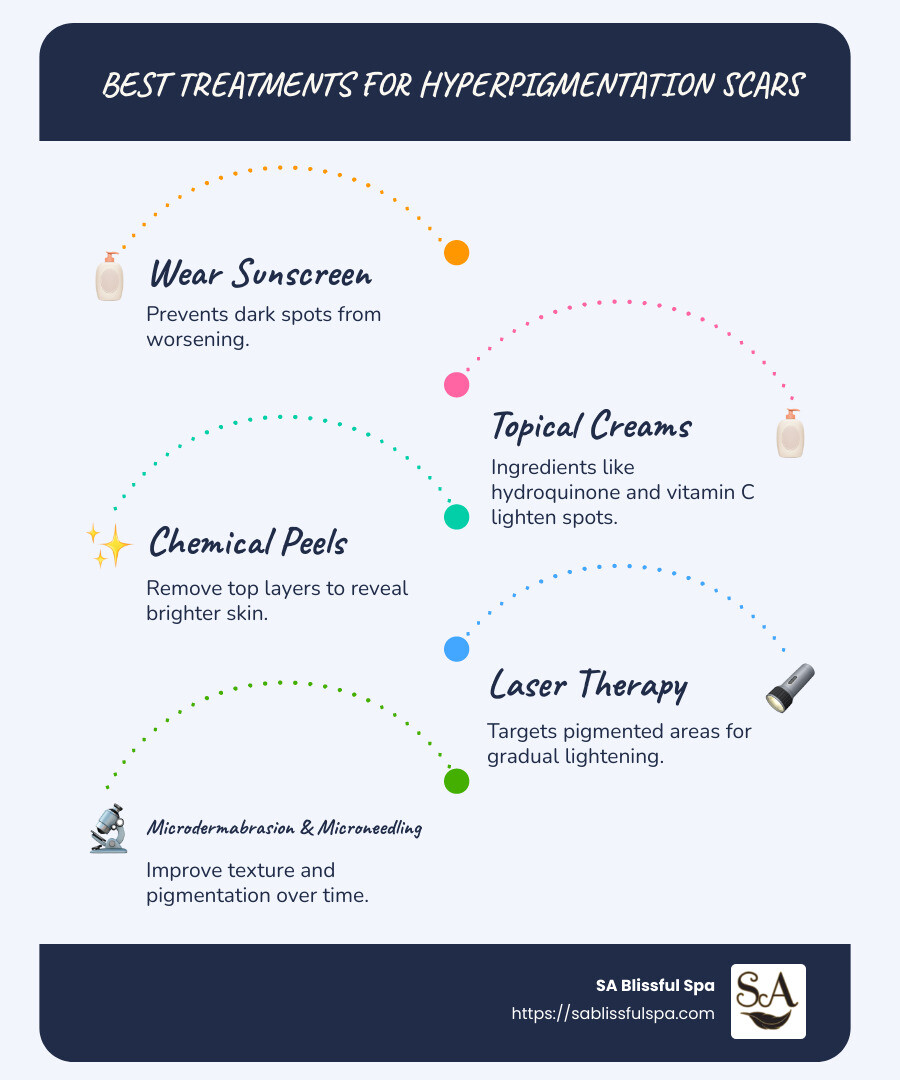
When it comes to the best treatment for hyperpigmentation scars, there are several effective options available. These treatments range from topical applications to advanced procedures, each targeting the excess melanin that causes dark spots. Let’s explore some of the most effective treatments:
Topical treatments are often the first line of defense against hyperpigmentation scars. They include:
Chemical peels are another popular treatment option. They use acids to exfoliate the skin, removing the top layer to reveal a more even complexion.
Laser treatments are advanced options for stubborn hyperpigmentation scars. They target and break down melanin deposits in the skin.
Microdermabrasion is a minimally invasive procedure that exfoliates the skin, helping to reduce superficial scarring.
Microneedling involves using fine needles to create tiny punctures in the skin, stimulating the body’s natural healing process.
Each of these treatments has its own benefits and considerations. It’s essential to consult with a skincare professional to determine the most suitable option for your skin type and the severity of your hyperpigmentation scars.
If you’re looking for natural ways to deal with hyperpigmentation scars, there are several home remedies that might help. These remedies use everyday ingredients that are known for their skin-lightening properties. Let’s explore some of the most popular options:
Aloe vera is a soothing gel known for its healing properties. It contains aloesin, a compound that may help lighten hyperpigmentation by reducing melanin production. For best results, apply fresh aloe vera gel directly to the scars at night and wash it off in the morning.
Red onion, or Allium Cepa, is often found in skin-lightening creams. It’s effective in reducing dark spots over time. You can try using creams with red onion extract or create a homemade paste to apply to the affected areas.
Apple cider vinegar is rich in acetic acid, which can lighten pigmentation. Mix equal parts of apple cider vinegar and water, apply to the dark spots, leave it on for a few minutes, and rinse off. Use this remedy twice daily for best results.
Black tea is not just for drinking; it can also help with hyperpigmentation. Soak a cotton pad in cooled black tea and apply it to the scars twice a day. This remedy might take a few weeks to show results.
Green tea contains EGCG, an antioxidant that can help lighten dark patches. Use cooled green tea bags as a compress on the affected areas twice daily to gradually reduce pigmentation.
Tomatoes are rich in lycopene, an antioxidant that protects against sun damage and helps even out skin tone. Apply tomato paste to the scars, leave it on for 20 minutes, then rinse off. Regular use can lighten dark spots.
Red lentils are packed with antioxidants and can be used as a natural bleaching agent. Make a paste by soaking red lentils overnight, then blend them. Apply the paste for 20 minutes and rinse off gently. Use regularly for noticeable effects.
Lactic acid in milk is effective for lightening dark spots. Soak a cotton pad in milk and apply it to the scars twice a day. This gentle remedy can gradually reduce pigmentation.
Licorice extract contains glabridin, which inhibits the enzyme responsible for pigmentation. Look for creams with licorice extract or make a homemade mask to apply to the affected areas.
While these home remedies offer a natural approach to treating hyperpigmentation scars, results can vary. It’s important to test any new treatment on a small patch of skin first to ensure there’s no irritation. For persistent or severe hyperpigmentation, consulting with a dermatologist is always a good idea.
Choosing the best treatment for hyperpigmentation scars depends on your skin type and the severity of the scars. Chemical peels are a popular choice, using acids like Alpha Hydroxy Acids (AHAs) and Beta Hydroxy Acids (BHAs) to remove dead skin cells and lighten dark spots. Trichloroacetic Acid (TCA) peels offer a deeper exfoliation, promoting the growth of new, even-toned skin.
Topical creams are another effective option. Hydroquinone, kojic acid, azelaic acid, and retinoids are well-known for their ability to reduce pigmentation. These creams work by inhibiting melanin production or speeding up cell turnover, leading to a brighter complexion.
Treating hyperpigmented scars involves a combination of professional treatments and at-home care. Chemical peels, as mentioned, are excellent for exfoliating the skin and encouraging new cell growth. AHAs and BHAs are particularly effective for mild to moderate pigmentation.
For those who prefer topical solutions, creams with active ingredients like hydroquinone or kojic acid can be applied directly to the scars. These ingredients help lighten dark spots by targeting excess melanin production. Retinoids, derived from vitamin A, are also beneficial as they promote skin renewal and can improve the effects of other treatments.
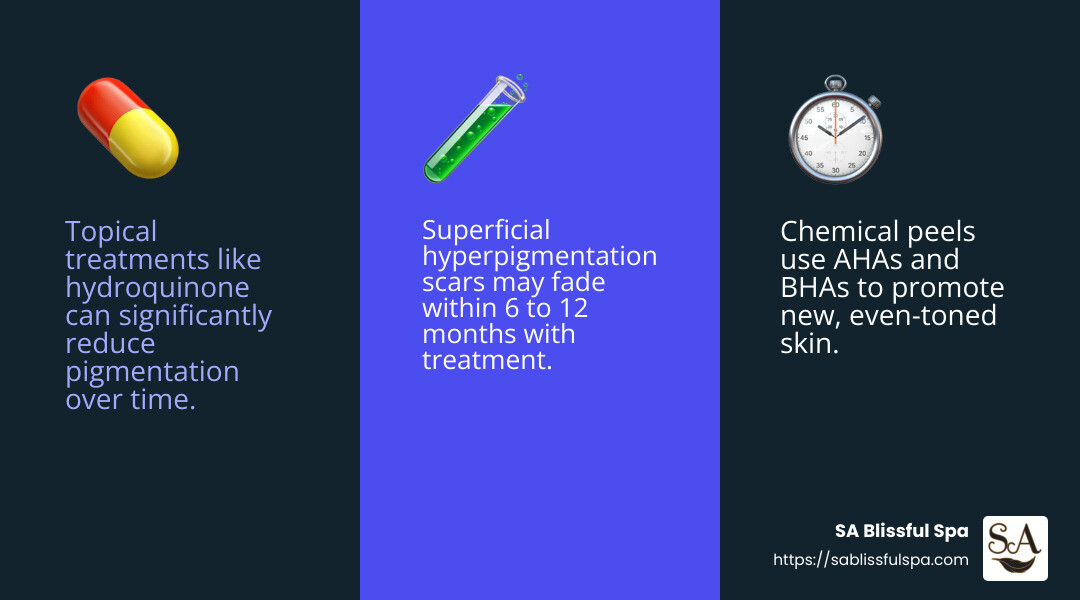
The fading of hyperpigmentation scars largely depends on the depth and cause of the pigmentation. Superficial scars, which are closer to the skin’s surface, may fade within 6 to 12 months with consistent treatment. However, deeper pigmentation can take years to diminish.
Contrast and permanence are key considerations. Scars that are only a few shades darker than your natural skin tone are more likely to fade completely over time. In contrast, scars with deeper, darker pigmentation may not disappear entirely but can be significantly lightened with the right treatments.
For those seeking faster results, professional treatments like laser therapy or microneedling can accelerate the fading process by stimulating collagen production and promoting healthy skin regeneration.
At SA Blissful Spa, we believe that achieving radiant, even-toned skin is not just about treatments—it’s about personalized care and expertise that cater to your unique needs. Our team is dedicated to providing the best treatment for hyperpigmentation scars, leveraging advanced techniques and high-quality products to improve your skin’s health and beauty.
Our approach is centered on understanding your skin’s specific requirements. Whether you’re dealing with stubborn dark spots or mild discoloration, our custom treatments can help you achieve the results you desire. From chemical peels that refresh your skin to microneedling sessions that boost collagen production, we offer a range of solutions designed to improve your skin’s texture and tone.
By choosing SA Blissful Spa, you’re not just opting for a service—you’re embracing a journey towards healthier, more beautiful skin. Our serene environment and professional care ensure that each visit is a step towards achieving your skincare goals. We are committed to helping you unveil your skin’s natural glow with treatments that are as relaxing as they are effective.
If you’re ready to experience personalized care and expert treatments, schedule your appointment with us today. Let us guide you towards the skin health and beauty you deserve.