Back peel for hyperpigmentation is a specialized chemical treatment that uses acids to remove damaged skin layers and fade dark spots, sun damage, and acne marks on your back. These professional peels can improve hyperpigmentation by 75-85% for many clients through a series of treatments.
Quick Answer for Back Peel for Hyperpigmentation:
– Best peels: Glycolic acid, lactic acid, salicylic acid, or TCA
– Sessions needed: 3-5 treatments spaced 6 weeks apart
– Results timeline: Visible improvement in 7-14 days
– Cost range: $150-$400 for light peels, $600-$4,500+ for deeper treatments (average internet pricing)
– Recovery: 1-14 days depending on peel depth
– Best candidates: Those with dark spots, acne scars, or sun damage on healthy skin
If you’ve ever avoided tank tops or backless dresses because of dark spots on your back, you’re not alone. Many busy professionals struggle with back hyperpigmentation from acne scars, sun exposure, or hormonal changes. The good news? Chemical peels offer a proven path to clearer, more even-toned skin.
Unlike your face, your back has thicker skin that can often handle stronger treatments. This means potentially faster and more dramatic results when done properly by a trained professional.
I’m Saloni Bhandari, an experienced esthetician and founder of SA Blissful Spa with extensive training in chemical peel treatments. I’ve helped countless clients achieve clearer backs through customized back peel for hyperpigmentation protocols custom to their unique skin needs and goals.
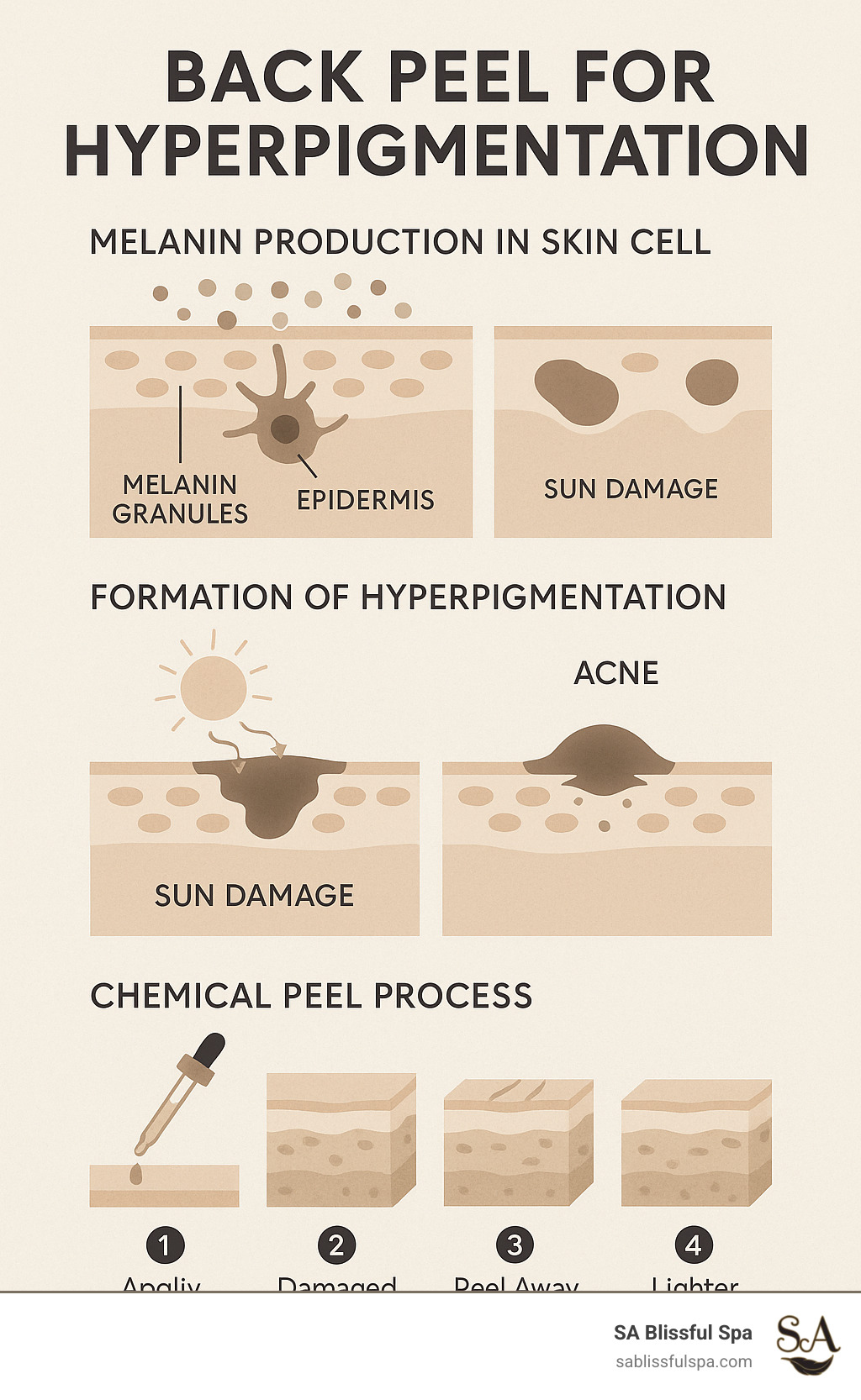
Think of a back peel for hyperpigmentation as a controlled reset button for your skin. These treatments work by applying carefully selected acid solutions that dissolve the bonds holding damaged, pigmented skin cells together. As these old layers shed away, fresh, evenly-toned skin emerges from underneath.
Your back’s thicker skin can often handle stronger treatments than your delicate facial skin, which means we can sometimes achieve more dramatic results. The key is choosing the right type and strength of peel for your specific skin type and pigmentation concerns.
Light peels use gentler acids like glycolic acid (the smallest molecule that penetrates deeply), lactic acid (perfect for sensitive skin), or salicylic acid (excellent for acne-related dark spots). These treatments require minimal downtime but may need more sessions to achieve your goals.
Medium-depth peels typically use trichloroacetic acid (TCA) or stronger glycolic blends. They penetrate deeper into the skin, offering more dramatic results but with increased peeling and recovery time.
Deep peels use phenol and create the most significant change, but they require medical supervision and extensive downtime. Most back hyperpigmentation responds beautifully to light or medium peels without needing this intensive approach.
Post-inflammatory hyperpigmentation (PIH) is the most common culprit behind those stubborn dark spots on your back. This happens when acne breakouts trigger your skin to produce excess melanin as it heals. Sun damage and hormonal changes can also create uneven pigmentation that makes you want to cover up.
Understanding your Fitzpatrick skin type is crucial for safe, effective treatment. If you have darker skin (Types IV-VI), you’re more prone to developing dark marks, but you also need extra care to avoid complications. That’s why a thorough consultation is so important before any treatment.
Scientific research shows that chemical peels can be highly effective for treating hyperpigmentation when performed with proper protocols and appropriate patient selection. The key is working with an experienced professional who understands how to customize treatments for your unique skin.
You’re likely a great candidate for a back peel for hyperpigmentation if you’re dealing with dark spots from old acne breakouts, sun damage showing up as brown patches, or acne scars with lingering discoloration. The most important requirement is having a healthy skin barrier without active infections or severe inflammation.
We also look for clients who have realistic expectations about the process and results. This isn’t a one-and-done treatment, and you’ll need to commit to proper sun protection both during treatment and long-term maintenance.
You might not be ready for a back peel if you have active acne with open wounds, have used certain medications like isotretinoin recently, are pregnant or breastfeeding, or have a history of keloid scarring. Recent sun exposure or tanning also means we’ll need to wait until your skin has recovered.
During your consultation at SA Blissful Spa, we’ll thoroughly assess your skin and discuss whether you’re a good candidate for treatment.
Most clients need 3-5 treatments spaced about 4-6 weeks apart to see optimal results from their back peel for hyperpigmentation series. This spacing gives your skin time to fully heal between sessions while building those cumulative brightening effects we’re after.
Here’s the realistic timeline: after your first treatment, you’ll notice an initial glow and smoother texture. By your second or third session, lighter spots start fading noticeably. After 4-5 treatments, most clients see significant improvement in their overall skin tone and texture.
Many people start seeing visible changes within 7-10 days of their first treatment, though deeper, more stubborn pigmentation takes patience. The good news? Each treatment builds on the last, so your results keep improving throughout the series.
Once you’ve completed your initial series, yearly touch-up treatments help maintain your beautiful results and keep new pigmentation from forming.

Choosing the right peel for your back peel for hyperpigmentation treatment isn’t a one-size-fits-all decision. Your skin type, the severity of your dark spots, and how much downtime you can handle all play important roles in finding your perfect match.
The good news? Your back skin is typically thicker and more resilient than your facial skin, which means it can often handle stronger treatments. But that doesn’t mean we should go full throttle right away – starting conservatively and building up is always the smarter approach.
Understanding the difference between AHAs and BHAs is key to making the right choice. Alpha hydroxy acids like glycolic and lactic acid work on the skin’s surface to brighten and smooth. Beta hydroxy acids like salicylic acid dive deeper into pores, making them perfect if you’re dealing with both acne and the dark marks it leaves behind.
For more stubborn pigmentation, TCA (trichloroacetic acid) offers stronger results, while phenol peels are reserved for the most dramatic changes – though these require serious medical supervision and aren’t something to take lightly.
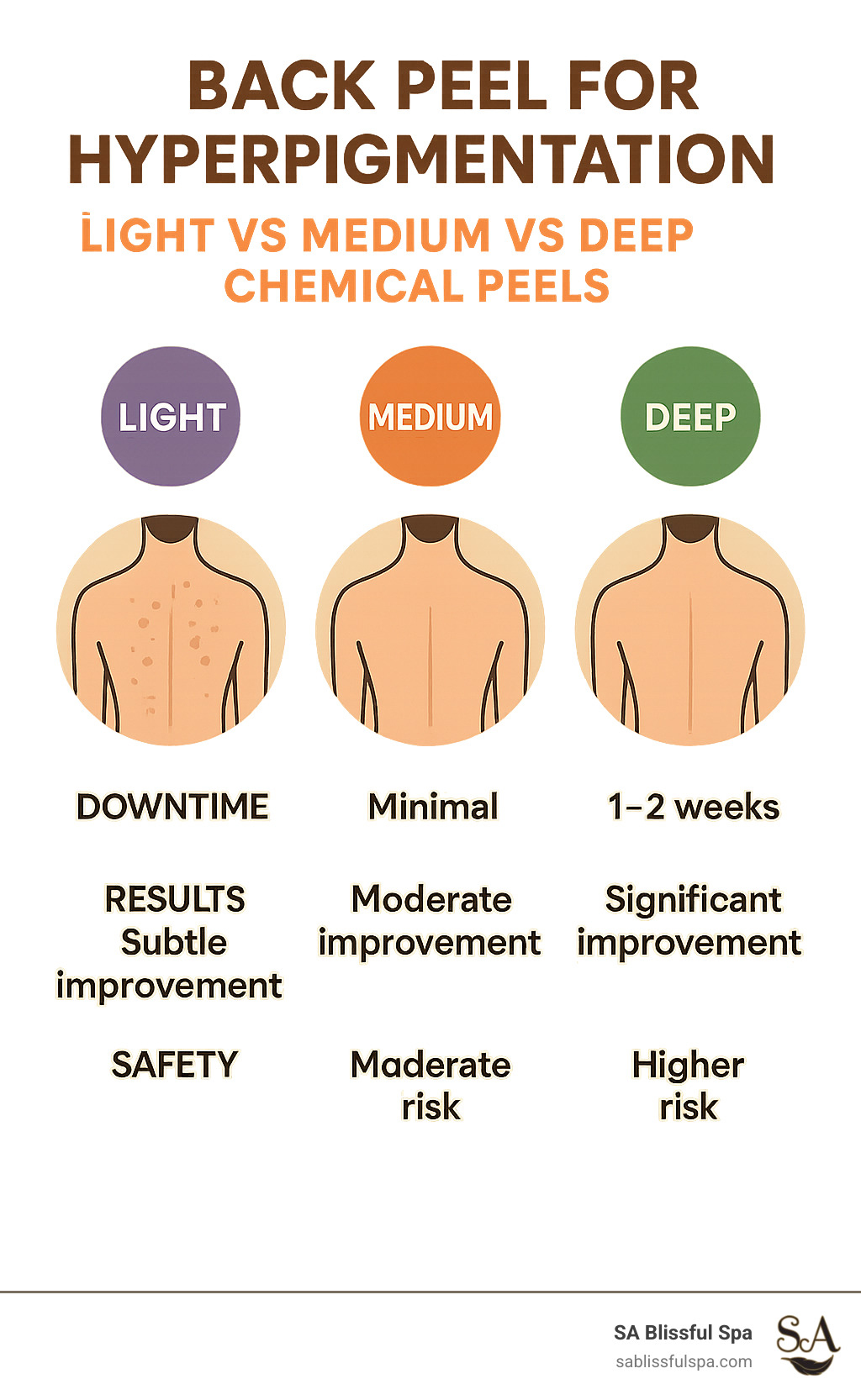
Light peels using 5-30% AHA concentrations are like the gentle introduction to chemical peels. They’re perfect if you’re new to peels, have sensitive skin, or simply can’t afford much downtime in your busy schedule.
These treatments offer minimal downtime while still delivering that healthy glow and gradual improvement you’re looking for. Think of them as your maintenance treatments – they keep your skin looking fresh and can be repeated every 2-4 weeks without overwhelming your skin.
Glycolic acid at 20-30% works beautifully for general brightening, while lactic acid at 20-25% is your best friend if your skin tends to be reactive. For those with darker skin tones, mandelic acid at 15-20% provides effective results with less risk of irritation or additional pigmentation issues.
The beauty of light peels is their predictability – you’ll experience gentle exfoliation with minimal discomfort, and you can usually return to your normal activities immediately.
When light peels aren’t quite cutting it, medium-depth peels step up to the plate. Using 20-35% TCA or stronger glycolic blends, these treatments mean business when it comes to tackling moderate hyperpigmentation.
You’ll see more dramatic results after fewer sessions, which can be appealing if you’re eager for change. However, this increased effectiveness comes with moderate peeling and downtime that you’ll need to plan for.
Expect the treated areas to take about 7-14 days to heal completely, with redness that might linger for several weeks. The peeling process typically starts around days 3-5, and it’s more noticeable than what you’d experience with light peels.
Deep peels using phenol or high-concentration TCA are the heavy hitters of the peel world. They provide the most dramatic resurfacing results, but they come with serious considerations that make them appropriate for medical supervision only.
These treatments require extensive downtime of two weeks or more, carry higher risks of complications, and demand very careful patient selection. The results can be transformative, but the commitment is substantial.
At SA Blissful Spa, we focus on light to medium-depth peels for back treatments. These provide excellent results for hyperpigmentation while keeping downtime manageable for our busy clients throughout Burlington, MA and the surrounding areas. Sometimes the best approach is the one that fits seamlessly into your life while still delivering the clear, even-toned back you’re dreaming of.
Your back peel for hyperpigmentation journey begins well before you step into our treatment room. Understanding each phase helps set realistic expectations and ensures you get the beautiful, even-toned results you’re hoping for.
The process starts with a thorough consultation where we examine your back’s unique skin story. I’ll assess your Fitzpatrick skin type, map out areas of hyperpigmentation, and discuss what bothers you most about your skin. This isn’t just a quick look – we’re creating a personalized roadmap for your change.
For many clients, especially those new to chemical peels or with sensitive skin, we recommend a patch test a few days before your full treatment. Think of it as a sneak preview that helps us fine-tune your peel for optimal safety and results.
When your treatment day arrives, you’ll start by changing into a comfortable gown that allows easy access to your back. We begin with a deep cleansing to remove any oils, lotions, or impurities that could interfere with the peel’s effectiveness.
The actual peel application is surprisingly quick – typically just 3-10 minutes depending on which acids we’re using and your skin’s response. I apply the solution evenly across treatment areas, monitoring your skin’s reaction closely. Once we’ve achieved the desired endpoint, we neutralize the acid with cool water or a specialized solution to stop the chemical action.
Before you leave, we apply soothing post-treatment products and review your personalized aftercare plan. You’ll receive detailed instructions and our direct contact information for any questions during your healing process.
For more comprehensive information about what makes each peel type unique, visit our Types of Chemical Peels page.
Let’s be honest about what you’ll feel during your back peel for hyperpigmentation – knowledge helps you relax and get better results.
Most clients describe the initial sensation as a mild tingling or gentle warmth, similar to applying a strong toner. As the acid begins working, this can intensify to a brief stinging sensation – completely normal and a sign the peel is doing its job. With stronger peels, you might notice “frosting” where treated areas develop a white, frosty appearance.
The good news? The active discomfort is brief and manageable. Most clients are surprised how tolerable the process actually is.
Your recovery timeline unfolds predictably. During the first 1-3 days, expect your back to feel similar to a mild sunburn – some redness and sensitivity that’s easily managed with loose clothing and gentle care.
The exciting part begins around days 3-7 when peeling starts. Don’t worry – this isn’t the dramatic, painful peeling you might imagine. Instead, skin typically sheds in thin sheets resembling tissue paper. This is your damaged, pigmented skin making way for the brighter, more even-toned skin underneath.
Complete healing occurs within 7-14 days for most light to medium peels, though your skin continues improving for weeks as new, healthy cells reach the surface. Full results become visible in 4-6 weeks when cellular turnover completes its cycle.
Your results depend just as much on aftercare as the peel itself. Think of the days following your treatment as an investment in your skin’s future clarity.
During the first 48 hours, your skin needs gentle, nurturing care. Use only mild, fragrance-free cleansers – this isn’t the time for your usual exfoliating body wash. Apply petroleum jelly or our recommended healing ointment to keep skin protected and comfortable.
The biggest temptation? Picking or forcefully removing peeling skin. Please resist! Let your skin shed naturally to avoid scarring or uneven healing. Loose-fitting clothing prevents friction that could irritate healing skin.
Daily sun protection becomes non-negotiable – broad-spectrum SPF 30 or higher every single day, even when indoors near windows. Your newly revealed skin is particularly vulnerable to UV damage that could actually worsen hyperpigmentation.
Antioxidant serums like vitamin C support healing and protect against environmental damage, while gentle moisturizers maintain your skin barrier function. Avoid heat sources like saunas, very hot showers, or intense exercise for several days to prevent complications.
Your aftercare routine isn’t just about healing – it’s about maximizing and maintaining your investment in clearer, more confident skin. For additional information about comprehensive hyperpigmentation treatment approaches, explore our Hyperpigmentation Scar Removal services.
Expected results from back peel for hyperpigmentation:
– 75-85% improvement in hyperpigmentation for many clients
– Smoother skin texture from improved cell turnover
– Improved collagen production leading to firmer skin
– Brighter, more radiant appearance overall
– Improved absorption of skincare products
Potential risks and complications:
While chemical peels are generally safe when performed by trained professionals, risks include:
People with darker skin are more prone to developing complications, which is why proper professional assessment and customized treatment protocols are essential.
Alternative treatments:
If chemical peels aren’t suitable for your skin type or preferences, alternatives include:
For more information about chemical peel safety and what to expect, consult resources from professional plastic surgery organizations.
Let’s talk numbers – because understanding the investment for back peel for hyperpigmentation helps you plan your journey to clearer skin without any surprises.
What you can expect to invest:
Based on average internet pricing data (not SA Blissful Spa’s actual costs), here’s what most people pay across the country:
Light peels typically run $150-$400 per session, making them the most budget-friendly option for gradual improvement. Medium peels jump to $600-$1,500 per treatment due to their stronger formulations and longer recovery time. Deep peels represent the biggest investment at $2,000-$4,500+ per session, though these require medical supervision and aren’t commonly used for back treatments.
Several factors influence these costs. Your location makes a huge difference – treatments in major metropolitan areas typically cost more than smaller cities. The provider’s experience and credentials also affect pricing, as does the complexity of your specific hyperpigmentation concerns.
Planning your series budget:
Since most clients need 3-5 treatments for optimal results, you’ll want to budget for the complete journey rather than just one session. Many spas offer package discounts when you purchase multiple treatments upfront, which can provide significant savings over individual sessions.
For light peels, expect to invest somewhere in the range of the total series cost. Medium peels require a larger commitment, but they often deliver more dramatic results in fewer sessions.
Your long-term maintenance game plan:
Here’s the thing about beautiful results – they need a little TLC to stick around. Your maintenance strategy has two parts: professional touch-ups and smart at-home care.
Professional maintenance typically involves touch-up peels every 3-4 months once you’ve completed your initial series. Think of these as tune-ups for your skin. An annual assessment with your esthetician helps adjust your treatment plan as your skin changes over time.
At-home skincare is where the magic really happens between treatments. Daily SPF 30+ isn’t negotiable – it’s your best defense against new pigmentation forming. A good vitamin C serum provides antioxidant protection while supporting the brightening effects of your peels. Gentle retinoids keep cell turnover humming along, and quality moisturizers maintain your skin barrier integrity.
The beauty of a solid maintenance routine is that it extends your results and reduces how often you need professional treatments. It’s an investment that pays dividends in both your appearance and your wallet.
For comprehensive information about all your treatment options, check out our Best Treatment for Hyperpigmentation Scars page to explore what might work best for your specific concerns.
Back peel for hyperpigmentation can absolutely be safe for darker skin tones, but it requires a skilled professional who understands the unique needs of melanin-rich skin. People with Fitzpatrick skin types IV-VI have a higher risk of developing post-inflammatory hyperpigmentation if the treatment is too aggressive – essentially creating more dark spots while trying to treat existing ones.
The key is using modified protocols specifically designed for darker skin. We start with lower acid concentrations and gradually build up your skin’s tolerance over multiple sessions. Mandelic acid and lactic acid are often better choices than glycolic acid because they work more gently and cause less irritation.
Pre-treatment preparation is also crucial for darker skin tones. This might include using specific skincare products for several weeks before your first peel to prepare your skin and reduce sensitivity. Longer intervals between treatments – sometimes 8-10 weeks instead of 4-6 weeks – allow your skin to fully recover and minimize complications.
Strict sun protection becomes even more critical, as darker skin that’s been recently peeled is extremely vulnerable to developing new pigmentation from UV exposure.
Hold off on that spin class for a few days! Avoid activities that cause excessive sweating for at least 48-72 hours after your back peel treatment. Your freshly treated skin is essentially healing from a controlled injury, and sweat can irritate the area and potentially lead to infection.
This means temporarily saying goodbye to hot yoga, intense cardio workouts, saunas, and steam rooms. Swimming in chlorinated pools is also off-limits during the initial healing period, as chlorine can be particularly harsh on sensitive, post-peel skin.
Light walking and gentle stretching are usually fine after the first day, but listen to your skin. If the treated area feels tight, stings, or shows increased redness after light activity, give it more time to heal.
Once the initial peeling phase is complete (usually after about a week), you can gradually return to your normal exercise routine. Just remember to shower gently afterward and continue protecting your skin from sun exposure.
This is a great question because active acne breakouts should be controlled before starting chemical peel treatments. Applying acids to inflamed, broken skin can worsen irritation and potentially lead to more scarring and hyperpigmentation – the opposite of what we’re trying to achieve.
If you’re dealing with ongoing breakouts, we’ll typically recommend treating the active acne first with appropriate medications or targeted treatments. Sometimes we can use salicylic acid peels that address both acne and pigmentation simultaneously, since salicylic acid is excellent at penetrating pores and reducing inflammation.
Never pick or squeeze active breakouts, especially when you’re planning peel treatments. This can significantly worsen hyperpigmentation and increase your risk of permanent scarring. It’s better to be patient and get the acne under control first.
We might also suggest spacing treatments further apart to allow your skin more healing time between sessions, or combining your peel treatments with other acne-fighting therapies like LED light therapy for a comprehensive approach to clearer skin.
After years of hiding your back under layers of clothing, imagine the freedom of wearing that backless dress or hitting the beach with confidence. A back peel for hyperpigmentation offers exactly that change – the chance to finally reveal the clear, even-toned skin you’ve been dreaming of.
The science speaks for itself: most clients see 75-85% improvement in their hyperpigmentation through a carefully planned series of treatments. But beyond the numbers, what really matters is how you’ll feel when you look in the mirror and see skin that matches your inner confidence.
At SA Blissful Spa, we’ve learned that no two backs are alike. Your hyperpigmentation story is unique – whether it started with teenage acne, years of sun exposure, or hormonal changes. That’s why we never take a one-size-fits-all approach. Instead, we sit down with you during your consultation to really understand your skin, your lifestyle, and your goals.
Our experienced team has helped countless clients throughout Burlington, MA and surrounding communities like Arlington, Bedford, and Belmont refind their skin confidence. We know which peels work best for different skin types, how to minimize risks for darker skin tones, and most importantly, how to make your treatment journey as comfortable as possible.
The path to clearer skin doesn’t have to be overwhelming. During your consultation, we’ll walk you through every step – from choosing the right peel depth to planning your treatment schedule around your busy life. We’ll also discuss realistic timelines, because lasting results take patience and the right professional guidance.
Ready to stop covering up and start showing off? Your journey to spotless back skin begins with a simple conversation about what’s possible for your unique skin. For clients dealing with both active breakouts and scarring, our Chemical Peel for Back Acne Scars treatments can address both concerns simultaneously.
Book your consultation today and let’s create a personalized back peel for hyperpigmentation plan that fits your skin, your schedule, and your dreams. Your confidence has been waiting long enough – it’s time to peel away the past and step into your most radiant skin yet!


Book your first appointment online and enjoy 15% off your first service (one-time offer).
Use code NEWCLIENT15