Anti aging and skin care has become essential for anyone looking to maintain youthful, healthy skin. As we age, our skin naturally loses collagen and elastin, leading to visible changes that many wish to address.
Here are the key elements of effective anti-aging skincare:
The skin aging process begins in our 20s, with collagen production decreasing by about 1% each year after age 20. By age 40, most people have lost 10-20% of their collagen, resulting in thinner skin and more visible lines.
Aging skin concerns vary widely – from fine lines and wrinkles to hyperpigmentation, loss of elasticity, and dryness. While we can’t stop the clock, a strategic approach to skincare can significantly slow visible aging and even reverse certain signs.
I’m Saloni Bhandari, a licensed esthetician and founder of SA Blissful Spa with extensive experience helping clients address anti aging and skin care concerns through customized treatments and product recommendations. My expertise comes from years of hands-on experience with various skin types and conditions, allowing me to guide you toward the most effective solutions.
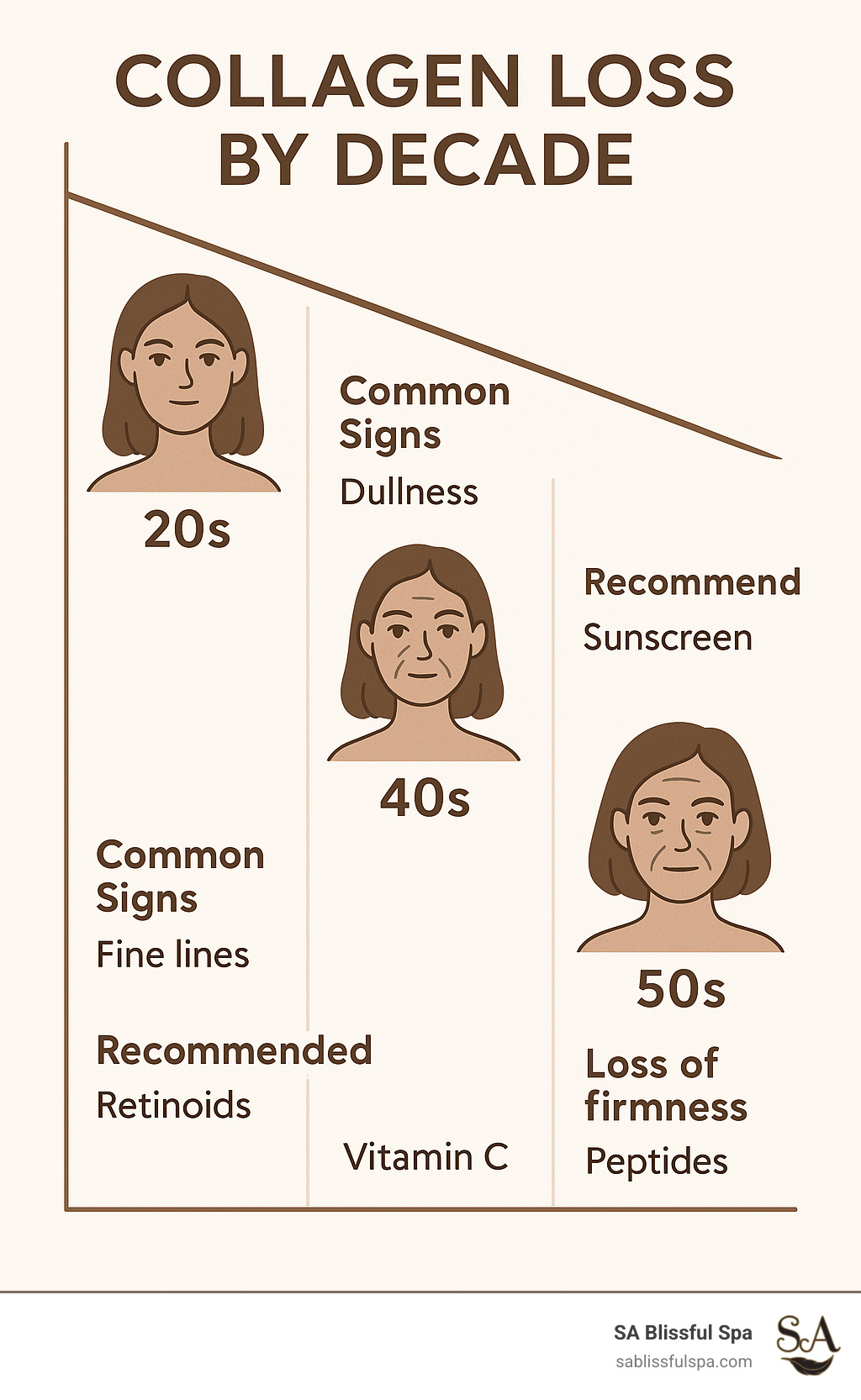
Anti aging and skin care terms to know:
– Immersive spa experience
– Skincare Salon
– skincare and beauty products
The science of skin aging isn’t just fascinating—it’s the key to creating a skincare routine that actually works. When we understand what’s happening beneath the surface, we can make smarter choices about the products we use every day.
Your skin ages in two distinct ways, and knowing the difference can transform your approach to anti aging and skin care:
Intrinsic aging is simply your body’s natural timeline. Think of it as your skin’s internal clock ticking away. As the years pass, your body naturally produces less collagen and elastin—those magical proteins that keep your skin firm, bouncy, and resilient. Cell turnover slows down (goodbye, that youthful glow!), and your skin gradually loses its ability to hold onto moisture.
Extrinsic aging, on the other hand, is where you have real power. These are the external factors that account for a whopping 90% of visible aging. The biggest culprits? That sunny day at the beach without sunscreen, city pollution, cigarette smoke, those late-night sugar cravings, chronic stress, and those nights when Netflix won over a good night’s sleep.
“If you’re looking for a face-lift in a bottle, you probably won’t find it in nonprescription wrinkle creams,” Mayo Clinic researchers tell us honestly. But don’t be discouraged! Consistent use of science-backed ingredients can make a remarkable difference in how your skin looks and feels over time.
Scientific research on skin aging from Harvard Health confirms that while we can’t stop time completely, we absolutely can minimize many visible signs with the right approach.
At SA Blissful Spa in Burlington, we often tell our clients: “Think of your skin as a long-term investment—what you do in your 20s and 30s pays dividends in your 40s, 50s, and beyond.” We believe in addressing both prevention and treatment for truly effective anti aging and skin care results.
Recognizing the early signs of aging gives you a tremendous advantage—you can address concerns before they become more pronounced and harder to treat.
Fine lines and wrinkles are usually the first visitors to arrive, typically showing up around your eyes (those charming crow’s feet) and mouth (smile lines). They begin as “dynamic” wrinkles that appear only when you make expressions, but eventually become “static,” visible even when your face is relaxed. The delicate skin around your eyes is especially vulnerable because it’s thinner than elsewhere on your face and moves constantly throughout the day.
Hyperpigmentation shows up as age spots, melasma, or general unevenness in your skin tone. These brown or grayish patches are primarily the result of sun exposure accumulated over years. Harvard Medical researchers explain that these spots (technically called solar lentigines) are actually clusters of melanin that form after years of UV exposure—like your skin’s record of every beach day and outdoor lunch.
Dryness and roughness become more common as your skin’s natural oil production decreases with age. Your skin barrier weakens, allowing more moisture to escape (dermatologists call this trans-epidermal water loss). This dryness doesn’t just feel uncomfortable—it can make fine lines look more pronounced and robs your skin of its natural radiance.
Loss of firmness and elasticity happens as those essential collagen and elastin fibers break down over time. You might notice subtle sagging along your jawline or cheeks, or find that your facial contours aren’t as defined as they once were. This process tends to accelerate in your 40s and 50s, especially during perimenopause and menopause for women.
I recently worked with Jane, a 56-year-old client who came to SA Blissful Spa frustrated about sudden changes in her skin during menopause. “My skin seemed to change overnight—suddenly dry, with new wrinkles appearing, and nothing in my usual routine seemed to help,” she told me. After a personalized consultation, we developed a targeted regimen that addressed her hormonal skin changes, significantly improving hydration and firmness within just two months.
Understanding these fundamental aspects of skin aging empowers you to make informed choices about your anti aging and skin care routine—whether you’re in your 20s and focusing on prevention, or addressing more visible signs of aging in later decades.
When it comes to scientifically-proven anti aging and skin care ingredients, retinoids stand alone at the top of the list. These vitamin A derivatives are considered the gold standard in anti-aging skincare, with decades of research backing their effectiveness.

Retinoids work on multiple levels to transform aging skin. They accelerate cell turnover, dramatically reducing the normal cycle from over 30 days down to just 14-21 days. They also stimulate collagen and elastin production, which helps reduce the appearance of those stubborn fine lines and wrinkles we all worry about. I’ve seen how they fade hyperpigmentation and age spots, refine skin texture, minimize pore appearance, and improve overall skin thickness and firmness.
Many of our clients are surprised to learn that prescription-strength retinoids can show visible improvements in as little as 8-12 weeks, while over-the-counter options typically take a bit longer—usually 3-6 months of consistent use. Patience really is key here!
“Retinoids are one of the most effective options for wrinkles, as they boost collagen, improve skin thickness, and smooth the outer layer of the skin,” confirms dermatological research from Harvard Medical School.
Understanding the different types of retinoids can help you choose the right one for your skin:
| Type | Strength | Availability | Best For |
|---|---|---|---|
| Tretinoin (Retin-A) | Strongest | Prescription only | Deep wrinkles, significant photoaging |
| Adapalene | Moderate-Strong | OTC (0.1%) & Prescription (0.3%) | Combination of acne and aging concerns |
| Retinol | Mild-Moderate | OTC (0.01-1%) | Prevention, mild to moderate aging |
| Retinyl esters | Mild | OTC | Sensitive skin, beginners |
At SA Blissful Spa, we offer professional treatments that complement your at-home retinoid regimen, enhancing results while minimizing potential irritation. Think of our services as the perfect partner to your daily skincare routine.
The science behind retinoids’ effectiveness is truly fascinating. When applied to your skin, retinoids bind to specific receptors in your skin cells, triggering a cascade of beneficial changes.
They boost fibroblast activity—these are the cells responsible for producing collagen and elastin. As we age, these cells become lazy, but retinoids essentially give them a wake-up call, stimulating renewed production of these crucial proteins. They also inhibit collagenase, those pesky enzymes that break down your existing collagen.
Retinoids normalize cell turnover too. You see, aging skin tends to shed cells more slowly, which leads to that dullness and rough texture we all want to avoid. By speeding up this process, retinoids reveal fresher, more radiant skin underneath.
Blood flow matters too! By improving vascularization and enhancing blood flow to the skin, retinoids help deliver more oxygen and nutrients while removing waste products more efficiently.
I remember Martha, a 62-year-old client who saw remarkable improvements after incorporating a prescription retinoid into her routine. “After decades of sun damage and neglecting my skin, I was skeptical anything would help,” she shared with me. “Six months later, even my adult children noticed the difference in my skin’s texture and clarity.” Stories like Martha’s remind me why I love what I do!
Selecting the appropriate retinoid formula is crucial for success. I always tell my clients to think of retinoids as a journey, not a destination.
For beginners, start with a low-strength over-the-counter retinol (0.01-0.03%) or retinyl palmitate. These gentler options allow your skin to build tolerance while minimizing that dreaded retinoid irritation. Apply just twice weekly at first—trust me, your skin will thank you!
Once your skin adjusts (usually after 2-3 months), you can graduate to a moderate-strength retinol (0.25-0.5%) or consider adapalene 0.1%, which is now available over the counter. Your skin has learned the retinoid language by this point and can handle more frequent conversations.
For those whose skin has built sufficient tolerance, higher-concentration retinol products (0.5-1.0%) or prescription options like tretinoin provide more dramatic results. These are the power players, but they require experienced skin.
Here are my favorite application tips for success with retinoids: Always apply to clean, completely dry skin, as moisture can increase irritation. Use just a pea-sized amount for your entire face—more isn’t better with retinoids! Wait 20-30 minutes after washing before applying, follow with a simple, fragrance-free moisturizer, and use only at night since retinoids break down in sunlight. And please, never skip sunscreen during the day when using retinoids.
“The key with retinoids is patience and consistency,” I often tell clients at SA Blissful Spa. “Think of it as a marathon, not a sprint—the longer you use them, the better your results.” This isn’t a quick fix, but rather an investment in your skin’s future that pays dividends for years to come.
While retinoids work behind the scenes to repair and rebuild, think of antioxidants like vitamin C as your skin’s personal bodyguards. These powerhouse ingredients stand at the frontline of your anti aging and skin care routine, defending your precious skin cells against environmental villains that accelerate aging.
Vitamin C (L-ascorbic acid) truly shines as the superhero of the antioxidant world. I’ve seen countless clients amazed at how this bright ingredient transforms their skin over time. It’s like watching a garden bloom after a long winter!
This multitasking ingredient works overtime by brightening your complexion through melanin inhibition, which helps fade those stubborn dark spots that seem to appear overnight (but actually took years to form). It also plays a crucial supporting role in collagen production—think of it as the construction foreman directing your skin to build more of the scaffolding that keeps everything firm and bouncy.
Perhaps most importantly, vitamin C neutralizes free radicals before they can wreak havoc on your skin cells. These unstable molecules from UV rays, pollution, and even normal metabolic processes are like tiny thieves stealing your skin’s youth bit by bit. Vitamin C catches them in the act!
Research published in the Journal of Clinical and Aesthetic Dermatology confirms what we’ve seen in our treatment rooms at SA Blissful Spa—vitamin C truly helps brighten the skin, even out patchy tone, and diminish the appearance of dark spots by putting the brakes on excess pigment production.
“Vitamin C is one of the few ingredients that both prevents damage and helps repair it,” our lead esthetician often tells clients during consultations. “It’s truly a multitasking powerhouse you’ll want in your corner.”
Don’t stop at vitamin C though! Consider these complementary antioxidants that work beautifully in your anti aging and skin care routine:
Vitamin E pairs perfectly with vitamin C, like peanut butter with jelly—each making the other work better. Niacinamide (the fancy name for Vitamin B3) strengthens your skin barrier while tackling redness and dark spots. Resveratrol from grapes (yes, the same compound in red wine!) shields your skin from environmental damage. Green tea extract with its powerful EGCG compounds calms inflammation like a soothing cup of tea for your face. And Coenzyme Q10, naturally present in your skin but declining with age, helps maintain your skin cells’ energy production.
To get the most bang for your buck with antioxidants, follow these insider tips we share with our clients at SA Blissful Spa:
Make morning application your non-negotiable ritual. Unlike retinoids that work best at night, antioxidants should be your daytime defenders, creating an invisible shield against pollution, UV rays, and other environmental stressors before they can damage your skin.
Pay close attention to packaging—it matters tremendously! Vitamin C is notoriously finicky and oxidizes quickly when exposed to air and light (ironically, this antioxidant doesn’t like oxygen!). Look for products in opaque, airless pumps or dark glass bottles with droppers. A properly packaged vitamin C serum should remain clear or slightly yellowish—if it turns brown, it’s oxidized and essentially useless.
When layering your products, think thin to thick: apply your water-based antioxidant serum after cleansing and toning but before heavier creams and sunscreen. Give it about 60-90 seconds to sink in before moving to the next step.
For L-ascorbic acid (the most researched and potent form of vitamin C), concentrations between 10-20% hit the sweet spot for effectiveness. If you’re just starting out or have sensitive skin, begin with a lower concentration and work your way up as your skin adjusts.
Here’s a little spa secret we share with our clients—store your vitamin C serum in the refrigerator! This not only extends its shelf life but also provides a refreshingly cool application that helps reduce morning puffiness. Most vitamin C serums remain effective for about three months after opening if properly stored.
One of our regular clients, Rebecca (43), shares her experience: “I started using a vitamin C serum after my facial at SA Blissful Spa, and within weeks, the stubborn dark spots I’d had for years began to fade. Friends kept asking what I was doing differently with my skin! It was like watching years of sun damage slowly disappear.”
The most effective vitamin C formulations often include ferulic acid and vitamin E—this powerful trio has been shown to provide eight times the photoprotection of vitamin C alone. Think of it as upgrading from a basic shield to a superhero force field!
Scientific research on vitamin C benefits continues to confirm what we’ve seen firsthand—this ingredient deserves a permanent spot in your anti aging and skin care routine. It’s not just about looking good today, but protecting your skin’s future as well.
Hydration is the foundation of healthy, youthful-looking skin, and hyaluronic acid (HA) is the superstar hydrator in the anti aging and skin care world. This miracle molecule can hold up to 1,000 times its weight in water, making it nature’s ultimate moisture magnet for your skin.

As we journey through life, our skin’s natural hyaluronic acid reserves gradually deplete. By age 40, we’ve lost approximately 30% of our natural HA, and by age 60, that number jumps to a staggering 60%. This significant decline contributes to the dryness, fine lines, and loss of plumpness that we associate with maturing skin.
Think of topical hyaluronic acid as your skin’s thirst-quencher. As a humectant, it draws moisture from the environment into your skin like a magnet. But HA’s benefits go far beyond simple hydration. When you apply products containing this powerhouse ingredient, you’re giving your skin an instant plumping effect that temporarily fills in fine lines, strengthening your skin’s protective barrier against environmental aggressors, improving elasticity for that youthful bounce, and soothing irritation and redness with its calming properties.
“Hyaluronic acid is like a refreshing drink of water for your skin,” we often tell clients at SA Blissful Spa. “It’s one of those rare ingredients that shows immediate visible results while also providing long-term benefits.”
What makes hyaluronic acid particularly fascinating is its varying molecular weights. High molecular weight HA creates a protective film on your skin’s surface, providing immediate hydration and smoothing. Medium molecular weight HA penetrates the upper layers of the epidermis for sustained moisture. Meanwhile, low molecular weight HA reaches deeper into the skin to support firmness and elasticity. The most advanced formulations contain a mix of these different weights for multi-level hydration, with some newer products featuring encapsulated or cross-linked HA for even longer-lasting effects.
To truly harness the power of your hyaluronic acid products, proper application makes all the difference:
Apply to damp skin – This might seem counterintuitive, but here’s why it works: HA molecules attract moisture to themselves. If you apply them to completely dry skin in a dry environment, they can actually pull moisture from the deeper layers of your skin instead of from the air, potentially increasing dryness. A light face mist before application gives those HA molecules water to capture, resulting in plumper, more hydrated skin.
Seal with a moisturizer – Think of this as creating a moisture sandwich. Follow your HA serum with a moisturizer containing emollients and occlusives to lock in all that wonderful hydration. Without this crucial step, the water attracted by the HA might simply evaporate, leaving your skin drier than before.
Layer strategically – HA plays well with others, making it a team player in your skincare routine. For a comprehensive anti aging and skin care approach, try applying your products in this sequence: cleanse, tone (if desired), vitamin C serum (morning), hyaluronic acid serum, peptide or growth factor serum, moisturizer, retinoid (evening), and sunscreen (morning).
Consider combination products – For efficiency in your routine, look for formulations that pair HA with complementary ingredients like peptides, niacinamide, or ceramides. These multi-tasking products simplify your regimen while maximizing benefits.
One of our clients, Diane (58) from Burlington, shared her experience: “I’d tried expensive creams for years with minimal results. After my consultation at SA Blissful Spa, I switched to a simple routine centered around hyaluronic acid. The difference in my skin’s texture and plumpness was noticeable within days, and my makeup finally stopped settling into fine lines!”
If you’re noticing dehydration lines—those fine lines that appear more pronounced when your skin lacks moisture rather than collagen—hyaluronic acid can be particularly effective. These temporary lines often worsen during winter or in dry climates but can improve dramatically with proper hydration.
At SA Blissful Spa, we’ve seen countless clients transform their skin simply by adding this hydration hero to their daily routine. The beauty of hyaluronic acid is that it’s gentle enough for all skin types, even the most sensitive, while delivering visible results that continue to improve with consistent use.
Taking your anti aging and skin care routine to the next level means incorporating peptides and growth factors—the sophisticated communicators that help orchestrate skin repair and renewal.
Peptides are short chains of amino acids that act as signaling molecules, essentially “talking” to your skin cells and instructing them to perform specific functions. In anti-aging skincare, they primarily work by signaling fibroblasts to produce more collagen and elastin, supporting the skin’s natural repair processes, strengthening the skin barrier, reducing inflammation, and improving skin firmness and elasticity.
“Peptides are like the project managers of your skin,” explains our senior esthetician at SA Blissful Spa. “They don’t do the heavy lifting themselves but direct your skin cells to do the work.”
Several peptides have shown particular promise in anti-aging skincare. Matrixyl (palmitoyl pentapeptide-4) stimulates collagen production and has been shown in studies to reduce wrinkle depth by up to 27% after 2 months of use. Argireline (acetyl hexapeptide-8) is often called “Botox in a bottle” because it subtly inhibits muscle contractions that lead to expression lines, particularly around the eyes and forehead.
GHK-Cu (copper peptide) promotes wound healing, stimulates collagen production, and has antioxidant properties. It’s particularly effective for improving skin firmness and elasticity. Meanwhile, Leuphasyl works similarly to Argireline but targets different neurotransmitters, making the two particularly effective when used together.
Growth factors are naturally occurring proteins that regulate cell growth and proliferation. In skincare, they help accelerate wound healing, stimulate collagen and elastin production, improve skin thickness, and improve skin texture and tone.
While both peptides and growth factors support skin regeneration, they work through different mechanisms and can complement each other in a comprehensive anti-aging routine.
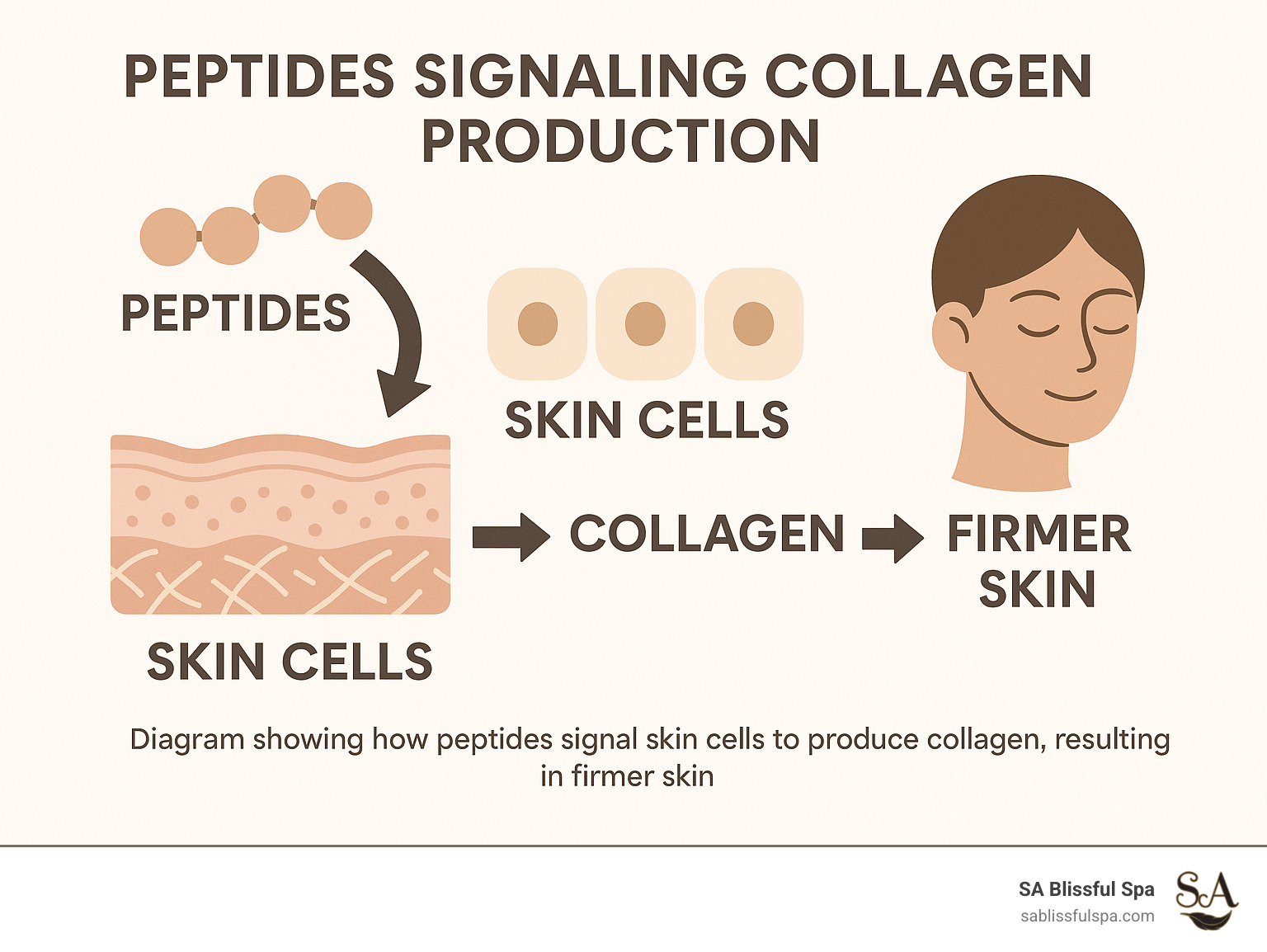
Peptides and growth factors can be valuable additions to your skincare routine at various stages of life and skin conditions.
In your 30s, this is an ideal time to introduce peptides preventively, before significant collagen loss has occurred. They can help maintain existing collagen levels while supporting ongoing production. Many of our clients in their early thirties start incorporating a simple peptide serum as part of their nighttime routine, often seeing a noticeable improvement in skin resilience within a few months.
Post-procedure recovery is where peptides and growth factors truly shine. When used after professional treatments like microneedling, chemical peels, or laser therapy, they help accelerate healing and improve results by supporting the skin’s natural repair mechanisms. At SA Blissful Spa, we often recommend specific peptide formulations to improve recovery and extend the benefits of our professional treatments.
The delicate eye area often shows signs of aging first. Peptide-rich eye creams can help address crow’s feet, crepiness, and loss of firmness in this area. The skin around the eyes is approximately 40% thinner than the rest of your face, making it especially responsive to peptide treatments that boost collagen production without causing irritation.
For those who cannot tolerate retinoids due to sensitivity or other contraindications, peptides offer an excellent alternative for collagen stimulation without irritation. Many of our clients with rosacea or extreme sensitivity have found peptides to be the gentle yet effective solution they’ve been searching for.
At SA Blissful Spa, we often incorporate professional-grade peptide treatments in our facials for clients seeking advanced anti-aging results. These treatments can be customized based on specific concerns, whether that’s firmness, wrinkle reduction, or overall skin rejuvenation.
“After my peptide facial at SA Blissful Spa, I was amazed at how much firmer my jawline looked,” reports Melissa (47) from Burlington. “I’ve continued using their recommended peptide serum at home, and the improvement in my skin’s elasticity has been remarkable.”
For home use, we recommend applying peptide products after cleansing and toning but before heavier creams. Most peptides are stable and work well in combination with other active ingredients, including hyaluronic acid, niacinamide, and antioxidants. However, they’re best applied separately from acidic products like vitamin C, which may affect their stability.
If there’s one non-negotiable in any anti aging and skin care routine, it’s sunscreen. No matter how expensive your serums or how advanced your treatments, nothing can undo the damage caused by unprotected sun exposure.
“I tell my clients that investing in fancy anti-aging products without daily sunscreen is like watering your garden during a rainstorm—pointless and wasteful,” says Saloni at SA Blissful Spa with a smile.
The evidence is compelling: up to 90% of visible skin aging comes directly from sun exposure. A landmark study in the Annals of Internal Medicine found that people who use sunscreen daily show 24% less skin aging than occasional users. That’s a significant return on a simple daily habit!
Sunlight damages your skin through several pathways. UVA rays (think “A” for aging) penetrate deeply into your skin, silently breaking down collagen and elastin. UVB rays (think “B” for burning) cause those painful sunburns and contribute significantly to skin cancer risk. Even visible light and infrared radiation can trigger inflammation and oxidative stress.
This is why broad-spectrum protection is absolutely essential. While the SPF number only measures UVB protection, the “broad-spectrum” designation ensures you’re also shielded against those sneaky UVA rays that cause premature aging.

When shopping for your daily armor, you’ll encounter two main types of sunscreens:
Mineral (physical) sunscreens contain zinc oxide and/or titanium dioxide that act like tiny shields, sitting on your skin’s surface and bouncing UV rays away. They offer immediate protection upon application and tend to be kinder to sensitive skin. Many of our clients with rosacea or acne find mineral formulas less likely to trigger flare-ups. They’re also more reef-friendly, which is a nice bonus for your next beach vacation.
Chemical sunscreens use organic compounds like avobenzone or octinoxate that absorb UV rays and convert them to heat. These typically feel lighter on the skin and blend more seamlessly, especially on deeper skin tones. No white cast means you’re more likely to apply the generous amount needed for proper protection.
At SA Blissful Spa, we recommend a minimum of SPF 30 for everyday use, and SPF 50+ when you’ll be outdoors for extended periods. It’s worth noting that the protection difference between SPF 30 (blocks about 97% of UVB rays) and SPF 50 (blocks about 98%) is relatively small—making proper application and reapplication far more important than chasing extremely high SPF numbers.
Curious about finding a luxury sunscreen that feels like a treat to apply? More info about luxury sunscreen options can help you find formulas that complement your anti aging and skin care routine.
Let’s clear up some persistent misconceptions that might be sabotaging your skin protection efforts:
Myth #1: Higher SPF means I can stay in the sun longer without reapplying. The truth is that higher SPF provides only slightly more protection, not longer protection. Whether you’re wearing SPF 30 or 100, you still need to reapply every two hours of sun exposure. That SPF 100 might block slightly more rays, but it breaks down from sun exposure at the same rate as lower SPFs.
Myth #2: I don’t need sunscreen on cloudy days or when I’m indoors. This couldn’t be further from the truth! Up to 80% of UV rays punch right through cloud cover, and UVA rays can pass through windows. I often point to clients’ left arms—which typically show more signs of aging from driving—as proof of incidental exposure through car windows.
Myth #3: My makeup with SPF provides sufficient protection. Unless you’re applying a quarter-teaspoon of foundation to your face (which would look like a mask!), you’re not getting the labeled SPF. Most people apply only about a tenth of the needed amount. Always use a dedicated sunscreen under makeup for proper protection.
Myth #4: Sunscreen causes vitamin D deficiency. Research consistently shows that regular sunscreen use has minimal impact on vitamin D levels for most people. If you’re concerned, a vitamin D supplement is a much safer option than unprotected sun exposure.
Myth #5: All sunscreens feel heavy and cause breakouts. Modern sunscreen technology has come remarkably far! Today’s formulations include weightless serums, hydrating gels, and neat lotions suitable for all skin types. At SA Blissful Spa, we love helping clients find their perfect match—because the best sunscreen is the one you’ll actually wear every day.
One of our clients, Jennifer (38), avoided sunscreen for years because she hated how it felt. “After my consultation at SA Blissful Spa, they recommended a lightweight serum sunscreen that changed everything,” she shares. “It feels like nothing on my skin, and I’ve noticed my melasma starting to fade after just a few months of consistent use.”
For optimal protection, apply sunscreen as the final step in your morning skincare routine, before makeup. Use approximately a quarter-teaspoon for your face alone, and don’t forget often-missed areas like your ears, neck, and the backs of your hands—these vulnerable spots often reveal your true age long before your carefully protected face does!
As we age, our skin’s natural renewal process slows dramatically—from that speedy 28-day cycle in our 20s to a sluggish 40+ days by our 50s. This is where exfoliation becomes your secret weapon in any anti aging and skin care routine. Without proper exfoliation, dead skin cells pile up, creating that dull, rough appearance that makes fine lines look even more pronounced.

“Think of exfoliating acids as tiny messengers gently telling dead skin cells it’s time to let go,” explains our lead esthetician at SA Blissful Spa. “Unlike harsh scrubs that can create micro-tears in your skin, acids dissolve the bonds between cells, revealing the fresh, glowing skin underneath.”
The world of exfoliating acids might seem complex, but understanding the main players can help you choose what’s right for your skin. Alpha Hydroxy Acids (AHAs) work primarily on the skin’s surface and include glycolic acid (the smallest molecule that penetrates deepest), lactic acid (gentler and more hydrating), and mandelic acid (excellent for targeting pigmentation).
Then there’s Beta Hydroxy Acid (BHA)—primarily salicylic acid—which is oil-soluble and can dive deep into pores, making it perfect if you’re dealing with congestion along with aging concerns.
For super-sensitive skin, Poly Hydroxy Acids (PHAs) like gluconolactone and lactobionic acid offer the gentlest approach. Their larger molecules don’t penetrate as deeply, and they even provide some bonus antioxidant benefits.
Don’t overlook enzymes derived from fruits like papaya and pineapple. These smart exfoliators dissolve only dead skin cells without affecting living tissue—nature’s gentlest exfoliation option.
The change regular chemical exfoliation brings is remarkable. Beyond the immediate glow, you’ll notice improved texture, more refined pores, and smoother, softer skin. Perhaps most importantly, your other skincare products can finally penetrate properly, maximizing their effectiveness.
At SA Blissful Spa in Burlington, we’ve seen countless clients amazed by the difference proper exfoliation makes. Our professional chemical peels complement your at-home routine, accelerating results when you’re ready for more dramatic improvement.
When it comes to mature skin, the method of exfoliation matters tremendously. Chemical exfoliation uses acids or enzymes to dissolve the bonds between cells, while physical exfoliation relies on granules, brushes, or tools to manually scrub away dead skin.
“We generally recommend chemical exfoliants over physical scrubs for aging skin,” our esthetician shares with a smile. “As skin matures, it becomes thinner and more delicate—like fine china rather than stoneware. Those rough scrubs that felt invigorating in your 20s can actually damage your skin now.”
Chemical exfoliation offers more even, controlled removal of dead skin cells and can actually penetrate into pores for deeper cleansing. It’s less likely to cause micro-tears or irritation, and many formulas provide additional benefits like hydration or brightening. For those with inflammatory conditions like rosacea, chemical options are far gentler.
Physical scrubs, while satisfying in their immediate smoothing effect, come with risks. Those rough particles can create microscopic tears in aging skin, potentially causing more inflammation and damage than good. They can also spread bacteria if acne is present and often prove too harsh for thin or mature skin.
One of our clients, Elizabeth (52), shared her experience: “After years of using harsh scrubs that left my skin red and irritated, I switched to a gentle glycolic acid toner recommended during my facial at SA Blissful Spa. The difference was remarkable—my skin looks clearer and brighter, and my serums seem to work better now. I wish I’d made the switch years ago!”
For those new to chemical exfoliation, start slowly to build tolerance. Begin with lower concentrations (5-10% for AHAs, 0.5-2% for BHAs) and apply just once weekly, gradually increasing frequency as your skin adjusts. Never use multiple exfoliating products in the same routine, and always follow with moisturizer and sunscreen during daylight hours.
PHAs or lactic acid make excellent entry points for beginners due to their gentleness. As your skin builds tolerance, you might gradually introduce glycolic acid or combination products for more pronounced results. The key is listening to your skin—if irritation occurs, reduce frequency or concentration.
Exfoliation is a perfect example of “more isn’t better.” Overexfoliating can damage your skin barrier, leading to sensitivity, redness, and ironically, accelerated aging. The goal is healthy cell turnover, not stripping your skin of essential oils and protection.
When it comes to anti aging and skin care, timing really matters—but probably not in the way you might think. The truth is, the best time to start is much earlier than most people realize.
In your 20s, think of your skincare as laying a foundation. This is when prevention truly shines. Make daily sunscreen (at least SPF 30) your non-negotiable—it’s the single most powerful tool against premature aging. Add a simple vitamin C serum to fight off environmental damage, establish consistent cleansing habits, and keep your skin properly moisturized. These basics might seem simple, but they pay enormous dividends later.
“I always tell my younger clients that their future skin will thank them for every day they wore sunscreen in their 20s,” shares our lead esthetician at SA Blissful Spa. “It’s like saving for retirement, but for your face!”
As you enter your 30s, it’s time to be more proactive. This decade is perfect for introducing retinol into your routine—start slowly, just once or twice weekly. Add peptide serums to support your skin’s natural collagen production before significant loss begins. Many people also benefit from adding a dedicated eye cream at this stage, as the delicate eye area often shows the first signs of aging.
By your 40s and beyond, your skin needs more targeted support. This might be the time to talk with a dermatologist about prescription-strength retinoids if you haven’t already. Your routine should emphasize intensive hydration as natural oil production decreases, and you’ll likely benefit from more specialized treatments that address specific concerns like deeper lines or loss of firmness.
One long-term study found that individuals who began using sunscreen consistently in their early 20s showed remarkably fewer signs of photoaging by their 40s compared to those who started later. The difference was dramatic—equivalent to looking several years younger.
“It’s never too early to start protecting your skin, and it’s never too late to see improvement,” we remind our clients at SA Blissful Spa. “The skin is remarkably responsive to proper care at any age.”
While we often focus on what we put on our skin, what’s happening inside our bodies might be even more important for anti aging and skin care. Your lifestyle choices affect your skin in profound ways that even the most expensive creams can’t fully address.
Sleep is your skin’s time to repair and regenerate. During deep sleep phases, your body increases production of growth hormone, which is essential for cell and tissue repair. When you consistently shortchange your sleep, your skin pays the price. Chronic sleep deprivation raises cortisol levels, which can break down collagen and accelerate aging. It also reduces circulation to the skin, decreases moisture levels, and slows the cell turnover and repair processes your skin needs to stay youthful.
“I can always tell when a client hasn’t been sleeping well—no serum can fully mask that,” notes our esthetician. “Aim for 7-9 hours of quality sleep nightly, and consider sleeping on your back to prevent ‘sleep wrinkles’ that can form from pressing your face into a pillow night after night.”
Your diet directly impacts how your skin ages. What you eat becomes the building blocks for your skin cells. Sugar and refined carbohydrates are particularly problematic—they cause a process called glycation where sugar molecules attach to proteins like collagen, making them stiff and less functional. On the flip side, filling your plate with antioxidant-rich foods (colorful berries, leafy greens, and vibrant vegetables) helps fight the free radical damage that accelerates aging.
Don’t forget about healthy fats—omega-3 fatty acids found in fatty fish, walnuts, and flaxseeds support your skin barrier and reduce inflammation. Adequate protein provides the amino acid building blocks your body needs to create collagen and elastin. And proper hydration is absolutely essential for maintaining skin plumpness and barrier function.
Stress management might be the most overlooked aspect of skin health. Chronic stress triggers persistent inflammation and accelerates aging through increased cortisol production, impaired barrier function, delayed wound healing, and exacerbation of inflammatory skin conditions.
“I started seeing one of my clients for regular facials when she was going through a difficult divorce,” shares our esthetician. “Beyond the treatments themselves, we focused on stress management techniques and sleep improvement. The change in her skin over six months was remarkable—proof that addressing lifestyle factors is just as important as using the right products.”
Simple practices like meditation, yoga, deep breathing, or any activity that helps you truly relax can have visible benefits for your skin that rival expensive treatments.
While a thoughtful at-home routine and regular professional facials can address many anti aging and skin care concerns, there comes a point when certain issues benefit from a dermatologist’s expertise and medical-grade interventions.
Consider scheduling a dermatology appointment when you’re dealing with deep wrinkles that haven’t responded to over-the-counter products, significant sagging that’s changing your facial contours, or persistent hyperpigmentation that refuses to fade with topical treatments. Any sudden or unusual changes in skin texture or appearance should always prompt a professional evaluation. And of course, if your skin concerns are causing emotional distress or affecting your confidence, that’s reason enough to seek specialized care.
A board-certified dermatologist brings powerful tools to the table that aren’t available elsewhere: prescription-strength retinoids that work more effectively than over-the-counter versions, powerful lightening agents for stubborn pigmentation, and advanced treatments like injectables, energy-based therapies (lasers, radiofrequency, ultrasound), professional-grade chemical peels, and cutting-edge options like microneedling with PRP (platelet-rich plasma).
“Dermatologists and estheticians serve complementary roles in your skin health,” explains our spa director. “Think of your dermatologist as handling the medical aspects of skin aging, while estheticians focus on maintaining skin health, barrier function, and that beautiful glow between medical treatments.”
At SA Blissful Spa, we believe in collaborative skincare. We often work alongside dermatologists, providing complementary treatments that improve medical interventions while supporting overall skin health.
“One of our clients saw remarkable improvement combining our monthly hydrating facials with her dermatologist’s prescribed tretinoin therapy,” notes our spa director. “The facials helped manage the dryness and irritation sometimes associated with prescription retinoids, allowing her to continue the treatment for better results.”
If you’re unsure whether your concerns require dermatological care, a consultation at SA Blissful Spa can help guide you in the right direction. We can assess your skin’s needs and refer you to trusted dermatologists when appropriate.
Find a dermatologist near you through the American Academy of Dermatology’s official directory if you need specialized medical care for your skin concerns.
Navigating anti aging and skin care can feel like walking through a maze of promises, products, and procedures. But here’s the truth I’ve learned after years of helping clients: there’s no single miracle product that turns back time. The real magic happens when you build a consistent routine with ingredients that actually work for your unique skin.
Think of your skincare journey as a marathon, not a sprint. The small, daily actions you take matter far more than occasional expensive treatments. Your skin remembers what you do consistently, not what you do once in a while.
If there’s one thing I want you to take away from everything we’ve discussed, it’s this: protection comes first. No serum, cream, or treatment can undo the damage caused by unprotected sun exposure. That daily application of broad-spectrum sunscreen is your skin’s best friend in the fight against aging.
Beyond protection, focus on those powerhouse ingredients we’ve explored. Retinoids rebuild and repair, vitamin C brightens and protects, hyaluronic acid plumps and hydrates, peptides signal and support, and gentle exfoliating acids reveal your freshest skin. These aren’t trendy ingredients that will fade next season—they’re backed by decades of research and real results.
Layering matters too. The thinnest, water-based products go on first, followed by serums, then creams and oils to seal everything in. This simple approach ensures each ingredient can do its job properly.
Your skin is constantly changing—with the seasons, with hormonal shifts, and yes, with age. Be prepared to adjust your routine as needed. What worked in your 30s might need some tweaking in your 40s and beyond. Listen to your skin—it will tell you what it needs if you pay attention.
“I’ve seen incredible changes in clients who commit to their routine,” shares Saloni from SA Blissful Spa. “One woman came in with deep concerns about her sun damage. After six months of consistent home care and regular professional treatments, not only did her skin look noticeably brighter and firmer, but she told me she finally felt comfortable going makeup-free for the first time in decades.”
This is why we love what we do at SA Blissful Spa in Burlington. Professional treatments like our customized facials can take your results to the next level, offering deeper exfoliation, more potent ingredients, and technologies that complement your daily routine. More info about facials is available if you’re curious about how they might improve your skincare journey.
Be patient with your skin. Real change—especially collagen production—takes time. Most people start seeing noticeable improvements after 6-12 weeks of consistent care. Take progress photos! Sometimes the changes are so gradual that you might not notice them day to day, but comparing photos from a few months apart can be truly eye-opening.
At SA Blissful Spa, we believe that great skin isn’t just about looking younger—it’s about feeling confident in the skin you’re in. Whether you’re just beginning to think about anti-aging or looking to refine your existing routine, it’s never too early to start protecting your skin, and never too late to start caring for it better.
Your skin tells your story—all the summers in the sun, the nights of laughter (and maybe too little sleep), the stress and the joy. With the right care, you can make sure it’s telling that story beautifully for years to come.


Book your first appointment online and enjoy 15% off your first service (one-time offer).
Use code NEWCLIENT15